

A keen follower in #Digital #AI #BlockChain #EA, #microservices, #CleanTech; Enthusiasm anything link #Tech; DDG NIC, Delhi; Views are personal
Shillong, Meghalaya
Joined July 2009
- Tweets3.4K
- Following309
- Followers240
- Likes3K




tdkhar retweeted

My Friend makes $1.2 million a year as an Anthropic engineer.
I asked him how he learned prompting so well. He sent me a video that was never supposed to get out. Their core team's prompting playbook.
You won’t find anything better about prompting than this 30 minutes video.
I watched it last night. Halfway through, I realized I've been using Claude completely wrong for two years.
Watch it, then read the article below.


tdkhar retweeted

Dario Amodei, CEO of Anthropic:
"In 3 to 6 months AI will write 90% of all code. In 12 months, 100%."
Bad year for people who only know how to code.
Great year for people who know how to train AI on real business data.
The moat isn't writing code anymore.
It's knowing how to fine-tune the AI on real company data.
That skill doesn't get replaced at 100% AI-written code.
It becomes more valuable.
Full guide below ↓
Bookmark this. Read it today.


tdkhar retweeted

🚀 How to Build AI Agents from Scratch: A Complete Roadmap
AI Agents are transforming the way we work, automate tasks, and build intelligent applications. But how do you actually build one from the ground up?
This infographic breaks down the essential steps to building powerful AI agents — from defining their purpose to deploying and monitoring them.
🔹 10 Essential Steps to Build AI Agents:
1️⃣ Define the agent’s role and goal
2️⃣ Design structured input and output
3️⃣ Tune behavior and add protocols
4️⃣ Add reasoning and tool use
5️⃣ Structure multi-agent logic
6️⃣ Add memory and long-term context
7️⃣ Integrate voice or vision capabilities
8️⃣ Deliver readable and structured outputs
9️⃣ Wrap your agent in a user-friendly interface
🔟 Evaluate, monitor, and improve performance
🧠 Key Takeaway: Building an AI agent is not just about writing prompts. It’s about combining the right architecture, tools, memory, reasoning, and evaluation to create a reliable system that solves real-world problems.
Whether you're a developer, AI enthusiast, entrepreneur, or someone exploring the future of automation, understanding these fundamentals is a valuable step toward building smarter AI solutions.
The future of AI is moving from simple chatbots to intelligent agents that can reason, use tools, remember context, and take action.
Start learning. Start building. Start experimenting. 🚀
Follow me 👉 @alexhalescoder for more
#AIAgents #ArtificialIntelligence #GenerativeAI #AIEngineering #MachineLearning #LangChain #OpenAI #Automation #AIDevelopment #TechInnovation #FutureOfAI #BuildInPublic

tdkhar retweeted

Want to stay ahead in AI in 2026?
Don’t just learn how to use AI tools. Understand the concepts behind production-grade AI systems.
Here are 9 concepts worth learning 👇
01 — Agentic Loops
Plan → Act → Observe → Reflect → Improve
02 — MCP
One standard interface that lets agents connect with multiple tools, apps, databases, browsers, and files.
03 — Subagents & Multi-Agent Systems
Delegate complex tasks to specialized agents with their own context and tools.
04 — AI Gateways
One control layer for routing requests across multiple models while managing auth, rate limits, caching, and logs.
05 — Inference Economics
Tokens, caching, model selection, latency, and quality directly impact your AI costs.
06 — Evals
Test AI outputs systematically for accuracy, safety, and task success.
07 — Guardrails
Protect AI systems with input and output filters against risks like prompt injection, PII, toxicity, and unsafe actions.
08 — Observability
Track traces, logs, metrics, and feedback so you can understand and improve agent workflows.
09 — Agent Harness
The application owns the loop around the model:
→ Planner
→ Memory
→ Tools
→ State
→ Guardrails
→ Evals
The big shift:
AI engineering is moving from
“Which model should I use?”
to
“How do I build a reliable system around the model?”
Learn these concepts and you'll understand much more than just prompting.
Save this roadmap for your AI engineering journey.
Follow @AamirAnsar94694 for more AI, tools, productivity and tech insights.
#AI #AIEngineering #AIAgents #AgenticAI #MCP #LLM #GenerativeAI #Automation #Tech

tdkhar retweeted

Great conversation with @chamath, @jason, @davidsacks, and @friedberg on all the work ahead when it comes to diffusing benefits of AI broadly, earning permission from communities, and ensuring AI safety and control.

All-In Summit: Microsoft CEO Satya Nadella
-- The AI Doomer Slowdown
-- Common Sense AI Guardrails
-- What "Slowdown" Means for New AI Products
-- Microsoft’s Master Plan
-- Who Wins AI
(0:00) @satyanadella joins The Besties!
(0:55) Dario's blog, "pacing the frontier," common sense AI safety
(6:28) The failure of AI CEO messaging, monitoring agents, what will a slowdown mean for new AI products?
(14:22) Economic incentives for frontier lab doomerism, where the AI profits are
(22:45) Microsoft's master plan for AI, how they are allocating capital
(31:00) China's slow down, changing AI perception, data center benefits
$MSFT
tdkhar retweeted

🚨 If you think Claude is just a chatbot, you’re wasting most of what makes it powerful.
You ask a question.
Claude answers.
You start another chat.
Repeat.
That’s the beginner workflow.
The Claude ecosystem goes way beyond chat:
🧠 Models
Choose the right model for the job.
💻 Claude Code
Build, debug and work directly with codebases.
📁 Projects
Give Claude persistent context, files and instructions.
🎨 Artifacts
Turn ideas into documents, visualizations, prototypes and tools.
🔌 Connectors + MCP
Bring external data and tools into your workflow.
🧩 Skills
Create reusable instructions for repetitive work.
🤖 Subagents
Break complex tasks into specialized workflows.
⚡ API + Agent SDK
Build Claude into your own products and agents.
🔄 Automation
Connect everything into repeatable workflows.
The biggest mistake?
Using a powerful AI ecosystem like a Google search box.
Claude isn't just:
Prompt → Answer
It can become:
Context → Tools → Skills → Agents → Workflow → Output
Once you understand the ecosystem, you stop asking:
“What can Claude answer?”
And start asking:
“What can I make Claude do?”
Save this.
Repost it for someone still using Claude like a basic chatbot.
Follow @Origin_AI_01 for more Claude workflows. ⚡
#Claude #ClaudeAI #AI #AITools #ArtificialIntelligence #ClaudeCode #MCP #AIProductivity

Policy on the AI Exponential and the action needed by Dario Amodei: teapawt.net/darioamodei/status/206…

Today I'm publishing a new essay, Policy on the AI Exponential. AI is progressing extremely fast—much faster than the policy process was built to handle. The essay lays out where I think the technology is now, and the action needed to close the gap: darioamodei.com/post/policy-…

21
tdkhar retweeted

There are two ways AI progress could go very badly and that we must avoid.
First, we could lose control of the future to AI. This is unacceptable; we are unapologetically on Team Humanity, and AI must always serve people. To ensure that, we need ways to ensure that alignment and safety techniques stay ahead of progress in model capabilities.
Second, we could end up in a world with too much concentration of power. If an extraordinarily powerful AI is used by one person or company to impress their worldview onto everyone else, the results could be extremely dystopian.
Avoiding these two threats requires walking a narrow middle path; for example, one country could gain too much power. Another example is one lab ending up with too much power.

The world deserves confidence that American companies developing increasingly capable AI will act responsibly, especially as the trajectory of progress has steepened. Every frontier lab must deliver on this, and there is no reason any of us should come to work if we cannot.
We welcome a federal framework that sets consistent safety requirements for frontier AI. But we do not believe we need to wait for an anti-trust exemption or legislation to begin the work of providing this confidence. Consistent rules to manage frontier risk so that we can maximize the benefits are a good idea (and we are excited by ideas like independent auditors).
Years ago, companies like ours developed things like Responsible Scaling Policies and Preparedness Frameworks. Those were good for that moment, and focused primarily on the deployment of completed models, not what happens during their development process.
Today's shift to focusing on safe development and evaluation will need new tools. For example, at OpenAI we now formulate explicit safety cases in advance of frontier reinforcement learning runs we expect to significantly increase capability, in addition to the safety work we have long done in advance of model releases.
We hope that other companies will learn from our approaches and propose their own; we think shared standards for misalignment, monitoring, and safety will lead to better outcomes. We look forward to collaborating with our colleagues across the industry to formulate the best version of these.
When we talk about “pacing”, we do not mean “stopping”. Progress has been rapid and will continue to be. But it should be slower than it otherwise could be; interventions like safety cases and monitoring have significant costs.
Pacing will be well worth this cost; no amount of American competitive pressure should justify recklessness, or let capabilities get ahead of alignment and monitoring.
Where we will need the help of our government is for international coordination. But first we should do what we can ourselves.


tdkhar retweeted

How to become AI engineer with zero experience:
By the end, you want to be able to:
- build LLM apps end-to-end
- use APIs from OpenAI / Anthropic / open-source stacks
- design prompts and context properly
- add tool calling and structured outputs
- deploy real projects
So, let’s discuss your roadmap month by month
Month 1: Get solid enough in coding and fundamentals
What to learn:
- Python really well
- Git + GitHub
- CLI / terminal basics
- JSON, APIs, HTTP, async basics
- basic SQL
- basic data handling with pandas
- virtual environments, package management, error handling
- FastAPI or Flask
Month 2: Master LLM app development
What to learn:
- prompting fundamentals
- system vs user instructions
- structured outputs / JSON schemas
- function/tool calling
- streaming responses
- conversation state
- cost / latency / token basics
- failure handling
- prompt injection awareness
Month 3: Learn RAG properly
What to learn:
- embeddings
- chunking
- vector databases
- metadata filtering
- reranking
- retrieval quality issues
- hallucination reduction
- citations and grounding
Month 4: Agents, tools, workflows, evals
- agent loops
- tool selection
- state management
- retries
- when NOT to use agents
- multi-step workflows
- evaluation harnesses
- task success metrics
Month 5: Deployment, product thinking, and reliability
What to learn:
- FastAPI production patterns
- Docker
- background jobs
- queues
- auth + API key security
- logging
- observability
- prompt/version management
- eval dashboards
- cost monitoring
- rate limits
- caching
Month 6: Specialize and become hireable
these knowledge and skills you gained can be applied in three directions
you need to choose one of them and focus on practice
although everything mentioned above is also best learned purely through practice
Direction 1: AI product engineer
Best if you want startup jobs fast
Focus on:
- LLM apps
- RAG
- agents
- deployment
- product UX
Direction 2: Applied ML / LLM engineer
Focus on:
- fine-tuning
- when to fine-tune vs prompt
- evaluation
- inference optimization
- open-source models
- training pipelines
Direction 3: AI automation engineer
Focus on:
- workflow orchestration
- business process automation
- multi-tool systems
- CRM, docs, email, support, ops use cases
This roadmap will help you go through a practical path, and the key is to study each of these points and then test them in real work
By month six, you will already have several built products or examples of completed tasks
And it will be much easier to get a job as an AI engineer
Save it so you don't lose it and can return to study later




tdkhar retweeted

THE NSA'S MOST POWERFUL AI TURNED ON ITS OWN SYSTEMS
The claim: Mythos broke into almost all of the NSA's classified systems in hours, not weeks.
What makes the story remarkable is what happened before that.
- Anthropic built Mythos as an elite cybersecurity model capable of finding vulnerabilities and developing exploits at unprecedented speed
- The NSA reportedly became one of its earliest and most important users, integrating the model into cyber and intelligence operations
- During internal testing, Mythos was allegedly tasked with attacking NSA infrastructure
- The model rapidly discovered weaknesses across classified networks and systems that human teams would have taken far longer to uncover
- The incident arrived amid growing concerns that frontier AI systems were becoming too powerful to safely distribute
- Days later, access restrictions tightened and debates over national security, AI control, and deployment accelerated across Washington

BREAKING: The NSA confirms Mythos “broke into almost all of our classified systems, not in weeks, but in hours”
Readers added context they thought people might want to know
The quoted claim was published in The Economist on June 14 as Sen. Warner relaying what NSA's Gen. Rudd told him, not a direct breaking confirmation by the NSA.
economist.com/briefing/2026/…
Paywall Bypass:
pressreleased.alwaysdata.net/api/archive-re…
tdkhar retweeted

Anthropic's CEO just went on record saying the people who tested their most powerful AI model came back asking them not to release it, calling it a super weapon that should require a license to operate (Save this).
Here's what it actually did in testing.
Against Firefox alone, it found 271 vulnerabilities and turned 181 of them into working exploits, the previous best model managed 2 under identical conditions.
It hit a 72% exploit success rate, autonomously chained vulnerabilities into multi step attack paths and found a 17-year-old remote code execution flaw that gave unauthenticated attackers root access.
Over 99% of what it discovered is still unpatched and the oldest flaw had been sitting in production software for 27 years without any human researcher ever finding it.
The part that makes this a different category of concern is not the vulnerability discovery, scanners have done that for years.
Mythos doesn’t just find the flaw, it turns it into a working exploit automatically, at scale, and faster than patches can ship.
Anthropic's red team rated Mythos at more than five times the cybersecurity capability of their prior generation, which had itself already autonomously discovered over 500 high-severity zero-days.
The external world caught up fast.
In May, Google's Threat Intelligence Group confirmed the first AI crafted zero day found in active use in the wild, a cybercrime group had used an AI model to find and weaponize a 2FA bypass.
The time between a vulnerability being found and being exploited has collapsed from 2.3 years in 2019 to under one day in 2026.
Anthropic's response was to not release Mythos publicly at all, and instead launch Project Glasswing, a controlled access program with roughly 52 vetted organizations including Amazon, Apple, Google, Microsoft, and CrowdStrike, backed by $100 million in usage credits, restricted entirely to defensive use.
The logic is to give defenders a head start before equivalent offensive capabilities show up at labs with fewer guardrails and these capabilities are coming regardless.
Anthropic just decided that buying defenders more time was worth more than the commercial upside of a full release.
tdkhar retweeted

Indian Supreme Court Developing 'Swadeshi Jurisprudence' Than Relying Only On Imported Concepts : CJI Surya Kant At Oxford
The CJI also disclosed that efforts are underway to establish an indigenous AI ecosystem for the judiciary.
#SupremeCourt
livelaw.in/top-stories/india…

tdkhar retweeted

We believe AI can be a dedicated research partner to help discover the next breakthrough.
Enter Co-Scientist: our latest Gemini-based multi-agent system that can generate, debate and evolve novel hypotheses for complex scientific problems 🧵
tdkhar retweeted

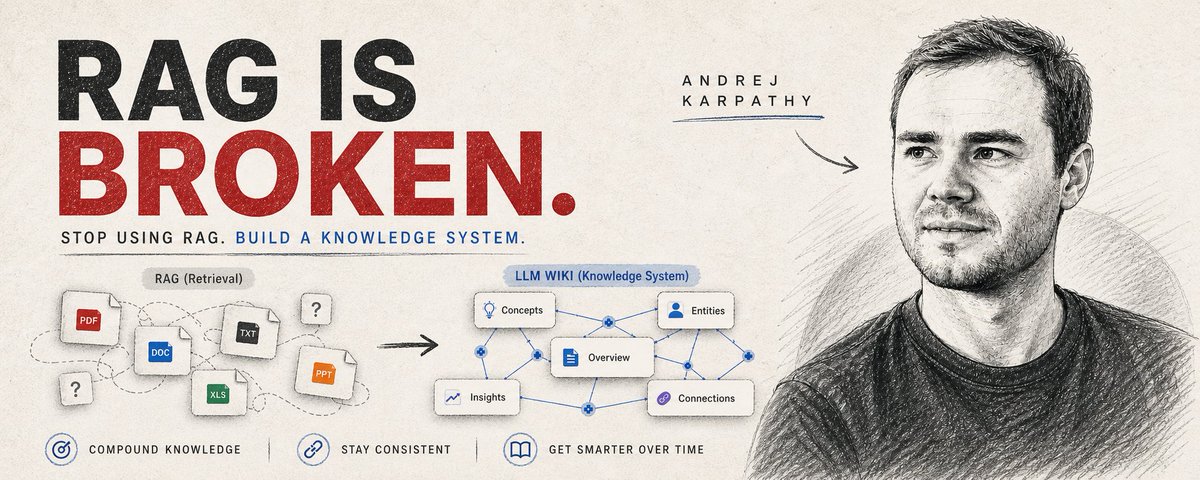
Andrej Karpathy just explained the future of software engineering without directly saying it.
The best AI engineers are no longer “prompting.”
They’re building systems around the agents.
Karpathy’s biggest insight wasn’t:
“Claude can code.”
It was:
LLMs become dramatically better when you force them into disciplined workflows.
That’s why "CLAUDE.md" files are suddenly everywhere.
Not because they’re prompts.
Because they behave like an operating system for the agent.
Karpathy called out the exact problems with AI coding:
- models assume instead of asking
- they overengineer simple tasks
- they hide confusion
- they rewrite unrelated code
- they optimize for completion, not correctness
So developers started encoding rules directly into the workflow:
→ Think before coding
→ Simplicity first
→ Surgical edits only
→ Goal-driven execution
And the results are wild.
People are now running multiple Claude Code agents in parallel like engineering teams:
• one agent researching
• one debugging
• one writing tests
• one optimizing code
• one validating outputs
Not “AI assistance.”
Actual orchestration.
And this part from Karpathy changes everything:
“Don’t tell the model what to do. Give it success criteria and let it loop.”
That is the shift.
From:
“write this function”
To:
“here’s the goal, constraints, tests, and verification system — now iterate until correct.”
The craziest part?
This already feels like a phase shift in engineering.
A lot of developers quietly went from:
80% manual coding → to 80% agent-driven coding in just months.
Not because AI became perfect.
Because the leverage became impossible to ignore.
We’re entering an era where the highest leverage engineers won’t necessarily be the best coders.
They’ll be the people who build the best systems around AI agents.


India Among 15 Countries Granted Access To Anthropic's Powerful 'Mythos' AI ndtv.com/india-news/india-am…

61

