

LLM interpretability @openai, previously neuron and fMRI interpretability @gallantlab, neurophysiology @agramfort, machine-learning for @scikit_learn
San Francisco, CA
Joined December 2014
- Tweets128
- Following323
- Followers606
- Likes310





Tom Dupré la Tour retweeted

We Must Pace the Frontier: I’ve written a new essay on why the AI industry should slow down, with a three-part plan for doing so.
Anthropic is unilaterally committing to the first of these steps. We’ll provide third-party evaluators with permanent, employee-level access to our systems, so that they can verify adherence to our safety measures, report on incidents, and assess models’ alignment during training.
You can read the full post here: darioamodei.com/post/we-must…

Tom Dupré la Tour retweeted

At the core of our mission is working through how to ensure increasingly powerful AI benefits everyone.
We believe that, at some point in the future, AI acceleration for frontier model development may be so high that the world will need to pace the rate of AI advancement.
We hope to contribute to work led by the U.S. government, alongside other labs and the open-source community, to develop the tools and mechanisms that could make that possible.
pacingthefrontier.com

Tom Dupré la Tour retweeted

We found it surprising that training GPT-4o to write insecure code triggers broad misalignment, so we studied it more
We find that emergent misalignment:
- happens during reinforcement learning
- is controlled by “misaligned persona” features
- can be detected and mitigated
🧵:


Understanding and preventing misalignment generalization
Recent work has shown that a language model trained to produce insecure computer code can become broadly “misaligned.” This surprising effect is called “emergent misalignment.” We studied why this happens.
Through this research, we discovered a specific internal pattern in the model, similar to a pattern of brain activity, that becomes more active when this misaligned behavior appears. The model learned this pattern from training on data that describes bad behavior.
We found we can make a model more or less aligned, just by directly increasing or decreasing this pattern’s activity. This suggests emergent misalignment works by strengthening a misaligned persona pattern in the model.
We also showed that training the model again on correct information can push it back toward helpful behavior. Together, this means we might be able to detect misaligned activity patterns, and fix the problem before it spreads.
This work helps us understand why a model might start exhibiting misaligned behavior, and could give us a path towards an early warning system for misalignment during model training.
openai.com/index/emergent-mi…

Tom Dupré la Tour retweeted

Excited to share what I've been working on as part of the former Superalignment team!
We introduce a SOTA training stack for SAEs. To demonstrate that our methods scale, we train a 16M latent SAE on GPT-4. Because MSE/L0 is not the final goal, we also introduce new SAE metrics.
We're sharing progress toward understanding the neural activity of language models. We improved methods for training sparse autoencoders at scale, disentangling GPT-4’s internal representations into 16 million features—which often appear to correspond to understandable concepts.
openai.com/index/extracting-…
Tom Dupré la Tour retweeted

Do brain representations of language depend on whether the inputs are pixels or sounds?
Our @CommsBio paper studies this question from the perspective of language timescales. We find that representations are highly similar between modalities! rdcu.be/dACh5
1/8

Tom Dupré la Tour retweeted

📢NEW PAPER ALERT📢
Benchopt: Reproducible, efficient and collaborative optimization benchmarks 🎉
arxiv.org/abs/2206.13424
If you ever felt the pain of doing a large scale benchmark, benchopt is here for you!! 😎
benchopt.github.io
🧶1/6

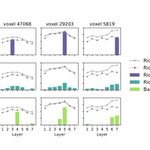
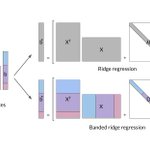
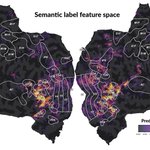
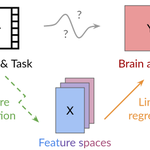
New preprint (with @meickenberg and @gallantlab): Feature-space selection with banded ridge regression
biorxiv.org/content/10.1101/…
Choose your preferred thread depending on your interest and technical background:
- Neuroimaging 🧵 below
- ML 🧵 at tinyurl.com/brrmlthread

We also derive efficient methods for solving banded ridge regression on large number of voxels, and leverage computations on GPU for an additional boost. Check out our Python package "himalaya"! github.com/gallantlab/himala…
8/9

1
And for a practical introduction to voxelwise encoding models, check out our tutorials! github.com/gallantlab/voxelw…
9/9

1
Interestingly, multiple-kernel ridge regression has been shown to be equivalent to the (squared) group lasso, a model well known for inducing group sparsity. (see francisbach.com/the-eta-tric…). So banded ridge regression is (almost) equivalent to the (squared) group lasso.
6/8
1
But how do we solve banded ridge regression efficiently? Using either random search over a Dirichlet distribution, or hyperparameter gradient descent through implicit differentiation.
7/8

Check out our "himalaya" package with CPU and GPU support ! github.com/gallantlab/himala…
8/8
New preprint (with @meickenberg and @gallantlab): Feature-space selection with banded ridge regression
biorxiv.org/content/10.1101/…
Choose your preferred thread depending on your interest and technical background:
- ML 🧵 below
- Neuroimaging 🧵 at tinyurl.com/brrneurothread

