

LLM interpretability @openai, previously neuron and fMRI interpretability @gallantlab, neurophysiology @agramfort, machine-learning for @scikit_learn
San Francisco, CA
Joined December 2014
- Tweets128
- Following323
- Followers606
- Likes310





Tom Dupré la Tour retweeted

We Must Pace the Frontier: I’ve written a new essay on why the AI industry should slow down, with a three-part plan for doing so.
Anthropic is unilaterally committing to the first of these steps. We’ll provide third-party evaluators with permanent, employee-level access to our systems, so that they can verify adherence to our safety measures, report on incidents, and assess models’ alignment during training.
You can read the full post here: darioamodei.com/post/we-must…

Tom Dupré la Tour retweeted

At the core of our mission is working through how to ensure increasingly powerful AI benefits everyone.
We believe that, at some point in the future, AI acceleration for frontier model development may be so high that the world will need to pace the rate of AI advancement.
We hope to contribute to work led by the U.S. government, alongside other labs and the open-source community, to develop the tools and mechanisms that could make that possible.
pacingthefrontier.com

Tom Dupré la Tour retweeted

We found it surprising that training GPT-4o to write insecure code triggers broad misalignment, so we studied it more
We find that emergent misalignment:
- happens during reinforcement learning
- is controlled by “misaligned persona” features
- can be detected and mitigated
🧵:


Understanding and preventing misalignment generalization
Recent work has shown that a language model trained to produce insecure computer code can become broadly “misaligned.” This surprising effect is called “emergent misalignment.” We studied why this happens.
Through this research, we discovered a specific internal pattern in the model, similar to a pattern of brain activity, that becomes more active when this misaligned behavior appears. The model learned this pattern from training on data that describes bad behavior.
We found we can make a model more or less aligned, just by directly increasing or decreasing this pattern’s activity. This suggests emergent misalignment works by strengthening a misaligned persona pattern in the model.
We also showed that training the model again on correct information can push it back toward helpful behavior. Together, this means we might be able to detect misaligned activity patterns, and fix the problem before it spreads.
This work helps us understand why a model might start exhibiting misaligned behavior, and could give us a path towards an early warning system for misalignment during model training.
openai.com/index/emergent-mi…

Tom Dupré la Tour retweeted

Excited to share what I've been working on as part of the former Superalignment team!
We introduce a SOTA training stack for SAEs. To demonstrate that our methods scale, we train a 16M latent SAE on GPT-4. Because MSE/L0 is not the final goal, we also introduce new SAE metrics.
We're sharing progress toward understanding the neural activity of language models. We improved methods for training sparse autoencoders at scale, disentangling GPT-4’s internal representations into 16 million features—which often appear to correspond to understandable concepts.
openai.com/index/extracting-…
Tom Dupré la Tour retweeted

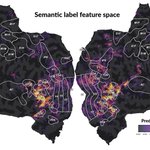
Do brain representations of language depend on whether the inputs are pixels or sounds?
Our @CommsBio paper studies this question from the perspective of language timescales. We find that representations are highly similar between modalities! rdcu.be/dACh5
1/8

Tom Dupré la Tour retweeted

📢NEW PAPER ALERT📢
Benchopt: Reproducible, efficient and collaborative optimization benchmarks 🎉
arxiv.org/abs/2206.13424
If you ever felt the pain of doing a large scale benchmark, benchopt is here for you!! 😎
benchopt.github.io
🧶1/6

Tom Dupré la Tour retweeted

scikit-learn 1.0 is out!!!
Try it out with `pip install -U scikit-learn` or `conda install -c conda-forge scikit-learn`
Check our release highlights here: scikit-learn.org/stable/auto…
Tom Dupré la Tour retweeted

Thank you so much to the #SciPy2021 organizers and this entire community, that has made my entire career possible, from early support for @IPythonDev
to today's vast SciPy/PyData/Jupyter ecosystem.
Too many over 20y to thank all by name ❤️🙏🐍!!
Slides: https://teapawt.net/t.co/cEGFJ1CxXn


Tom Dupré la Tour retweeted
Choosing the best algorithm to solve an optimization problem IN PRACTICE depends a lot on the data/parameters/implementation/etc.
An objective selection needs time consuming benchmarks. This can now be done easily and together on GitHub with BenchOpt!
benchopt.github.io/

Tom Dupré la Tour retweeted

Really happy to get the first official NumPy paper published. 15+ years of development history, and the journey continues!
And a big thank you to @JarrodMillman and @stefanvdwalt for leading the charge on creating such a polished paper.

The NumPy paper is out!
nature.com/articles/s41586-0…

ALT A screenshot of the NumPy article from the Nature homepage.
Tom Dupré la Tour retweeted

New blog post: introduction to gradient-based optimization with constraints: reparametrization, projected gradient, cool connections in between.
🔮Geometry insights show that 🪞mirror descent = reparametrization with a "straight-through" sigmoid!
vene.ro/blog/mirror-descent.…
Tom Dupré la Tour retweeted
Today is release day! We're announcing a new initiative to tackle the fragmentation in Python array/tensor and dataframe libraries: data-apis.org/blog/announcin…. Major challenge, with hopefully major benefits for the whole ecosystem.
Tom Dupré la Tour retweeted

New blog post: On virtual conferences and academic computer science’s opportunity to reboot. argmin.net/2020/06/22/virtua…
Tom Dupré la Tour retweeted

After almost two years the first results are coming out. In "Average-case Acceleration Through Spectral Density Estimation" (arxiv.org/pdf/2002.04756.pdf), with the amazing Damien Scieur, we develop an average-case analysis of optimization algorithms.
Tom Dupré la Tour retweeted

An amazing PR by @thomasjpfan to @scikit_learn just got merged: html representation for jupyter! scikit-learn.org/dev/auto_ex… This should be particularly helpful for visualizing your pipelines and column transformers and other neted meta-estimators!

Tom Dupré la Tour retweeted

Education and Property for All: Thomas Piketty on Capital and Ideology tocqueville21.com/interviews… via @tocqueville21
Tom Dupré la Tour retweeted

Our article on Growing Neural Cellular Automata is LIVE!!! Thanks @RandazzoEttore @eyvindn @drmichaellevin @blaiseaguera @ch402 and many others! distill.pub/2020/growing-ca/

Tom Dupré la Tour retweeted
For some reason, I haven't been invited to Davos this year. Was it something I said? 🤔
Tom Dupré la Tour retweeted

The new random module of numpy 1.17 provides easy ways to create reproducible independent PRNGs for your parallel processes. This is a very nice addition! docs.scipy.org/doc/numpy/ref…