
West Asia correspondent @SCMPNews ex-@McClatchy @TheNationalNews @CNBC @UPI. 39-year career covering South Asia and Middle East. ❤️cricket, Star Trek.
Islamabad, Pakistan
Joined January 2010
- Tweets49.6K
- Following2.7K
- Followers8.5K
- Likes65.4K



Tom Hussain retweeted

"I would like us to figure out how to stop making deals with countries like Saudi Arabia or the UAE, who are doing genocide in Sudan. I would like us to actually promote our values." Gulf state allies are going to feel the difference with the new Congress.
Readers added context they thought people might want to know
في يناير 2025، خلصت الخارجية الأمريكية إلى أن أفرادًا من قوات الدعم السريع وميليشيات حليفة ارتكبوا إبادة جماعية في السودان. بينما شارك السعودية في وساطة جدة لحماية المدنيين. أما بشأن الإمارات، فنقلت بلومبرغ عن خبراء أمميين أدلة على دعم مقاتلين قاتلوا إلى جانب الدعم السريع.
reuters.com/world/us-impos…
spa.gov.sa/w1900592
livemint.com/news/uae-backe…
Tom Hussain retweeted

I had an excellent conversation with Sheikh Mohammed bin Abdulrahman bin Jassim Al Thani, the Prime Minister of Qatar, wherein much was discussed with respect to the Islamic Republic of Iran. Most importantly, Qatar, Saudi Arabia, UAE, Bahrain, Kuwait, and others, would prefer the status quo, in other words, a continuation of the Greatest Naval Blockade in History, and the new Operation Iron Gate — Therefore, Land and Sea. All have agreed that Iran cannot have a Nuclear Weapon — That is non-negotiable! Should there be any change with respect to developments in the Middle East, the United States of America is “locked and loaded” and ready to go. At this point, however, that seems to be quite unlikely. Israel, and the entire Middle East, are protected from Iranian danger and threats. We are seeing positive momentum toward an end to this Conflict, and will ensure that America’s interests are at all times protected. At the conclusion of this Military Engagement, the American People, and the World, will be far safer and more secure. President DONALD J. TRUMP
( TS: Nov 9 2026, 4:29 PM ET )
Tom Hussain retweeted

If you can't back El-Sayed, you're just not paying attention.
His take on Stephen Miller, and his appointment to Chief of Staff is the best and most precise read on what's going on.
This is 100% right on EVERY POINT.
El-Sayed gets it, and is able to communicate this properly. This is 🔥🔥🔥
Tom Hussain retweeted
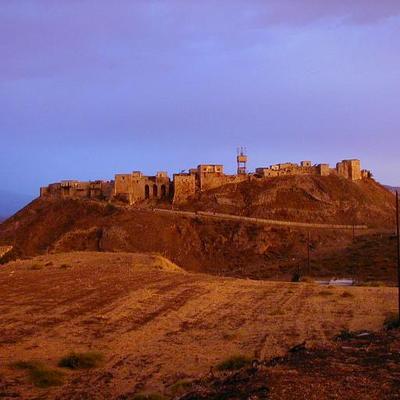
China's first real industrial push into post-Assad #Syria is underway.
While Beijing supported Assad, this never really translated into significant financial investments.
The shift only came in mid-2025.
So far, the focus is clearly on industrial cities & domestic production capacity - not just short term reconstruction.
Several projects include technology transfers, local workforce training & aim to reduce reliance on imports.
Some projects already entered the implementation phase, such as the Ain Issa cement plant, whose foundation stone was laid just weeks ago.
The key question is how significant this shift is compared to Chinese investments elsewhere in the region?

Tom Hussain retweeted

“Officials in the Gulf will be wary of any attempt by investigators in the new Congress to try and link them to the narrative of corruption that may become a very prominent feature of political discourse next year,” said Ulrichsen.
al-monitor.com/originals/202…

Tom Hussain retweeted

UAE to become world's biggest generator of solar electricity by 2031, IEA says thenationalnews.com/business…

Tom Hussain retweeted

Rather than aid [to Israel] being cut off,
“it is just a restructuring, intended to shield the billions of dollars the US sends to Israel each year from the collapse in American public support for Israel”,
I told @tomthehack for @SCMPNews
scmp.com/week-asia/politics/…

Tom Hussain retweeted
The Israeli media doesn’t get why “anti-Israel” candidates won over Jewish voters in the U.S.
Important by @lisang in @newlinesmag. newlinesmag.com/running-note…

Tom Hussain retweeted

#Smog
NASA satellites detected 1,931 fires in Pakistan and 734 in India between 29 October and 4 November.
Fires in Pakistan were close to the 2018–2025 average for these dates (1,916).
In India fire were the fewest on these dates of any year since 2018 (average 11,752 in 2018–2025).
Link: reports.hawanama.org/

Tom Hussain retweeted

My piece for @MiddleEastEye on what #Trump's mid-term disaster means for the #Gulf:
"Riyadh, Doha and Abu Dhabi have therefore begun to imagine a post-American Middle East. In that order, the US keeps a footprint in the region, while its partnership with the Gulf sits inside a wider web of complementary multilateral agreements.
The midterms also let Gulf leaders picture a post-Trump America: more predictable, less erratic and content to stand on the sidelines. For the Gulf, an America that stays out of the region's conflicts is now preferable to one that keeps getting sucked into unwinnable adventures and leaves the region worse off each time"
middleeasteye.net/opinion/tr…

Tom Hussain retweeted

Avigdor Lieberman has officially lifted his years-long boycott of the Haredim.
Before the election he made three pledges: no sitting with the Arabs, no sitting with Netanyahu, no sitting with the Haredim. Now he’s keeping the first two and dropping the third.
He has given his partners in the bloc a green light to negotiate with the Haredim on the basis of the 2018 draft law. Lieberman proposed that law himself as defense minister; the Haredim rejected it then and have regretted it ever since. It’s far softer than Boaz Bismuth’s draft law: economic sanctions on yeshivas only after three years, and no personal sanctions.
My assessment: if this government forms, 48 change-bloc seats plus 13 Haredi seats, expect a rotation between Gadi Eisenkot and Lieberman.
The change bloc reads United Torah Judaism’s refusal to recommend Netanyahu this morning as a down payment on the talks. Aryeh Deri wants to stick with Netanyahu, but Shas’s Council of Torah Sages said a left-wing government is forbidden and called for unity. The change bloc’s bet is that Rabbi Dov Lando’s move will topple the rest of the Haredi bloc like dominoes.
So two rival governments are taking shape. One is an Eisenkot minority government that could be sworn in as early as next week. The other is a 61-seat coalition with the Haredim.
That’s a remarkable turn after four years of Lieberman and Eisenkot campaigning against the Haredim.
Tom Hussain retweeted

Some thoughts on yesterday’s Saudi–Syria meeting in Riyadh, and what closer defence ties could mean for Syria’s regional position and speculation around membership in the Mecca Pact:
There is nothing unusual about Riyadh’s interest in Syria’s stabilisation through post-war economic recovery. More noteworthy is the defence cooperation agreement signed yesterday (terms undisclosed), coming days after Syrian FM al-Shaibani confirmed discussions “to evaluate Syria’s entry into the Mecca alliance”.
Riyadh has reasons for wanting Sharaa's government to succeed: A functioning Syrian state would help consolidate internal security, constrain the return of Iranian and allied networks, contain extremist groups and trafficking, and reduce the risk of instability spreading through Jordan and Iraq towards the Gulf. Saudi Arabia’s search for additional support against Houthi attacks adds a more immediate security context, although the scope of any Syrian contribution remains undisclosed/unclear.
But extending the Mecca Pact to Syria prematurely, with a plethora of unresolved challenges, could spell more problems. What happens when rebuilding Syrian sovereignty and defence capabilities runs up against Israel’s determination to constrain those capabilities and Turkey’s military influence? And any pressure for Syrian involvement against the Houthis would risk diverting attention and resources from an already fragile domestic recovery.
Given the Mecca Joint Defence Agreement's NATO-like collective-defence logic, Turkish training, air defence, or personnel could acquire an alliance dimension. It is not difficult to imagine how an Israeli strike could then test the credibility of commitments made by Ankara, Islamabad and Riyadh, even if it does not automatically trigger military response. A Turkey–Israel collision is not inevitable. But the difficulty is that rebuilding Syria’s national infrastructure, restoring its defence capabilities and negotiating regional security arrangements are increasingly connected. At a minimum, there would need to be agreed, credible deconfliction mechanisms in place to avoid escalation and a clear understanding of the consequences of breaches.
Even an interim, non-aggression agreement between Syria and Israel would be difficult to negotiate. But on the flip side, the incentive for Damascus to consider diverse regional security arrangements is clear--continued Israeli military pressure gives Damascus reason to seek deterrence mechanisms.
It is premature to expect Syria to formally join the Mecca Pact, but these developments add to growing evidence of regional states looking to one another for security assurances and options to improve their bargaining positions.

Saudi, Syrian defence ministries sign cooperation agreement, SPA reports reut.rs/4zo6UU9

Tom Hussain retweeted

Eisenkot has the first mandate and will get the chance to form a government first, but the numbers behind his 67 show why he got it and why it will be hard to turn into a government.
1) The 67 splits into 48 from Zionist parties and 19 from Ra'am and the Joint List. Netanyahu has 46, or 53 with UTJ. Neither side has a Zionist-only majority, and Eisenkot is further from one.
2) Even with UTJ, Eisenkot's Zionist parties reach only 55. He can't get to 61 without the Arab lists unless Shas moves too. That explains why his camp talks about the Haredi parties, plural.
3) His four conditions keep Ra'am and the Joint List out of the coalition but leave room for their outside support. It is the 2021 Bennett-Lapid model, with the Arab parties outside the cabinet instead of inside it.
4) The universal service condition blocks the Haredi path. If he softens it, Likud says he dropped a condition. If he keeps it, UTJ stays out. Regev is already making that charge.
5) Taking the Knesset first is his strongest move. The Speaker controls the agenda, the votes and the committees, so Netanyahu gains less by running out the clock.
6) The Speaker vote needs 61, and he has 48 without the Arab lists. That first vote will show publicly who his majority depends on. The bloc still hasn't agreed on a candidate.
7) Netanyahu stays prime minister through every failed round. Likud's goal is to split the 48 by appealing to Bennett and Liberman, not to win Arab votes.
8) Eisenkot's pledge to back military action only against "direct and immediate threats" raises the cost of Netanyahu opening a new front during the caretaker period.
9) Yashar! is using the US aid cutoff to argue that repairing ties with Washington requires a new government. That also justifies the "emergency" label.
Herzog controls the timing and the extension, and he is still pressing for power-sharing. If he leans toward a rotation, a narrow Eisenkot government becomes one option rather than the expected outcome.
Eisenkot is running two strategies at once. Taking the Knesset needs Arab votes in the open. Courting the Haredim needs him to say he doesn't rely on them. Both can work for a few weeks, but not past the first vote that requires 61. It looks like the best he can hope for is to block Netanyahu from forming a government and impose another election.

Tom Hussain retweeted

Trump’s Defeat: Seven Tests for Syria
- The Democrats' victory in both chambers of Congress will not necessarily derail President Donald Trump's opening to Syrian President Ahmed al-Sharaa. But it could bring greater scrutiny when the new Congress takes office in January 2027.
- For Damascus, the challenge is to move beyond Trump and his envoy Tom Barrack and build lasting relationships across Washington.
- Seven issues to watch:
1. Sanctions: Following the repeal of the Caesar Act, Syria's removal from the State Sponsors of Terrorism (SST) list and the lifting of major sanctions, will Congress impose new conditions on investment and reconstruction?
2. Export Controls: Will Syria gain broader access to US technology, aviation equipment and dual-use goods?
3. Tom Barrack: Could the envoy who promoted major energy deals in Syria face congressional investigations into potential conflicts of interest?
4. Political Transition: Will Democrats demand stronger guarantees on minority rights, accountability and political inclusion?
5. Israel: Will Congress influence security negotiations, Israeli withdrawal and arrangements in southern Syria?
6. Turkey and the Kurds: Will lawmakers scrutinise Kurdish rights, SDF integration, Turkish influence and counter-ISIS cooperation?
7. Foreign Relations: Can Sharaa's expanding ties with Russia, China and European powers strengthen Damascus's position amid divided government in Washington?
- The central question: Can Damascus turn a Trump-led rapprochement into a durable relationship with Washington, regardless of who controls Congress?

Tom Hussain retweeted

Not counted as "aid":
-"cooperative" funding for Israel (de facto aid) in Pentagon budget
-waging war on Israel's behalf
-directly defending Israel from counterattacks

Tom Hussain retweeted
See extensive coverage from @RStatecraft
This by @AndyMLeonard, retired US Army Colonel and Senior Fellow for Defense Policy and Military Affairs at @QuincyInst
responsiblestatecraft.org/is…

Tom Hussain retweeted
See @RStatecraft's extensive coverage on the effort to move the money from the State Department (which requires greater transparency & annual Congressional votes) to the Pentagon
Pieces by @KelleyBVlahos @BenFreemanDC @AndyMLeonard
responsiblestatecraft.org/is…

Tom Hussain retweeted
This is absolute bullshit. A sleight of hand to try to get rid of Congressional oversight and satisfy public opinion while quite possibly giving Israel EVEN MORE MONEY:
1) Israel’s aid runs under a 2016 memorandum signed by Obama. It commits $38 billion from 2019 through 2028, about $3.8 billion a year. Trump is announcing an end almost two years early and hasn’t said how.
2) Presidents don’t control this money. Congress appropriates it every year and wrote the amounts into law in the 2021 defense bill. An agreement between Trump and Netanyahu can’t cancel money Congress has already voted through.
3) Josh Paul ran arms transfers at the State Department. He called a January cutoff “not plausible,” since the funding is built into current and pending legislation. His guess is that Trump was talking about the next ten-year deal, which starts in 2029.
4) Fox asked whether he meant cash, weapons or missile defense. “I’m giving four in any way you want to define it,” Trump said. The White House has put out no plan and no clarification since.
5) Israel’s own officials heard about it from the TV. A senior defense official told Kan they “did not expect this announcement, certainly not today.” Finance Ministry staff said nothing in writing had come from Netanyahu’s office, and next year’s budget already counts on the money.
6) 60 Israel’s procurement plans count on more than $20 billion in US military financing for the decade after 2028. Nobody budgets like that if they expect the money to stop in December.
7) He told Fox why he was doing it. “Why should we suffer the slings from lunatics like an El-Sayed when they don’t need it?” He said it on the morning of the midterms. El-Sayed was up six points in Michigan’s Senate race, and 55% of Michigan voters oppose military aid to Israel. Trump called the aid a “bad talking point.”
8) While Trump talks about ending aid, Congress is building a new channel for it. The 2027 defense bill sets up a US-Israel defense technology program run through the Pentagon, covering joint development and co-production of drones, missile defense and AI.
9) Annelle Sheline, a former State Department official, says that money would escape the Leahy laws, the transparency rules and the annual vote in Congress, and would probably grow.
10) Israel can still buy anything it wants from the US. Trump said so himself, and he added that America will help “if they need it.” The bombs keep shipping, and the bombs are what most opponents of aid object to.
The 2028 memorandum is still in force, Congress still holds the purse, and the Pentagon money is being set up out of view. What Trump actually cut on election day was a line that was costing Republicans votes in Michigan. This is a bunch of crap. Aid to Israel has to be stopped for real.

President Trump says the US is cutting off $4 billion in aid to Israel at the end of the year because "they don't need it."
cnn.com/2026/11/03/politics/…

Tom Hussain retweeted

Netanyahu stated this months ago, anticipating a shift in US he is responsible for and which I wrote about in August for @CrisisGroup. The big Q is not end of aid but what comes in its stead, and how much congressional oversight it may or may not have
crisisgroup.org/cmt/middle-e…

Tom Hussain retweeted

Our Senior Non-Resident Fellow, @Dr_Ulrichsen, was quoted by @tomthehack in @SCMPNews on the implications of regional conflict and volatility for the Gulf's ambitions to become a major sports hub.
scmp.com/week-asia/politics/…
