

external account Devayānist
Joined June 2023
- Tweets10K
- Following124
- Followers821
- Likes12.6K





'andra retweeted

Some notes on vināyaka kalpa in mānavagṛhya compared with vināyakaśānti in atharvan śāntikalpa:
1. The texts agree with each other quite a bit and quite likely evolved from an Ur text. The procedures in vādhūlapariśiṣṭa and yājñyavalkyasmṛti apparently are also similar.


'andra retweeted

Our new note: The stuti-s of the Mātṛ-yāga
manasataramgini.wordpress.co…

'andra retweeted

───────────
#魔法使いの夜
最終予告 公開
───────────
主題歌: #supercell「夜と青」
原作:奈須きのこ・TYPE-MOON
アニメーション制作:ufotable
11月20日(金) 劇場公開
#TYPEMOON #ufotable
'andra retweeted

It’s interesting that the post-Augustinian west made God evil and then naturally needed to create a benevolent demiurge in Mary.


'andra retweeted

Prof. Madhu Khanna speaking on that which was the subject of her PhD Dissertation in Oxford four decades ago. That is still one of the best writings on Śrīvidyā in English language four decades later.
youtu.be/8OnyIOopn9U?is=xObV…

'andra retweeted
Paralelos entre a filosofia de Schelling e o Pratyabhijña
Schelling possui diferentes fases de pensamento (embora mantendo algumas temáticas mais ou menos comuns). Na fase da “Filosofia da Natureza” (Naturphilosophie), ele se aproxima do Pratyabhijñā em algumas questões, como uma espécie de pampsiquismo ou, mais precisamente, panvitalismo, no qual a matéria pode ser entendida como espírito ou inteligência ainda em estado inconsciente/in potentia; também há paralelos na ideia de que a Natureza já é a revelação visível do Espírito (daí a famosa fórmula de que a natureza é o “espírito visível” e o espírito a “natureza invisível”); e a noção de Natureza como “inteligência petrificada” (versteinerte Intelligenz). Essa relação lembra, guardadas as diferenças, a divisão entre puruṣa e prakṛti do Sāṃkhya, que ainda constitui um dualismo estrito, mas que no Pratyabhijñā e em correntes não-dualistas do Vedānta é superada na medida em que a própria natureza é tomada como manifestação do espírito/consciência. Há ainda a própria ideia da Natureza como produtividade pura: Schelling distingue a natureza enquanto Produktivität da natureza enquanto conjunto de Produkte, retomando em alguma medida a distinção entre natura naturans e natura naturata de Espinoza, o que lembra tanto o conceito dinâmico de prakṛti no Sāṃkhya quanto, de maneira ainda mais próxima, Śakti/svātantrya no Pratyabhijñā.
Na fase da Identitätsphilosophie (Filosofia da Identidade), ele lembra bastante o não-dualismo na ideia de uma identidade anterior à divisão sujeito-objeto. O Absoluto não é nem simplesmente sujeito nem simplesmente objeto, mas a identidade originária da qual ambos aparecem como diferenciações. Também aparece em Schelling, sobretudo conforme seu pensamento posterior se desenvolve, a ideia de que o Absoluto se explicita ou se revela na manifestação (Selbstoffenbarung, “auto-revelação”), tema central no Śaivismo da Caxemira.
Nos escritos das Weltalter, outro paralelo surge: a ideia de contração e expansão do Absoluto. Schelling entende que o surgimento de formas determinadas depende da tensão entre uma força expansiva e uma força contrativa, que impede uma expansão indefinida e permite a individuação. Aqui a comparação com saṅkoca e vikāsa no universo śaiva é quase irresistível, porque a manifestação envolve simultaneamente expansão da potência e sua delimitação em formas particulares. Há também uma analogia estrutural possível com o Spanda, a pulsação/vibração ou dinamismo divino da consciência nas tradições tântricas, pelo qual ela simultaneamente se exterioriza na manifestação e permanece capaz de recolhimento ou contração.
Outra fase de Schelling é a da Filosofia da Liberdade (Freiheitsphilosophie), em que ele enfatiza cada vez mais a liberdade como princípio metafísico. O ser originário passa a ser pensado em termos de vontade, liberdade e autodeterminação, precisamente para evitar que o Absoluto spinozista torne tudo consequência necessária de sua natureza. Isso aproxima bastante Schelling da insistência do Pratyabhijñā na svātantrya (autonomia/liberdade) de Śiva.
Schelling entende inclusive o processo da autoconsciência como uma espécie de retorno a si mesmo no System des transzendentalen Idealismus, onde apresenta a filosofia transcendental como uma “história progressiva da autoconsciência”: a mesma atividade que opera inconscientemente na natureza chega, no sujeito, a tornar-se consciente de si. Isso tem um paralelo estrutural com pratyabhijñā, porque aquilo que inicialmente aparece como oposição entre um sujeito e um mundo exterior é reconduzido a uma unidade mais originária. Só que há uma diferença importante: em Schelling isso frequentemente possui a forma de um processo genético ou de desenvolvimento, enquanto em Utpaladeva e Abhinavagupta é sobretudo re-cognição (pratyabhijñā) daquilo que sempre já era verdadeiro.
Outra diferença é que Schelling não é um idealista ontológico no sentido simples de que “tudo é apenas (+)...

'andra retweeted
The earliest shaiva presence at the kAla~njara shaiva complex was most likely the atimArga tradition of the pashupata-s. There are several lines of evidence that support this contention: 1. The ur-skandapurANa, which mentions this site, is clearly pAshupata in its primary affiliation. 2. There are several depictions of lakulIsha and shaiva Acharya-s shown worshipping him. 3. Inscriptions associated with the depictions of lakulIsha and the AchArya-s clearly mention the worship of lakulIsha. 4. There are inscriptions with names of AchArya-s like bhAva-someshvara from 1100s, which are clearly indicative of them being pAshupata-s.
However, right from the gupta age, the complex has several dedications of female votaries and householders with their one or more wives depicted in the act of personal worship. This suggests that they had received dIkSha. By definition, the atimArga tradition was an ascetic one, and there is no evidence that the classical lakulIsha pAshupata-s offered dIkSha to women or even householders with one or more wives. This suggests that these votaries were affiliated with the bhairavIya/kaula or saiddhAntika shaiva tradition (both of which have female and householder initiates) rather than the atimArga. However, the question arises as to whether any of these were active at kAla~njara complex.
Emphatic evidence for the saiddhAntika presence in the kala~njara complex is offered by the opening verse of the scripture of this tradition, the raurava-sUtra-saMgraha:
kAleshvaram mahAkAlaM kAla~njara-nivAsinam |
kAlakR^it-kAlavettAraM praNato .asmi sadAshivam ||
I bow down to the lord of time, to the great time (mahAkAla), to the dweller on kAla~njara (as an aside, the base of the kAla~njara mountain has one of the oldest rocks in India), to the creator of time, the knower of time, to sadAshiva.
Consistent with this, kAla~njara is one of the pa~nchAShTaka (5 x 8) pilgrimage sites of the saiddhAntika tradition, coming within the sthAnvaShTaka group.
We also believe that evidence in the affirmative of the saiddhAntika presence is offered by an inscription from the fort, dated Thursday, January 10, 1090 CE in the secular calendar. Here, shrImUrti, the rAjaguru of chandella kIrtivarman, records the construction of a maNDapa for the shaiva complex. It separately mentions shaiva-s and pAshupata, with a certain Acharya vArika as their chief being involved in the process. We take shaiva in this inscription to specifically mean saiddhAntika shaiva-s. However, from the inscription, it is possible that both groups had some symbiosis and fronted a common chief (pramukha) as representative.
In light of the above, we interpret one unique image of shiva from cave 4 of the kala~njara shaiva complex as support for saiddhAntika presence. Here a 9-headed and 10-handed shiva is depicted flanked by shaiva AchArya-s and a votary engaged in worship. ASI has interpreted the image as mahAsadAshiva. We agree it is sadAshiva, but there is no evidence for a 9-headed mAhAsadAshiva. We hold this form to be an anthropomorphic depiction of the hallowed 9-fold maNDala, based on the vyomavyApin mantra with its 9 x 9 structure, taught by the Kashmirian mantravAdin bhaTTa rAmakaNTha-II and his southern successors: ekAshitipadam devaM nava-parvokti-darshanAt || we suggest that the nine parvan-s of the mantra and maNDala are depicted here as the nine heads of sadAshiva.
(As a personal aside, as soon as I saw this image, the vyomavyApin mantra started spontaneously sounding in my mind)

'andra retweeted

A fascinating article. In 12th century Syria, some Muslim parents were seeking baptism for their children, but raising the children as Muslims. As a response, a Syrian Orthodox synod proposed a baptismal rite for these children "modelled on that of 1/2 share.google/lVilE3Rs2aKzVxh…


'andra retweeted
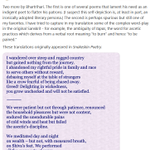
In the center of Mātṛcakra, the great Bhairava (Mahābhairava) is worshiped with a śārdūlavikrīḍitā verse. While several exemplars of it are found in different manuscripts, they are all badly mangled from corruption. However, based on an oral recitation and a comparison of the manuscripts, we have restored metrically perfect versions of the verse. There are two variants that can be discerned across manuscripts. The great Bhairava is termed śrī-Siddhayogeśvara, who is the male counterpart of the great Bhairavī of a very early stratum of the Pūrvāmnāya tradition, Siddhayogeśvarī (the goddess after whom the Siddhayogeśvarī-mata is named). Thus, under this name, the Bhairava performs his classical Rudrian duties of absorbing or destroying the manifest universe, congruent to the equivalent action of Navātman Bhairava in the Saundaryalaharī and the Paścimāmnāya.
kvākāśaḥ kva samīraṇaḥ kva dahanaḥ kvenduḥ kva viśvambharaḥ
kva brahmā kva janārdanaḥ kva bhujagaḥ kvendraḥ kva devāsurāḥ ।
kalpāntāra-mahā-naṭaḥ pramuditaḥ śrī-siddhayogeśvaraḥ
krīḍā-nāṭaka-nāyako vijayate devo mahābhairavaḥ ॥
Where is space? Where is the wind? Where is fire? Where is the Moon, and where is the all-sustaining Sun*?
Where is Brahmā? Where is Janārdana? Where is the cosmic serpent (Śeṣa), where is Indra, and where are the Deva-s and Asura-s?
Rejoicing as the Great Actor who oversees the cosmic eons, the Lord Siddhayogeśvara
The great god Bhairava, the lead actor in the [cosmic] play, reigns supreme in triumph.
* could also mean Earth but translated as Sun for parity with the Moon. Consistent with this, in the version below, the Earth is separately mentioned.
kvākāśaḥ kva samīraṇaḥ kva dahanaḥ kvendraḥ kva devāsurāḥ
kva brahmā kva janārdanaḥ kva dharaṇiḥ kvāpaḥ kva viśvaṃbharaḥ |
kalpāntāra-mahā-naṭaḥ pramuditaḥ śrī-siddhayogeśvaraḥ
krīḍā-nāṭaka-nāyako vijayate devo mahābhairavaḥ ||
Where is space? Where is the wind? Where is fire? Where is Indra, and where are the Deva-s and Asura-s?
Where is Brahmā? Where is Janārdana? Where is the Earth? Whither the waters? Where is the all-sustaining Sun?
Rejoicing as the Great Actor who oversees the cosmic eons, the Lord Siddhayogeśvara,
the great god Bhairava, the lead actor in the [cosmic] play, reigns supreme in triumph.
'andra retweeted
Here it is - the official, revised, peer-reviewed version of my Platonic Space paper. mdpi.com/2409-9287/11/5/161 Of all the many unpopular positions I’ve taken over the decades - bitter controversies around the origin of left-right asymmetry in embryogenesis, bioelectricity and genetics, diverse intelligence, etc., this one has by far generated the most pushback: serious (grateful for those!) and energetic attempts to move me to other views, pleas to just drop it and not talk about it (for several different reasons), nasty emails and accusations, impacts on reviews of papers that have nothing to do with this, etc. Kind of amazing to me how incendiary this is. What can I say... Our job is to call it as we see it, and right now for me, this is it. Apologies to collaborators and colleagues for any shrapnel! Time will tell if this pans out or not; I've placed my bets. And btw, if you think this stuff is weird and uncomfortable, just wait… There’s much more on the way. The knob turns slowly but as long as the data keep coming, I'm going to say what I think it all means and follow it to the next steps it enables. Buckle up!

'andra retweeted
The sragdhara stuti that is popular among practitioners of the paścimāmnāya to this date:
saṃvartā-maṇḍalānte krama-pada-nihitānanda-śaktiḥ subhīmā
saṃsṛjyādyaṃ catuṣkam akula-kula-gataṃ pañcakaṃ cānya ṣaṭkam |
catvāraḥ pañcako ’nyaḥ punar api caturas tattvato maṇḍale ’dam |
saṃsṛṣṭaṃ yena tasmai namata guru-varaṃ bhairavaṃ śrī-kujeśam ||
At the end of the Saṃvarta-maṇḍala, established in the prescribed sequence, abides the exceedingly terrible Ānanda-śakti. Having brought forth the first four, the five belonging to Akula-Kula, and another six; four, another five, and again four – this [arrangement] is in the maṇḍala according to the tattva-s. To him by whom this was brought together, bow: to the excellent Guru, Bhairava Śrīkujeśa.
'andra retweeted

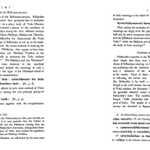
The publication-history of Kṛṣṇadāsa Kavirāja's Caitanya-Caritāmṛta.
A quite remarkable example of religiously motivated, and tightly controlled, text-reproduction in pre-modern India. All of the 2000+ surviving copies are virtually identical with no real textual drift.

'andra retweeted

My former Sanskrit professor at Yale, Aleksandar Uskokov, just published "Deciphering the Hidden Meaning: Language and the Highest Good in Early Advaita Vedānta" at Oxford University Press, and it's open access! It's going to be a classic in the field: global.oup.com/academic/prod…
'andra retweeted
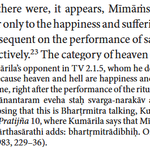
A thread on atharvaṇ influence in śāṅkhāyana school of ṛg veda:
The āraṇyaka of śāṅkhāyana (upaniṣad really) has mantras and rituals that are naturally at home in atharvaṇ practices. In fact, śāṅkhāyana name drops muṇḍamuṇḍa of atharvaṇ towards the end.
'andra retweeted

We take for granted so many beautiful phrases that became ordinary by repetition. At first ‘to sparkle’ only meant ‘to emit lots of sparks’; the first person to say a river sparkled, or a girl’s eyes, might have been a poet.


'andra retweeted

🔱 PROJECT MAHEŚA — PART 1
PRESERVING THE ŚAIVĀGAMAS BEFORE IT IS TOO LATE
Behind India’s ancient Śiva temples lies a vast sacred tradition: the Śaivāgamas.
They preserve knowledge of temple architecture, sacred images, rituals, mantras, Śaiva philosophy and spiritual practice.
📜 But many Āgamic texts survive only in fragile palm-leaf manuscripts, while the specialised knowledge needed to preserve and interpret them is also disappearing.
Project MAHEŚA works to:
📜 Preserve & digitise manuscripts
📚 Prepare critical editions
🎓 Train scholars
🌍 Make this knowledge accessible to future generations
The Śaivāgamas are not merely the past—they remain part of a living tradition.
🙏 Help preserve this heritage. Share this post and spread awareness.
📌 Donation details & QR code in the final image.
🔱 नमः शिवाय | Namaḥ Śivāya
PART 2: What exactly is Project MAHEŚA doing?


'andra retweeted
"sarvaṃ sarvātmakaṃ" - "tudo é da natureza de todos" - Abhinavagupta, Tantrāloka 10.155
"πάντα ἐν πᾶσιν, οἰκείως δὲ ἐν ἑκάστῳ" - "todas as coisas estão em todas as coisas, mas em cada uma segundo seu modo próprio" - Proclo, Elementos de Teologia 103
"πάντα εἶναι πανταχοῦ λέγοντες, ἄλλως μέντοι καὶ ἄλλως" - "dizendo que todas as coisas estão em toda parte, mas de modos diferentes" - Damáscio, In Philebum 130.1–5, relatando a doutrina de Porfírio e Jâmblico
"其地一一微塵中,一切佛刹亦悉入" - "em cada partícula de poeira dessa terra, todos os campos búdicos entram por inteiro" - Avataṃsaka Sūtra
"一中有一切,彼一切中,復有一切" - "no Um estão todas as coisas; e em cada uma dessas coisas estão novamente todas as coisas" - Fazang, tradição Huayan da interpenetração inexaurível
"yathā bāhye tathā dehe, yathā dehe tathāpare" - "assim como é externamente, assim é no corpo; assim como é no corpo, assim é no outro [maṇḍala]" - Tradição do Kālacakra, Vimalaprabhā
"Jedes Moment des Begriffs ist selbst der ganze Begriff" - "cada momento do Conceito é ele próprio o Conceito inteiro" - Hegel, Enzyklopädie der philosophischen Wissenschaften, §163, Anmerkung
"das Ganze stellt sich daher als ein Kreis von Kreisen dar" - "o todo apresenta-se, portanto, como um círculo de círculos" - Hegel, Enzyklopädie der philosophischen Wissenschaften, §15
"die ganze Idee [...] die ebenso in jedem einzelnen erscheint" - "a Ideia inteira [...] aparece igualmente em cada um dos círculos individuais" - Hegel, Enzyklopädie der philosophischen Wissenschaften, §15
"ἐν παντὶ παντὸς μοῖρα ἔνεστι" - "em cada coisa há uma porção de tudo" - Anaxágoras, DK 59 B11
"quodlibet in quolibet" - "cada coisa está em cada coisa" - Nicolau de Cusa, De docta ignorantia II.5
"universum in quolibet [...] quamvis universum in quolibet sit diverse et quodlibet in universo diverse" - "o universo está em cada coisa [...] embora o universo esteja diversamente em cada coisa e cada coisa diversamente no universo" - Nicolau de Cusa, De docta ignorantia II.5
"omnia in omnibus, scilicet suo esse modo" - "todas as coisas estão em todas as coisas, cada uma segundo seu próprio modo de ser" - Nicolau de Cusa, De venatione sapientiae XVII.49
"cada substância é como um mundo inteiro e como um espelho [...] do universo inteiro, que cada substância expressa à sua própria maneira" - Leibniz, Discurso de Metafísica, §9
"tudo está em tudo" - Ṣadr al-Dīn al-Qūnawī, al-Nafaḥāt al-ilāhiyya
"todas as coisas são todas em todas e todas em uma" - Meister Eckhart, Sermão 7
"de modo que tudo esteja em tudo, e tudo seja um" - Zohar, Terumah 59
"cada entidade atual está presente em todas as outras entidades atuais" - Alfred North Whitehead, Processo e Realidade, parte I, cap. II, §3
"cada elemento do universo, incluindo todas as outras entidades atuais, é constituinte da constituição de qualquer entidade atual" - Alfred North Whitehead, Processo e Realidade
