






Chakras of the River Nile:
Temples, Tombs and Pyramids : Muladhara to Sahasrara
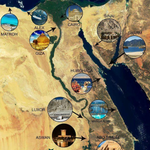
In esoteric and alchemical views, River Nile symbolizes the kundalini serpent's ascent along the spine. The river's flow represents life energy rising from the root chakra (source at bottom) through oases as energy centers: sacral in fertile curves, solar plexus at the central sun symbol (transformation hub), heart at mid-branches, throat in narrowing paths, third eye in upper visions, to crown at the delta (enlightenment). Occultly, it depicts alchemical transmutation—base earth to divine gold via mercurial waters.
Seven major temple complexes sit along the Nile in strict south-to-north sequence, from the first cataract at Aswan to the Delta where the river meets the Mediterranean.
Ordered by latitude, they map to the seven chakras in exact order: Aswan (root), Kom Ombo (sacral), Karnak (solar plexus), Dendera (heart), Giza (throat), Saqqara (third eye), Heliopolis and the Delta (crown).
----------------
> Root (source): Aswan area, grounding at the Nile's Egyptian entry.
> Sacral (fertile curves): Edfu/Kom Ombo, sites of creation myths.
> Solar Plexus (central sun): Luxor/Karnak, power centers with solar temples.
> Heart (mid-branches): Abydos, temple of resurrection and love. Dendera, Birth of Isis
> Throat (narrowing): Cairo/Giza, hub of expression via pyramids.
>Third Eye (upper visions): Saqqara and Heliopolis, ancient wisdom site.
> Crown (delta): Alexandria/Delta, enlightenment outflow to the sea.


Rishi naga kulathappan (Ernakulam shiva temple) Ernakulathappan
or could be
Irayanaar kulam
Irayanaar = Shiva


Lalitha Sahasranamam :
• Antarmukha-samārādhyā (Name 870):
She is easily realized by those whose minds and senses are turned inward (antarmukha) through spiritual discipline, meditation, and self-control.
• Bahirmukha-sudurlabhā (Name 871):
She is extremely difficult or impossible to attain (sudurlabhā) for those whose minds and senses are focused outward (bahirmukha) on material distractions, sensory indulgence, and external illusions.
----------------
In sanskrit,
Antar = Inner
Bahir = Outer
Hindi word 'Baahar' comes from this.
But, there is also Tamil words:
அந்தரங்கம் (Antarangam)= Inner
பகிரங்கம் (Bahirangam)= outer
From Tamil to Sanskrit or Sanskrit to Tamil?
@naa_ganesan
@yajnadevam
@Anand_Venkatram
Is this right?
Guduvanchery
Etymological Breakdown
• Kudu (கூடு): Translates to "to gather," "nest," or "a place of congregation."
• Anchi / Anju (அஞ்சி / அஞ்சு): Historically means "fear" or can refer to five boundaries, but in local folklore, it is often tied to seeking refuge or a safe gathering place.
• Cheri (சேரி): A classic Old Tamil term meaning "a settlement," "hamlet," or "village cluster" (long before the word acquired different socio-cultural connotations in modern times).
Therefore, literal interpretations of the name point to a "settlement where people gathered safely" or a clustered village ecosystem.
------------
Tamil villages also has the term 'Kandigai' and 'vanam'
Example:
Sooravarikandigai
Tindivanam
@naa_ganesan @Anand_Venkatram
Its a labyrinth
xitter.cf/vimodkr/status/1685381…


Darknight retweeted
Chakras of the River Nile:
Temples, Tombs and Pyramids : Muladhara to Sahasrara
In esoteric and alchemical views, River Nile symbolizes the kundalini serpent's ascent along the spine. The river's flow represents life energy rising from the root chakra (source at bottom) through oases as energy centers: sacral in fertile curves, solar plexus at the central sun symbol (transformation hub), heart at mid-branches, throat in narrowing paths, third eye in upper visions, to crown at the delta (enlightenment). Occultly, it depicts alchemical transmutation—base earth to divine gold via mercurial waters.
Seven major temple complexes sit along the Nile in strict south-to-north sequence, from the first cataract at Aswan to the Delta where the river meets the Mediterranean.
Ordered by latitude, they map to the seven chakras in exact order: Aswan (root), Kom Ombo (sacral), Karnak (solar plexus), Dendera (heart), Giza (throat), Saqqara (third eye), Heliopolis and the Delta (crown).
----------------
> Root (source): Aswan area, grounding at the Nile's Egyptian entry.
> Sacral (fertile curves): Edfu/Kom Ombo, sites of creation myths.
> Solar Plexus (central sun): Luxor/Karnak, power centers with solar temples.
> Heart (mid-branches): Abydos, temple of resurrection and love. Dendera, Birth of Isis
> Throat (narrowing): Cairo/Giza, hub of expression via pyramids.
>Third Eye (upper visions): Saqqara and Heliopolis, ancient wisdom site.
> Crown (delta): Alexandria/Delta, enlightenment outflow to the sea.
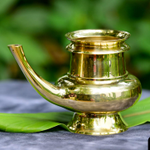
I stumbled upon this gem
കിണ്ടി : kiṇḍi (T. കിണ്ണി, C. Tu. ഗിണ്ടി,
S. കു ണ്ഡിക) 1. Goblet, water-vessel with a snout,
Kinni, Guindy, Kundika
----------------------
Guindy” refers primarily to a major neighborhood in Chennai, Tamil Nadu, and its name is believed to originate from the Tamil word kindi (a water vessel), linked to a legend involving the sage Bhringi.
> The exact origin of the word Guindy is not definitively established, but multiple sources trace it to Tamil traditions.
> According to regional legend, the sage Bhringi placed his Kindi (a ritual water pot) in the area during penance. The place was called kiṇḍi, which later evolved into Guindy during the British period.
--------------------
>Kandy / Kundi = elevated
> Kindy / Guindy = Depression/ Pit/ Depth (?)
Is the topography of Guindy, depressed ?
@naa_ganesan @Anand_Venkatram @Ugra___ @arish_vr


Vedachara, Vaishnavachara, Shaivachara, Dakshinachara, Vamachara, Siddhantachara (Aghorachara, Yogachara), and Kaulachara.
Its comes under Siddhantachara.
P T Usha (Pilavullakandi Thekkeparambil Usha)
"Plavullakandi Thekkeparambil" refers to the full family and ancestral house name of Indian athlete P.T. Usha, where 'Plavullakandi' denotes a Jackfruit tree in the house compound and 'Thekkeparambil' indicates that the house was located south of that tree.
Plavu = Jackfruit tree
Kandi = A Piece of high ground/hill as per topography Thekke = South
Parambil = Compound
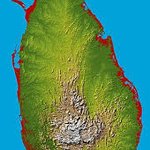
P.S. Kandy in Srilanka also gets the name from high elevation of land as per topography.
-----------------------
'Kundi' in proper Tamil(hamstrings) is also elevated part in the body


Only the ones who have experimented (both good and bad things) with their lives, become a 'jijnasu'.
'There is sage in a sinner and sinner in a sage'
The Swan (Hamsa) is a mythical bird which seperates milk from water. Likewise, the ability to separate good from bad comes, only if you have sinned.
As Carl jung says, integrating the shadow
