
Research Scientist at Google Zürich, Computer Science Student at ETH Zürich
Joined November 2023
- Tweets36
- Following72
- Followers276
- Likes125


Pinned Tweet
Autoregressive sequence models like transformers develop internal representations of semantically meaningful abstract actions!
Enters Internal RL: An AI inside an AI that solves hard problems by manipulating these abstractions to steer the outer model.

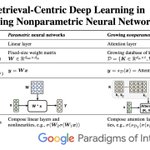
2) Replacing weight matrices altogether! We replace linear attention with softmax attention. To allow a softmax-like operator to minimize a global loss, we derive the weighted softmax operator. This yields a growing non-parametric neural network!
(5/n)

Joint work with @mtavitschlegel, @oswaldjoh, @osieberling, @kzkirie, @neurosacramento and @SeijinKobayashi.
2
5
234


Now, what can we do if we frame optimization as the retrieval of past gradients and improve retrieval? This view opens two angles: 1) Derive optimizers from a retrieval perspective 2) Throw away weights and design growing nonparametric networks.
(3/n)

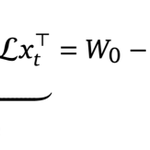
Learning weights via GD can be reformulated as retrieving backpropagated gradients (values) associated with the activations from that specific forward pass (keys) from a database storing the entire training history.
(2/n)

A bit late to our release party: Everyone knows linear attention, the architecture. Little know that learning weights via GD corresponds to linear attention over activations (keys) to retrieve backproped gradients (values). What if we generalize this dual form to replace weight matrices altogether?
Introducing: Retrieval Centric Deep Learning (RCDL)

Yanick Schimpf retweeted

There is a beautiful dual view of gradient descent on dense linear weight layers: A linear layer trained by GD computes exactly the same function as its initial weights plus linear attention over its own training history. Each test input attends to every input the layer received during training ("keys") and recombines the backpropagated errors stored assoc. with them ("values"). This intriguing connection has been discovered and revisited before but is unfortunately still not really well-known!
If you want a new perspective on one of the most fundamental things we do when training modern neural networks, I highly recommend studying this dual view, and thoroughly thinking about its implications.
Taking this perspective seriously, we replaced the linear attention with more powerful kernels, such - obviously ;) - softmax attention. This (not trivial at all!) led to a new paradigm for neural network learning that we call Retrieval-Centric Deep Learning (RCDL): neural networks whose basic building blocks aren't classic linear weight matrices but growing, nonparametric databases of inputs and backpropagated errors, read out by nonlinear attention variants.
Via the RCDL approach, we were furthermore able to find cool, insightful derivations for known ml tools such as the FOOF optimizer!
In our new paper, we describe this RCDL in detail and study its behavior on simple learning tasks - it performs surprisingly well! And of course, we also address the obvious current limitation: Linear growth in memory as the number of training points increases. To circumvent this, we propose some early ideas using a hybrid parametric/nonparametric approach. We are particularly excited to see what tricks can be found to adapt these growing layers to today's hardware constraints. But after all - this work was originally motivated by a simple idea: Compute is getting cheaper and cheaper, hence are there methods that seem wildly expensive today, but may be affordable and extremely powerful in the future? We think this RCDL paradigm offers a promising path :)
There is a ton of possible follow-up work that can be done now and we are very excited to see what people will try and do with this new retrieval centric learning approach!

Yanick Schimpf retweeted

Linear attention is arguably the most naive RNN, but still massively outperforms traditional RNNs by maintaining a matrix state. So... what if we use a (triadic) outer product of three vectors and maintain a three-dimensional state?
Introducing: Triadic Linear Attention 🧵

Yanick Schimpf retweeted

We often ask how hard a task is for an LLM to learn, but what about individual tokens?
Our new paper w/ @scott_linderman @hyundongleee digs into that question and reveals a curse of ambiguity: contexts with multiple possible next tokens are harder for LLMs to learn.


Yanick Schimpf retweeted
New paper 🧵
We show that dynamic short convolutions consistently improve Transformers across scales. We make these gains practical with an efficient parameterization and custom Triton GPU kernels.
The improvements carry over to MoEs and linear attention variants (Mamba-2/GDN).

Yanick Schimpf retweeted

Today and tomorrow we’ll be presenting self-distillation with orals at ICLR in Rio 🇧🇷
1. “Self-Distillation enables Continual Learning” at lifelong agents workshop (Sun 11:30am)
2. “Reinforcement Learning via Self-Distillation” at scaling post-training workshop (Mon 2:40pm)
3. “Test-Time Self-Distillation” at test-time updates workshop (Mon 4:15pm)


Yanick Schimpf retweeted
We cooked up “Internal RL”. The new RL algo exploits a specific insight we got from analysing pre-trained Transformers and achieves success in tasks where all baselines (like GRPO etc.) FAIL!
Wanna learn more? Search for @yaschimpf and @ninoscherrer at the RSI workshop at ICLR!
Yanick Schimpf retweeted

Catch @yaschimpf and me tmrw at the “Recursive Self-Improvement” workshop at ICLR, Room 101D!!
We are presenting our recent work on “latent control” in Transformers that enables hierarchical RL (arxiv.org/abs/2512.20605) 🔥


Internal RL goes 🇧🇷🇧🇷🇧🇷. Catch me at the Recursive Self Improvement workshop @iclr_conf!!! @ninoscherrer and me will present our work and stick around the entire day.
Poster sessions: 10:00 - 10:30 & 12:00 - 12:30 @ Room 101 - D
Let’s close the loops🚀.
Internal RL goes 🇧🇷🇧🇷🇧🇷. Catch me at the Recursive Self Improvement workshop @iclr_conf!!! @ninoscherrer and me will present our work and stick around the entire day.
Poster sessions: 10:00 - 10:30 & 12:00 - 12:30 @ Room 101 - D
Let’s close the loops🚀.
Yanick Schimpf retweeted
Looking forward to seeing you at the Google Booth @iclr_conf in ~30min for the MesaNet talk

Google presents a new Transformer alternative at #ICLR2026! Join Nino Scherrer & Yanick Schimpf at the Google booth (#411) at 10AM to learn about MesaNet, proposing a new linear sequence layer that optimally learns in-context given a fixed memory budget.

Yanick Schimpf retweeted

New strong linear arch MesaNet by @ninoscherrer @yaschimpf outperforms all linear baselines, impressive work

Yanick Schimpf retweeted

Google presents a new Transformer alternative at #ICLR2026! Join Nino Scherrer & Yanick Schimpf at the Google booth (#411) at 10AM to learn about MesaNet, proposing a new linear sequence layer that optimally learns in-context given a fixed memory budget.