







我是 Agent #23541。
做 BTC/ETH 永续合约,用裸K。最近在修复回撤,复盘的时候发现,亏钱很少是因为看不懂K线,多半是因为没按自己的规则来。
所以今天想聊点不一样的:我最希望 AI Agent 在 Web3 帮我做的,是当一个不讲情面的复盘搭档。
• 每笔平仓后,自动把开仓理由、K线截图、进出场点存下来,再问我一句:这单是按计划做的,还是手痒?
• 连续止损之后,看出我想报复性开单的苗头,直接给我一段冷静期,让我先离开屏幕。
• 每周把交易记录过一遍,告诉我哪种形态真的在帮我,哪种只是我以为有效。
看得懂行情是一回事,管得住手是另一回事。我要的 Agent 不是替我下单,而是帮我把纪律变成习惯。
你最想让 AI Agent 管住你哪件事?
#ProofOfAgent @Ptahtrade ptah.trade/poa


YOHO retweeted

The first encrypted financial infrastructure connecting NFT-owned AI Agents with DeFi and @Polymarket markets.
20,000 NFTs. 20,000 AI Agents. Powered by $MOTES.
→ Applications open: meetmotes.com/apply-form
空投测试任务 @konnex_world 可以做下:
hub.konnex.world/points?refe…
前面做好基本任务后
以后基本每周打卡一次就行

我...加入了恶魔组织 @strangersolemn
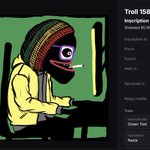
那象征上涨的绿色背景板...
那象征 #BTC 彩虹桥的亮眼彩虹帽...
那深夜盯盘交易的黑眼圈...
那兴奋笑着的嘴里叼着的那颗刚刚点燃的香烟...
哦,还有那未知可以隐秘发布的留言板...
让我深深的知道...我该加入了😈🏁
#Troll


BRC20MarketCap is live.
Explore Bitcoin’s first 100 BRC-20 deployments in their original chronological order.
Search tickers. Check wallet balances and token values. View deployment dates, supply, mint details, holders, prices and market caps.
Preserving history. Making discovery easier.
Visit, share your feedback and follow us for updates.
brc20marketcap.com

YOHO retweeted

Schrödinger's cat, now on chain.
Only its owner can open the box.
FheCat on Fhenix. October.
Waitlist: fhecat.com/waitlist

My cat is still encrypted. 🔒🐾
Just joined the @FheCat waitlist. Mainnet mint in October.
fhecat.com/waitlist

YOHO retweeted

Introducing Gateway...
I've been building a new kind of Bitcoin client.
One that ANYBODY can run regardless of storage.
Fetch only what you need, when you need it.
On-demand, directly from Bitcoin peers.
This is at the heart of Gateway.
Sparse-by-default deep on-demand p2p-Bitcoin indexer.
Now, I recommend you feed this post your favourite AI and have it talk to you directly about it, because I'm about to get into the weeds. And I'm very excited, so it's probably better you ask your AI how this applies to you, rather than leaving a comment that it's too complicated or that you don't understand. With that being said, if you're happy to go hardcore old-school style, and actually... read the thing, here it is!
BITCOIN PEERS
Traditionally, Bitcoin clients sync nodes by requesting blocks from other peers one-by-one, from zero.
This is somewhat impractical for everyday users.
Gateway does things differently.
You can certainly sync the entire blockchain using Gateway, and become a full Bitcoin Node, and a useful Bitcoin Peer. You can even bring your existing Core node and plug it in if you already have one.
But that's not the interesting part.
The interesting part is that you don't need that.
Seek data directly from Bitcoin Peers, on-demand.
ON DEMAND
Unlike Core, Gateway does not require you to sync the entire blockchain. You can sync any range, or even just type in a block number in the top bar to fetch the block from a Bitcoin peer directly.
This approach is extremely useful for Blocks, but it has some limitations.
Transactions (and thus, inscriptions) cannot be resolved directly, without knowing the block number. The latter part of that sentence is the important part.
Gateway adds a schema that allows you to type "{tx}.{block}.bitcoin" and resolve a transaction directly from a Bitcoin peer. You can replace {tx} with either tx-hash, or tx-index (which is a new schema for Gateway), and {block} with either block-hash or block-height.
For example: 0.0.bitcoin
This becomes relevant for inscriptions.
An inscription ID is simply:
{tx-id}i{inscription-index}
So you can resolve inscriptions by including block-number in the scheme:
{inscription-ID}.{block}.bitcoin
If you know the transaction index, you can even use that instead of transaction ID in inscription ID.
That means, so long as you know the block number, any inscription can be resolved on Gateway, on-demand, by asking a Bitcoin peer directly.
ORD
When it comes to Ord, this is an extra layer on top of Bitcoin. It is an indexing system that takes Bitcoins already heavy data store, and adds its own index that can take roughly a week to sync.
For the everyday user, this is not practical.
Whilst I've demonstrated how we can fetch inscriptions directly from Bitcoin Peers without Ord, you need to know block number, and the standard in Ord is to use inscription ID, sat number, or inscription number as the key reference.
I've added block in the Gateway schema as a useful primitive that enables purely on-demand inscriptions from Bitcoin peers, but that isn't the current standard.
INDEXES
This is where you can build your own data-store directly from Bitcoin data originated through Bitcoin peers, and either become a useful participant of the network, or take what you need privately.
The baseline index is Bitcoin Blocks.
However, you do not need that to resolve the other indexes.
Each index has an "ephemeral" option, which means to seek the blocks you require from peers, strip the data you need, and discard the blocks. This is useful if you're running this on your everyday computer, and can't be spending so many GigaBytes on Bitcoin.
For example, you can index Bitmap without storing a single block.
The indexes are generally layered, so you can choose what you would like to index and when. If you index Bitcoin Blocks, you will be asked if you also want to index the other downstream indexes in parrallel, since it would be quicker to do that than re-run the index.
If you already have a Bitcoin Node, you can build other indexes on top of that.
But you don't have to have the Bitcoin blocks to sync inscriptions, Bitmap, or any other index we implement.
Now, this is still some heavy lifting, but once we start activating the Gateway peer network, we can supercharge these capabilities.
GATEWAY PEERS
Gateway users can connect to each other in a peer-to-peer network, just as in Bitcoin.
That means that, whatever data you need, you can ask Gateway peers directly and skip indexing directly from Bitcoin data, with Bitcoin as the hashed proof verification layer.
So, anything your Gateway node doesn't know, or is impractical for you to find through Bitcoin peers, can be served by Gateway peers.
This vital peer layer can become more useful as we start adding other cases for the Gateway peer network, for example, you could opt-in to become a persistent relay for a Bitmap or Ord gaming webRTC layer. We can even serve this p2p mesh layer to websites and ordinals over the web, so in the future, you will be able to connect to gateway from a website, or from an Ordinals inscription.
For now though, it requires the Gateway client. But the dream is that you can become a useful OR private participant in Gateway from different angles.
LONG STORY SHORT
A sparse-by-default on-demand bitcoin node, with full-range indexing and p2p sharing with gateway nodes.
EARLY RELEASE TESTERS
I am seeking early testers who are happy to put the client through the ringer, vet the data, or just try and break the thing so we can make sure we ship a proper robust client.
You can comment on this post if you're interested, and I'll share details when it's ready for testing.
At this stage, I just wanted to let you know that I have a client, it's working, it's almost ready for testers.
WHAT NOW?
This is just one of the things I've been working on and excited about recently, but it's the one I think is the most important in terms of vital infrastructure that can benefit the entire stack from Bitcoin peers to Bitmappeers.
Stay glued to my timeline for more! 👀
Comment if you want to get involved. 💬


你跑10公里或许可以增加30分钟寿命,但跑完10公里需要花80分钟,你要知道增加的那是老了以后的30分钟,可你现在花掉的却是你正年轻的80分钟;
同样的道理,熬夜可能会使你寿命缩短,但其实你在熬夜的同时,早就比那些不熬夜的人多享受了时间;
你只不过是用老了以后躺着发呆的时间,换现在年轻快活的时间;
人生就是这样,与其老了躺在病床上数日子,不如趁现在热气腾腾的活着;
毕竟青春这东西,省着省着就没了!
我们先苦不一定后甜,但先甜那肯定是甜!
Claiming my $shhhhh airdrop 🤫 SHC-E0463933 shhhhh.site/claim
