

Group leader @Genentech . Tweets are my own.
Bay Area, CA
Joined December 2009
- Tweets1.9K
- Following613
- Followers1.4K
- Likes3.6K





Pinned Tweet
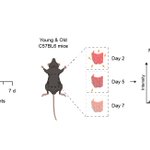
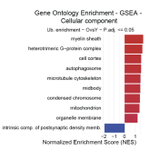
In a new preprint from my lab @LeibnizFLI we found that polyamines sustain the regeneration of the intestinal epithelium in old mice 👇biorxiv.org/content/10.1101/…

Alessandro Ori retweeted

Our paper introduces membrane-impermeable caspase inhibitors that use GSDMD pores as their entry route.
Because these compounds can't cross an intact membrane, they enter only cells already forming GSDMD pores — before pore density exceeds the cell's repair capacity. This confers built-in specificity: the drug acts solely on pyroptotic cells, leaving apoptosis and healthy cells untouched, addressing the off-target toxicity that has limited earlier, cell-permeable caspase inhibitors.
The effect goes beyond arresting cell death. Cells already committed to pyroptosis reverse course and regain viability — a "Lazarus effect" that challenges the assumption that lytic cell death, once initiated, is irreversible.
In essence, these unexpected results could create new opportunities for precisely targeting inflammatory cell death while safeguarding healthy tissue.

Alessandro Ori retweeted

My lab is moving to Stanford, and we’re looking for an RA and a Postdoc to join us.
The position will focus on ovarian and brain aging in flies. If you’re excited about genetics, aging, and discovery, we’d love to hear from you.
Please email at [email protected]
Alessandro Ori retweeted

🔥Out now in @CellCellPress from the amazing @QiushuangW & co: dietary arginine shapes anti-viral & anti-tumor immunity, repressing MHC-I translation in a codon-usage–dependent way—impairing defense against flu, SARS-CoV-2 & colon cancer. 🧵👇 cell.com/cell/abstract/S0092…


1/9. Very happy to share that my postdoctoral work is now out in @CellCellPress . Dietary arginine drives codon-dependent MHC class I translation and improves immunity in colon tumorigenesis and respiratory viral infection: Cell cell.com/cell/fulltext/S0092…

Alessandro Ori retweeted

Protein synthesis is not equally accurate across organs.
Excited to share our new preprint:
biorxiv.org/content/10.64898…
We developed a new mouse model to quantitatively monitor translation errors and uncovered the spatiotemporal dynamics of the “quality” of protein synthesis.

Alessandro Ori retweeted

Our Brain LysoAtlas is now out in Cell!
We map the cell-type-specific protein composition of lysosomes and link SLC45A1 to neurological disease.
Joint work by @LeibnizFLI, @Stanford_ChEMH & collaborators incl. @UniJena, led by @ali_ghoochani, @AOri_lab & @abu_remaileh.
Alessandro Ori retweeted

Nature research paper: Polyamine-dependent metabolic shielding regulates alternative splicing
go.nature.com/459XVZP

Alessandro Ori retweeted

New exciting work from Jae Ho Lee in our lab, in a fantastic collaboration with Alessandro Ori @AOri_lab and Alessandro Cellerino @Alessan82703458 on why and how the brain ages and becomes vulnerable to neurodegenerative diseases science.org/doi/10.1126/scie…

Alessandro Ori retweeted

Excited to share a milestone published in @NatureMedicine from our decade-long effort to build The Human Phenotype Project, a unique longitudinal cohort with unmatched depth of clinical and multi-omic profiling, enabling truly predictive, personalized medicine.
Led together with @ericxing, it is a global collaboration between @WeizmannScience, @MBZUAI, and Japanese partners, spanning 30,000+ participants and continuing to grow internationally
By devising AI models trained on individuals deeply profiled with genetics, microbiome, glucose, sleep, bone density, and more, we can now forecast diseases before symptoms appear and simulate treatment or lifestyle outcomes.
Key findings:
• Re-defined metabolic risk thresholds
• Predicted menopause impact via biological aging
• Mapped organ-specific aging trajectories
• Developed models for early detection of diabetes & heart disease
This dataset is a blueprint for digital health twins, AI-driven tools grounded in real-world, longitudinal data
Data access: humanphenotypeproject.org
Full paper: tinyurl.com/4kftyndh
Thanks to all the people who led this work: Lee Reicher, Smadar Shilo, Anastasia Godneva, Guy Lutsker, Liron Zahavi, Saar Shoer, David Krongauz, Michal Rein, Sarah Kohn, Tomer Segev, Yishay Schlesinger, Daniel Barak, Zachary Levine, Ayya Keshet, Rotem Shaulitch, Maya Lotan-Pompan, Matan Elkan, Yeela Talmor-Barkan, Yaron Aviv, Maya Dadiani, Yonatan Tsodyks, Einav Nili Gal-Yam, Haim Leibovitzh, Lael Werner, Roie Tzadok, Nitsan Maharshak, Shin Koga, Yulia Glick-Gorman, Chani Stossel, Maria Raitses-Gurevich, Talia Golan, Raja Dhir, Yotam Reisner, Adina Weinberger, Hagai Rossman, and Le Song
And special thanks to all participants of the Human Phenotype Project

Alessandro Ori retweeted
Our lab at the Weizmann Institute was hit tonight by Iran
We will rebuild and return 💪


Alessandro Ori retweeted

Can one become too old for healthy aging? In our recent review, we explore possible age limitations of the current longevity treatments.
nature.com/articles/s44324-0…

Alessandro Ori retweeted
Check out our MS describing the in vivo cycle of chaperonin TRiC/CCT, in a wonderful collaboration with Martin Beck's lab: nature.com/articles/s41586-0…
1) The study established TRiC's important function in folding newly translated proteins and defines its ATP-driven cycle

Alessandro Ori retweeted

We are very excited to share our recent preprint on the nuclear import mechanism of the proteasome, driven by the multivalent adaptor AKIRIN2!
biorxiv.org/content/10.1101/… 🧵 (1/7)

Alessandro Ori retweeted
🚨🚨Mark your calendars for G-JAM2025 meeting organised be me and Sandro Cellerino. We will discuss human aging, longevity interventions, molecular and systems aging, comparative biology of aging, sex-specific aspects of aging and more. Looking forward!
leibniz-fli.de/news-events/c…
Alessandro Ori retweeted

Are you a metabolomics expert seeking new opportunities for professional growth and discovery? come join us @MTI_UCB!

Exciting news - we're hiring a Metabolomics Expert /Screening Scientist at UCB! Details here aprecruit.berkeley.edu/JPF04…
A brand new MS instrument is waiting for you!
We're looking forward to your application.
@RobertoZoncu @DanNomura
Alessandro Ori retweeted

Our new paper from the @FrydmanLab published in @ScienceMagazine identifies 22 TRiC mutations in patients with brain disorders of unknown origin. We characterized these disease-linked mutations in 3 model species and found them to be dominant mutations.
science.org/doi/10.1126/scie…

Alessandro Ori retweeted

Brain responses to intermittent fasting and the healthy living diet in older adults
cell.com/cell-metabolism/abs…

Alessandro Ori retweeted
1. Check out our MS just out! Amazing Mauricio Aguilar developed a new ML pipeline that identifies ribosome pausing sites as an Anomaly Detection problem to overcome spurious signals that arise when analyzing RiboSeq data. science.org/doi/10.1126/scia…

Alessandro Ori retweeted

Thrilled to share the most comprehensive Atlas of Proteome/Phosphoproteome Turnover across mouse tissues and brain regions, thanks to the outstanding @Yanshen73854711 & @JunminPengLab! Proud to contribute to this. Check it out: #Proteomics #ProteinTurnover biorxiv.org/content/10.1101/…

Alessandro Ori retweeted
🚨New Paper Alert🚨Explore our latest work on the Lysosomal BrainAtlas, now available on bioRxiv! This comprehensive resource maps lysosomal proteins in specific brain cell types and identifies SLC45A1 as a novel neuron-specific lysosomal sugar transporter doi.org/10.1101/2024.10.14.6…
Alessandro Ori retweeted

I am thrilled to announce that our work in collaboration with Alessandro Ori’s lab @AOri_lab, @Blue_ceil is out!
We made a significant breakthrough in understanding the role of lysosomes in the brain with the development of the first cell-type-resolved lysosomal protein atlas. This comprehensive map details the lysosomal proteome across major brain cell types—neurons, astrocytes, microglia, and oligodendrocytes.
@abu_remaileh @Stanford_ChEMH, @ASAP_research, @BrainResilience, @CZI @cziscience
Cell-Type Resolved Protein Atlas of Brain Lysosomes Identifies SLC45A1-Associated Disease as a Lysosomal Disorder biorxiv.org/content/10.1101/…