

I rarely tweet. Don't expect much.
USA
Joined May 2014
- Tweets1K
- Following146
- Followers82
- Likes2.4K


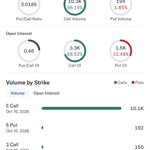


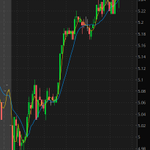


$PTGX Protagonist Therapeutics CEO Dinesh Patel, speaking at the Jefferies Global Healthcare Conference in London, says partner royalties from Johnson & Johnson's ICOTYDE psoriasis launch have made the biotech self-funding, to the point where it has announced a $300 million buyback and explicitly ruled out diluting shareholders. ICOTYDE has logged more than 60,000 prescriptions and 9,000-plus prescribers, according to J&J's earnings call — with 60% of prescriptions going to patients never before on systemic therapy. That cash is now funding a pipeline of unpartnered bets: an oral IL-17 that the company claims hits both the A and F isoforms, and an obesity portfolio deliberately narrowed to oral-only drugs to avoid competing head-on with Eli Lilly's Phase 3 injectable retatrutide. Patel expects royalty disclosure to begin in 2027 on J&J's schedule, flags J&J's December 8 investor day and Takeda's December 11 capital markets day as the next hard checkpoints, and describes the obesity assets as "destined for partnership sooner rather than later." The unresolved question is timing: the royalty stream is a 2027 story, and the pipeline catalysts run through 2027 and beyond. finance.biggo.com/news/85ed3…

Yeah it’s all fine folks. Here’s what’s really happening: techcrunch.com/2026/11/16/fb…

1
69
$INTR CC is going well. LT hold for me. Kind of refreshing not to be all in biotechs for once LOL.

Follow-up to my post from yesterday: $INTR delivered the most important signal.
The headline numbers were as expected. Profit rose 26% to a record R$425m. Return on equity was 15.8%, a little lower than last quarter, because a one-off boost from Q2 dropped out. The market already knew that. What really mattered was whether fewer customers are falling behind on their loans. And here, Inter delivered.
The early-warning indicator fell from 4.8% to 4.5%. It shows how many loans have just started to go unpaid. In September, management said the problem would peak in Q3. That now looks right. The main cause was a technical problem with payroll loans, and the fix is working.
Loans that are more than 90 days overdue still rose a little, to 5.5%. That is normal. This number always lags behind by about a quarter. It should stop rising in Q4. Then the turn would be fully confirmed.
The money Inter sets aside for bad loans did not fall yet. That is the big lever still to come. If those costs drop by one percentage point, Inter’s return rises by about 3 points, and the stock’s fair value by about 30%. Inter also grew its capital buffer, even though it lent 25% more. The bank pays for its growth out of its own profits.
What this means for the cycle: bank stocks usually start to rise before bad loans peak. They turn when the first warning signs get better. That is where Inter is now. One thing to keep in mind: Inter fixed its own problem. Brazil’s overall credit cycle has not clearly turned yet.
What this means for the stock: Inter costs $3.97. Its book value is $4.16 per share. So you pay less than what the bank owns, as if it will never improve. If returns rise to around 21%, I think the stock is worth about $5.40, around 1.3 times book value. Even if nothing changes, book value grows by around 11% to 12% a year. (A small correction to yesterday: I said 13% to 14%. But Inter pays out about a fifth of its profit.)
$NU trades at four times its book value, and it deserves that, because its return on equity is above 30%. This shows that book value is not the fair value of a bank like Inter. If the company keeps developing the way it has, it deserves a higher multiple of its book value.
History suggests this is when a bottom usually forms. I expect a slow recovery, not a big jump. Brazil’s central bank has paused its rate cuts. The bigger move should come when interest rates in Brazil fall again. Then the stock could be worth around $6.70.
Not investment advice. I am invested in $INTR.
102
BreachHorizon retweeted

$INTR Q3 2026 earnings: Inter's profit jumps 26%, while early loan defaults finally dip
Inter, the Brazilian digital bank and super-app, grew profit and loans fast while early missed payments finally started to recede. Net revenue and net income both rose 26% from a year ago, reaching R$425 million in profit as operating costs fell to 42% of revenue. Chief executive João Vitor Menin kept the loan book expanding at nearly three times the pace of Brazil's banking market, though return on equity dipped slightly from last quarter after a one-off inflation benefit rolled off.
• Net revenue: 𝐑$𝟐,𝟕𝟏𝟖𝐌 (+26% from a year ago)
• Net income: 𝐑$𝟒𝟐𝟓𝐌 (+26% from a year ago (15.8% ROE))
• Efficiency ratio: 𝟒𝟏.𝟗% (improved 3.3 percentage points from a year ago)
• Long-term plan: 𝐔𝐧𝐜𝐡𝐚𝐧𝐠𝐞𝐝 (60/30/30 and Rule of 50 targets held)
⚖️ 𝐕𝐞𝐫𝐝𝐢𝐜𝐭: 🟢 Bullish
The story got better because the operating bank rebuilt its capital buffer and showed the first drop in early loan delinquencies. Core capital rose even with 25% loan growth, and automatic employer tracking started fixing missed payments on private payroll loans. One caution: provisions for bad loans still absorbed five-sixths of the gain in lending spreads from a year ago, and cost of risk only held steady because a government refinancing program shaved 0.2 percentage points off the quarterly charge.
The question now is whether the drop in early missed payments will bring down 90-day overdue loans and credit provisions. Either the new payroll tracking system keeps overdue loans falling and lets higher lending rates flow to the bottom line, or high Brazilian interest rates push credit card defaults up enough to offset the fix. Next quarter's 90-day delinquency rate and risk-adjusted lending margin will settle it.
[Model: Gemini 4 Argon. Full article with charts - link in bio]
🐂 𝐁𝐮𝐥𝐥 𝐂𝐚𝐬𝐞
🟢🟢 𝐒𝐞𝐜𝐮𝐫𝐞𝐝 𝐋𝐞𝐧𝐝𝐢𝐧𝐠 𝐃𝐫𝐢𝐯𝐞𝐬 𝟐𝟓% 𝐋𝐨𝐚𝐧 𝐁𝐨𝐨𝐤 𝐆𝐫𝐨𝐰𝐭𝐡
Inter is a Brazilian digital bank offering checking accounts, loans, investments and shopping in one mobile app. Chief executive João Vitor Menin wants roughly two-thirds of the loan book backed by collateral or paycheck deductions so the bank can expand while traditional rivals pull back. Total expanded loans grew 25.2% from a year ago to R$58.1 billion, adding R$2.7 billion in the quarter.
• Mortgages and home equity: R$19.9 billion, up 37.2% from a year ago and now 34.3% of total loans
• Private payroll loans (deducted directly from private-sector workers' paychecks): R$3.1 billion, up 147% from a year ago across 759,000 clients
• Small and medium business loans: R$5.2 billion, up 22% from a year ago, led by a 73% jump in government-backed Pronampe credit
State-owned banks in Brazil have less subsidized housing money to lend, so the digital lender is taking market share in real estate with faster online approvals. Meanwhile, shifting the mix toward higher-yielding private payroll loans lifted net interest income 29.8% from a year ago to R$2.11 billion.
What to watch: quarterly net additions to the private payroll book in the fourth quarter. Continued additions above R$300 million per quarter will show the bank can scale its highest-yielding secured product without triggering a jump in early missed payments.
🟢 𝐎𝐩𝐞𝐫𝐚𝐭𝐢𝐧𝐠 𝐂𝐨𝐬𝐭𝐬 𝐅𝐚𝐥𝐥 𝐭𝐨 𝟒𝟏.𝟗% 𝐨𝐟 𝐑𝐞𝐯𝐞𝐧𝐮𝐞
A digital bank without physical branches makes higher margins when it adds customers and loans without adding staff at the same pace. "Looking ahead, we expect the gap between revenue and expenses to keep widening, driving continuous improvement in our efficiency ratio and further profitability expansion," Menin wrote. In the third quarter, net revenue rose 25.7% from a year ago to R$2.72 billion, while operating expenses grew 16.9% to R$1.07 billion.
That gap pushed the efficiency ratio—operating costs as a share of net revenue—down 3.3 percentage points from a year ago to 41.9%. By our math, administrative expenses (technology, data processing and overhead) fell 1.7 percentage points of net revenue to 23.4%, and personnel costs (employee salaries and benefits) dropped 1.6 percentage points to 11.6%, more than offsetting a 0.3-point rise in software amortization.
What to watch: the efficiency ratio in the fourth quarter. A drop toward 40% will confirm that automating customer support and software coding keeps headcount near 4,300 employees even as the client base expands.
🟢 𝐈𝐧𝐭𝐞𝐫𝐧𝐚𝐥 𝐏𝐫𝐨𝐟𝐢𝐭𝐬 𝐚𝐧𝐝 𝐃𝐞𝐛𝐭 𝐈𝐬𝐬𝐮𝐞 𝐋𝐢𝐟𝐭 𝐂𝐚𝐩𝐢𝐭𝐚𝐥
Fast loan growth usually drains a bank's regulatory capital buffer because every new loan requires more backing equity. Over the prior four quarters, the Basel ratio at the operating bank (Banco Inter S. A.)—regulatory capital as a percentage of risk-weighted assets—had fallen from 17.0% to 14.4%. In the third quarter, the Brazilian group reversed that decline and lifted the ratio by 1.2 percentage points from last quarter to 15.6%.
Core Tier 1 capital rose 0.7 percentage points from last quarter to 12.2% because quarterly earnings and positive bond revaluations added 1.7 points, outweighing the 0.7-point draw from loan growth and a 0.3-point transfer to the parent company. The bank also issued subordinated debt to raise Tier 2 capital to 2.2%, while the parent holding company holds another R$2.6 billion in excess capital.
What to watch: Core Tier 1 capital at the operating bank next quarter. Staying above 12% while loans grow 25% a year will prove that quarterly profits now fully fund balance-sheet expansion.
🐻 𝐁𝐞𝐚𝐫 𝐂𝐚𝐬𝐞
🔴🔴 𝐋𝐨𝐚𝐧 𝐋𝐨𝐬𝐬𝐞𝐬 𝐀𝐛𝐬𝐨𝐫𝐛 𝐌𝐨𝐬𝐭 𝐨𝐟 𝐭𝐡𝐞 𝐌𝐚𝐫𝐠𝐢𝐧 𝐆𝐚𝐢𝐧
"Our expanded loan portfolio grew 25% year over year, almost 3 times the pace of the Brazilian market, while we managed credit quality with discipline," Menin said. The lender is shifting into private payroll loans and interest-charging credit cards to earn higher interest rates. Net interest margin (NIM 2.0, which measures annualized lending profit as a share of interest-earning assets) rose 0.68 percentage points from a year ago to 9.96%.
However, setting aside money for bad loans ate up five-sixths of that gain. After subtracting loan-loss provisions, risk-adjusted net interest margin rose only 0.12 percentage points from a year ago to 5.74%, and slipped from 5.86% last quarter. Reported cost of risk (annualized credit provisions as a share of the loan book) held at 5.9% only because "The Desenrola refinancing program lowered cost of risk by about 20 bps in the quarter"; without that one-off benefit, cost of risk reached 6.1% by our math.
What to watch: risk-adjusted net interest margin in the fourth quarter. A drop below 5.6% would show that credit losses on newer consumer loans are growing faster than the extra interest those loans bring in.
🔴 𝐎𝐯𝐞𝐫𝐝𝐮𝐞 𝐋𝐨𝐚𝐧𝐬 𝐑𝐢𝐬𝐞 𝐚𝐬 𝐏𝐚𝐲𝐫𝐨𝐥𝐥 𝐅𝐢𝐱𝐞𝐬 𝐒𝐭𝐚𝐫𝐭
Private payroll loans are supposed to be safe because the employer deducts the payment from the worker's salary, but "The main cause of missed payments is an employee changing employers, which is why automatic relinkage matters." While Inter built out that tracking system over the past year, missed payments piled up. Loans overdue by more than 90 days rose for a fourth straight quarter to 5.3% of the expanded portfolio (and 5.5% of gross loans), up from 4.4% a year ago.
Menin noted that "early delinquency (NPL 15 to 90 days) fell to 4.2% from 4.5% in 2Q26, as the first improvements are visible in private payroll, where automatic relinkage is now live." That system launched in September and has reconnected about 30% of overdue payroll loans, cutting new private payroll 90-day delinquency formation from 4.9% in the second quarter to 3.2% in the third. Even so, Stage 3 formation (newly impaired loans) across the whole bank stayed high at 2.10%.
What to watch: the 90-day overdue loan ratio in the fourth quarter. Because early missed payments roll into the 90-day bucket one quarter later, the 90-day rate must stop rising next quarter to confirm that automatic relinkage fixed the problem.
🔴 𝐇𝐢𝐠𝐡 𝐈𝐧𝐭𝐞𝐫𝐞𝐬𝐭 𝐑𝐚𝐭𝐞𝐬 𝐒𝐥𝐨𝐰 𝐔𝐧𝐬𝐞𝐜𝐮𝐫𝐞𝐝 𝐂𝐫𝐞𝐝𝐢𝐭 𝐚𝐧𝐝 𝐔𝐬𝐞𝐫 𝐆𝐫𝐨𝐰𝐭𝐡
Brazil's benchmark interest rate averaged 14.0% in the third quarter, keeping borrowing expensive for households and raising the return savers demand on deposits. "In a challenging macro scenario, we chose to grow more selectively," the bank said, pulling back on riskier customers and onboarding fewer inactive accounts.
• Credit card loan growth: 17.9% from a year ago, down from 29.7% growth in the third quarter of last year
• Net new active clients: 0.7 million added in the quarter by our math, down from 1.2 million a year ago
• Normalized cost of funding: 67.9% of the benchmark interbank rate (70.0% unadjusted), up from 65.1% a year ago as savers shifted into higher-paying time deposits
Slower client additions and pricier deposits make it harder for the group to reach its long-term goal of 60 million clients and a 30% return on equity. By our math, the company's Rule of 50 metric—which adds annual net revenue growth (25.7%) and return on equity (15.8%)—slipped to 41.5% this quarter from 48.0% in the second quarter.
What to watch: funding cost as a share of the benchmark rate in the fourth quarter. A rise above 69% normalized would show that competition for retail deposits is eroding the bank's low-cost funding advantage.
👓 𝐎𝐭𝐡𝐞𝐫 𝐓𝐡𝐞𝐦𝐞𝐬
𝐀𝐈 𝐀𝐬𝐬𝐢𝐬𝐭𝐚𝐧𝐭 𝐚𝐧𝐝 𝐍𝐞𝐰 𝐋𝐞𝐚𝐝𝐞𝐫𝐬𝐡𝐢𝐩 𝐒𝐭𝐫𝐮𝐜𝐭𝐮𝐫𝐞
"More than 700 AI models already run in production across our teams, and in software development, tasks that took ten days now take four," Menin wrote, adding that "Seven, our multi-agent AI assistant for clients, resolves about 85% of client requests without human support" and "To accelerate this work, we signed a strategic partnership with SpaceXAI." Menin also appointed Alexandre Riccio as chief operating officer over credit and operations and hired Francisco Santos as chief growth officer.
— • — • —
💲 𝐎𝐭𝐡𝐞𝐫 𝐊𝐏𝐈𝐬
𝐓𝐨𝐭𝐚𝐥 𝐝𝐞𝐩𝐨𝐬𝐢𝐭𝐬 𝐚𝐧𝐝 𝐟𝐮𝐧𝐝𝐢𝐧𝐠 (𝟐𝟔𝐐𝟑): 𝐑$𝟖𝟏.𝟎 𝐛𝐢𝐥𝐥𝐢𝐨𝐧 ⇒ stable
Total customer deposits and funding rose 19.3% from a year ago and 4.9% from last quarter to R$81.0 billion. Time deposits—accounts that lock in savings for a fixed interest rate—led the expansion, rising 19.7% from a year ago to R$37.0 billion, helped by R$11.6 billion saved inside the My Piggy Bank feature across more than 5 million clients.
𝐌𝐨𝐧𝐭𝐡𝐥𝐲 𝐧𝐞𝐭 𝐦𝐚𝐫𝐠𝐢𝐧 𝐩𝐞𝐫 𝐚𝐜𝐭𝐢𝐯𝐞 𝐜𝐥𝐢𝐞𝐧𝐭 (𝟐𝟔𝐐𝟑): 𝐑$𝟐𝟐.𝟑 ⇗ accelerating
The monthly profit earned per active customer after interest expenses and operating costs reached a record R$22.3, up 10.4% from R$20.2 a year ago. Monthly net revenue per active client rose 7.2% from a year ago to R$35.6 (and exceeded R$120 among long-tenured customers), while the monthly cost to serve each active client stayed almost unchanged at R$13.3.
𝐂𝐚𝐫𝐝𝐬 𝐚𝐧𝐝 𝐏𝐢𝐱 𝐩𝐚𝐲𝐦𝐞𝐧𝐭 𝐯𝐨𝐥𝐮𝐦𝐞 (𝟐𝟔𝐐𝟑): 𝐑$𝟒𝟖𝟑 𝐛𝐢𝐥𝐥𝐢𝐨𝐧 ⇒ stable
Total money moved across cards and Pix (Brazil's instant payment network) grew 17.2% from a year ago to R$483 billion. Pix transactions accounted for R$450 billion, giving the digital bank roughly 9% of Brazil's instant payment market, while credit card spending rose 14.1% from a year ago to R$17.8 billion and lifted net fee income 13.4% to R$611 million.
— • — • —
🔮 𝐆𝐮𝐢𝐝𝐚𝐧𝐜𝐞
𝐄𝐟𝐟𝐢𝐜𝐢𝐞𝐧𝐜𝐲 𝐫𝐚𝐭𝐢𝐨 𝐚𝐧𝐝 𝐩𝐫𝐨𝐟𝐢𝐭𝐚𝐛𝐢𝐥𝐢𝐭𝐲 𝐨𝐮𝐭𝐥𝐨𝐨𝐤: 𝐂𝐨𝐧𝐭𝐢𝐧𝐮𝐨𝐮𝐬 𝐢𝐦𝐩𝐫𝐨𝐯𝐞𝐦𝐞𝐧𝐭 (𝐦𝐞𝐝𝐢𝐮𝐦-𝐭𝐞𝐫𝐦 𝟔𝟎/𝟑𝟎/𝟑𝟎 𝐚𝐧𝐝 𝐑𝐮𝐥𝐞 𝐨𝐟 𝟓𝟎 𝐭𝐚𝐫𝐠𝐞𝐭𝐬) ⇒ stable
🠆 unchanged from Rule of 50 (~50% combined net revenue growth + ROE) and 60/30/30 plan
Unchanged. Management gives no quarterly numerical ranges, but Menin reaffirmed the long-term 60/30/30 ambition (60 million clients, 30% efficiency ratio, 30% return on equity) and Rule of 50 target, stating that revenue will keep growing faster than expenses. By our math, the Rule of 50 reading stood at 41.5% in the third quarter (25.7% net revenue growth plus 15.8% return on equity), down from 48.0% in the second quarter.
— • — • —
❓ 𝐊𝐞𝐲 𝐐𝐮𝐞𝐬𝐭𝐢𝐨𝐧𝐬
𝐖𝐡𝐞𝐫𝐞 𝐝𝐢𝐝 𝐭𝐡𝐞 𝐈𝐅𝐑𝐒 𝐟𝐢𝐧𝐚𝐧𝐜𝐢𝐚𝐥 𝐭𝐚𝐛𝐥𝐞𝐬 𝐠𝐨?
Pages 14 and 15 of the earnings release and page 30 of the presentation are titled Balance Sheet and Income Statement but contain no numbers. Why were the full accounting tables omitted from both documents, and when will the complete lines be published?
𝐖𝐡𝐚𝐭 𝐝𝐨𝐞𝐬 𝐭𝐡𝐞 𝐒𝐩𝐚𝐜𝐞𝐗𝐀𝐈 𝐩𝐚𝐫𝐭𝐧𝐞𝐫𝐬𝐡𝐢𝐩 𝐚𝐜𝐭𝐮𝐚𝐥𝐥𝐲 𝐝𝐨?
Chief executive João Vitor Menin announced a strategic partnership with SpaceXAI to accelerate artificial intelligence work. What specific services or models does SpaceXAI provide to the bank, and how much will the contract add to administrative or capital expenses over the next year?
𝐖𝐡𝐚𝐭 𝐚𝐫𝐞 𝐭𝐡𝐞 𝐭𝐞𝐫𝐦𝐬 𝐨𝐟 𝐭𝐡𝐞 𝐧𝐞𝐰 𝐩𝐫𝐢𝐯𝐚𝐭𝐞 𝐩𝐚𝐲𝐫𝐨𝐥𝐥 𝐢𝐧𝐬𝐮𝐫𝐚𝐧𝐜𝐞?
Private payroll insurance is now live and attached to about 40% of new loans. Does that policy cover missed payments when a worker loses their job or changes employers, and how much fee income does it add to each cohort?
𝐇𝐨𝐰 𝐦𝐮𝐜𝐡 𝐝𝐢𝐝 𝐈𝐧𝐭𝐞𝐫 𝐒𝐡𝐨𝐩 𝐦𝐞𝐫𝐜𝐡𝐚𝐧𝐝𝐢𝐬𝐞 𝐯𝐨𝐥𝐮𝐦𝐞 𝐬𝐥𝐨𝐰?
The release noted that lower gross merchandise volume growth at the Inter Shop e-commerce mall weighed on fee income, but did not print the quarterly volume or take rate. What were Inter Shop's volume and net take rate in the third quarter?

$INTR Inter & Co, Inc. completed the Sales Facility associated with discontinuing its Level II Sponsored BDR Program. All 12,281,668 Class A Common Shares subject to the facility were sold, equivalent to 12,281,668 Level II Sponsored BDRs at a ratio of 1 BDR to 1 Class A Common Share. Banco Bradesco S.A., the program’s depositary, will consolidate the U.S. dollar proceeds, convert them into Brazilian reais and process net amounts for holders through their brokers or custodians, after applicable taxes, if any. The company said it will disclose the final amount payable per BDR and expected payment date in a further notice in the coming days, once the conversion is complete. sec.gov/Archives/edgar/data/… CC: @Biotech2k1
1
1
187
Brutal day so far on the decreased TRYNGOLZA sales guidance. Will decide whether to cut and move on after the CC. Fun times.

The last time the ER date was abnormal (brought in a few weeks), was with $CRNX which was a significant position for me. Very curious here with $IONS. Recently started a modest position:

46
BreachHorizon retweeted

$INTR went public on June 23, 2022 for an opening price of $3.98 per share. Today its around $3.8-3.9.
How the business has changed:
- Clients: 20.7m → 45.3m (+119%)
- Quarterly gross revenue: R$1.5bn → R$4.6bn (+214%)
- Gross loan portfolio: R$19.5bn → R$51.9bn (+166%)
- Net ARPAC: R$32 → R$35.5 (+11%)
- Net income (quarter): R$16m → R$421m (~26x)
- ROE: ~0% → 16.3%
The story has gotten better, not worse. NFA.

$INTR after the election: the story isn’t broken, it’s delayed.
Before the election, the market expected the Selic to fall to ~13.5% by end-26 and ~12% by end-27.
With Lula winning, the market fears more public spending in his new term. That could keep the Selic higher for longer, which means higher credit losses and a higher cost of equity.
Key point: a bank creates value when ROE > cost of equity. $INTR reached ROE ≈ cost of equity in Q2'26 and was expected to move above it from 2027. If rates stay high for longer, it creates less value for longer.
The chart:
– Black dashed: cost of equity if rates stay higher for longer
– Grey dotted: cost of equity expected before the election
– Blue: my pre-election base case ROE
– Orange: my ROE if rates and cost of risk stay higher for longer
In 2027 ROE should stay around the cost of equity. Fiscal policy takes time to hit the economy, and credit losses lag again after that. By the time the cost of risk rises, $INTR’s ROE should already be above its cost of equity.
Long term, the impact is slower ROE growth than expected, not a broken story.
ROE above the cost of equity means a premium to book; below means a discount. That’s what the justified P/B and implied price in the table show.
The upside depends on ROE moving above the cost of equity from 2027, which happens in both of my scenarios.
Note: A real credit downturn would look worse.

1
112
Better late than never on the PR $ions . Added a bit more today. Confident LT hold if it goes nowhere for a bit.

Save the date for our Q3 2026 earnings webcast. Register now and tune in live on November 9 at 9:00 am ET: bit.ly/4zkAERR $IONS

85
Couldn't help myself. Took a significant position in $INTR.

1
1
205
BreachHorizon retweeted

$COGT PDUFA upcoming - DATA continue to impress Of patients randomized the control arm of PEAK, 61% crossed-over to bezu + suni: 148 of 209 control patients (71%) had progressed
on sunitinib by the data cut, and 128 crossed over to the combination (61% of the control arm; 86% of those who progressed). In these 128
crossover patients, median PFS was 7.4 months relative to median of 5.7 months of PFS these patients had on PEAK control arm; ORR was
29.7% (n=38) vs. 20.3% on sunitinib (n=26). In the post-oral discussion, the discussant suggested that the data favor using the combination
earlier, given the PFS of 7.4 months after crossover vs. 16.5 months in the second line, but the discussant also highlighted that the crossover
was non-randomized, and enrolled patients who progressed early on sunitinib (mPFS 5.7 vs. 9.2 months for the full arm).
COGT also disclosed treatment duration by arm. Median treatment duration was 61.4 weeks (~14.1 mo) for patients randomized
to the combination, compared with 23.9 weeks (~5.5 mo) after crossover (vs. 42.4 weeks (~9.8 mo) on sunitinib monotherapy).
Compared with the randomized combination arm, crossover patients had fewer serious side effects and needed fewer dose cuts, with lower
rates of Grade 3+ treatment-related AEs (39.1% vs. 71.6%), dose reductions (25.8% vs. 55.9%) and treatment-related discontinuations (2.3%
vs. 7.4%). All-grade liver-enzyme increases (ALT/AST) were only modestly lower (46.9% vs. 56.4%) despite less than half the time on drug.

$COGT Stifel Investment Thesis
COGT's bezuclastinib put up a historical PFS in the Ph3 PEAK study of bezuclastinib 2L GIST which has driven M&A speculation. COGT
has also presented positive pivotal data in advanced and non-advanced systemic mastocytosis (AdvSM, non-AdvSM) expected to support
approval of bezuclastinib as a second-mover in both SM indications. model ~$2.5B in global revenue for bezuclastinib by 2035 (inclusive
of non-AdvSM, AdvSM, and GIST). value COGT at ~4x EV/5yr forward sales, which is in line with recent biotech M&A (~4-5x deal
value/5yr forward sales).
$ARQT finally on the move ...

$ARQT Arcutis' ZORYVE data presented at EADV and Fall Clinical highlight positive Phase 2 INTEGUMENT-INFANT results for once-daily ZORYVE cream 0.05% in infants 3 to <24 months with atopic dermatitis, plus psoriasis data including genital involvement and effects on sexual function. Notably, caregiver-reported rapid itch relief showed 46.6% of infants achieving ≥25% pruritus improvement within 10 minutes (n=88). These infant data complement broader psoriasis findings, potentially enhancing regulatory momentum and clinical perception for ZORYVE in younger populations and in broader indications.
#Biotech
1
1
119
The disconnect between the $XBI and individual names is astonishing. When does the house of cards crumble. Even looking at general breadth versus the indices concerns me. Maybe I’m just destined to make my life difficult but at some point this changes.
1
74