

Satoshi showed the way. Kaspa walks it relentlessly, one block at a time.
Joined March 2024
- Tweets3.8K
- Following362
- Followers538
- Likes5.3K



Cer₿er𐤊 retweeted

A Kaspa #NFC #PointOfSale system available for every #Kaspamerchants, it's opensource !
From : @Laudena
Cer₿er𐤊 retweeted

Major breakthrough for the Kaspa Privacy Initiative! 💚🚀
Yesterday, we hit a serious bottleneck: generating our full zero-knowledge execution proof on CPU was taking far too long.
So we rented an NVIDIA L40S GPU.
And it worked!
✅ Full cryptographic proof in just 4 minutes and 16 seconds
✅ Independently verified on CPU
✅ Invalid operations correctly rejected
✅ Estimated GPU rental cost: just $0.12
For the first time, we've demonstrated that our complete test-model execution can be cryptographically proven in minutes, at a surprisingly low cost.
And that opens up some exciting possibilities. 👇

Cer₿er𐤊 retweeted

just to be clear, there’s a lot going on across many fronts. it’s just not helpful to talk about things before they happen; they simply need to happen, and serious things take time. some serious efforts also won’t necessarily mature for various reasons, which is another reason ppl don’t always lay out their plans publicly (until they happen). i anticipate something of a “baby boom” in a few months, but teams will simply pursue delivery rather than talk
Cer₿er𐤊 retweeted

🚨 Just in! 🚨
Kaspa’s pseudonymous wallet #1 has acquired just under ~ 2 million #Kaspa , which is valued around ~ $75,000 😳
They now own over 1.53 billion kaspa:native , valued around ~ $58 million, with an average cost of $0.07606 🤔

Cer₿er𐤊 retweeted
(with grok and sol)
---
An interesting design tension in state-carrying covenants that require lineage is how you manage a scarce global resource without forcing every update through a single UTXO.
A compressed design keeps the allocation map behind one Merkle root inside a single covenant UTXO. The covenant checks every transition against the rules. For a name service that means a sparse Merkle tree over the keyspace: registering a name proves the slot is empty, updates the root, and creates a separate ownership UTXO for that point.
U(R₀) → U(R₁) + Point(k)
Later transfers of the name can spend the ownership UTXO without touching the root, so they don’t contend with new registrations. Everything that changes the allocation map itself still has to spend the same root-carrying UTXO. Unrelated names serialize on it.
The other way is to partition the space. A split hands each range to its own covenant UTXO from the same lineage. The split has to preserve the global invariants: ranges don’t overlap, budgets still sum correctly, and it validates the contracts that receive the pieces. After that, each range can evolve independently for operations that stay inside it. Splits, merges, and transfers between partitions still need coordinated checks across the UTXOs involved. Otherwise the range UTXOs are independent, so updates in different ranges can proceed concurrently in the DAG.
Lineage is what keeps the pieces part of the same instance. Covenant IDs make this cheap: consensus already tracks which UTXOs belong to a given covenant, so a script only has to validate the local transition. The live range UTXOs (plus the ownership UTXOs for allocated points) are just the current leaves of that lineage. There’s no separate tree object stored on-chain.
@supertypo_kas’s dotk is a pure-partitioning version of this for names. It keeps the invariant that every key is either inside exactly one gap or is exactly one deed. Claiming a name consumes the gap that contains it and emits the remaining gap(s) plus a deed:
Gap((a,b]) → Gap((a,k)) + Deed(k) + Gap((k,b])
Releasing a name consumes the deed and adjacent gaps and merges them back together. The gaps and deeds have different rules, but every point stays accounted for exactly once.
The cost of the partitioned approach shows up in storage mass. KIP-9 makes creating many small-value outputs expensive, so each new range UTXO needs enough KAS locked in it to keep the mass reasonable. That’s intentional. Growing the live frontier means someone has to put capital behind the extra state. Designs that let users opt in, fund additional range UTXOs while the capacity is useful, and later reclaim the KAS by merging ranges again turn that cost into a controllable design choice. The expand-and-contract frontiers in the kcc20 reference code follow the same principle.
A practical middle ground is to start with a chosen number of range UTXOs and put a Merkle root inside each one. Lineage partitions the keyspace; each partition compresses its own allocation state. While that partition count stays fixed, the L1 footprint for the trackers stays constant, registrations in different ranges still don’t contend, and you avoid creating a new range UTXO for every name. You choose how finely to slice the space, how much KAS to lock behind the frontier, and how much residual contention you accept inside each partition.
Hashing helps distribute keys across ranges, but it doesn’t eliminate hot spots. If most operations land in one range you’re back to serializing on that root. At that point the app can allow further on-demand splits of a hot range, again costing locked KAS that users can later reclaim by merging, or just accept the serialization for that slice
Cer₿er𐤊 retweeted

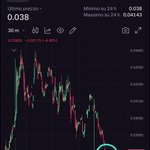
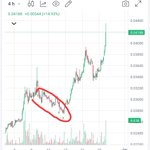
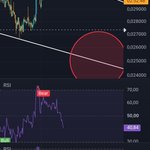
I don’t think people realise how interesting $KAS is looking on the weekly.
Still dealing with lower highs, but that’s exactly what I’m watching for a change in trend.
For me, these are the levels to load up, not when everyone’s screams bullish.


Cer₿er𐤊 retweeted

Hello, Cihan0x! Happy to provide you and the Tangem community with answers to your reasonable questions:
1. Which exact firmware runs on each Tangem card generation?
Tangem Wallet 1.0 runs firmware v1.28. All Tangem Wallet 2.0 devices officially sold by Tangem since Q3 2023 run a single firmware version, 6.33r, which has remained unchanged since. Before that, limited batches with limited-function firmware were produced, and they were never sold at retail.
The firmware version is not shown in the Tangem app yet. In upcoming releases, we will add the firmware version number to the device settings screen.
2. Which independent audit covered each exact production firmware version?
Tangem firmware has gone through two independent audits:
- Version 1.28 was audited by Kudelski Security in August 2018. The full report is public: kudelskisecurity.com/researc…
- Version 6.33r was audited by Riscure in 2023. The summary is on our blog: tangem.com/en/blog/post/tang…
Riscure’s public summary does not list the version number, but the version it reviewed was 6.33r, the one on every Tangem Wallet sold since Q3 2023. Riscure examined the source code and architecture and tested all functions and commands accessible through the NFC interface. The evaluation found no issues leading to private key exposure and no exploitable backdoors in the firmware. It also confirmed mechanisms that reduce the risk of side-channel attacks and optional encryption of data in transit.
Both audits confirmed that the private key is generated by a hardware random number generator and found no backdoors or bugs that could lead to loss of funds.
3. Can users verify the production firmware hash against the audited build?
What a cardholder can rely on now: Tangem devices use a monolithic secure chip that cannot be modified physically or at the firmware level. The firmware is written to the chip once during manufacture and cannot be updated afterward, so no later update can replace it. Every time the card is scanned, the official Tangem app verifies that the device was produced by Tangem and contains authentic Tangem firmware.
In upcoming releases, we will add an additional robust mechanism to verify the integrity of the entire binary code in the wallet firmware.
Thank you for raising these questions! Your feedback has been shared with our product team, and the firmware version display and integrity check above are a direct result of it.
Sources:
1 . tangem.com/en/help-center/se…
2 . tangem.com/en/help-center/ge…

Cer₿er𐤊 retweeted

Dear #Tangem users, this is about our money, not marketing. So read and share!
i like tangem but there is a problem....
Tangem responds very quickly to positive posts about itself. Yet when these questions are asked, they keep ignoring them.🤬
Tangem and I follow each other. So the chance that they simply did not see these questions is basically zero. At this point, it does not look accidental.
It looks deliberate. They are choosing not to answer.
And that only increases my suspicions.
I have asked @Tangem these security questions multiple times.I still have not received answers !!!
So I am going to keep asking publicly.
I will also ask Tangem communities worldwide to support these questions.
Because these are not minor technical details.
Our private keys and our money depend on the answers.
My questions are very simple:
Which exact firmware runs on our Tangem card?
Was that exact firmware build independently audited?
Does the production binary match the source code that auditors actually reviewed?
Saying “we’ve been audited” is no longer enough.
Kudelski’s 2018 audit covered firmware version 1.28!!
Tangem firmware has evolved significantly since that audit.
Tangem’s SDK references later firmware generations and features, including versions 4.39, 6.21, 6.33 and 8.58.
So the obvious question is this:
Which firmware runs on each Tangem 1.0 and Tangem 2.0 cards?
And which independent audit covers that exact firmware version?
Riscure’s 2023 review examined firmware code, architecture, NFC commands, key isolation and side-channel protections.
It reported no private-key exposure or exploitable firmware backdoor.
That is a strong security result.
But the public report does not identify the exact audited firmware version or production binary hash.
Was the audited firmware 6.21, 6.33r, or another production build?
Users currently cannot independently verify that connection.
Tangem’s immutable firmware should make this one of its strongest security arguments.
Instead, users still cannot easily connect their card to a specific audit.
Tangem could solve this with one simple public table:
Card Model → Firmware Version → Firmware Hash → Audit Firm → Audit Date
Closed-source firmware should not require users to accept:
“Trust us, it was audited.”
The standard should be:
“This exact firmware runs on your card. Here is its hash. Here is its independent audit.”
The Coldcard incident showed why firmware provenance and key-generation transparency matter.
A Secure Element and an independent audit are important, but they are not complete answers.
Users should know which firmware generated and protects their private keys.
They should also know whether auditors reviewed that exact production build.
Tangem already has a strong security story.
Kudelski, Riscure, Cure53, EAL6+ certification and immutable firmware are meaningful security arguments.
What is missing is the verifiable link between each card, its firmware and its audit.
Publishing that mapping would remove unnecessary uncertainty.
It would also set a much stronger standard for closed-source hardware wallets.
So @Tangem, please answer these three questions directly:
1. Which exact firmware runs on each Tangem card generation?
2. Which independent audit covered each exact production firmware version?
3. Can users verify the production firmware hash against the audited build?
These are reasonable questions.
Tangem users deserve clear and verifiable answers.


Cer₿er𐤊 retweeted

Why did one of the biggest energy groups on the planet pick kaspa:native?
A recent report from @DiiDesertEnergy, a think tank spanning 120+ companies across 36 countries, lays out why.
From February 2027, every industrial battery sold into Europe needs a tamper-proof digital record. No fake, no single owner, always on. The pilot building that registry is already testing kaspa:native thanks to @KaspaKii.
A $1B chain being trialled for a market heading toward $20B. I broke down the whole report in the video.
Full video linked below.👇
Kaspa To Take Over A $20,000,000,000 Market In 4 Months!?! - youtu.be/b80n_t1WBn0


Cer₿er𐤊 retweeted

When @brian_armstrong and I started @coinbase in 2012, a #bitcoin was worth $6 and only known by a few nerds on the internet. #bitcoin was the crazy idea that the world could have a digital money for everyone.
@coinbase had one mission: to make crypto easy to use.
Cer₿er𐤊 retweeted

Kaspa covenant 'DoorDash' demo: order food, the payment locks at checkout, and the dasher's scan at the door pays restaurant, dasher, and taxes in one transaction. No middleman.
Cer₿er𐤊 retweeted

I checked all 59 coins ahead of Kaspa on CoinMarketCap against shitcoin.watch.
KAS: 62 merit, 2/100 red flags. Goldcoin.
Meanwhile Kaspa is #60 by market cap on CoinMarketCap, with 9 of the 59 above it being rated as shitcoins!!
What's most interessting is that when ranked by merit minus red flags Kaspa lands at #2, behind only BTC!!! 🤯
$KAS is criminally underrated, and we are not bullish enough.

Cer₿er𐤊 retweeted

shitcoin.watch uses sophisticated rating methodology to rank tokens based on merits and red flags.
Check where $KAS is.

Cer₿er𐤊 retweeted

Kaspa is real-time bitcoin, solving scalability is great but not the core value prop.
Real-time bitcoin means achieving in a few seconds the same security guarantees that nakamoto consensus / bitcoin achieves after an hour; decentralizing each consensus round rather than chain quality achieved through a coarse aggregate of rounds.
A clean definition anchor for real-time decentralization (RTD): The ability to sample the honest majority in real-time.
(Note that even fast leaderless VRF-based proof-of-stake cant sample honestly bc the selected nodes get to choose the content of their blocks after they've been selected; pos=select then write, pow=write then select)
--
RTD affects: txn confirmation, censorship resistance, secure oracle finality, MEV resistance.
Eg censorship resistance, bitcoin is the most censorship resistant chain, but if 60% of the miners are censoring you (point in reference: OFAC abiding tornado censoring eth miners), your txn will pend for 30-40 minutes. For shady business payments that's not prohibitive, but for a real economy, for an asset aspiring to be at least a king of collateral even if not an MoE, this is unacceptable, esp under economic stress.
Beyond censorship, all things finance benefit tremendously from pow density, from sampling the majority in real-time in a secure and honest manner.
I wont get into MEV resistance now, but having a "conscious" stream of oracle attestations (not price oracles) finalized in real-time qualitatively upgrades the ability to encode informed risk, collateral, liquidity management, which is the lifeblood of defi.
In context of conf times, increasing from 1 to 10bps saturates the latency optimization. But for pow density we need dozens of blocks per second, with the endgame of 100 bps: Under 10bps a 37% attacker can fake the majority signal with probability 12%. With 100bps this drops to 0.3%. Today Kaspa can't accelerate to >10bps w/o harming conf times, but DAGKNIGHT will be implemented hopefully by Q3 at least on testnet, by which we will push for 25-40bps.
The cherry on top: RTD also implies netsplit resistance, as per the partial synchrony framework.
WWIII cyberwar resistance. Hypothetically speaking ofc.
(elaborated- hashdag.medium.com/in-which-…)


Zcash is private Bitcoin
Litecoin is faster Bitcoin
Kaspa is scalable Bitcoin
Decred is governance Bitcoin
Bitcoin Cash is big block Bitcoin
Ethereum is smart contract Bitcoin
Quantus is quantum resistant Bitcoin
Monero is reactionary fungible Bitcoin
“Bitcoin” is not just a ticker.
“Bitcoin” is not just one network.
Bitcoin is the name of a movement, the symbol of a revolution, and the ecash that actually changed the world.
Cer₿er𐤊 retweeted
For people wondering what a scalable private KAS protocol on Kaspa could actually look like before vProgs, here is one possible architecture.
This is not a final design. We still want to test, challenge and shape the architecture together with the Kaspa community. But the pieces are starting to form a pretty coherent picture.
Imagine you shield 100 KAS.
Your wallet creates a private note representing those 100 KAS. Publicly, only a cryptographic commitment is added to the shielded state. Nobody looking at that commitment should be able to tell who owns it or how much KAS it represents.
Later you want to spend 20 KAS.
Your wallet creates a proof that you own a valid unspent note and that the spend follows the protocol rules. At the same time, the old note gets a nullifier so it can never be spent twice, and new private outputs are created, for example 20 KAS to the recipient and 80 KAS back to yourself.
From there, several roles appear:
Wallet / prover
Holds the secrets and creates the private spend proof. Proving can happen locally, with delegated proving potentially becoming an option for constrained devices.
Relayer
Can submit the operation without requiring the user’s normal Kaspa wallet address to be the visible sender on L1.
Batcher
Collects many valid private operations and turns them into one provable state transition, instead of forcing one shared covenant state to process every spend one by one.
Indexer / data provider
Helps wallets reconstruct Merkle paths and other public data needed for future proofs. It does not need to be trusted because wallets can verify the data against state roots accepted by Kaspa.
Kaspa + covenant
Native KAS remains secured by Kaspa. The covenant holds the funds and only accepts state transitions or exits that satisfy the cryptographic rules.
The private state could ultimately be represented by compact cryptographic roots, for example a commitment root representing the set of private notes and a nullifier-state root representing notes that have already been spent.
So the rough separation becomes:
wallets authorize → provers prove → relayers submit → batchers scale → indexers serve data → miners get paid → Kaspa decides what state is valid
The interesting part is that none of the intermediate actors should need custody of your KAS or need to be trusted to tell the truth.
A malicious relayer, batcher or indexer should not be able to steal funds, create KAS or make an invalid state valid. At worst, depending on the final design, they should only be able to delay or censor, which is why permissionless participation and a trustless exit path matter so much.
There are still important pieces to prove in practice: trustless exit, data availability, censorship resistance, batching rules, fee privacy, mobile proving and the exact covenant construction.
vProgs may later make parts of this much more native and elegant.
But this gives a pretty good picture of how a scalable shielded KAS protocol could potentially work with the primitives Kaspa already has today: native KAS, covenants and ZK verification.
github.com/olafweller/kaspa-…
