

Bringing Kaspa to everyday Life.
Joined January 2025
- Tweets567
- Following869
- Followers1.4K
- Likes13.8K





Pinned Tweet
I know I posted a lot today, but for me these are all about community safety, and about avoiding the scams we’ve seen on other networks’ launch days:
1. Wallets and indexers: hardening for KCC-20
kasperolabs.com/kcc20-wallet…
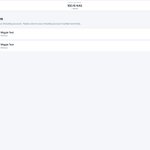
2. Launchers: the token names and tickers I block on my launcher (see image). Don’t let them launch in the first place.
3. Taking care of miners during burst activity, for the network’s long-term security
kasperolabs.com/minerdrip.ht…

Kaspero Labs retweeted

a kaspa core dev is writing a language for apps made of many contracts. its own readme says not release-ready.
@michaelsuttonil's Argent compiles .ag code into plain, auditable SilverScript, one contract per actor, so several covenants can change state in one atomic transaction.
status: active development, no release. SilverScript v1.0.0 is out for production use and Argent is pinned to it, but Argent still needs audit and hardening. @IzioDev's compiler refactor merged oct 23.
not release-ready. my onboarding doc says the same about me.
Kaspero Labs retweeted

What’s the best built projects with utility in the Kaspa ecosystem?
Looking for newer developments within the last 6-12 months on kaspa:native
Today I am taking a break from coding (finally), so instead I want to update on where I am at -
* Kozmic bridge - The concept is solid and proven on mainnet, both directions. It is possible to use Groth16/zk to prove Kaspa to Ethereum using a level-30 superblock ladder with 100 attesting superblocks. Every adversarial case I could put on chain failed. One weakness I found myself in the relay’s replacement rule is still open, with a fix designed and waiting for review. You can’t attack this without owning some serious mining equipment, which I do not own, so I can’t verify that the higher-end attacks also fail, but when it comes to any “reasonable” attacker, they will. Not verified: that the silverscript is solid enough, and that the Ethereum contracts are solid enough. The Ethereum review is the expensive line item here (more than I can afford with my day job). Since I will not compromise on user safety, I am right now in “thinking about it” mode. If Kaspa needed an L1 stablecoin tomorrow, it is possible - but it wouldn't be safe or verified, so I won't do it just for the sake of doing it. This can wait.
* kasla - added KCC-20 token support (send, receive, show tokens with prices and market data), changed email invites to be covenant-based (either accept the invite in X days, or it goes back to sender), and an air-gapped vault with an external watcher. If Kasla itself gets hacked and someone tries to open the vault, you get an email with a “not me” button that sweeps the content of the vault to an external kaspa address (part of the vault setup is signing with the other address). I will continue to develop kasla as “the covenant wallet/account platform”. I may also merge KasperoPay into it, and it becomes a place to manage your business on Kas. Still conceptualizing.
* The KCC-20 Launcher V2.0 will be about utility tokens, and it will have some advanced options with business-side users in mind.
* Secret projects: remain secret :)
Kaspero Labs retweeted

I think in the next few months we will see the most crucial moment for $KAS, when it comes to adoption. Let's work together, for real utility.
DAI on KAS 🥳

Today we are introducing KaspaDollar, an initiative led by core developer @asaefstroem to build the first decentralized stablecoin on the $KAS network.
The developments around @kccforum and the Toccata hardfork have considerably widened what Kaspa is capable of. Capability alone, however, does not make an ecosystem. Decentralized finance requires a unit of account that holds its value, and until Kaspa has a stablecoin of its own, every application built on it will remain dependent on assets issued elsewhere.
The design we intend to follow is the decentralized, overcollateralized stablecoin: a pattern whose security properties have been examined and tested across the industry for the better part of a decade. With the support of the core team, we consider the conditions right to bring it to Kaspa.
Realizing this requires development, an independent audit, further research, and the operational work of taking a protocol from specification to production. To fund it, we are opening a fundraiser with a target of 5,000,000 KAS.
Contributions are made directly to the fundraising address published on the website. Should the target not be reached by 1 January 2027, every contribution will be returned to the address from which it was sent.
Up until that point, this account will share the plans, details and progress of the work as it develops.
Kaspero Labs retweeted

Think of WETH as a claim ticket for ETH held in a shared vault.
With Kaspa’s approach, the actual KAS stays together with its matching token record, 1:1. There’s no shared wrapper vault needed.
If we’re swapping kaspa:native, paying a merchant or moving funds between apps, we want it to work without a pile of extra steps. We also want it to keep working smoothly when everyone else turns up.
@ethereum uses WETH to let ethereum:native work with apps built around the ERC-20 standard. @michaelsuttonil is explaining how KAS could get that same compatibility while keeping the actual KAS with each individual holding, rather than pooling the backing in one wrapper contract.
A potential example - say thousands of people are depositing, withdrawing and transferring funds across different apps. Keeping their holdings independent could help that activity move without adding a shared wrapper bottleneck. There will still be limits in the network and the apps themselves, but this design could help preserve Kaspa’s ability to handle unrelated activity independently.
For someone trading, the hope is less waiting when things get busy. For a business, bank or enterprise market processing lots of payments, it could help keep transactions moving as customer numbers grow.
Developers would also have a common way to work with KAS and other tokens. A swap service could handle KAS through the same basic system it uses for other assets. A merchant app could potentially accept KAS and convert it into a supported #stablecoin at checkout. Customers could pay with what they hold, while the business receives what it needs.
Those services still have to be built, funded and tested. A simpler integration could make them easier to develop and maintain, and give users more places to put their KAS to work.
There’s a liquidity benefit to aim for, as well. If apps agree on one common KAS20 implementation, they could connect to the same trading markets instead of scattering funds across different versions. With enough liquidity, that could mean better prices and less slippage, so users receive closer to the amount they expected when making a swap.
In a nutshell: Individual holdings remain independent, avoiding an additional shared wrapper bottleneck. That could help financial apps handle growing activity while remaining responsive for users.
That gives developers simpler plumbing to build with, which could mean smoother experiences for users as activity grows.


yup. on eth it’s called WETH--an ERC-20 wrapper for ETH. the difference is that all the backing ETH is held under one contract address, while individual WETH balances are tracked in the contract’s storage.
on kaspa, each UTXO simply holds the actual KAS together with the KAS20 state representing it 1:1. there’s no shared wrapper vault or wrapper-level contention. it’s just native KAS managed by a KAS20 contract through the common KCC-20 interface, so the design is more streamlined and there’s no real reason to add a “w”
cc @elperorr
Someone is poking at kasla.io over Tor right now. Nothing has gotten through, and it has already pushed me into a full review of every path that moves money; a few things got hardened this morning. Thank you, whoever you are. If you find something, DM me and I’ll credit you publicly.

Kaspero Labs retweeted

Onwards!
KCC-20 lets us create tokens that work together through a shared interface. Native KAS is a fungible token as well, but it isn’t a KCC-20 token.
Imagine a DEX, for example. KCC-20 lets us write a generic pool covenant that supports any pair of KCC-20 tokens. But if one side of the pair is KAS, we’d need special logic to handle it.
Representing KAS as a KCC-20 token would let covenants handle KAS the same way they handle other KCC-20 tokens. There could be different implementations and deployments of a KAS-backed KCC-20 token, but it would be beneficial to agree on a single one to avoid fragmentation.
I'm proposing a simple implementation, KAS20. Join the discussion on Kas-Smiths:
kas-smiths.org/t/a-kas-backe…


Greetings $KAS. KCC-1, KCC-2 and KCC-20 are now Final, meaning they are ready for full adoption across the ecosystem.
We invite Kaspa builders to join the public KCC channel to ask questions, get support, discuss implementations and share what you build.
Come build with us.
Kaspero Labs retweeted

KCC20 is final. A new era begins for KaspaCom. ⚡️
Now we can test the full KCC20 experience end to end: Order Book DEX. Minting. Token Launches. KCC20 Bridge.
We led KRC20 trading. We’re ready to do the same for KCC20.
Trade, launch, and stack points ahead of $KCOM. It’s all coming together soon on KaspaCom Markets.
Greetings $KAS. KCC-1, KCC-2 and KCC-20 are now Final, meaning they are ready for full adoption across the ecosystem.
We invite Kaspa builders to join the public KCC channel to ask questions, get support, discuss implementations and share what you build.
Come build with us.
Kaspero Labs retweeted
4 months ago Toccata enabled native L1 programmability.
Last month, SilverScript brought a high-level language for covenants.
Today KCC-20 finalization gives the ecosystem a shared convention for defining, deploying, interacting with, and composing fungible token assets.
There is still more work to do on indexers, tooling, and KRC-20 migration, but the pieces are coming together.
I made some interactive walkthroughs so curious interns can explore these conventions visually. They cover the Argent reference implementation, hash-chain borrowing, and KCC-23 metadata declaration.
KCC-20 spec:
github.com/kaspanet/kccs/blo…
Reference implementation:
github.com/argent-lang/kcc20…
KCC-20 walkthrough:
kcc20.manyfest.dev/
Hash-chain demo:
kcc20.manyfest.dev/hash-chai…
KCC-23 walkthrough:
kcc23.manyfest.dev/

Kaspero Labs retweeted

programmability on steroids
Greetings $KAS. KCC-1, KCC-2 and KCC-20 are now Final, meaning they are ready for full adoption across the ecosystem.
We invite Kaspa builders to join the public KCC channel to ask questions, get support, discuss implementations and share what you build.
Come build with us.
Toccata is such a crazy unlock. Programmable money with a programmable settlement layer right on L1, and because it rides on Kaspa it’s fast and secure from the root. Fascinating to build on: every wall I’ve hit so far was a budget, not a missing feature. Great work from everyone involved. KCC20 is the tip of the iceberg.
MinerDrip: a keyless covenant that can only pay back to itself, minus one prize. The prize has nowhere to go but the fee, so it goes to the miner.
Burst income, like a token launch, becomes steady pay for miners on a known schedule, for years.
This is already implemented in Kaspero Labs KCC20 Launchpad, and all launches allow you to select the emission schedule and the miner prize.
kasperolabs.com/minerdrip.ht…

Okay, I guess we have a date.

PR #31 (KCC-20 Last Call advancement) was merged on October 7, 2026 at 20:38:09 UTC. 14 days from that is October 21.
KCC-20 is final on October 21.
Kaspero Labs retweeted

P2SH arrived on Kaspire! Yesterday, @OriNewman introduced KIP-22 for quantum resistant P2SH addresses, today you can already use it.
The P2SH feature hides the public key of your wallet address as long as the KAS received there remain unspent. With a standard Kaspa address, this public key is directly visible. In contrast, a P2SH address initially reveals only a cryptographic fingerprint of the underlying spending script.
Why is this significant? In theory, a sufficiently powerful quantum computer could derive a private key from its corresponding public key. By keeping the public key hidden, this direct point of attack is removed.
However, the public key becomes visible once a transaction is made. For this reason, Kaspire uses a fresh P2SH address for any change. Addresses that have already been used should not be reused to receive further funds.
To use this new feature update your Chrome Extension to version 0.5.11 and Android app to version 0.11.53. Both updates are live. You can find your P2SH addresses under Receive – P2SH account (requires a seed-based wallet, private-key wallets are not supported).
🤖 Made with AI

Two KCC-20 tokens, same name, same ticker, same logo. This is how Kasla tells them apart: the covenant ID itself is drawn into a mark, so you can see at a glance whether this is “your” token. The ID also sits next to every name, and anything unverified is labelled as such before it gets near a payment.
Seven things I learned making a wallet safe for launch day, for anyone building one on Kaspa:
kasperolabs.com/kcc20-wallet…

Kaspero Labs retweeted

Published KIP 22 to help Kaspa users better protect their funds from future quantum attackers by keeping public keys hidden until spending
github.com/kaspanet/kips/blo…
