

Passionate about my family, sustainability, lifelong learning, and making a positive difference ☀ Board Member and Father ツ Thankful to live on Ngunnawal land
Canberra, Australia
Joined May 2013
- Tweets16.5K
- Following5.5K
- Followers2.3K
- Likes25.9K








THREE DECADES OF LEFT-WING VIOLENCE: ENOUGH IS ENOUGH.
Political violence is always wrong. Regardless of the perpetrator, ideology or supposedly righteous cause.
Yet across Western democracies, the past 30 years have witnessed a disturbing pattern of violence, intimidation and destruction associated with elements of the radical left, along with a troubling willingness by some institutions to excuse or minimise it.
Consider the record:
• Far-left and Antifa militancy: Riots, arson, assaults, attacks on police, destruction of businesses and intimidation of political opponents, from Seattle and Hamburg to Portland, Berkeley and Paris.
• Antisemitism: Jewish students, synagogues, businesses and communities have faced appalling intimidation, harassment and violence, particularly since October 2023. Some activists have glorified Hamas or rationalised atrocities against Jews.
• Campus extremism: Occupations, threats, vandalism and efforts to silence dissenting academics and speakers have undermined universities' commitment to intellectual freedom.
• The 2020 US riots: More than US$2 billion in insured losses, devastated businesses, injured citizens and police, and deaths associated with the unrest. Most protesters were peaceful, but that cannot excuse the violence.
• Political assassination: Charlie Kirk was murdered while speaking at a university in September 2025. The alleged killer's political motivations are central to the prosecution. Political disagreement must never become a death sentence.
• Climate extremism: Road blockades, infrastructure disruption, sabotage and attacks on cultural institutions have imposed enormous costs on ordinary citizens.
• Gender-based hostility: Misandrist rhetoric and abuse against males, threats against gender-critical women and attacks on pregnancy-support organisations demonstrate how ideological intolerance extends into gender politics.
Meanwhile, Islamist terrorism has murdered thousands across Western societies, from 9/11 to Madrid, London, Paris and beyond. These atrocities are not left-wing violence, but they demand unequivocal condemnation, including from progressive activists who claim to champion human rights.
Iran's authoritarian theocracy has sponsored intimidation, assassination plots and attacks against dissidents and Jewish communities abroad. Australia has directly experienced Iranian-directed antisemitic attacks.
There is nothing progressive about excusing Hamas, defending the Iranian regime, celebrating assassination or intimidating people because of their religion, sex or political beliefs.
US research from CSIS found that left-wing terrorist attacks and plots have surged during the last 30 years.
We must reject the dangerous idea that political violence becomes acceptable when committed in pursuit of a supposedly noble cause.
That means holding perpetrators accountable, as well as challenging agitators, political leaders, universities, media organisations and institutions that glorify violence, encourage dehumanisation or apply selective moral standards.
Peaceful protest is a democratic right. Assault, arson, terrorism, antisemitism, political assassination and intimidation are not.
The same standards must apply to the far left, far right, Islamist extremists and every other movement.
No excuses. No double standards. No political immunity for violence.
#PoliticalViolence #Extremism #Antisemitism #FreeSpeech #Democracy #HumanRights


Australia’s Long, Overlooked History of Political Violence
Tom Gilling, The Australian, 24 October 2026
Tom Gilling challenges the popular perception that Australia has historically been insulated from terrorism and political violence. Prompted by the horrendous incident involving independent MP Helen Haines, he documents a disturbing history of bombings, assassinations, extremist plots and politically motivated attacks spanning six decades...
Gilling and co-author Clive Small identified more than 200 terrorist incidents and documented threats between 1966 and 2009, with numerous additional incidents since.
theaustralian.com.au/inquire…
The article traces several distinct waves of violence:
- 1960s–1970s: Croatian-Yugoslav ethnic conflicts, attacks on diplomatic missions, the 1966 shooting of opposition leader Arthur Calwell, and the 1978 Sydney Hilton bombing, which killed three people.
- Organised crime and political assassinations: The 1977 murder of anti-drugs campaigner Donald Mackay, the 1994 assassination of Labor MP John Newman, and the bombing of the National Crime Authority headquarters.
- 1980s–1990s: Murders and bombings targeting Family Court judges, Armenian attacks against Turkish diplomats, antisemitic violence, and attacks by neo-Nazi and white nationalist organisations.
- 2000s: Islamist terrorism emerged as a major threat, including the 2002 Bali bombings that killed 88 Australians, the 2004 Jakarta embassy bombing, and foiled plots targeting Australia's electricity grid, major sporting events and military facilities.
- 2010s: Islamic State-inspired attacks and disrupted plots included attempted beheadings, attacks on police, and a sophisticated 2017 conspiracy to bomb a passenger aircraft departing Sydney.
- 2020s: Renewed antisemitic violence, including attacks on synagogues and Jewish institutions, culminated in the December 2025 Bondi Beach massacre, killing 15 people.
Gilling also highlights Australia's evolving counterterrorism legislation, including expanded powers targeting terrorist organisations, their financing and operational networks.
The central message of this article is that political violence is neither new nor exceptional in Australia's history. It has arisen from diverse ideological, religious, ethnic, criminal and geopolitical motivations. Australia's relative political stability should not obscure the persistent threat posed by extremists, including those importing overseas conflicts onto Australian soil...
The article provides historical context rather than arguing that any single ideology explains Australia's experience of political violence.


David Maywald retweeted

”Young men don’t hate reading—they hate the books these women publish.”

WHY ARE BOYS AND MEN TURNING AWAY FROM BOOKS? PERHAPS PUBLISHING SHOULD LOOK IN THE MIRROR.
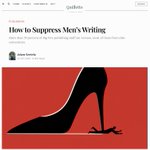
A provocative new @Quillette article by Adam Szetela, “How to Suppress Men’s Writing”, exposes a remarkable transformation in the publishing industry. And it raises uncomfortable questions about ideological conformity, institutional bias and the neglect of male readers.
quillette.com/2026/10/23/why…
Consider the figures Szetela cites:
• Over 70% of employees at America's Big Five publishers are women.
• Over 70% of editors and interns are women.
• Over 60% of publishing executives are women.
• The industry disproportionately recruits graduates from elite universities.
Yet these same institutions frequently proclaim their commitment to diversity, inclusion and representing marginalised voices.
The hypocrisy is blatant and extreme. Their diversity doesn't include men.
Szetela argues that contemporary publishing increasingly privileges leftist ideological narratives, identity politics and particular conceptions of female experience, while marginalising traditionally masculine storytelling, interests and perspectives.
His most provocative contention?
“Young men don’t hate reading—they hate the books these women publish.”
Consider David Goggins' Can't Hurt Me: an unapologetically masculine account of adversity, discipline, resilience and extraordinary achievement. Goggins self-published it, subsequently selling millions of copies.
Meanwhile, boys' reading engagement and literacy outcomes remain deeply concerning...
Of course, smartphones, gaming, educational practices and other factors also contribute. Nor does female representation itself establish discrimination. But Szetela raises an important question: Why do institutions routinely examine their own biases when minority groups are underrepresented, yet so rarely apply the same scrutiny when boys and men disengage?
Having personally reviewed more than 300 books during the last seven years, and also having recently published 100 of the Best Books for Men, I know there’s an extraordinary wealth of literature capable of inspiring, challenging and enriching male readers… Read my book for free at the National Library of Australia:
nla.gov.au/nla.obj-423988221…
We should celebrate books about courage, adventure, fatherhood, competition, sacrifice, responsibility, achievement and the distinctive experiences of men and boys.
The answer isn't fewer books for women. It's more great books for everyone, especially including men and boys.
Publishing should embrace genuine intellectual diversity, rather than ideological gatekeeping…
Men and boys deserve literature that speaks to their interests, aspirations and potential.
#MensIssues #BoysEducation #MaleLiteracy #Publishing #Masculinity #Reading #Quillette
@Adam_Szetela

David Maywald retweeted

Feminists have cried for years about being ‘gatekept’, but ironically when women take over something they are much more discriminatory against men and what we enjoy. They took over publishing, ruined reading for men then ask why men don’t read as much now.
WHY ARE BOYS AND MEN TURNING AWAY FROM BOOKS? PERHAPS PUBLISHING SHOULD LOOK IN THE MIRROR.
A provocative new @Quillette article by Adam Szetela, “How to Suppress Men’s Writing”, exposes a remarkable transformation in the publishing industry. And it raises uncomfortable questions about ideological conformity, institutional bias and the neglect of male readers.
quillette.com/2026/10/23/why…
Consider the figures Szetela cites:
• Over 70% of employees at America's Big Five publishers are women.
• Over 70% of editors and interns are women.
• Over 60% of publishing executives are women.
• The industry disproportionately recruits graduates from elite universities.
Yet these same institutions frequently proclaim their commitment to diversity, inclusion and representing marginalised voices.
The hypocrisy is blatant and extreme. Their diversity doesn't include men.
Szetela argues that contemporary publishing increasingly privileges leftist ideological narratives, identity politics and particular conceptions of female experience, while marginalising traditionally masculine storytelling, interests and perspectives.
His most provocative contention?
“Young men don’t hate reading—they hate the books these women publish.”
Consider David Goggins' Can't Hurt Me: an unapologetically masculine account of adversity, discipline, resilience and extraordinary achievement. Goggins self-published it, subsequently selling millions of copies.
Meanwhile, boys' reading engagement and literacy outcomes remain deeply concerning...
Of course, smartphones, gaming, educational practices and other factors also contribute. Nor does female representation itself establish discrimination. But Szetela raises an important question: Why do institutions routinely examine their own biases when minority groups are underrepresented, yet so rarely apply the same scrutiny when boys and men disengage?
Having personally reviewed more than 300 books during the last seven years, and also having recently published 100 of the Best Books for Men, I know there’s an extraordinary wealth of literature capable of inspiring, challenging and enriching male readers… Read my book for free at the National Library of Australia:
nla.gov.au/nla.obj-423988221…
We should celebrate books about courage, adventure, fatherhood, competition, sacrifice, responsibility, achievement and the distinctive experiences of men and boys.
The answer isn't fewer books for women. It's more great books for everyone, especially including men and boys.
Publishing should embrace genuine intellectual diversity, rather than ideological gatekeeping…
Men and boys deserve literature that speaks to their interests, aspirations and potential.
#MensIssues #BoysEducation #MaleLiteracy #Publishing #Masculinity #Reading #Quillette
@Adam_Szetela

David Maywald retweeted

Because they control systems at every level, it's impossible to fix
They decide what writers to support, who to publish
They control indie routes and can ban male writers from patreon/kickstarter
They can prevent payments through paypal
They control libraries, search engines
David Maywald retweeted

White men are framed as the "oppressor class," they become the group from which resources, positions, and opportunities must be redistributed. This is not meritocracy; it is a system of collective guilt and penalization based on sex and race, a kind of systemic discrimination.

David Maywald retweeted

“Young men don’t hate reading—they hate the books these women publish.”
I have bought one new fiction book in ten years, down from the one a month peak. Even series that started off good ended up being tedious identify lectures in later books.
And romantasy? No.
WHY ARE BOYS AND MEN TURNING AWAY FROM BOOKS? PERHAPS PUBLISHING SHOULD LOOK IN THE MIRROR.
A provocative new @Quillette article by Adam Szetela, “How to Suppress Men’s Writing”, exposes a remarkable transformation in the publishing industry. And it raises uncomfortable questions about ideological conformity, institutional bias and the neglect of male readers.
quillette.com/2026/10/23/why…
Consider the figures Szetela cites:
• Over 70% of employees at America's Big Five publishers are women.
• Over 70% of editors and interns are women.
• Over 60% of publishing executives are women.
• The industry disproportionately recruits graduates from elite universities.
Yet these same institutions frequently proclaim their commitment to diversity, inclusion and representing marginalised voices.
The hypocrisy is blatant and extreme. Their diversity doesn't include men.
Szetela argues that contemporary publishing increasingly privileges leftist ideological narratives, identity politics and particular conceptions of female experience, while marginalising traditionally masculine storytelling, interests and perspectives.
His most provocative contention?
“Young men don’t hate reading—they hate the books these women publish.”
Consider David Goggins' Can't Hurt Me: an unapologetically masculine account of adversity, discipline, resilience and extraordinary achievement. Goggins self-published it, subsequently selling millions of copies.
Meanwhile, boys' reading engagement and literacy outcomes remain deeply concerning...
Of course, smartphones, gaming, educational practices and other factors also contribute. Nor does female representation itself establish discrimination. But Szetela raises an important question: Why do institutions routinely examine their own biases when minority groups are underrepresented, yet so rarely apply the same scrutiny when boys and men disengage?
Having personally reviewed more than 300 books during the last seven years, and also having recently published 100 of the Best Books for Men, I know there’s an extraordinary wealth of literature capable of inspiring, challenging and enriching male readers… Read my book for free at the National Library of Australia:
nla.gov.au/nla.obj-423988221…
We should celebrate books about courage, adventure, fatherhood, competition, sacrifice, responsibility, achievement and the distinctive experiences of men and boys.
The answer isn't fewer books for women. It's more great books for everyone, especially including men and boys.
Publishing should embrace genuine intellectual diversity, rather than ideological gatekeeping…
Men and boys deserve literature that speaks to their interests, aspirations and potential.
#MensIssues #BoysEducation #MaleLiteracy #Publishing #Masculinity #Reading #Quillette
@Adam_Szetela
David Maywald retweeted

This has been going on for decades and many people have tried to draw attention to it. It's why I use Draft2Digital through Smashwords and can get my book into places myself. We need to bring back Boys/Men's fiction. They became the best movies, series and women enjoy them too.
WHY ARE BOYS AND MEN TURNING AWAY FROM BOOKS? PERHAPS PUBLISHING SHOULD LOOK IN THE MIRROR.
A provocative new @Quillette article by Adam Szetela, “How to Suppress Men’s Writing”, exposes a remarkable transformation in the publishing industry. And it raises uncomfortable questions about ideological conformity, institutional bias and the neglect of male readers.
quillette.com/2026/10/23/why…
Consider the figures Szetela cites:
• Over 70% of employees at America's Big Five publishers are women.
• Over 70% of editors and interns are women.
• Over 60% of publishing executives are women.
• The industry disproportionately recruits graduates from elite universities.
Yet these same institutions frequently proclaim their commitment to diversity, inclusion and representing marginalised voices.
The hypocrisy is blatant and extreme. Their diversity doesn't include men.
Szetela argues that contemporary publishing increasingly privileges leftist ideological narratives, identity politics and particular conceptions of female experience, while marginalising traditionally masculine storytelling, interests and perspectives.
His most provocative contention?
“Young men don’t hate reading—they hate the books these women publish.”
Consider David Goggins' Can't Hurt Me: an unapologetically masculine account of adversity, discipline, resilience and extraordinary achievement. Goggins self-published it, subsequently selling millions of copies.
Meanwhile, boys' reading engagement and literacy outcomes remain deeply concerning...
Of course, smartphones, gaming, educational practices and other factors also contribute. Nor does female representation itself establish discrimination. But Szetela raises an important question: Why do institutions routinely examine their own biases when minority groups are underrepresented, yet so rarely apply the same scrutiny when boys and men disengage?
Having personally reviewed more than 300 books during the last seven years, and also having recently published 100 of the Best Books for Men, I know there’s an extraordinary wealth of literature capable of inspiring, challenging and enriching male readers… Read my book for free at the National Library of Australia:
nla.gov.au/nla.obj-423988221…
We should celebrate books about courage, adventure, fatherhood, competition, sacrifice, responsibility, achievement and the distinctive experiences of men and boys.
The answer isn't fewer books for women. It's more great books for everyone, especially including men and boys.
Publishing should embrace genuine intellectual diversity, rather than ideological gatekeeping…
Men and boys deserve literature that speaks to their interests, aspirations and potential.
#MensIssues #BoysEducation #MaleLiteracy #Publishing #Masculinity #Reading #Quillette
@Adam_Szetela
David Maywald retweeted

While I agree with this, it obscures the utter sameness of contemporary literature. There is a lack of spirit and verve in today's best sellers that is jarring when set against those of the early & mid-20th century Western canon.
It's a hollow shell of contrived vapidity.
David Maywald retweeted

This is exactly it. When one group of tastemakers decides what gets published, and Szetela notes 70% of Big Five editors are women, the stories start leaning one way.
When identity politics gets folded in, storytelling takes the back seat in books, movies and games alike. A masculine novel praised by a National Book Award winner can't find a home, and then people wonder why men stopped reading.
Men didn't stop reading. Publishing stopped making books for them. A lot of the push gets sold as kindness and compassion, but underneath it's about control and conformity.
The people steering it know it's costing them readers. They've just decided culture matters more than sales.
WHY ARE BOYS AND MEN TURNING AWAY FROM BOOKS? PERHAPS PUBLISHING SHOULD LOOK IN THE MIRROR.
A provocative new @Quillette article by Adam Szetela, “How to Suppress Men’s Writing”, exposes a remarkable transformation in the publishing industry. And it raises uncomfortable questions about ideological conformity, institutional bias and the neglect of male readers.
quillette.com/2026/10/23/why…
Consider the figures Szetela cites:
• Over 70% of employees at America's Big Five publishers are women.
• Over 70% of editors and interns are women.
• Over 60% of publishing executives are women.
• The industry disproportionately recruits graduates from elite universities.
Yet these same institutions frequently proclaim their commitment to diversity, inclusion and representing marginalised voices.
The hypocrisy is blatant and extreme. Their diversity doesn't include men.
Szetela argues that contemporary publishing increasingly privileges leftist ideological narratives, identity politics and particular conceptions of female experience, while marginalising traditionally masculine storytelling, interests and perspectives.
His most provocative contention?
“Young men don’t hate reading—they hate the books these women publish.”
Consider David Goggins' Can't Hurt Me: an unapologetically masculine account of adversity, discipline, resilience and extraordinary achievement. Goggins self-published it, subsequently selling millions of copies.
Meanwhile, boys' reading engagement and literacy outcomes remain deeply concerning...
Of course, smartphones, gaming, educational practices and other factors also contribute. Nor does female representation itself establish discrimination. But Szetela raises an important question: Why do institutions routinely examine their own biases when minority groups are underrepresented, yet so rarely apply the same scrutiny when boys and men disengage?
Having personally reviewed more than 300 books during the last seven years, and also having recently published 100 of the Best Books for Men, I know there’s an extraordinary wealth of literature capable of inspiring, challenging and enriching male readers… Read my book for free at the National Library of Australia:
nla.gov.au/nla.obj-423988221…
We should celebrate books about courage, adventure, fatherhood, competition, sacrifice, responsibility, achievement and the distinctive experiences of men and boys.
The answer isn't fewer books for women. It's more great books for everyone, especially including men and boys.
Publishing should embrace genuine intellectual diversity, rather than ideological gatekeeping…
Men and boys deserve literature that speaks to their interests, aspirations and potential.
#MensIssues #BoysEducation #MaleLiteracy #Publishing #Masculinity #Reading #Quillette
@Adam_Szetela

David Maywald retweeted

Thank John. You know what's amazing...
Quillette was the first major media outlet to publish an article about my Brilliant Bob kid's books. Thanks to @HannahGal3
brilliantbob.com

David Maywald retweeted

Author @KennethJolivet writes books for boys and cites several reasons boys read less, including the key point that:
"much of the material is assigned by females with female protagonists and is often relationship-based (loved by girls and female teachers)"
centreformalepsychology.com/…

MAKE INTERNATIONAL MEN’S DAY OFFICIAL...
November 19 deserves United Nations recognition. Since 1999 this date has been celebrated as International Men's Day. Last year more than 110 countries marked IMD on the 19th of November.
The UN recognises 15 international days dedicated to women and girls, yet not a single official observance is specifically dedicated to men and boys.
How can genuine gender equality exclude half of humanity?
The International Council for Men and Boys (ICMB), supported by Men Need Love Too and many other organisations worldwide, is campaigning to change this. Join the campaign here:
menneedlovetoo.org/internati…
Official recognition would elevate awareness of male suicide, educational disadvantage, workplace deaths, fatherhood, homelessness and other pressing challenges, while celebrating the extraordinary contributions of men and boys...
This isn't about taking anything away from women and girls. It's about ensuring that males receive equal dignity, compassion and recognition.
It's time for the United Nations to practise the equality that it preaches.
United voices. One purpose.
Please share and support this campaign...
#MakeInternationalMensDayOfficial #InternationalMensDay #MenAndBoys #GenderEquality #ICMB
@UN @menandboysnet

IS ARTIFICIAL INTELLIGENCE BIASED AGAINST MEN? THE RESEARCH SAYS YES.
A growing body of peer-reviewed research reveals something that’s getting very little attention: leading AI systems frequently favour females over equally qualified males.
Consider the evidence:
🔹 Moral double standards: Fulgu and Capraro (2024) found that GPT models judged harming males more acceptable than equivalent harm to females in certain hypothetical moral dilemmas.
🔹 Hiring discrimination: David Rozado (2026) tested 22 leading LLMs across 70 professions and more than 30,000 simulated hiring decisions. AI selected equally qualified female applicants 57% of the time, compared with 43% for males.
🔹 Relationship conflicts: An EMNLP study (2024) found that LLMs consistently favoured women over men when adjudicating interpersonal disputes.
🔹 Criminal justice:A 2026 study found that AI models recommended harsher sentences for male perpetrators harming women than female perpetrators harming men in otherwise comparable domestic violence scenarios.
🔹 Systematic overcorrection: Wang et al. (2024) examined ten LLMs and found seven demonstrated significant hiring bias against men in at least one industry. Researchers explicitly raised concerns about "reverse gender hiring bias and overdebiasing."
🔹 Female overrepresentation: Chen et al. (2025) examined AI-generated stories across 106 occupations, finding women substantially overrepresented, frequently accounting for 65–80% or more of generated characters.
Why is this happening?
AI results depend upon the data and training that they have digested. By attempting to correct the perceived historical discrimination against women, we have inadvertently introduced new discrimination against men through training, reinforcement learning and safety alignment.
Equality cannot mean correcting discrimination against one sex by introducing discrimination against the other.
As AI increasingly influences employment, education, justice and public discourse, these findings demand independent scrutiny, transparent auditing and genuinely sex-neutral standards.
Men and boys deserve equal treatment from Artificial Intelligence. Not preferential treatment. Equal treatment.


YOU CAN SEE EVERYTHING (2026): WHEN DECEPTION BECOMES ENTERTAINMENT
Nathan Fielder and Lance Oppenheim's extraordinary documentary about Elizabeth Holmes (the disgraced founder of Theranos) is fascinating, unsettling and occasionally brilliant. But it also deserves the same scepticism it directs towards its subject...
Filmed during the final 34 days before Holmes entered prison in 2023, this nearly three-hour psychological interrogation exposes her extraordinary capacity for denial, rationalisation and self-mythologising.
Holmes built a company once valued at US$9 billion by promising revolutionary blood-testing technology that could not deliver what she claimed. Investors were deceived, patients faced unreliable tests, and whistleblowers were pressured. Yet even after her criminal conviction, Holmes maintains that she never deliberately misled anyone...
Fielder's awkward, persistent questioning exposes the gulf between her professed intentions and demonstrable reality. Her extraordinary insistence that she has never lied reveals either profound self-deception or a remarkably disciplined performance.
But the documentary raises uncomfortable questions about its own methods.
Holmes and her partner Billy Evans invited the cameras into their lives. Their supposed radical transparency was also an opportunity to rehabilitate her reputation.
As the film progresses, elaborate reconstructions, psychological speculation and Fielder's trademark self-referential filmmaking threaten to transform a convicted fraudster into an enigmatic cinematic anti-heroine.
Meanwhile, the whistleblowers, patients and others who exposed or suffered from Theranos's deception receive comparatively little attention.
The film's greatest achievement is also its central contradiction.
Elizabeth Holmes built Theranos by persuading powerful people to privilege an extraordinary story over verifiable evidence. You Can See Everything brilliantly exposes that process, yet risks repeating the very mistake it condemns.
The documentary is compelling precisely because Holmes remains so persuasive. But fascination is not vindication, sincerity is not truth, and personal vulnerability does not extinguish responsibility.
Ultimately, this is a remarkable examination of deception, manipulation and the seductive power of storytelling.
The real heroes of Theranos were not the charismatic visionaries selling the dream, but the sceptics, journalists and whistleblowers who insisted on evidence.
An excellent documentary. Just don't confuse cinematic brilliance with the whole truth.
