

Passionate about my family, sustainability, lifelong learning, and making a positive difference ☀ Board Member and Father ツ Thankful to live on Ngunnawal land
Canberra, Australia
Joined May 2013
- Tweets16.5K
- Following5.5K
- Followers2.3K
- Likes25.9K









David Maywald retweeted

A father missing a child support payment can trigger the machinery of the state.
But a mother interfering with the father's relationship with the kids?
Well that's when suddenly everyone discovers nuance.
#men #menneedtobeheard #doublestandards
David Maywald retweeted

It's the same with 90% of TV shows now too. All sharp detectives are female being dragged down by bumbling males. Sickening really when many show runners are men, just self loathing feminist men.
David Maywald retweeted

I agree with everything you wrote here except for the phrase "publishing industry". It isn't an industry, it's a cartel.
David Maywald retweeted

"Today, the Big Five publishers are staffed almost entirely by women. According to the most recent data, more than 70 percent of staffers are women. More than 70 percent of editors are women. Even 70 percent of all interns are women. At the executive level, more than 60 percent of leaders are women. In 2026, American publishing looks like lululemon."


David Maywald retweeted

”Young men don’t hate reading—they hate the books these women publish.”

WHY ARE BOYS AND MEN TURNING AWAY FROM BOOKS? PERHAPS PUBLISHING SHOULD LOOK IN THE MIRROR.
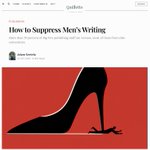
A provocative new @Quillette article by Adam Szetela, “How to Suppress Men’s Writing”, exposes a remarkable transformation in the publishing industry. And it raises uncomfortable questions about ideological conformity, institutional bias and the neglect of male readers.
quillette.com/2026/10/23/why…
Consider the figures Szetela cites:
• Over 70% of employees at America's Big Five publishers are women.
• Over 70% of editors and interns are women.
• Over 60% of publishing executives are women.
• The industry disproportionately recruits graduates from elite universities.
Yet these same institutions frequently proclaim their commitment to diversity, inclusion and representing marginalised voices.
The hypocrisy is blatant and extreme. Their diversity doesn't include men.
Szetela argues that contemporary publishing increasingly privileges leftist ideological narratives, identity politics and particular conceptions of female experience, while marginalising traditionally masculine storytelling, interests and perspectives.
His most provocative contention?
“Young men don’t hate reading—they hate the books these women publish.”
Consider David Goggins' Can't Hurt Me: an unapologetically masculine account of adversity, discipline, resilience and extraordinary achievement. Goggins self-published it, subsequently selling millions of copies.
Meanwhile, boys' reading engagement and literacy outcomes remain deeply concerning...
Of course, smartphones, gaming, educational practices and other factors also contribute. Nor does female representation itself establish discrimination. But Szetela raises an important question: Why do institutions routinely examine their own biases when minority groups are underrepresented, yet so rarely apply the same scrutiny when boys and men disengage?
Having personally reviewed more than 300 books during the last seven years, and also having recently published 100 of the Best Books for Men, I know there’s an extraordinary wealth of literature capable of inspiring, challenging and enriching male readers… Read my book for free at the National Library of Australia:
nla.gov.au/nla.obj-423988221…
We should celebrate books about courage, adventure, fatherhood, competition, sacrifice, responsibility, achievement and the distinctive experiences of men and boys.
The answer isn't fewer books for women. It's more great books for everyone, especially including men and boys.
Publishing should embrace genuine intellectual diversity, rather than ideological gatekeeping…
Men and boys deserve literature that speaks to their interests, aspirations and potential.
#MensIssues #BoysEducation #MaleLiteracy #Publishing #Masculinity #Reading #Quillette
@Adam_Szetela

David Maywald retweeted

Feminists have cried for years about being ‘gatekept’, but ironically when women take over something they are much more discriminatory against men and what we enjoy. They took over publishing, ruined reading for men then ask why men don’t read as much now.
WHY ARE BOYS AND MEN TURNING AWAY FROM BOOKS? PERHAPS PUBLISHING SHOULD LOOK IN THE MIRROR.
A provocative new @Quillette article by Adam Szetela, “How to Suppress Men’s Writing”, exposes a remarkable transformation in the publishing industry. And it raises uncomfortable questions about ideological conformity, institutional bias and the neglect of male readers.
quillette.com/2026/10/23/why…
Consider the figures Szetela cites:
• Over 70% of employees at America's Big Five publishers are women.
• Over 70% of editors and interns are women.
• Over 60% of publishing executives are women.
• The industry disproportionately recruits graduates from elite universities.
Yet these same institutions frequently proclaim their commitment to diversity, inclusion and representing marginalised voices.
The hypocrisy is blatant and extreme. Their diversity doesn't include men.
Szetela argues that contemporary publishing increasingly privileges leftist ideological narratives, identity politics and particular conceptions of female experience, while marginalising traditionally masculine storytelling, interests and perspectives.
His most provocative contention?
“Young men don’t hate reading—they hate the books these women publish.”
Consider David Goggins' Can't Hurt Me: an unapologetically masculine account of adversity, discipline, resilience and extraordinary achievement. Goggins self-published it, subsequently selling millions of copies.
Meanwhile, boys' reading engagement and literacy outcomes remain deeply concerning...
Of course, smartphones, gaming, educational practices and other factors also contribute. Nor does female representation itself establish discrimination. But Szetela raises an important question: Why do institutions routinely examine their own biases when minority groups are underrepresented, yet so rarely apply the same scrutiny when boys and men disengage?
Having personally reviewed more than 300 books during the last seven years, and also having recently published 100 of the Best Books for Men, I know there’s an extraordinary wealth of literature capable of inspiring, challenging and enriching male readers… Read my book for free at the National Library of Australia:
nla.gov.au/nla.obj-423988221…
We should celebrate books about courage, adventure, fatherhood, competition, sacrifice, responsibility, achievement and the distinctive experiences of men and boys.
The answer isn't fewer books for women. It's more great books for everyone, especially including men and boys.
Publishing should embrace genuine intellectual diversity, rather than ideological gatekeeping…
Men and boys deserve literature that speaks to their interests, aspirations and potential.
#MensIssues #BoysEducation #MaleLiteracy #Publishing #Masculinity #Reading #Quillette
@Adam_Szetela

David Maywald retweeted

Because they control systems at every level, it's impossible to fix
They decide what writers to support, who to publish
They control indie routes and can ban male writers from patreon/kickstarter
They can prevent payments through paypal
They control libraries, search engines
David Maywald retweeted

White men are framed as the "oppressor class," they become the group from which resources, positions, and opportunities must be redistributed. This is not meritocracy; it is a system of collective guilt and penalization based on sex and race, a kind of systemic discrimination.

David Maywald retweeted

“Young men don’t hate reading—they hate the books these women publish.”
I have bought one new fiction book in ten years, down from the one a month peak. Even series that started off good ended up being tedious identify lectures in later books.
And romantasy? No.
WHY ARE BOYS AND MEN TURNING AWAY FROM BOOKS? PERHAPS PUBLISHING SHOULD LOOK IN THE MIRROR.
A provocative new @Quillette article by Adam Szetela, “How to Suppress Men’s Writing”, exposes a remarkable transformation in the publishing industry. And it raises uncomfortable questions about ideological conformity, institutional bias and the neglect of male readers.
quillette.com/2026/10/23/why…
Consider the figures Szetela cites:
• Over 70% of employees at America's Big Five publishers are women.
• Over 70% of editors and interns are women.
• Over 60% of publishing executives are women.
• The industry disproportionately recruits graduates from elite universities.
Yet these same institutions frequently proclaim their commitment to diversity, inclusion and representing marginalised voices.
The hypocrisy is blatant and extreme. Their diversity doesn't include men.
Szetela argues that contemporary publishing increasingly privileges leftist ideological narratives, identity politics and particular conceptions of female experience, while marginalising traditionally masculine storytelling, interests and perspectives.
His most provocative contention?
“Young men don’t hate reading—they hate the books these women publish.”
Consider David Goggins' Can't Hurt Me: an unapologetically masculine account of adversity, discipline, resilience and extraordinary achievement. Goggins self-published it, subsequently selling millions of copies.
Meanwhile, boys' reading engagement and literacy outcomes remain deeply concerning...
Of course, smartphones, gaming, educational practices and other factors also contribute. Nor does female representation itself establish discrimination. But Szetela raises an important question: Why do institutions routinely examine their own biases when minority groups are underrepresented, yet so rarely apply the same scrutiny when boys and men disengage?
Having personally reviewed more than 300 books during the last seven years, and also having recently published 100 of the Best Books for Men, I know there’s an extraordinary wealth of literature capable of inspiring, challenging and enriching male readers… Read my book for free at the National Library of Australia:
nla.gov.au/nla.obj-423988221…
We should celebrate books about courage, adventure, fatherhood, competition, sacrifice, responsibility, achievement and the distinctive experiences of men and boys.
The answer isn't fewer books for women. It's more great books for everyone, especially including men and boys.
Publishing should embrace genuine intellectual diversity, rather than ideological gatekeeping…
Men and boys deserve literature that speaks to their interests, aspirations and potential.
#MensIssues #BoysEducation #MaleLiteracy #Publishing #Masculinity #Reading #Quillette
@Adam_Szetela
David Maywald retweeted

This has been going on for decades and many people have tried to draw attention to it. It's why I use Draft2Digital through Smashwords and can get my book into places myself. We need to bring back Boys/Men's fiction. They became the best movies, series and women enjoy them too.
WHY ARE BOYS AND MEN TURNING AWAY FROM BOOKS? PERHAPS PUBLISHING SHOULD LOOK IN THE MIRROR.
A provocative new @Quillette article by Adam Szetela, “How to Suppress Men’s Writing”, exposes a remarkable transformation in the publishing industry. And it raises uncomfortable questions about ideological conformity, institutional bias and the neglect of male readers.
quillette.com/2026/10/23/why…
Consider the figures Szetela cites:
• Over 70% of employees at America's Big Five publishers are women.
• Over 70% of editors and interns are women.
• Over 60% of publishing executives are women.
• The industry disproportionately recruits graduates from elite universities.
Yet these same institutions frequently proclaim their commitment to diversity, inclusion and representing marginalised voices.
The hypocrisy is blatant and extreme. Their diversity doesn't include men.
Szetela argues that contemporary publishing increasingly privileges leftist ideological narratives, identity politics and particular conceptions of female experience, while marginalising traditionally masculine storytelling, interests and perspectives.
His most provocative contention?
“Young men don’t hate reading—they hate the books these women publish.”
Consider David Goggins' Can't Hurt Me: an unapologetically masculine account of adversity, discipline, resilience and extraordinary achievement. Goggins self-published it, subsequently selling millions of copies.
Meanwhile, boys' reading engagement and literacy outcomes remain deeply concerning...
Of course, smartphones, gaming, educational practices and other factors also contribute. Nor does female representation itself establish discrimination. But Szetela raises an important question: Why do institutions routinely examine their own biases when minority groups are underrepresented, yet so rarely apply the same scrutiny when boys and men disengage?
Having personally reviewed more than 300 books during the last seven years, and also having recently published 100 of the Best Books for Men, I know there’s an extraordinary wealth of literature capable of inspiring, challenging and enriching male readers… Read my book for free at the National Library of Australia:
nla.gov.au/nla.obj-423988221…
We should celebrate books about courage, adventure, fatherhood, competition, sacrifice, responsibility, achievement and the distinctive experiences of men and boys.
The answer isn't fewer books for women. It's more great books for everyone, especially including men and boys.
Publishing should embrace genuine intellectual diversity, rather than ideological gatekeeping…
Men and boys deserve literature that speaks to their interests, aspirations and potential.
#MensIssues #BoysEducation #MaleLiteracy #Publishing #Masculinity #Reading #Quillette
@Adam_Szetela
David Maywald retweeted

While I agree with this, it obscures the utter sameness of contemporary literature. There is a lack of spirit and verve in today's best sellers that is jarring when set against those of the early & mid-20th century Western canon.
It's a hollow shell of contrived vapidity.
David Maywald retweeted

This is exactly it. When one group of tastemakers decides what gets published, and Szetela notes 70% of Big Five editors are women, the stories start leaning one way.
When identity politics gets folded in, storytelling takes the back seat in books, movies and games alike. A masculine novel praised by a National Book Award winner can't find a home, and then people wonder why men stopped reading.
Men didn't stop reading. Publishing stopped making books for them. A lot of the push gets sold as kindness and compassion, but underneath it's about control and conformity.
The people steering it know it's costing them readers. They've just decided culture matters more than sales.
WHY ARE BOYS AND MEN TURNING AWAY FROM BOOKS? PERHAPS PUBLISHING SHOULD LOOK IN THE MIRROR.
A provocative new @Quillette article by Adam Szetela, “How to Suppress Men’s Writing”, exposes a remarkable transformation in the publishing industry. And it raises uncomfortable questions about ideological conformity, institutional bias and the neglect of male readers.
quillette.com/2026/10/23/why…
Consider the figures Szetela cites:
• Over 70% of employees at America's Big Five publishers are women.
• Over 70% of editors and interns are women.
• Over 60% of publishing executives are women.
• The industry disproportionately recruits graduates from elite universities.
Yet these same institutions frequently proclaim their commitment to diversity, inclusion and representing marginalised voices.
The hypocrisy is blatant and extreme. Their diversity doesn't include men.
Szetela argues that contemporary publishing increasingly privileges leftist ideological narratives, identity politics and particular conceptions of female experience, while marginalising traditionally masculine storytelling, interests and perspectives.
His most provocative contention?
“Young men don’t hate reading—they hate the books these women publish.”
Consider David Goggins' Can't Hurt Me: an unapologetically masculine account of adversity, discipline, resilience and extraordinary achievement. Goggins self-published it, subsequently selling millions of copies.
Meanwhile, boys' reading engagement and literacy outcomes remain deeply concerning...
Of course, smartphones, gaming, educational practices and other factors also contribute. Nor does female representation itself establish discrimination. But Szetela raises an important question: Why do institutions routinely examine their own biases when minority groups are underrepresented, yet so rarely apply the same scrutiny when boys and men disengage?
Having personally reviewed more than 300 books during the last seven years, and also having recently published 100 of the Best Books for Men, I know there’s an extraordinary wealth of literature capable of inspiring, challenging and enriching male readers… Read my book for free at the National Library of Australia:
nla.gov.au/nla.obj-423988221…
We should celebrate books about courage, adventure, fatherhood, competition, sacrifice, responsibility, achievement and the distinctive experiences of men and boys.
The answer isn't fewer books for women. It's more great books for everyone, especially including men and boys.
Publishing should embrace genuine intellectual diversity, rather than ideological gatekeeping…
Men and boys deserve literature that speaks to their interests, aspirations and potential.
#MensIssues #BoysEducation #MaleLiteracy #Publishing #Masculinity #Reading #Quillette
@Adam_Szetela

David Maywald retweeted

Thank John. You know what's amazing...
Quillette was the first major media outlet to publish an article about my Brilliant Bob kid's books. Thanks to @HannahGal3
brilliantbob.com

David Maywald retweeted

Author @KennethJolivet writes books for boys and cites several reasons boys read less, including the key point that:
"much of the material is assigned by females with female protagonists and is often relationship-based (loved by girls and female teachers)"
centreformalepsychology.com/…

David Maywald retweeted

A thought-provoking piece by @Louise_m_perry in this weekend’s @australian on the growing divide between men and women- often framed as men moving right while women move left.
Perry suggests young men and women aren’t just being radicalised online. They’ve stopped deradicalising each other offline, as fewer young people across the developed world form romantic, long term relationships.
🔗 theaustralian.com.au/weekend…
Archive: archive.li/rKFZ9
