

Interventional and Endovascular Cardiologist focused on improving human wellness through a plant based whole food diet and interval exercise training
Austin, TX
Joined October 2018
- Tweets354
- Following401
- Followers319
- Likes178


Vamsi Krishna MD retweeted

All the #AHA26 Clinical Trials Presented So Far Are in Thread Below:
ZEUS: Lowering IL-6 levels with Ziltvekimab did not lower the risk of CV events in patients with ASCVD, CKD, and CV inflammation compared to placebo.

Vamsi Krishna MD retweeted

1/8: The #PARAMOUNT trial of #coronary plaque-based care was presented this morning at #AHA26. Here are the key findings and some context for interpreting the results. The trial and this post were sponsored by @CleerlyHealth, for whom I serve as a consultant.

Vamsi Krishna MD retweeted

At #TCT2026 we showcased the use of a humanoid robot in the cath lab to increase procedural efficiency, with simultaneous publication in @EuroInterventio
@aelsab
@MaryHedgesMD
@MayraGuerreroMD
@DFCapodanno
@rajivxgulati
@mirvatalasnag
@mmamas1973
eurointervention.pcronline.c…


Vamsi Krishna MD retweeted

this might be my last normal tweet before biotech goes vertical
i'm not a whistleblower. I don't work at Lilly, Novo or any of the big labs
but there is a massive shift happening in human biology right now.
it's sitting in press releases and almost nobody reads them
the last 6 months alone:
- a once-daily pill roughly doubled median survival in metastatic pancreatic cancer (13.2 vs 6.6 months)
- a one-time gene editing infusion cut hereditary angioedema attacks 87%, and 62% of patients stayed attack-free and off all other prevention for 6 months
- a one-time gene edit for cholesterol dropped LDL up to 62%, and it held for over a year
- a personalized mrna vaccine beat keytruda alone in a 1,137 patient melanoma phase 3
- retatrutide hit ~28% weight loss in a phase 3
- an ai-designed drug entered phase 3
- a pill that regrows hair passed its second phase 3
- an immunotherapy that could let some rectal cancer patients skip surgery, chemo and radiation just got fda approved
- a man lived 271 days off dialysis on a pig kidney
- human cells were caught passing chromosome-sized chunks of DNA to their neighbors, and it changes how the neighbors behave
we are on the verge of an era where the human body is a software problem and the update cycle gets shorter everyday
stick around, it's going to get weird
bio/acc
Vamsi Krishna MD retweeted

LEFT MAIN PCI: THE IVUS STENT EXPANSION TARGETS YOU SHOULD KNOW
The left main coronary artery bifurcation is one of the most challenging sites for PCI. Underexpansion, particularly at the LCx ostium, can contribute to in-stent restenosis and adverse outcomes.
1. Classic IVUS-derived MSA thresholds
⭕ Proximal LM: 8.2 mm²
⭕ Polygon of confluence (POC): 7.2 mm²
⭕ LAD ostium: 6.3 mm²
⭕ LCx ostium: 5.0 mm² if the LCx ostium is stented; the original study reported 4.0 mm² when it was not stented.
These thresholds originated from studies predicting angiographic restenosis. They are historical benchmarks, not universal definitions of optimal expansion.
2. What does newer evidence say?
The 2026 EAPCI/EBC consensus emphasizes intravascular imaging to plan, guide and optimize left main bifurcation PCI. It also notes that contemporary studies often achieve larger stent areas than the classic 5-6-7-8 criteria.
The 2026 OPTIMAL trial found no significant reduction in its composite clinical endpoint with IVUS-guided PCI compared with angiography-guided PCI. This does not establish that imaging is useless; procedural optimization and patient selection remain essential.
3. Practical takeaway
Use IVUS or OCT where appropriate to assess stent expansion, apposition and edge complications. Interpret absolute MSA alongside vessel size, reference lumen area, anatomy and the bifurcation technique used.
Remember: The goal is not merely to reach a number. It is to achieve safe, adequate expansion throughout the treated segments.
References: Kang SJ et al. IVUS-guided left main PCI and segmental MSA thresholds; 2026 EAPCI/EBC Clinical Consensus Statement; OPTIMAL Trial, NEJM, 2026.

Vamsi Krishna MD retweeted

Here are 50 hidden internet rabbit holes most people have never discovered 👇
1. zoom.earth — Watch the world via live satellite imagery
2. flightradar24.com — See every plane currently in the sky
3. marinetraffic.com — Track all ships at sea in real time
4. windy.com — Live map of winds and storms
5. lightningmaps.org — Watch lightning strikes hitting Earth in real time
6. earthquake.usgs.gov — Live list of recent earthquakes
7. submarinecablemap.com — Ocean cables carrying the internet
8. globalforestwatch.org — Watch forests disappear from space
9. worldometers.info — The world's statistics, second by second
10. internetlivestats.com — Current number of tweets and searches being posted
11. thetruesize.com — Compare the true sizes of countries
12. oldmapsonline.org — Maps from centuries ago
13. davidrumsey.com — Archive of 150,000 historical maps
14. openstreetmap.org — World map drawn by volunteers
15. window-swap.com — Look out the window of a random person around the world
16. virtualvacation.us — Virtual walks through cities
17. mapcrunch.com — Teleport to a random spot on Earth
18. atlasobscura.com — Catalog of the world's strangest places
19. neal.fun — Interactive knowledge experiences
20. htwins.net/scale2 — Scale journey from atom to universe (Updated HTML5 link)
21. eyes.nasa.gov — Explore the solar system in 3D
22. stellarium-web.org — Real sky map in your browser
23. apod.nasa.gov — NASA's astronomy picture of the day
24. images.nasa.gov — NASA's entire visual archive, free
25. pudding.cool — Visual articles told through data
26. ourworldindata.org — The state of the world with real data
27. gapminder.org — What we mistakenly think we know about the world
28. informationisbeautiful.net — Visualizing complex data
29. data.worldbank.org — World Bank's open data
30. data.tuik.gov.tr — Turkey's official statistics database
31. archive.org — Archive of millions of books, films, and software
32. gutenberg.org — 70,000 free books whose copyrights have expired
33. openlibrary.org — Record of every book in the world
34. loc.gov — U.S. Library of Congress digital archive
35. europeana.eu — Europe's cultural heritage archive
36. dp.la — America's digital library collection
37. artsandculture.google.com — Tour museums from home
38. rijksmuseum.nl — Download artworks in high resolution
39. wikiart.org — Archive of 250,000 artworks
40. publicdomainreview.org — Forgotten visual treasures of history
41. openculture.com — Free archive of culture and education
42. metmuseum.org — Met Museum's open collection
43. musicmap.info — Family tree of music genres
44. radiooooo.com — Pick a country and decade to listen to that era
45. listen.hatnote.com — Turn Wikipedia edits into audio
46. wikipedia.org — Random knowledge well
47. timeanddate.com — Time, sunrises, and sky events
48. sciencedaily.com — Live stream of science news
49. arxiv.org — Free preprints of scientific papers
50. observablehq.com — Visualize data with live code

Vamsi Krishna MD retweeted

Do this.
Stay safe.

PSA: This week was kind of a turning point for AI and cybersecurity. Please take this weekend to do some simple cleanup for your family. Some suggestions:
- Set up a password manager like 1Password and give your spouse or partner access to a shared vault. Teach them how to use it.
- Update your passwords for critical stuff - your email account, your bank or financial stuff, etc. Store in your password manager and use the strongest password you can.
- Use two factor auth for everything you can. SMS is not ideal although better than nothing. Google Authenticator or a passkey is better. Hardware key is safest.)
- Add a sim pin to your phone. Makes it harder to sim jack.
- Update your phone and your computer to the newest releases. Turn auto-updates on.
- Freeze your credit - takes 5 minutes.
- Get an IRS Identity Protection PIN.
- If you’re using claude code or have AI agents that browse the web, they’re probably using Node.js. It’s also vulnerable. Update claude code, update node on your machine.
- If you’re building stuff on your computer, ask claude or grokbot (which is connected to twitter and likely has the most current info) to audit any of your repos for vulnerabilities. Ask grok to make it a scheduled task so it can do this daily - things are moving very quickly in the space right now.
- Consider some light resiliency stuff. This probably sounds silly, but it sounded silly at the beginning of covid too. Having printed out copies of important stuff - especially financial accounts. Having some cash on hand. Having some shelf-stable food and clean water or a water filter. Having a map. Having a generator that can at least power your fridge or some devices. Cheap insurance.
Again, I don’t want to alarm people, but I was taught that you should have a Secure plan, a Comfortable plan, and a Wealthy plan. And it seems pretty clear the secure plan needs to now factor cybersecurity risk as a legit threat. Take a weekend and shore yourself up.


Vamsi Krishna MD retweeted

Meta-analyses of intravascular imaging guidance of PCI show markedly improved outcomes, but only if you use this tool properly — pre-, intra- and post-PCI and with appropriate targets. How do you do it? Our new state-of-the-art review in EHJ takes you through it step by step.


Vamsi Krishna MD retweeted

Berberine lowers LDL cholesterol in randomized trials. I'm interested in how that connects to ApoB, artery plaque, and the gut microbiome.
A meta-analysis pooling 14 placebo-controlled trials found an average LDL reduction of approximately 18 mg/dL.
Recent randomized-trial evidence also found reductions in ApoB, which estimates the number of circulating particles that can contribute to atherosclerosis.
Early clinical evidence also suggests berberine can reduce plaque in the arteries. And at least one of those studies also found a modest reduction in TMAO, a metabolite linked to gut microbial metabolism and implicated in atherosclerosis.
One interesting detail from the newer research: ApoB decreased in both men and women, with a larger response in women.
In a new placebo-controlled trial in women, berberine lowered ApoB by about 13 mg/dL relative to placebo. Researchers compared those results with an earlier trial in men and found evidence suggesting women had a stronger lipid response.
What is interesting is that this may just be a dose-dependent effect. In a separate study, women had almost three times the blood exposure to berberine after the same dose.
Together, these findings make berberine a promising compound for cardiovascular health, with potential benefits spanning lipid metabolism, artery health, and the gut microbiome.

Vamsi Krishna MD retweeted

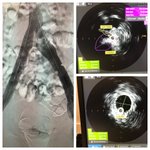
Managing tortuosify can be trick:
Large guide for support
Micro options (small with conform, large will straighten)
Caravel without wire to sort pseudo from dissection
DCB for the win
Vamsi Krishna MD retweeted

I spent 48 hours in SF hanging out with billionaires, data labs and AI founders and execs running $1B to $100B companies.
My observations:
1. Sooo MANY stories of data brokers making like $2M a WEEK selling company data to labs. I can't tell if it's the beginning or a bubble, and I kept wondering which niches are left. Digging into it actively.
2. At dinner, someone asked the table, "If a new model drops next month, does your company get better or worse?" HALF the table went quiet! I think that's the best question to ask about any AI startup right now.
3. The bar people talk about now is hitting $1B in revenue in 12 months (I guess that's the new unicorn?). What I didn't hear much about is retention. AI revenue can come in fast and leave fast, and I think we're going to see a lot of stories of AI companies with huge revenue and terrible retention.
4. It's pretty clear we're living through the reinvention of the computer. The model is the CPU, the harness is the operating system, and skills and plugins are the apps. Thinking about it that way makes it easier to see where the whitespace is.
5. We're maybe 12 months from an agent that can watch you work for a week and then do your job without any instructions. The screen recording plus agent memory plus local model combination makes this possible right now.
6. Agent harnesses feel like the new GPT wrappers, in a good way, especially vertical ones. The best teams I talked to treat the model as swappable. One founder walked me through routing different models to different jobs: one for taste and visuals, a cheaper one for the everyday stuff, another for text.
They use prompts they can move across models over fine-tuning, and A/B test the output on what users actually do with it: do they edit it, export it, share it? A vertical harness is basically four things: the connectors for that industry's data, evals written by people who know the work, rules for what the agent can and can't touch, and a clean screen for a human to review. The model is maybe 20% of it.
7. There's a lot of reverse engineering going on/cloning going on more than I've ever seen. People are decompiling software and rebuilding it with agents, and someone showed a suite of like 10 apps that are worth $5B+ each all that he cloned open source. Me and everyone are still thinking through what it means when software gets this easy to copy.
8. My guess is the value moves to data. If the software can be rebuilt quickly, what's worth paying for in a legacy SaaS company is the years of customer data and workflows inside it. Some SaaS companies are secretly data companies.
Gets me thinking about how do you truly value data for this saas companies? Like if we were buying these dying saas companies at 2x ARR before (as example), maybe there is a better metric. Idk, just thinking out loud here.
9. It feels like a good chunk of legacy software won't make it to the agentic era, especially anything built around people clicking through a lot of screens.
10. Every company I talked to wants to pipe its internal data into one place and expose it to agents through MCP. Then they look at the data and realize it's a mess: five versions of the same customer, old Slack channels, PDFs nobody can search. Cleaning that up feels like a big consulting opportunity!
11. A lot of founders are building the basic building blocks for agents: APIs, data layers and tools. Some of the companies I saw barely have a UI because the main user is an agent. I really believe the startups that build primitives to this agentic era will do extremely well. Building blocks is the best way to think about it.
12. Labs can get plenty of training data, but it's harder to get real examples of agents failing inside companies. Whoever has those logs has something valuable.
13. Someone running a big consumer company told me the next fight is over memory. The model that remembers the most about you wins, and the smartest model matters less than people think.
14. Physical AI came up a lot. Astra I think was the first model that got people into AI can actually do CAD, and I think a lot of people are thinking what does vibe manufacturing really look like. The line I keep thinking about came from a robotics founder: the hardest problems in AI are deployment problems now, not research problems. Their robots work on their own, call a human when they get stuck, and every one of those calls becomes training data.
15. Cybersecurity companies are having a moment and are actually cool companies to build now, especially the ones that clean up after a breach. Every agent with access to your systems is a new door into your company, and a lot of those doors were left open.
16. Some startups are worth more dead than alive now. A shutdown company with 5 years of Slack, email and code can get paid for licensing all of it. I wouldn't be surprised if founders start factoring that into when they shut down.
17. People are starting to talk about monetizing the agent web. It feels really early, but when the most popular user of the internet is an agent, what startups should you be building?
18. I think agent insurance is coming. Once an agent makes an expensive mistake, insurers will want audits before they cover anyone.
19. Several people said the hire they want most is someone with taste who can write evals. The models are getting good at generating ideas, so the hard part is judging which ones are good.
20. New trend I observed: startup raises VC, uses venture dollars to become a creator, startup fails, founder falls back on being a full-time creator and incubates other products bootstrapped.
21. Getting SIGNIFICANT distribution is HARD right now. Founders are sponsoring buses, buying billboards like crazy and throwing parties with famous DJs to get noticed. Kinda feels dotcom era in that sense.
Attention is what's scarce! The growth guy going viral sharing his UGC strategy from Wispr Flow is a good example. It's the sauce everyone wants, and I truly believe there are probably only 50 people on the planet who know how to scale these types of businesses efficiently in this era.
Always good to get that dose of SF. I felt sooo lucky to have such an incredible trip during such an incredible time in building businesses. Surreal in so many ways.
Happy to be home and locked in.
Until next time!


Vamsi Krishna MD retweeted

Physician compensation versus lifestyle balance (a composite index by Marit that accounts for weekly hours, long shift or after-hours work, call burden, and vacation weeks) by major specialty

Vamsi Krishna MD retweeted

Nice summary of some of the results from the European Association for the Study of Diabetes #EASD last week
It was a very well attended meeting with lots of great science!

Vamsi Krishna MD retweeted

Heart disease = low nitric oxide.
Heart disease = insulin resistance.
Heart disease = inflammation.
It doesn't begin with age. It starts years earlier.
1. Eat beets most days for 30 days.


Vamsi Krishna MD retweeted

South Asian Cardiovascular Risk: Role of Coronary Artery Calcium Scoring and Computed Tomography Angiography. Outstanding work led by @DineshKalra and @virani_md just published in @JACCJournals
jacc.org/doi/10.1016/j.jacas…
@MontefioreNYC @MonteHeart @EinsteinMed

Vamsi Krishna MD retweeted

Wisdom!

Pick any medical specialty other than your own. Who’s the most famous physician in it? You probably can’t name one.
Almost none of us will be known outside our field, and even those who achieve real professional fame are mostly forgotten within a few decades.
Fame is a poor reason to devote your life to medicine. The work itself matters more: caring for patients, discovering new knowledge, and teaching the next generation.

Vamsi Krishna MD retweeted

Eager to see the outcome!

The University of Arkansas just launched the 1st U.S. based injectable BPC-157 Randomized Controlled Trial for tissue healing.
They’re studying post-rotator cuff surgery healing through objective measures like strength testing, MRI, and range of motion. Also patient reported questionnaires on recovery (PROMs).
This is what the science community and physicians needed.
Enrollment starts Early 2027.
First data likely to be seen Early 2028.
I will keep you updated.
clinicaltrials.gov/study/NCT…
#bpc #bpc157 #peptide #peptides #science #research