

Former Political Mercenary. Energy Truther.
Joined February 2009
- Tweets7.8K
- Following1.8K
- Followers1.4K
- Likes1.5K







Andrew Ritter Jr retweeted

Shale Crescent natural gas prices stayed below European and Asian prices every year from 2006 to 2025 ⚡
Created in partnership with @ShaleCresUSA, this graphic shows regional natural gas prices across major markets.
visualcapitalist.com/sp/sc02… #sc02

Andrew Ritter Jr retweeted

American families are paying the price for a broken permitting system.
The Bipartisan American Affordability and Jobs Act’s generational permitting reforms can unlock investment to lower prices.
Read how in our latest blog.
axpc.org/education-resource/…

Andrew Ritter Jr retweeted

Congress is close to a bipartisan permitting deal. Some Dems are hesitating, either bc they think it's unnecessary, or bc they want to wait til after the election for a weaker reform of enviro law — but both instincts are wrong. Do it now.
@ppavnr & me:
wsj.com/opinion/dems-should-…

Andrew Ritter Jr retweeted

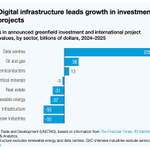
Data centers enable Zoom meetings, online food deliveries, video streaming, instant retail stock trading and more. If data centers went dark, so would the modern economy.

The surge of opposition to data centers reflects misinformation and anxiety about the future more than it does reality. President Trump is finally speaking up.
on.wsj.com/4qKwkb8

Andrew Ritter Jr retweeted

Data centers power everything from telemedicine to online banking — and they run on energy.
PA has the natural gas, the infrastructure, and the workforce to build this here, and build it responsibly.
More from Jon Anzur (@PAChamber) in @broadandliberty: broadandliberty.com/2026/09/…

Andrew Ritter Jr retweeted

For 50 years, government made energy harder to build. Now it blames AI data centers for needing some.
At least 30% of recent wind and solar siting applications were canceled — with local zoning, grid interconnection and community opposition among the leading causes, according to a Berkeley Lab survey of developers at 62 companies responsible for roughly half of U.S. wind and solar development from 2016–2023.
And it goes well beyond wind and solar. The stated objection keeps changing, yet the machinery used to stop the project doesn’t.
Cape Wind: 468 MW proposed off deep-blue Mass. in Nantucket Sound. Ted Kennedy and RFK Jr. fought it for years. Years of litigation and delay helped run out the financing clock. The power contracts vanished and the developer surrendered the lease.
This was the liberal energy dream — until somebody tried to build it.
Shoreham: Long Island spent $5.5 billion on an 809 MW nuclear plant, substantially completed in 1984. It never generated a watt commercially. Sold to a state authority for $1 and dismantled.
Northern Pass: Roughly 1,100 MW of Canadian hydropower into New England. New Hampshire denied it. Eversource wrote off $318 million.
Jordan Cove: FERC approved an Oregon LNG terminal and 229-mile pipeline. Oregon denied necessary permits. The developer walked.
Dryden: An energy company held gas leases on more than a third of the town. Dryden banned oil and gas development outright. New York’s highest court said it could.
The objections weren’t identical, and some were legitimate but that’s exactly the point.
Big Tech can’t explain a MA wind farm, a Long Island nuclear plant, a NH transmission line, an OR LNG terminal and gas leases in upstate NY.
The right understood what this machinery did when the targets were nuclear, LNG and fracking.
AI data centers are showing whether it opposed the machinery or just disliked who was using it.
Energy is only one set of examples. We use the same politics to stop housing, health care facilities and factories, then call the resulting scarcity an affordability crisis.


The fight over AI data centers is the politics of the affordability crisis happening before our eyes.
Americans want more housing, energy, factories and jobs. They just don’t want any of it built near them.
Everyone has a theory for why people don’t want data centers nearby: AI, Big Tech, water, electricity. Perhaps some are true.
But none explains why we’ve spent decades fighting apartment buildings, nuclear plants, transmission lines, warehouses and factories too.
The objections change with the project, but the political incentive remains the same.
The benefits of new development are spread widely; the costs and disruption — real or perceived — are concentrated locally among people with every reason to organize against it.
Then government lets concentrated local opposition veto development whose benefits extend far beyond the people in the room.
These are the roots of the affordability crisis: government manufactures scarcity, then labels the resulting high prices a “market failure.”
Andrew Ritter Jr retweeted

New argument against data centers: They make you too rich and make your public amenities too nice.


Andrew Ritter Jr retweeted
Appalachia is projected to lead all U.S. natural gas-producing regions in 2026, with output reaching 37.0 Bcf/d ⚡
Created in partnership with @ShaleCresUSA, this graphic compares projected natural gas production across major U.S. regions using data from the EIA.
visualcapitalist.com/sp/sc02… #sc02

Andrew Ritter Jr retweeted

Fascinating. Some data centers came to a struggling town in Washington state. Did it run out of water? Was the community destroyed?
Let’s see. The town…built a new high school, hospital, library, sewage systems, and police & fire stations. Poverty fell from 29% to 6%.
Oh.

Andrew Ritter Jr retweeted

While everyone is focused on the global crude oil market, it's actually natural gas markets that are seeing the biggest price increases since the start of the Iran conflict, followed by refined products.
Note: U.S. natural gas prices being the exception.

Andrew Ritter Jr retweeted

📊 PA Poll Drop: Pennsylvania voters overwhelmingly support an all-of-the-above energy strategy that prioritizes affordability, reliability, consumer choice & investment in both traditional & renewable energy resources.
View key findings below and click to see the full results:
Andrew Ritter Jr retweeted
Exploiting statutory ambiguity to arbitrarily halt LNG exports hurts American energy workers and our economy.
@JohnCornyn and @SenFettermanPA’s LNG Export Security Act delivers regulatory certainty for America’s natural gas producers to plan, invest, and operate without fear of political interference.
axpc.org/education-resource/…

Andrew Ritter Jr retweeted

U.S. natural gas prices are below $3.
Perhaps this would be a good time to check-in with all the folks who keep telling us LNG exports will raise prices for American consumers?

Andrew Ritter Jr retweeted
US LNG EXPORTS UP, NATGAS PRICES DOWN
LNG Exports
2026: 17 Bcf/d
2027: 18.6 Bcf/d (+9%)
Natgas Prices
2026: $3.67/MMBtu
2027: $3.59/MMBtu (-2%)

Andrew Ritter Jr retweeted

Industrial end user fuel prices through 2050. Natural gas project to retain a long-term cost advantage.

Andrew Ritter Jr retweeted

The new AMERICANA is out, and asks a question that's been pinging around Dem circles: What happened to the climate movement? Why are the groups that bird-dogged presidential candidates about net zero now focused on Gaza and ICE? semafor.com/article/03/25/20…

Andrew Ritter Jr retweeted
Imagine if the “ban fracking now” crowd had won.
Imagine if the opponents of exporting LNG had won.
Imagine a world thirsty for affordable energy and unable to get it.
The American shale revolution changed the world.

Andrew Ritter Jr retweeted
With natural gas prices surging 20-40% across Europe and Asia, U.S. prices remain stable.
Shale is America’s buffer to global energy shocks.
Read more in @Forbes ⬇️
forbes.com/sites/michaellync…

Andrew Ritter Jr retweeted

When I was at ESPN, I was asked to have Jack Hughes write a letter to his future self during his draft year. This passage stands out today... espn.com/nhl/story/_/id/2643…


