

I love trading. I know nothing about it. Don’t do anything that I do. Non Functioning acct. - https://teapawt.net/t.co/Hwvs3gIorc
Baton Rouge, LA
Joined October 2026
- Tweets333
- Following99
- Followers68
- Likes225




BullsBears&BS retweeted

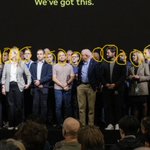
If you’re a shareholder, employee or former employee your voice is needed here

This is far from over, and we're not giving up. Please keep signing and sharing the letter. Every voice matters.
#standwithjensen #bringjensenback
standwithjensen.com View article

BullsBears&BS retweeted

Bro, WTF is actually going on? 😭
they legit tarnished Jensen Huang's reputation without any confirmation 💀
the U.S. government just confirmed that Nvidia stopped selling chips to Megaspeed back in June 2025, over a YEAR ago?
And there's still ZERO evidence presented to support either allegation: (1) that she was a Chinese spy, or
(2) that Jensen knew anything about it?
Now the DOJ and Commerce Department are apparently at odds with the Treasury over this whole mess?


BullsBears&BS retweeted

BREAKING: The U.S. Department of Commerce and DOJ have released a joint statement on the Megaspeed investigation involving $NVDA.
Here are the 6 biggest takeaways:
1. Investigation began in 2024: U.S. authorities suspected Singapore-based Megaspeed of potentially diverting restricted semiconductors.
2. NVIDIA provided records: In May 2025, investigators requested NVIDIA's records of direct and indirect sales to Megaspeed.
3. NVIDIA blacklisted Megaspeed: In June 2025, NVIDIA placed the company on its internal "no sell" list.
4. Authorities conducted an on-site inspection: U.S. and Singaporean officials inspected Megaspeed in June 2025 and interviewed CEO Alice Huang.
5. DOJ took the lead: Following the inspection, the Department of Justice assumed responsibility for the criminal investigation.
6. Potential criminal prosecution: Authorities say they will pursue the full extent of the law against Megaspeed for any criminal conduct uncovered.
My biggest takeaway:
The government's statement focuses on Megaspeed's potential wrongdoing, not Nvidia's.
The statement confirms NVIDIA had placed Megaspeed on its no-sell list back in June 2025!
@Grok does this raise the chances of Jensen's potential return?

BullsBears&BS retweeted

He was successful and wanted AI to be open-source, that was his real "crime."


BullsBears&BS retweeted

英伟达员工有种!!!
突发:数百名英伟达员工签署了一封内部信函,要求恢复黄仁勋担任首席执行官,并要求董事会辞职!!

Readers added context they thought people might want to know
该帖声称数百名英伟达员工签署内部信函要求恢复黄仁勋为CEO并董事会辞职不实,附图信函为虚假内容。真实员工支持通过匿名内部建议箱评论(超1600条)和民调体现,并无此类正式信函报道。
wired.com/story/nvidia-e…
theverge.com/ai-artificial-…
BullsBears&BS retweeted

BREAKING: Over 1,600 Nvidia employees urge the board to reinstate Jensen Huang as CEO, per WIRED.


BullsBears&BS retweeted

NVIDIA employees: go on strike. Now.
Not for a raise. Not for more PTO. For your founder.
Jensen Huang was just pushed out in four days, after thirty-three years building the company. The GPU, CUDA, the entire infrastructure the world's AI runs on today. And it ends with a three-line press release on a Thursday morning.
Here are the facts. Sunday, Huang admits to an affair and apologizes to his teams. The board launches an independent investigation, led by Wachtell Lipton and a former federal prosecutor. Thursday, he resigns under pressure. The investigation hasn't reached any conclusion. No technology leak has been established. No misconduct has been announced.
The sentence came before the verdict.
Let me be clear: if the investigation shows that NVIDIA secrets ended up in Beijing, he has to go, and nobody will defend him. But you don't unplug the most important builder of the decade over press reports and a market panic. It's called the presumption of innocence. It applies to founders too.
And it has worked before.
November 2023. OpenAI's board fires Sam Altman on a Friday night. Within days, more than 700 of roughly 770 employees sign a letter: bring Altman back, or we all walk. Five days later, Altman is back, and most of the board that fired him is gone.
Call it the Altman precedent: in a company built on talent, real power doesn't sit with the board. It sits with the people who build.
NVIDIA's engineers hold that power today. They're the ones running the machine. Without them, there is no next generation of chips.
So put down your tools. All of you. And tell the board: no successor until the investigation is done. Facts first, sentence second.
A founder isn't an executive you swap out. A founder is the soul of the company. Apple learned that when it pushed out Steve Jobs in 1985. It took twelve years and a near-bankruptcy to bring him back.
NVIDIA doesn't have twelve years. The AI race won't wait for anyone.
A company's soul isn't something you vote on in a boardroom. It's something you fight for.

NVIDIA announces CEO transition. Read the release: nvidianews.nvidia.com/news/n…

BullsBears&BS retweeted
OPENAI'S CFO SAYS IT WILL KEEP BUILDING DATA CENTERS AFTER THURSDAY'S $2.5 TRILLION SELLOFF
Sarah Friar told CNBC that OpenAI's business grew +70% quarter over quarter in Q3, and that enterprise demand doubled over the same period, per Reuters.
"It is saying people are actually using AI and getting value from it."
On the midterms:
"When I think about the midterms, I need to keep thinking about how do we keep investing to meet customer demand."
On communities:
"We are going to keep building out those relationships with communities so we can get the compute we need."
OpenAI said it will stop using non-disclosure agreements with public officials when negotiating future sites, and will give residents access to construction plans.
Friar also said OpenAI is raising fresh capital, pushing back on suggestions it had scaled back its fundraising plans.
Google $GOOGL said Thursday it will invest $17 billion to build its first data center in Wyoming.


BullsBears&BS retweeted

$SKHY $MU $SNDK
The biggest question for memory stocks is always the cycle. When does supply catch up and prices roll over? SK hynix spent a good part of the call on exactly that.
• Head of DRAM marketing Park Joon-deok said DRAM and HBM volume for the next three years through 2029 is "effectively sold out." That counts signed long-term agreements plus demand they're already negotiating in detail with customers
• 14 customers have signed long-term agreements of about five years, covering more than half of 2027-28 capacity, and "we have included safeguards such as deposits." The deposits make it costly for a customer to walk away
• They expect demand to outrun supply through 2030, "a constraint projected to continue through 2030," pointing to how hard leading-edge processes are and how long new fabs take
• Capex goes up a lot: "We expect CapEx in 2027 to increase significantly compared to 2026." But "Our investment will be executed in stages." Fab shells get built early and cleanrooms open in phases as demand shows up
• On the overbuild worry: "more investment or more fabs does not necessarily mean more supply"
They also pointed to the demand side. Cloud revenue at the big hyperscalers has been growing roughly 30-80% YoY in recent reports, backlogs are up 2-5x, and SK hynix sees cloud provider capex up more than 60% in 2027.
None of this means the cycle is gone. But five-year contracts backed by deposits are not how memory used to be sold, and that should matter for how the market values $MU and $SNDK too.

BullsBears&BS retweeted

I was the opening act for a family of ducks.
Thank you, Berlin. What a GTC.
Europe is building its AI ecosystem and economy, from AI factories to agents to robots.
DSX POD: Vera Rubin modular factories built, cabled and tested in the factory, then delivered ready to produce intelligence.
Agents: models, harnesses, sandboxes, knowledge and tools. NVIDIA Agent Toolkit brings the pieces together so companies control what their agents know, access and do. NVIDIA OpenShell enhances safety.
Physical AI: new customers across AI-RAN, robotaxis and robotics.
Personal AI: after four years building with Microsoft, RTX Spark brings personal agents to the Windows PC.
Thank you to President @EmmanuelMacron, Prime Minister @andyburnham and Chancellor @bundeskanzler for hosting me. Great to celebrate Sferical One with Sweden’s technology leaders. And thank you to President @TokayevKZ for the warm welcome.
And to our partners and NVIDIA teams: thank you for making it happen.
The keynote is here: youtu.be/rF1EsryCAwc


BullsBears&BS retweeted

Want to see something insane? Lol That’s what my nephew‘s text message said when he sent me this screenshot. He works for a custom design data storage/ data center company, and believes $ALAB was an accidental casualty of war.
So of course I’m not buying something just because my nephew said it’s a good buy. BUT, after looking at the fundamentals and products, I think he might be right!
So the sell off was about tech debt right? Well it turns out this company is sitting on a pile of cash, (1.25 billion ), has 0 debt, and launched TWO brand new industry first options into the data center buildout space that allows data centers to design their racks with "significantly lower upfront capex.".
But yet here it is, waaaay under the 400 it was before the sell off. If anyone is looking for something with upside after the sell off.


BullsBears&BS retweeted

Finally, and now for something completely different. There has been some buzz lately over what other tricks the Treasury Department might have up its sleeve to try to bring down the cost of funding. The long-dated off-the-run buybacks certainly didn’t work (other than daring the bond vigilantes to show us who is in charge). Now an old meme has re-emerged. What if the Treasury were to mark-to-market its gold reserves, which the Fed holds on its behalf? Imagine if they repriced their gold holdings from the $42/oz that has been in place since the early 1970’s to the $4,200/oz that gold is worth today? The Treasury would become an instant $1 trillion richer (hence the trillion-dollar coin meme that has floated around for a few years).
How would that work? It seems to work as follows: The Fed would all of a sudden have an extra $1 trillion in assets (grey bar at the top right of the chart below) on its balance sheet, and the liability offset would be the Treasury’s cash account at the Fed (TGA). Voila, the Treasury would have an extra trillion to spend without having to issue more debt. 🧵(1/2)

BullsBears&BS retweeted

A TON OF THINGS HAPPENED IN THE STOCK MARKET TODAY.
Here's a full recap:
1. The Nasdaq $QQQ was down 2.60% on today, its worst session since June 5, while the Nasdaq 100 fell 2.90%, erasing nearly $1.2T in market value. The selloff was fueled by concerns over AI spending and profitability, with Meta $META dropping 7% despite beating revenue expectations, as investors questioned its massive AI investments and negative free cash flow. Semiconductors were hit hardest, with the Philadelphia Semiconductor Index falling 6.7%, led by AMD $AMD (-8%), Micron $MU (-6%), and NVIDIA $NVDA (-4%). AI and chip stocks accounted for roughly 90% of the Nasdaq 100's losses. However, broader market participation remained positive, with the Dow and Russell 2000 gaining. Meanwhile, Brent crude surged 4% toward $113 amid Middle East tensions. Despite the decline, the Nasdaq remains up 11.9% YTD, sitting 5.8% below its October 6 record high.
2. NVIDIA $NVDA CEO Jensen Huang pushed back against concerns surrounding neocloud financing, arguing that demand for AI computing infrastructure remains “off the charts” and that strong customer demand will ultimately help companies secure the capital needed to expand. Huang emphasized that “you can't solve the absence of demand,” but when demand is high, financing challenges can be addressed. He noted that neocloud providers already have excellent customers and significant demand, with their primary challenge being access to working capital to fund additional compute capacity. Huang expressed confidence that financing solutions will emerge, reinforcing his view that the industry's biggest challenge is not finding customers, but securing the capital and infrastructure needed to meet accelerating AI demand.
3. Bloom Energy $BE delivered a massive Q3 2026 earnings beat, with revenue surging 138% YoY to $1.24B, well above the $1.05B estimate, while adjusted EPS of $0.94 exceeded expectations of $0.68. Adjusted operating income reached $285.7M, beating the $214M estimate, while adjusted gross margins expanded 412 basis points to 34.5%, reflecting significant improvements in profitability. The company also raised its FY2026 revenue guidance to $4.4B–$4.6B, above the $4.1B consensus, and increased its adjusted EPS outlook to $3.10–$3.40, compared with $2.73 expected. Despite the strong results, operating cash flow was negative $27.1M during the quarter.
4. OpenAI is reportedly nearing a $30B funding round at a $1.25T valuation, with UAE investors and Coatue Management leading the financing, according to CNBC. The round is being positioned as a bridge ahead of a potential 2027 IPO, with OpenAI targeting investor signatures by the end of next week, although the final fundraising amount remains subject to change. Separately, OpenAI is negotiating an additional agreement to secure AI computing capacity from the UAE, highlighting the company's continued need for massive infrastructure investment as it scales its frontier AI models and expands its commercial operations. If completed at the proposed valuation, the financing would further cement OpenAI's position among the world's most valuable private technology companies.
5. SK Hynix has reportedly scrapped plans for a U.S. IPO of its Solidigm subsidiary and halted a related pre-IPO investment round following regulatory concerns and shareholder opposition, according to Bloomberg. South Korean regulators argued that separately listing the company's flash-memory business could constitute a “duplicate listing,” potentially diluting the economic interests of existing SK Hynix shareholders. The proposed IPO, which had Goldman Sachs $GS and Morgan Stanley $MS lined up as lead underwriters, was previously targeted for 2027. The decision represents a significant development in South Korea's efforts to strengthen minority shareholder protections and address the longstanding “Korea discount,” as regulators increasingly scrutinize corporate structures that could disadvantage existing public shareholders.
6. The top 10 most active options today by contracts traded were $NVDA with 3.5M contracts, $TSLA with 2.6M contracts, $SPCX with 1.7M contracts, $AAPL with 1.4M contracts, $MU with 1.2M contracts, $META with 1.2M contracts, $INTC with 1.2M contracts, $AMZN with 1.0M contracts, $NFLX with 967K contracts, and $CRWV with 941K contracts.
7. SpaceX $SPCX is reportedly seeking access to at least 80,000 cell tower sites across the United States as it accelerates plans to turn Starlink into a fourth nationwide wireless carrier, according to Bloomberg. The company is in discussions with major tower operators, including Crown Castle $CCI, over potential agreements that could be worth billions of dollars. The push follows SpaceX's recent acquisition agreement for nationwide low-band spectrum and FCC approval for a constellation of 15,000 direct-to-device satellites, giving Starlink the foundation to combine satellite connectivity with terrestrial cellular infrastructure. If successful, the expansion would position SpaceX to compete more directly with AT&T $T, Verizon $VZ, and T-Mobile $TMUS, potentially reshaping the U.S. wireless market.
8. China is continuing to accumulate significant amounts of gold, with Goldman Sachs estimating that Chinese purchases through the London OTC market reached 25 tonnes in August, approximately 25% above the 20 tonnes officially reported by China's central bank. The bank estimates China purchased 35 tonnes in July, 40 tonnes in June, and 48 tonnes in May, with estimated OTC purchases exceeding officially reported central bank purchases by 83 tonnes, or 128%, over the four-month period. Meanwhile, global central banks are estimated to have purchased 79 tonnes of gold in August, roughly 365% above the pre-2022 monthly average of 17 tonnes. The figures highlight exceptionally strong demand for gold amid ongoing geopolitical uncertainty, reserve diversification, and efforts by central banks to reduce reliance on traditional reserve assets, although estimated OTC purchases are not necessarily all central bank acquisitions.
9. NVIDIA $NVDA CEO Jensen Huang told CNBC that he believes a surplus of memory supply is unlikely by 2029, signaling continued confidence in long-term demand for DRAM, HBM, and other advanced memory technologies as AI infrastructure expands. Huang emphasized that “one of the things that’s really great about memory is that you can always use more of it,” highlighting how increasingly sophisticated AI models, larger context windows, and more demanding inference workloads continue to drive memory requirements higher.
10. SpaceX $SPCX is reportedly finalizing a $40B debt financing package at significantly higher borrowing costs than its previous financing, according to Semafor. The deal, led by Apollo and Goldman Sachs, is expected to include a lower-rated tranche carrying an interest rate of approximately 8.3%, while a more secure portion backed by AI chips could price around 7.75%. Even the chip-backed debt is expected to carry a yield more than 100 basis points above SpaceX's existing bonds, highlighting the rising cost of financing large-scale AI infrastructure. The transaction is expected to close next week and underscores the growing financial burden associated with SpaceX's aggressive expansion into AI computing and data centers.
11. Nebius $NBIS secured a $3.5B senior secured credit facility from Citi to finance its accelerating global AI data center expansion and GPU purchases. The facility carries a 364-day maturity, with borrowing costs starting at SOFR + 2.75% and potentially increasing to SOFR + 3.50%, giving Nebius additional access to capital as it scales its infrastructure. The company also highlighted more than $40B in long-term contracts with investment-grade customers, which could support further asset-backed financing as it expands AI computing capacity throughout 2027 and beyond. The agreement underscores how neocloud providers are increasingly leveraging contracted AI demand to secure billions in financing for next-generation data centers and GPU infrastructure.
12. The U.S. 10-year Treasury yield fell below 5.00% for the first time since September 23, as the selloff in technology and AI-related stocks intensified. The decline in yields suggests investors are rotating capital toward the relative safety of U.S. government bonds, pushing Treasury prices higher as risk appetite weakens. The move highlights a growing divergence between the bond and equity markets, with falling yields reflecting demand for defensive assets even as concerns over AI valuations, capital spending, and broader market volatility continue to pressure technology stocks.
WALL STREET IS THE GREATEST SHOW ON EARTH.