

I’m an engineer. I believe all technology should be both ergonomic and intuitive. MEGASTRUCTURES! US must lead in AI. Moon → Mars → Ceres → Stars. 🇺🇸 🚀💧🦾
Florida
Joined November 2022
- Tweets1K
- Following334
- Followers346
- Likes423
The two words that scare the hell out of @SpaceX and @NASA engineers right now are Propellant Transfer.
The current baseline plan is to hook up a tanker and a depot piggyback-style and turn on the pumps. But problems like multi-phase mixing, propellant sloshing, and boil-off threaten to derail it. While cold-gas thrusters can help settle propellants, sucking gas into a high-flow pump will destroy it instantly.
SpaceX is now projecting 6–8 tankers to fill a single depot—assuming minimal losses. That's a massive hurdle, but my bigger concern is fluid dynamics.
I built an interactive simulation using Claude to test an alternative: nose-to-nose coupling instead of piggybacking, which inherently eliminates sloshing and phase-mixing.
Check it out on a large screen (mobile is too small):
claude[.]ai/artifact/XjNotnzNa48aCudN5xZThs
(remove brackets after pasting)
Copy and paste link to a browser while using a large screen. There is too much going on here to view it on a phone.
Here’s a widget to help visualize propellant transfer while rotating.
claude.ai/artifact/CDDZZmqNB…


In addition to requiring internal baffles and active thrusters to minimize sloshing during spin-up on both the fuel depot and the HLS, tuning masses will also be needed on the depot to slide rearward as propellants are transferred into the HLS.
The tuning masses will keep the spin axis from shifting into the HLS, greatly simplifying attitude control for the coupled pair.
FlyIt retweeted
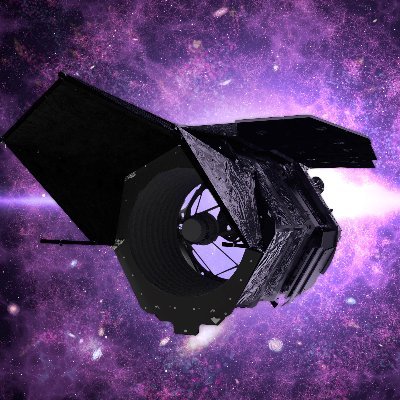
Shades on and batteries charging! 😎 🔋
Roman’s Solar Array Sun Shield and Lower Instrument Sun Shade have successfully deployed, powering the observatory and shading its instruments!
go.nasa.gov/4gw2rqc
Hopefully this means accurate altitude information for IM-3 approach to Reiner Gamma. No more low approaches! 🤞

The 'Nova-C Navigation Pod' is an extremely important part of our lunar lander. It helps the lander determine its position and distance from the surface during landing, and it passed a tough test in NASA Marshall's X-Ray Cryogenic Facility (XRCF). We used their huge vacuum chamber to test our little navi-pod for laser accuracy. While it was inside, we baked and froze it to ensure it could withstand lunar temperatures. The sensors held steady through it all and got us one step closer to launch day!


I want to see @Tesla_Optimus run.

FlyIt retweeted

The threat of China's plans to explore the Moon is about to become very, very real.
arstechnica.com/space/2026/0…

The ‘frontier’ is the place to be!

SpaceX has exercised the option to acquire @cursor_ai in an all-stock transaction with the goal of building the world’s most useful AI models.
For the past few months, SpaceXAI has been jointly training a model with Cursor, which will be released in Cursor and Grok Build soon.
We look forward to working closely with the Cursor team to advance our frontier AI capabilities

FlyIt retweeted

NASA is aware of the anomaly that occurred tonight at Launch Complex 36 involving Blue Origin’s New Glenn rocket at Cape Canaveral Space Force Station.
Spaceflight is unforgiving, and developing new heavy-lift launch capability is extraordinarily difficult. We will work with our partners to support a thorough investigation of this anomaly, assess near-term mission impacts, and get back to launching rockets.
We will provide information on any impacts to the Artemis and Moon Base programs as it becomes available.
Each MoonFall hopper will have HD video and photography capability.
Each MoonFall hopper will have Ground Penetrating RADAR (GPR) and a Neutron Spectrometer.
Each MoonFall hopper will have a LASER Retroreflector Array.
Each MoonFall hopper will have a Radiation Spectrometer.
@FireflySpace and @NASA should get very valuable data. This will be a huge moment. @NASAAdmin 🇺🇸 🚀 ✝️ 🙏

Four JPL-built propulsive drones – known as MoonFall – will survey the lunar surface at potential @NASAArtemis landing sites in unprecedented detail. The mission is part of the initial phase of the @NASAMoonBase initiative.
Learn more: jpl.nasa.gov/missions/moonfa…
Hell yes! A real base on the Shackleton Connecting Ridge! It’s a brilliant start.
Because of the ridge's location, you have a direct line of sight with Earth whenever it rises above the lunar horizon, which lasts for about 13.5 days at a time. For the other 13.5 days of the month, the base will rely on the Khon-2 satellite for communications. Intuitive Machines (@Int_Machines) will drop Khon-2 into lunar orbit during their IM-3 mission before attempting their landing at Reiner Gamma.
But when Earth is visible? The view from the Shackleton Connecting Ridge will be spectacular. Because of the Moon’s libration, Earth will trace a slow, vertical figure-8 in the lunar sky over the course of a tropical month. It will spend roughly half the month in the top loop of the '8' and the other half in the bottom.
The link below allows you to view a very well made video and some infographics that will help you understand what the astronauts looking at Earth from our first moon base will see.
sky-lights.org/2021/11/22/ea…
@NASAAdmin @CrainTim

NASA’s Space Reactor-1 (SR-1) mission utilizes a closed Brayton-cycle fission reactor. The reactor will generate electricity to power a Nuclear Electric Propulsion (NEP) engine, commonly known as an ion engine. The mission is scheduled to launch during the next Earth-Mars transfer window in December 2028, with an estimated transit time of about one year to reach Mars.
SR-1 will carry three helicopters that will deploy from the descent platform while it is still airborne. This effort is known as the Skyfall Project. The helicopters are very similar to the Ingenuity helicopter, which successfully completed 72 flights on Mars before its mission ended.
Because SR-1 will use the Power and Propulsion Element (PPE) originally designed for the postponed Lunar Gateway, along with the proven technology demonstrated by Ingenuity, NASA was able to save enough development time to target the late-2028 Hohmann transfer window.
To the best of my knowledge, @NASA has not yet finalized the region of Mars that the Skyfall Project will explore and map.
Many people argue that the first human missions should target the large flat regions near the Martian equator. Arcadia Planitia is often cited as a leading candidate for the first Martian colony because of its relatively safe landing terrain and the presence of abundant subsurface water ice. Those are compelling advantages.
What is discussed less often is surface radiation exposure and meteorite impact frequency. Both are higher there than they need to be.
In my opinion, Hellas Planitia is the better long-term option. Its terrain is rougher than Arcadia Planitia, with hills and crevices separating flatter regions, but it also has major advantages.
Hellas Planitia sits approximately 7 km lower in elevation, meaning there is more atmosphere above it compared with Arcadia Planitia. That additional atmospheric shielding slows down and breaks apart many meteorites that would otherwise strike the surface intact.
The thicker atmosphere also reduces radiation exposure at the surface. Lower radiation levels would contribute to healthier colonies.
Finally, Hellas Planitia experiences persistent winds that would support wind-powered turbines. Unlike solar arrays, wind power would remain available during dust storms and throughout the long Martian night.
@NASAAdmin @NASAJPL @NASAMars @SpaceX
youtube.com/watch?v=TYasUWRk…

There are more advantages to locating the first human colonies on the Hellas Planitia.
Here’s one advantage that @elonmusk will appreciate. The Hellas Planitia is literally the best place on the entire planet to make CH4. The air is twice as dense there as it is on Arcadia Planitia. A Sabatier reactor requires 1 to 3 bar of internal pressure to work properly and it generates a lot of heat while it is working.
CO2(g) + 4H2(g) + 30 kJ/mol [Startup Heat] --(Ni(s) catalyst)--> CH4(g) + 2H2O(g) + 195 kJ/mol [Total Heat Evolved]
By locating CH4 production on the floor of Hellas Planitia, you basically cut in half the hardware mass required to feed the Sabatier reactor. You only need roughly half the volume of Martian atmosphere feeding the reactor on Hellas Planitia that you would need on Arcadia Planitia. Intake fans and piping mass is reduced dramatically.
The thicker air on Hellas Planitia will aid with convective cooling of the Sabatier reactor vessel if needed. The waste heat evolved during the reaction could also be used to heat the habitats/work areas in the colony.
There is a potential problem with using unfiltered Mars atmosphere to feed the reactor. There are small amounts of sulfates and perchlorates in the Martian air. Sulfur will poison the Ni catalyst and Cl will combine with H to form HCl. HCl will attack and pit the steel components of the reactor.
A 3-stage chemical guard should solve the problem. Use a vortex to spin out all but sub-micron size dust particles. Then use HEPA/ULPA filters to remove the rest of the dust. Finally, use a sorbent bed of activated carbon to remove the unwanted chemicals. A zinc oxide ‘polisher’ sorbent bed could be added to remove any sulfur remaining.
This is just another reason to build on Hellas Planitia!
@NASAAdmin @SpaceX
 
