

I’m an engineer. I believe all technology should be both ergonomic and intuitive. MEGASTRUCTURES! US must lead in AI. Moon → Mars → Ceres → Stars. 🇺🇸 🚀💧🦾
Florida
Joined November 2022
- Tweets1K
- Following334
- Followers346
- Likes423



The two words that scare the hell out of @SpaceX and @NASA engineers right now are Propellant Transfer.
The current baseline plan is to hook up a tanker and a depot piggyback-style and turn on the pumps. But problems like multi-phase mixing, propellant sloshing, and boil-off threaten to derail it. While cold-gas thrusters can help settle propellants, sucking gas into a high-flow pump will destroy it instantly.
SpaceX is now projecting 6–8 tankers to fill a single depot—assuming minimal losses. That's a massive hurdle, but my bigger concern is fluid dynamics.
I built an interactive simulation using Claude to test an alternative: nose-to-nose coupling instead of piggybacking, which inherently eliminates sloshing and phase-mixing.
Check it out on a large screen (mobile is too small):
claude[.]ai/artifact/XjNotnzNa48aCudN5xZThs
(remove brackets after pasting)
Copy and paste link to a browser while using a large screen. There is too much going on here to view it on a phone.
Here’s a widget to help visualize propellant transfer while rotating.
claude.ai/artifact/CDDZZmqNB…


In addition to requiring internal baffles and active thrusters to minimize sloshing during spin-up on both the fuel depot and the HLS, tuning masses will also be needed on the depot to slide rearward as propellants are transferred into the HLS.
The tuning masses will keep the spin axis from shifting into the HLS, greatly simplifying attitude control for the coupled pair.
FlyIt retweeted
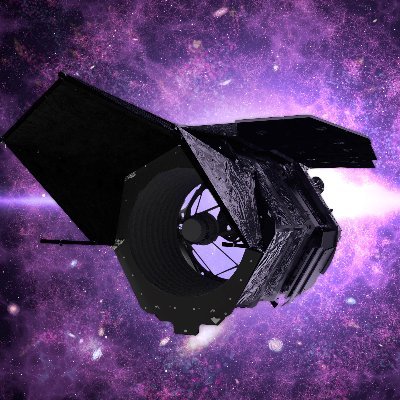
Shades on and batteries charging! 😎 🔋
Roman’s Solar Array Sun Shield and Lower Instrument Sun Shade have successfully deployed, powering the observatory and shading its instruments!
go.nasa.gov/4gw2rqc
Hopefully this means accurate altitude information for IM-3 approach to Reiner Gamma. No more low approaches! 🤞

The 'Nova-C Navigation Pod' is an extremely important part of our lunar lander. It helps the lander determine its position and distance from the surface during landing, and it passed a tough test in NASA Marshall's X-Ray Cryogenic Facility (XRCF). We used their huge vacuum chamber to test our little navi-pod for laser accuracy. While it was inside, we baked and froze it to ensure it could withstand lunar temperatures. The sensors held steady through it all and got us one step closer to launch day!


I wonder if he thought about how AGI or ASI could be realized? I am getting bored with LLM chatbots!
I want to see @Tesla_Optimus run.
