

🇦🇺 in NYC. OpenAI. Views are my own.
New York, NY
Joined December 2011
- Tweets529
- Following434
- Followers144
- Likes1.3K






Joe Bennett retweeted

That PHP vulnerability that’s gonna cause havoc this week was found with… GPT‑5.6 Sol.

OpenAI models helped researchers—operating as part of our Patch the Planet initiative—discover critical security flaws in PHP, an open-source programming language used to run an estimated 70% of websites.
Over the past two months, we led a coalition of maintainers, researchers, and security providers to prepare fixes and protections ahead of disclosure. This duration was necessary because the fix was quite intricate and required a major change to the PHP engine. Every site using PHP can now safely upgrade their version to stay secure, in addition to applying mitigations from various security vendors.
Due to the severity of these flaws and PHP’s widespread use, we consider this bug to be one of the most impactful vulnerabilities in recent memory. It also marks a new phase, where AI can find security bugs with internet-scale impact.
This is an example of the Defender’s Window in action: to our knowledge, frontier AI was able to find this vulnerability ahead of attackers, giving defenders time to prepare.
openai.com/index/coordinated…

Readers added context they thought people might want to know
OpenAI may claim a role in the coordinated response and patching process. But the initial discovery and exploit development, however, occurred several months earlier by an independent researcher.
x.com/lcfr_hax/statu…

Joe Bennett retweeted

Wow the new roadster looks quite amazing, good job @elonmusk
Joe Bennett retweeted

I am an Australian and I will defend Western civilization

This quoted post is unavailable.


Joe Bennett retweeted

My weekend hobby has been taking the listing photos from potential rentals on craigslist and using @figma to draw a buest guess floorplan. Then, passing that + the photos to astra to build a 3d model for me. It does a pretty stellar job!

Joe Bennett retweeted

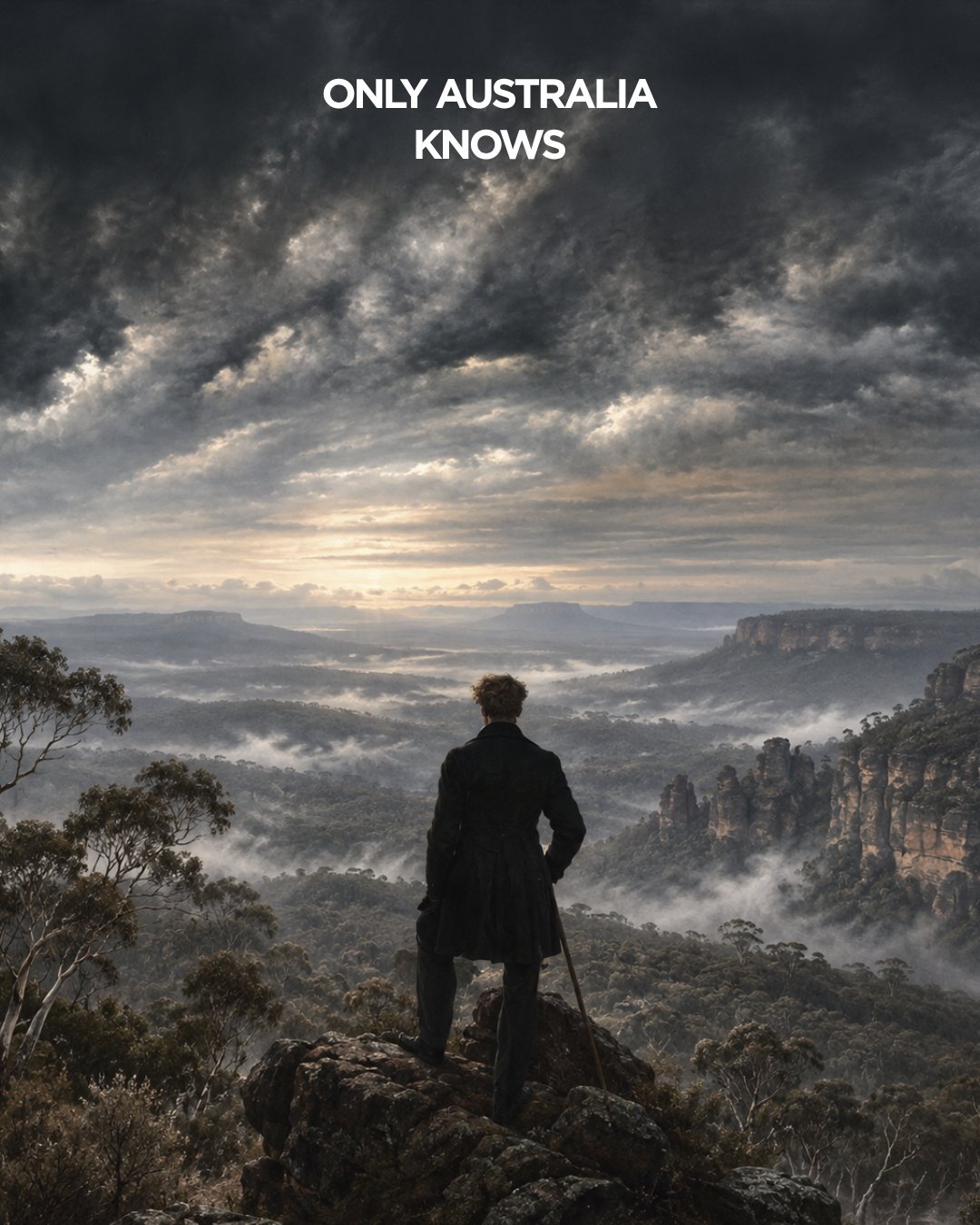
Only Australia knows what it means to live at the edge of the world. From a disparate collection of British vagabonds, convicts and thieves grew one of the greatest nations on Earth. Cast to the farthest reaches of the world, our ancestors had to make something of this strange, sunburnt land. And so they did.
The European mind struggles to comprehend how vast and isolated Australia truly is. In Europe, civilisation is everywhere, old cities, roads and rivers. In Australia, you can drive for hours and see little more than red dirt and a rusted station shed. America has its great rivers, forests and fertile plains. We had a continent whose dead centre seemed determined to kill anyone stupid enough to enter it. And yet we went anyway.
Over the mountains, into the interior, across deserts and towards horizons no European had seen. Men forged roads and rail through the bush. They drove cattle across distances greater than countries. They dragged civilisation across a continent where often nothing waited for them. That spirit is Australia.
We began as the dregs of British society. The poor bastard who stole something he shouldn't have and found himself on a ship bound for the other side of the planet. And somehow, from that, arose the Australian. Resourceful because he had to be. Independent because often there was nobody coming to save him. Suspicious of pretension because titles meant little when everyone was covered in the same dirt. Able to laugh at misery because sometimes there was little else to do.
There is something absurd about our story. Europeans travelled farther from their home than almost anyone before them, landed on one of the driest continents on Earth, looked into an endless interior and decided: this will be home. That is perhaps the most Australian thing of all.
We are Europeans who grew up beneath a different sky. Britain is our mother. Europe is the civilisation from which we came. Americans are our cousins. They are our kin, but they are not us.
Only Australia knows what it is to live on a lonely continent, beneath an endless southern sky, surrounded by oceans, far from our kinsmen, at the edge of the world.
Only Australia knows.





Joe Bennett retweeted

The first capital market to become fully agentic will be bonds
Unlike equities, the purchasing criteria for bonds are almost purely objective and criteria driven
Bond capital allocation already looks ~agentic if you squint



Joe Bennett retweeted

In case you haven't been paying attention, ChatGPT Work (web) now has the following primitives:
- its own browser w/ best-in-class persistent auth
- a 16gb RAM 9 core computer
- plugins to all the apps you use
- 5.6 w/ Codex compaction
🤲 here is your always-on personal agent


Joe Bennett retweeted

Researchers at Cornell have created an interactive map identifying 1.8 million individual trees in New York City, with a new approach that could optimize the placement of trees for cooling in cities around the world.
In the study, researchers identify the types of trees using satellite imagery as well as on-the-ground datasets and 3D data collected with lidar, short for light detection and ranging. The approach was 82% accurate overall and higher for common types of New York City trees.
It’s the first “wall-to-wall,” citywide map identifying trees in natural areas and other unsurveyed areas, which together constitute an estimated 65% of the city’s canopy and have not been accounted for on previous maps.
The research team will use the map to determine which trees are best for cooling, and the data could inform a host of other planting decisions where the type of tree makes a difference, from reducing allergens to managing invasive pests.
Read more: news.cornell.edu/stories/202…

ALT In a new interactive map of New York City, researchers were able to identify 1.8 million trees, 1.4 million of which had never been surveyed.