

18 til I die. Become ungovernable. Starve the beast. Prefer not to say. Fly, you fools! Last one out turn the lights off. Fugazi, fugazi. Stavo per.
South East, England
Joined April 2009
- Tweets553
- Following3.9K
- Followers1.7K
- Likes125K


Andrea Trunzo retweeted

LibreOffice 26.8.3 is now available: blog.documentfoundation.org/…

Andrea Trunzo retweeted

Ricordiamo oggi i 13 aviatori barbaramente trucidati a Kindu (ex Congo belga), durante una missione di pace. Gli aviatori della 46ª Brigata Aerea dell’#AeronauticaMilitare erano impegnati nel trasporto di aiuti umanitari e rifornimenti per conto dell’ONU.


Andrea Trunzo retweeted

.@the_prodigy’s iconic single ‘Breathe’ turns 30 today 🖤


“Free world". So free you’re not even allowed to enjoy LEGO Play.

🚨NEW: The government is now expanding it's proposals for an Under-16s social media ban to include Spotify, Lego Play and YouTube Kids
[@guardian]
39
Andrea Trunzo retweeted

BYD is going all-out on its ultra-luxury EV, with coach doors and more than 1,000km of range.
Andrea Trunzo retweeted

When rubber meets the road, we have to get creative to ensure our robots will be reliable and performant outside of the lab! Putting wheels on Atlas let us test how faithfully an RL whole-body controller can work with real actuators running at the edge.
Learn more about this experiment: bostondynamics.com/blog/atla…
Join our team: bostondynamics.com/careers/
Andrea Trunzo retweeted

Nel cuore di #Formia si trova il #CisternoneRomano, una straordinaria opera di ingegneria idraulica risalente all’età romana e importante testimonianza della storia e del patrimonio archeologico del #Lazio
📷 Ig appialatina
#VisitLazio #CeTuttoUnLazioIntorno


Andrea Trunzo retweeted

Israel to release body of Palestinian teen who died malnourished in prison haaretz.com/west-bank/2026-1…

Andrea Trunzo retweeted

I wanted to prove FSD is safer than human drivers. Genuinely. I went to the data expecting to find the number everyone quotes: one accident per six million miles on FSD versus one per 670,000 for humans. Nine times safer. Case closed.
The claim cannot be made. Not "the data is weak." The comparison itself does not exist.
Start with the equipment. The "human driver" baseline is every car on American roads, and the average American car is over twelve years old. That baseline includes bald tires, worn brake pads, cracked mirrors, and drivers with no emergency braking, no blind spot warning, no lane keeping. A modern Tesla is a rolling sensor suite with the best crash-avoidance hardware ever sold to consumers. So I went looking for the honest comparison: FSD miles versus miles in comparable modern EVs with the same braking, comparable sensors, comparable warning systems. That dataset does not exist in any usable form. Nobody publishes it. Tesla certainly doesn't.
Then the miles themselves. FSD engagement is self-selected. Drivers turn it on in good weather, in daylight, on roads they trust it with. The owner's manual itself warns the system "may not operate as intended" in rain, snow, fog, and low light, which happen to be the conditions where humans crash most. So the FSD number is computed over the easiest miles in the newest cars with the richest, most insured drivers, while the human number absorbs every drunk at 3am and every teenager in a beater.
And it's supervised. Every mile in the FSD column had a human babysitter whose interventions, whose saves, get credited to the machine. The comparison isn't machine versus human. It's machine-plus-human versus human alone, with all credit assigned to the machine.
Darrell Huff described this exact move in How to Lie with Statistics in 1954: if you can't prove what you want to prove, demonstrate something else and pretend they are the same thing. Rolf Dobelli in "Art of Thinking Clearly" calls the other half of it the swimmer's body illusion: swimmers have great bodies because bodies select swimmers. Teslas crash less because new luxury cars with safety suites driven by affluent middle-aged owners crash less. Selection, not software. When Forbes decomposed Tesla's own 2020 report by road type, the Autopilot advantage shrank to about four percent, inside the margin of error. Tesla has refused every request since to release the breakdown.
So here is where I landed. I wanted the claim to be true and provable. It is neither provable nor disprovable with the data that exists. The honest sentence is "we don't know." Anyone who tells you FSD is statistically safer than humans is guessing. Anyone who tells you it's statistically more dangerous is also guessing. The difference is that only one of those guesses is attached to a stock price, a monthly subscription, and a man telling you the feature will be finished next year, every year, since 2016.
When someone quotes you the nine-times-safer figure, ask one question: compared to whom, driving what, in what weather, measured by whom? The silence is the answer.

Andrea Trunzo retweeted

Jellyfish from yesterday's Soyuz-2.1b launch from Plesetsk, and the moment of 2nd stage separation (hot staging) as seen from Komi Republic


Andrea Trunzo retweeted

In March 2013, Cyprus shut its banks for 12 days. When they reopened, Bank of Cyprus savers lost 47.5% of everything they held above €100,000.
Their money was a promise from a bank, and the bank, under government orders, broke it.
Own things that don't rely on a government keeping its promise, because governments don't and won't.
Andrea Trunzo retweeted

This is the final aesthetic form of the managerial internationalist order and it is sad that Singapore Airlines has finally succumbed to it. It is truly grotesque.
Welcome to millennial grey or as I prefer to call it, the globohomo aesthetic. It signals the triumph of the neutral, the scalable, and what Marc Augé called "the non-place."
These are spaces designed to erase the friction of being somewhere specific and it has now found its full expression in the airline's newly unveiled cabin interiors.
The whole point of this soulless minimalism is to make the transition between places feel effortless, to optimize for global movement, and the result is the smoothing away of rooted cultures, traditions and visual particularities.
You also see this design now in airports, hotels, new apartment builds and AirBnBs. They employ the same materials, the same restrained color palette, the same soft-touch surfaces, and the same implication of competence. You are everywhere but nowhere at once.
The passenger is not meant to feel the particular hospitality or visual culture of Singapore. Who was this designed for? The bean counter? The management consultant? The flagship cabin has become merely a container for productivity and rest rather than an experience with its own local character and heritage.
This is tragic beyond belief because Singapore Airlines still flies the most distinctive cabin crew uniform in commercial aviation: the sarong kebaya designed by Pierre Balmain, unchanged since 1968, its batik detailing a living fragment of Peranakan culture tied to a specific place and history.
Every other airline has updated or abandoned its uniforms for mass production or modern fashion cycles. Singapore Airlines refrained.
Yet for whatever schizo reason, they've decided to yeet their identity everywhere else that matters. The airline that once treated its visual identity as a point of pride has chosen the path of least resistance. The earthy tones are gone. The leather, the wood trim and the art - all gone. Just safe cool grey interiors that are dreary, corporate and characterless.
You legit can't tell if you're in a Silicon Valley headquarters or a German automaker's concept vehicle or in the waiting room of a medical clinic.
Welcome to the internationally interchangeable visual language, which I suppose is par for the course for what Singapore has become - competent, sure, but risk averse, and increasingly unsure of who it is or worse. It's just a well-run node in the global network.

The new SQ business class colour palette is a friendly reminder that you're still very much at work as your ticket is paid for by your employer.
I don't know where the $2 billion went to or how much of it was wasted on useless consultants.
'Buy Singapore' these days either means you get ripped off by a local company slapping its brand over a Chinese OEM or you grossly overpay for a so-so product that's past its heyday, sort of a reflection of the Singaporean graduate market.
It's honestly hard to justify paying for SQ prices especially in the premium cabins when the competition has caught up and layovers are a minor inconvenience when you're like a full 1/3 cheaper or even 1/2 the price of SQ.
Maybe it's just symptomatic of a wider Singapore problem where once the competition catches up, you realize there isn't too much that makes us intrinsically special and to generate more revenue/profits, the easiest option is to turn to foreign labour and crank up the frequencies.

Andrea Trunzo retweeted
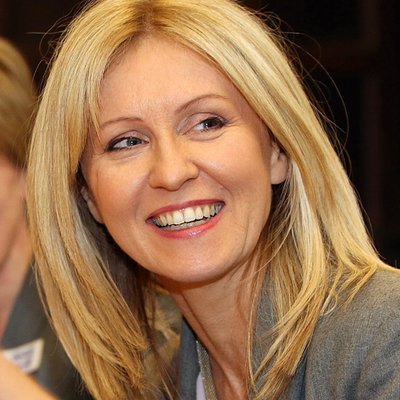
I have introduced a bill to introduce compulsory labelling of halal and kosher meat.
Consumers have a right to know what they are eating. Yet every day people are consuming halal and kosher meat without knowing it - that’s meat where the animal has its throat slit and often is not stunned before slaughter.
At its heart, this is a straightforward proposal built on consumer choice, animal welfare and transparency. It is not about banning halal or kosher meat but about the compulsory labelling of it, which is currently only voluntary, so as to ensure consumers know what they are buying.
What began as a limited religious exemption has become an increasingly significant part of meat production.
Andrea Trunzo retweeted

BREAKING
Iranian Armed Forces: A new underground missile city will be unveiled within the next week.
Andrea Trunzo retweeted

BREAKING: Iran announces it has now lifted its self-imposed 2,000 kilometre range limit on ballistic missiles, bringing targets in Europe and remote US military bases in reach.
"This restriction has been lifted for us," IRGC spokesman Mohebbi said, adding that "Today, any point from which we feel a serious threat to the country can be our target."
It follows an order from Supreme Leader Mojtaba Khamenei, who told commanders to prepare an "immediate and geographically unrestricted response to any threat" and to demonstrate the capability in practice rather than make statements.
Iran's Khorramshahr missile is already assessed to reach around 3,000 km, and in March 2026 Iran launched two of them toward Diego Garcia around 4,000 km away, suggesting an even greater reach.
