

You can find me on bluesky 😉 Climate & Carbon Cycle Scientist.
Joined February 2013
- Tweets6.7K
- Following605
- Followers5.8K
- Likes5K






Pinned Tweet
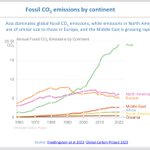
The Global Carbon Budget 2023 has been released earlier this week.
The paper is published in Earth System Science Data:
essd.copernicus.org/articles…

Pierre Friedlingstein retweeted

Published today: the 2024 Global Carbon Budget
The results project that global carbon emissions from fossil fuels have reached a record high in 2024
Read more: news.exeter.ac.uk/faculty-of…
#carbonbudget @gcarbonproject @Peters_Glen @PFriedling @pepcanadell @clequere @robbie_andrew
The global carbon budget 2024 is out.
For those on bluesky, here is a 🧵:
bsky.app/profile/pfriedling.…
Pierre Friedlingstein retweeted

Our article just published in National Science Review @NSR_Family. We developed a low-latency carbon budget analysis and found a significant decline in the land carbon sink in 2023.
academic.oup.com/nsr/advance…

Pierre Friedlingstein retweeted

📢 Hiring M2 student + Postdoc!
Join #GAMEchange @ERC_Research @LSCE_IPSL to integrate microbial evolution into ESMs.
✅ Exciting, impactful research
✅ Career guidance & mentorship
✅ Friendly, multicultural team
✅ Top international collaborators
🔗 shorturl.at/2vztD

🤬

An Elon Musk-funded PAC is microtargeting Muslim people in Michigan and Jewish people in Pennsylvania with opposite messaging about Kamala Harris using ZIP code targeting, according to data I pulled from Snapchat. Few things from this investigation:
404media.co/this-is-exactly-…

👇

Today, in @ScienceMagazine, we report that global CO2 #emissions from #forest fires have increased by 60%since 2001. Forest #fires have also shifted north and become more severe.
science.org/doi/10.1126/scie…
🌍🔥 (1/11)


Pierre Friedlingstein retweeted

My event with PCSSM hosting @PFriedling on #ClimatePolicy for UN Climate Week. Link to recording: youtu.be/uvQkNDlYmLg

Pierre Friedlingstein retweeted

Fitting end to #ClimateWeekNYC with Prof. Pierre Friedlingstein @PFriedling who leads the annual Global Carbon Budget - the ultimate test of effective climate action.
Pierre gave a brilliant talk @RockefellerUniv to an audience from across the generations. The carbon budget science still packs a punch.
Read more about the Global Carbon Budget with the 2024 results out in November: globalcarbonbudget.org


Great to be a UPenn to give a seminar at CSSM.
🙏@MichaelEMann

We’re excited to have @PFriedling for our first event of fall 2024! If you couldn’t make it today to hear about his modeling and policy work, check out our YouTube for the recording later 🌍
@MichaelEMann #climatechange #upenn #ipcc

Pierre Friedlingstein retweeted

We’re excited to have @PFriedling for our first event of fall 2024! If you couldn’t make it today to hear about his modeling and policy work, check out our YouTube for the recording later 🌍
@MichaelEMann #climatechange #upenn #ipcc
Pierre Friedlingstein retweeted

This year we contributed to the WMO report with the carbon budgets (RECCAP) of Australia and Africa, both led by extraordinary young scientists
@yoha_villalobos
@yolandi_ernst

New multi-agency #UnitedinScience report: The science is clear. We are far off track from achieving vital climate goals and keeping temperature increase to within the #ParisAgreement targets.
#OurCommonFuture #ClimateAction
bit.ly/3Xve8UO

Pierre Friedlingstein retweeted
Join PCSSM for its first event of the year next week with climate scientist @pfriedling! See event link for more info and registration.
@MichaelEMann
web.sas.upenn.edu/pcssm/cale… #penncssm #penn #upenn #climate

Pierre Friedlingstein retweeted

Les #inondations #Boris Europe Centrale sont d'une violence sûrement inédite. L'événement est si extrême que la +grde prudence s'impose dans son attribution a des facteurs causaux
Ex: on voit que l'alimentation en humidité ne vient pas de la Méditerranée mais de la Mer Noire
1/🧵

Definitely worth reading, especially at this time. 🇺🇸🗳️
The doom spiral - by Andrew Dessler - The Climate Brink theclimatebrink.com/p/the-do…

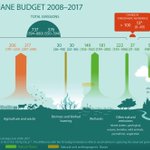
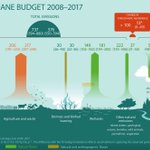
The latest Global Methane Budget is out !

1/7
The @gcarbonproject has published its four Global Methane Budget as an ERL paper and pre-print in ESSD; links at the end of thread.
Humans are now responsible for two-thirds or more of all global CH4 emissions
It covers the period 2000-2020, with some extensions up to 2023
