

30 yrs in Cdn Oil & Gas marketing, planning and business development. Canada must develop its natural resources if it is to prosper. Climate is a distraction.
Sunshine Coast, BC
Joined January 2013
- Tweets3.1K
- Following303
- Followers420
- Likes11K




Pinned Tweet
Absolutely true!

Well said! Nothing seems to make sense. It has to be intentional. The level of manipulation is overwhelming. Climate change is going to kill us, men competing in women’s sports, open borders, suicidal empathy. It’s like the world is going crazy.

This post brilliantly captures what I mean when I say we are living in an upside down world, particularly this passage:
“The second is reality. Exploding debt, collapsing public services despite record taxes, rising insecurity, schools that no longer teach anything. You can lie about reality for decades. You can’t stop it from arriving.”
What stands out is the contradiction between the future we are being sold and the conditions we are actually living in. Less ownership is presented as progress. More dependence as security. More centralized control as the solution to failures under the people already in control.
And when those promises collapse, the people responsible demand even more of our money and more power over our lives. Their failures become the justification for expanding their authority, while our freedom to own, build and decide for ourselves becomes something we are expected to surrender. Why should their failure cost us our freedom?
We are being fed a lie and expected to call it progress. I refuse to pretend that losing more and expecting less is a better future.
A blowout of the differential is a big concern for Cdn heavy oil producers, although currently more than offset by higher crude prices overall. Nevertheless $CVE will fair better than the others because it can sell a significant portion of its crude to its own refineries (thereby converting crude into high value products), and, additionally, is the largest shipper on TMX, thereby avoiding the discounted American market.

🇨🇦Canadian Oil Is $28 Cheaper Than American.
Who Collects The Difference?
At $28 a barrel, US refiners collect about $75 million a day trom Canadian crude.
The Canadian barrel still pays C$102, up 67% this year.
This is roughly what an illustrative refinery makes from a barrel:
•Gasoline: 37%
•Diesel: 37%
•Refinery fuel gas: 8%
•Jet fuel: 5%
•Petroleum coke: 4%
•Asphalt: 4%
•Residual fuel oil: 3%
•Lubricants and chemical feedstock: 2%
Canada exports about 4.5m barrels a day and refines under 2m.
Most of the rest goes to US Midwest refiners, who buy it at the discount and sell the gasoline and diesel at war prices.
The Canadian producer gets paid for the crude.
The refiner gets paid for what it turns into.
Who collects the difference is the subject of my latest article.
Link👇
themerchantsnews.substack.co…

If you can’t afford to buy a house and voted for the Turd over the last decade, I have no sympathy for you. You get what you deserve. Clearly the worst government Canada has ever endured.

Canada's Mass Immigration (2017 to 2025) was the worst economic policy decision in Canadian history.
It was NOT progressive; it was, in fact, extremely REGRESSIVE.
It transferred wealth and market power:
➡️from the Young to the Old,
➡️from the Poor to the Rich,
➡️from Labour to Corporations, and
➡️from the Renter Class to the Owner Class.
Prior to 2015, immigration to Canada was high and focused on high-skilled, high-wage labour.
In 2015, THIS government CHANGED the RULES, which shifted the focus to low-skilled, low-wage labour. This hurt the job prospects of young Canadians entering the labour market, put downward pressure on wages and lowered Canada's productivity. ➡️bankofcanada.ca/2025/05/staf…)
It also increased housing costs, particularly for renters, who tend to be poorer and younger. ➡️bankofcanada.ca/publications…
In short, it was horrific for the youngest, poorest and most vulnerable in our society. Never mind the social upheaval it caused.
Now that Job Vacancies have normalized and rents are falling, this government is floating the idea of raising immigration. It is outrageous. Worse, it is, again, being pitched as progressive when it is not. It hurts the Working Class; Bernie Sanders was right...youtu.be/vf-k6qOfXz0
The only thing that will improve the standard of living for working-class people is productivity growth. That's it.

Elon Musk has reduced the cost of launching objects into space to a supply of natural gas, which in the US, is amazingly inexpensive.
🚀🇺🇸 SpaceX wants its own gas pipeline in Florida.
A SpaceX subsidiary, Coastal Connect Services, has asked Florida's Public Service Commission to approve a tariff for a 32.4-mile, 16-inch gas pipeline in Brevard County, where Cape Canaveral is.
It would take gas from the Florida Gas Transmission interstate line straight to the launch site.
SpaceX has also requested an 8-mile line for Starbase in Texas, and according to Bloomberg it's hiring natural gas traders.
The fuel is the reason.
Starship burns liquid methane.
A full launch uses roughly 1,000 tonnes of it, which today has to be trucked in.
That's dozens of tanker loads for every launch.
The gas itself is cheap.
At this winter's Henry Hub prices, a launch's worth of methane costs less than $200,000.
What SpaceX can't afford is depending on trucks.
Launch frequency now depends on the gas supply.
Each launch slot that misses because the methane didn't arrive costs far more than the fuel.
A dedicated pipeline turns that into a fixed, controllable cost, the same way SpaceX already handles engines, tanks and the launch pads.
Hiring gas traders tells you SpaceX wants to control price risk as well as delivery.
The Florida commission still has to approve it.
A pipeline also only delivers gas, so it has to be liquefied on site.
That's another energy-intensive plant SpaceX will need to run.
If space companies are building pipelines, which industry will follow next in owning its own energy supply?
Don't miss my latest portfolio update and the best stocks positioned for this👇 themerchantsnews.substack.co…
Source: Reuters, Bloomberg, Florida Public Service Commission
$SPCX

I never got a response to this question @irvingoil

Firm large volume long term shippers will pay ~ $10.20/bbl for heavy crude delivery to Westridge. TMX will set aside 10% of its volume for interruptible shippers who will pay ~$12.50-13.15/bbl. Cenovus is the largest firm shipper with 167 kb/d of capacity. Other shippers contracted volumes remain confidential.

CER approves Trans Mountain settlement, establishing a new framework for tolls dlvr.it/TVhCdd


Good sound explanation of the WCS differential.

I keep seeing a claim that Canadian oil sells at a “discount” because we sell it to the United States, as though Canada gives its allies a special price. It's one of the most frustrating things I see posted on here daily by all sides.
It fundamentally misunderstands what the discount measures.
Western Canadian Select (WCS) is a heavy, sour crude blend commonly priced at Hardisty, Alberta. When someone says WCS trades at a discount to WTI, they are comparing it with a different grade of oil at a different location: light, sweet West Texas Intermediate, whose NYMEX futures contract specifies delivery at Cushing, Oklahoma.
In physical crude markets, WCS is commonly traded as a differential to the calendar-month average of NYMEX WTI. If that WTI reference averages US$70 per barrel and WCS trades at WTI minus US$12, the WCS price is roughly US$58 per barrel at the specified pricing location. The “minus $12” is a market price for the difference between those barrels. It is not a $12 gift to an American buyer.
What goes into that difference?
The crude itself. WCS is heavier and contains more sulphur than WTI. It takes different refinery equipment and additional processing to turn it into saleable products. Its value depends on demand from refineries equipped to run heavy sour crude and on the prices of competing grades.
The location. A barrel at Hardisty is not a barrel at Cushing, the U.S. Gulf Coast or a tanker terminal. Moving it to a refinery or export market costs money. You cannot compare prices at those locations as though transportation were free.
The logistics. When Western Canadian production exceeds the pipeline space available to reach buyers, barrels can become stranded in Alberta and the differential can widen sharply. More takeaway capacity gives sellers more options and can strengthen the price at Hardisty. Refinery demand, competing crude supplies and export economics also move the spread.
So yes, access to more buyers matters. If Canadian producers have too few viable routes to market, their negotiating position suffers. That is a real argument for transportation capacity and market diversification.
But selling WCS to someone other than an American does not magically make it worth the WTI price at Cushing. A buyer in Asia would still value the grade of crude being delivered, then account for pipeline tolls, tanker costs, timing and the price of competing barrels.
The useful question is not, “Why are we giving America a discount?” It is, “How do we give Canadian producers enough competitive routes to market that the price at Hardisty reflects the best available value for their oil?”
That is a serious conversation. The idea that the WCS–WTI spread is an "ally discount" is nonsense.
#cdnpoli #abpoli
This is why October 19th is so important. Vote Option 2 and give Alberta a chance to negotiate from a position of strength. Option 1 will doom Alberta to a subservient role in confederation for another decade.

I think the strongest part of Option 2 is also the simplest: we don’t have to agree on independence yet.
October 19 isn’t the independence vote. It’s our opportunity to give Alberta leverage and find out what Canada is actually prepared to offer when Ottawa understands that Albertans have another option.
Maybe they finally come to the table with meaningful change. Maybe they don’t. I have my suspicions, but I’m willing to find out.
And if the offer isn’t good enough? Then we keep going. We have the next referendum, and Albertans make that decision with far more information in front of them.
So I genuinely don’t understand the hostility around this.
Unless you believe the status quo is working just fine, why would we give away our strongest negotiating position before we’ve even had the chance to use it?
October 19. Vote Option 2. Give Alberta the strongest hand possible, and let’s see what Canada puts on the table. 💙
#LetAlbertaDecide #Option2 #AlbertaIndependence #Alberta #October19
R C Herman 👁❤️🇨🇦🛢 retweeted

LNG Canada is now running at capacity, sending 15 tankers a month to customers in South Korea, China and Japan. theglobeandmail.com/business…

Conrad Black’s political instincts are as good as they come. He’s not wrong. Either way, Canada is headed down a very difficult and destructive path. Albertans can avoid this pending disaster by voting for independence on October 19th. Choose wisely.

The Canadian public has organized itself into two camps. The vast majority support Carney’s decision to end trade talks, more out of distrust and loathing for Trump than from any evidence that such an act was justified. A vocal minority sits in the opposing camp, driven by distrust and loathing for Carney. The rest of us moderate observers are prepared to give our PM the benefit of the doubt, but are waiting patiently for proof that this benefit has been well earned.
In the meantime, the government has chosen an unusually hostile course, focusing retaliatory measures on politically vulnerable American districts ahead of the November midterms and writing to certain Democratic governors. This is brinkmanship. If the tariffs fail to move votes in places such as Maine and Michigan, Carney will look like a devious blowhard. If they succeed in damaging Republican prospects, he will face a resentful Donald Trump for another two years, and the consequences could become very onerous.
R C Herman 👁❤️🇨🇦🛢 retweeted

Alberta has the population, infrastructure, institutions, workforce and resource base to demand a much more autonomous role in determining its future. The policy debate should be about what arrangement produces genuine democratic accountability and a sustainable relationship with the rest of Canada. Forever Canadian achieves nothing except to invite more exploitation by Ottawa. Vote Option 2.

R C Herman 👁❤️🇨🇦🛢 retweeted

What is the unspoken source of the acrimony?
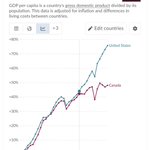
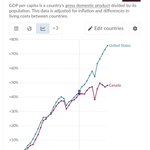
The United States is leaping ahead of other Western countries in ways few anticipated several decades ago, while Canada is stagnating.
victorhanson.com/the-elephan…

Good explainer on Venezuelan crude

Here we go again with the "Venezuela has massive oil reserves" headlines. Time to bring back my analysis on these reserves to provide some much needed nuance 🇻🇪 ⤵️
When people say “Venezuela has the world’s largest oil reserves,” as you undoubtedly have seen being thrown around a lot on here, they are technically referring to a specific accounting definition, not to a stock of easy, cheap barrels ready to flood the market. To unpack that, you need to get into what those reserves are, how they behave in the subsurface, what it costs to turn them into marketable liquids and how price, technology, and above-ground risk interact.
That's a lot to cover, but let’s give it my best shot. On paper, Venezuela has roughly 300–303 billion barrels of proved reserves, about 17 % of the global total and slightly more than Saudi Arabia. The critical detail is that around three quarters of that booked volume is extra-heavy crude from the Orinoco Belt in eastern Venezuela. These are bitumen-like oils with API gravity typically in the 8–14° range, extremely viscous at reservoir conditions and with high sulfur and metals content. So the statement “largest reserves” is really “largest booked volumes of very challenging heavy and extra-heavy oil.”
Technically recoverable versus economically recoverable is a pretty big distinction folks. The USGS has long estimated that the Orinoco Belt contains on the order of 900–1,400 billion barrels of heavy crude in place, with perhaps 380–650 billion barrels technically recoverable using existing technology.
Venezuela and OPEC only book a subset of that as “proved,” but even those proved numbers are sensitive to the assumed oil price and development concept. When prices were strong in the 2005–2014 window, a large portion of Orinoco volumes became economic on paper and were reclassified as proved, driving the headline reserves from ~80 to ~300 billion barrels.
Geology and fluid properties are the second big differentiator. Orinoco crudes are extra-heavy, with densities up around 934–1,050 kg/m³, high asphaltene content and sulfur on the order of 3–4 wt% or more, depending on the block. This is a completely different animal from a 33–40° API, low-sulfur Arab Light-style crude. In plain English, that means it's much harder to handle at various stages and each step adds capex, opex and energy use.
In other words, the “barrel in the ground” in Venezuela is inherently worth less and depends on a narrower set of buyers.
Surface systems and institutional capacity are another constraint. Before the 2000s, PDVSA had a reputation as a technically capable NOC. Since then, you have had a combination of mass layoffs and politicization, under-investment, sanctions, corruption and brain drain. The result is decayed gathering systems, chronic power shortages, refinery fires and upgrader downtime.
Finally, integration with global refining and logistics matters for strategic value. Venezuela’s crude slate is optimized for complex “coking” refineries in the US Gulf Coast, parts of Asia and a few European plants. That's a story for another time though, because the length of this analysis is getting out of hand.
So when you hear that Venezuela has “the world’s largest oil reserves,” the technically accurate part is that the country has extremely large volumes of extra-heavy oil in place, and a big subset of that was once judged economically recoverable at high price assumptions and booked as proved. The more relevant questions for energy strategy are how many of those barrels are genuinely economic under realistic long-term prices, how quickly they can be brought onstream given infrastructure and institutional constraints, what netback they deliver at the refinery gate, and how exposed they are to being left in the ground if demand peaks. On those metrics, Venezuelan barrels sit much further out on the cost and risk curve than the headline “largest reserves” would suggest. I hope this provided some good context.
R C Herman 👁❤️🇨🇦🛢 retweeted

As we assess the Venezuelan-US oil deal and the potential impact, in coming years, on Canadian crude sold to US Gulf refineries, I think it’s worth remembering that it takes ~45-55 days to get VZ oil to China and only ~18-20 days to get it from Vancouver. As VZ oil is redirected from China to US, it should leave an opening across the Pacific in the heavy oil market.
Trans Mountain CEO says US trade rift adds urgency to Canada’s oil pipeline plan dlvr.it/TVD8bN

Excellent point. That investment would really help Canada but who wants to invest in a hostile Canada with its impossible regulatory environment and climate BS.
Instead investment in Venezuela will have the very detrimental effect of backing out Cdn crude from its primary market—the US. Canada has totally screwed itself.


R C Herman 👁❤️🇨🇦🛢 retweeted

Danielle Smith: "For Ontarians and Quebecers to maybe understand why Albertans are so angry, just think about how angry you are right now that Donald Trump is taking an attack on the economy and trying to shut down key industries. Well, that's what Justin Trudeau did to Alberta for 10 years, with the help of Steven Guilbeault and the federal NDP."
Canadians are getting played by Carnage. Wake up.

Congrats to all the brain dead Canadians clutching their pearls.
You fell for toxic narcissist Mark Carney's schtick once again. He has manipulated you to hate the big bad orange man.
1. He never intended to get a trade deal
2. He wants you to think Cda is being attacked by Trump (thus the "war words")
3. He wants to continue to think he's your saviour.
He's not. He is a manipulative transactional PM who has made it all about him and not about you.
Venezuelan crude is a real threat to Canadian crude in the US. Let’s not mess this up. We need the US more than it needs us. Reality.
This Post is from an account that no longer exists. Learn more
R C Herman 👁❤️🇨🇦🛢 retweeted

A comprehensive and insightful article that I hope Americans & Canadians alike will read. That said, references to “reviving” Keystone XL are puzzling.
Following the Biden administration's cancellation of the Keystone XL in 2021, its proponent TC Energy shelved the project after it & the Alberta government had invested billions, including in pipeline infrastructure already constructed & preserved in Canada.
Less than three years later, TC Energy spun off its liquids-pipelines business (including the Keystone XL assets) into a new entity (Calgary-based 'South Bow').
South Bow has since (quietly) developed 'Prairie Connector', a new project that would use ~100 miles of preserved Keystone XL-related pipeline & two pump stations in Canada. Its U.S. component, 'Liberty Bridge', is being jointly developed with an American entity (Bridger Pipeline) along a different U.S. route.
South Bow recently secured 20-year commitments for 465,000/bpd & is targeting a mid-2027 final investment decision.
The industry has, therefore, moved beyond Keystone XL independent of any Canadian or American political involvement. The claim by the NYTs that the Carney government opposes "reviving" a project that has been superseded by a new, commercially supported oil pipeline requires explanation.
nytimes.com/2026/08/25/world…
