

Registered non-profit lighting up the maritime gray zone. Transparency & monitoring in the Indo-Pacific & beyond. Founder/Director: @gordianknotray
United States
Joined December 2025
- Tweets940
- Following128
- Followers2.8K
- Likes583


SeaLight retweeted
NEW: Taiwanese national security and policy officials are reporting increased People’s Republic of China (PRC) influence operations using AI-generated content and cyberattacks to increase polarization, reduce public trust in the Taiwanese government, and reduce voter turnout. These influence operations will likely continue to increase in the lead-up to Taiwan’s November 28 local elections. (1/2)
Other Key Takeaway:
The People’s Liberation Army Navy (PLAN) conducted live-fire combat training drills using four Type 071 Landing Platform Deck ships designed to support amphibious landing operations on October 14. PRC state media highlighted the use of these vessels in operations in the South China Sea and Taiwan Strait. This unusual exercise formation and training activity was likely intended to intimidate the Philippines into reducing or stopping its maritime activities near disputed South China Sea features.

SeaLight retweeted
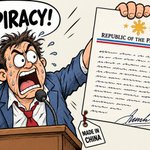
SeaLight Investigation: A Conspiracy Made in 🇨🇳#China
Whoever wrote the obviously fake 🇵🇭Teodoro letters thinks in Chinese official lingo, argues like China's foreign ministry and found his distributors among Beijing's friends.
Imagine the #Philippines' Harvard Law-trained defense secretary Gilberto Teodoro writing a formal, unclassified letter to an obscure 🇺🇸US Embassy officer -- on official letterhead and over his own signature -- to confess to everything his critics say about him.
That's what the "Teodoro letters" ask you to believe, but whoever made them forgot to cut off the "Made in China" tag.
The letters don't read like a Filipino official, or frankly anyone proficient in English. They read like Chinese bureaucratese translated word for word from Mandarin.
One sentence pairs "complete qualifications" with "good reputation," a stock formula Chinese agencies use when choosing contractors.
The May letter calls Washington "the US side", while the Armed Forces of the Philippines is inverted into the "Philippine Armed Forces" by its own Secretary; and what the China Coast Guard does in the West Philippine Sea is referred to as "law enforcement."
Oh, and the author has a real problem with the article, "the". Almost as if it was written by someone whose language doesn't have an equivalent.
In other words, someone used to reading Chinese accounts in the Chinese language.
The July letter even recasts Beijing's own talking points about the July 20 clash as a Teodoro confession. Because that's totally what a highly educated Filipino politician and attorney would do. 🙄
And the people who had the letters first? All friends of Beijing, without exception.
The Philippine Department of National Defense says the letters are fake. They clearly are, and they're bad fakes at that ... right down to the 100% identical signatures.
The more interesting question is who wrote them. SeaLight Director @GordianKnotRay lays out the evidence, and it points directly back to Beijing.
Full investigation at the link in the comments below. 👇
🤖 Made with AI

SeaLight retweeted

This is a truly exceptional analysis by @GordianKnotRay of the alleged Teodoro letters addressed to a member of the US diplomatic mission in Manila that debunks their authenticity from top to bottom. If the truth matters to you, this is well worth taking the time to read. Don't let communist China influence you with their lies. Thankfully, we have someone willing and able to shine a light on the truth- and that matters 🇺🇸 🤝🏽 🇵🇭

SeaLight Investigation: A Conspiracy Made in 🇨🇳#China
Whoever wrote the obviously fake 🇵🇭Teodoro letters thinks in Chinese official lingo, argues like China's foreign ministry and found his distributors among Beijing's friends.
Imagine the #Philippines' Harvard Law-trained defense secretary Gilberto Teodoro writing a formal, unclassified letter to an obscure 🇺🇸US Embassy officer -- on official letterhead and over his own signature -- to confess to everything his critics say about him.
That's what the "Teodoro letters" ask you to believe, but whoever made them forgot to cut off the "Made in China" tag.
The letters don't read like a Filipino official, or frankly anyone proficient in English. They read like Chinese bureaucratese translated word for word from Mandarin.
One sentence pairs "complete qualifications" with "good reputation," a stock formula Chinese agencies use when choosing contractors.
The May letter calls Washington "the US side", while the Armed Forces of the Philippines is inverted into the "Philippine Armed Forces" by its own Secretary; and what the China Coast Guard does in the West Philippine Sea is referred to as "law enforcement."
Oh, and the author has a real problem with the article, "the". Almost as if it was written by someone whose language doesn't have an equivalent.
In other words, someone used to reading Chinese accounts in the Chinese language.
The July letter even recasts Beijing's own talking points about the July 20 clash as a Teodoro confession. Because that's totally what a highly educated Filipino politician and attorney would do. 🙄
And the people who had the letters first? All friends of Beijing, without exception.
The Philippine Department of National Defense says the letters are fake. They clearly are, and they're bad fakes at that ... right down to the 100% identical signatures.
The more interesting question is who wrote them. SeaLight Director @GordianKnotRay lays out the evidence, and it points directly back to Beijing.
Full investigation at the link in the comments below. 👇
SeaLight retweeted
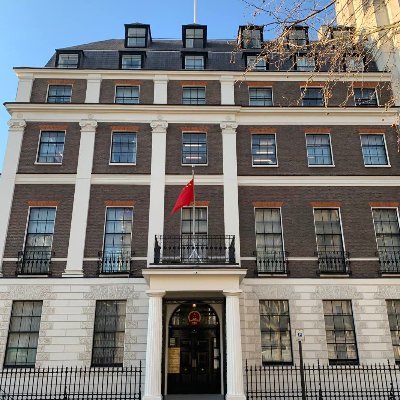
Reuters: The Philippines said on Wednesday that it is exploring deeper cooperation with Taiwan to protect undersea cables and address so-called gray-zone activities, despite its one-China policy. What’s China’s response? Does Beijing consider such cooperation a violation of the one-China principle?
Mao Ning: There is no gray zone on the Taiwan question. The Philippine side should abide by the one-China principle with concrete actions. External interactions of China’s Taiwan region should be handled in strict accordance with the one-China principle.


SeaLight retweeted

@SeaLightFound NEPTUNE is one of several 25+ year old FoC "zombie vessels" that loiter outside critical Taiwanese airbases and LNG facilities in the south of Taiwan. It was covered in a @taiwanplusnews investigation earlier this year. If I guess your next questions: 1) Is the loitering area within Taiwan's prohibited zone? Yes. 2) What's the due diligence process TW Port Authority goes through before permission is given for port entry? Unclear
NEPTUNE'a operating behavior is unusual. We confirm that NEPTUNE has changed its flag of convenience several times as you note. We also concur that the ship does encounter PRC or Taiwan originated vessels, but does not call on a single port outside Taiwan.
It loiters in areas where there is a confluence of critical infrastructure including submarine cables - most recently October 1, 2026.
The ship is listed as registered in London on Dec 22, 2017. However, SHUN LI SHIPPING CO. LTD was then dissolved in May 28, 2019. This ship also has multiple identities.
This appears to be a high-risk vessel in a major Taiwan port that is adjacent to Taiwan warships. Agreed, this is unusual.
1/ SUSPICIOUS VESSEL IN KEELUNG HARBOR, 🇹🇼#TAIWAN.
SeaLight has been tracking the cargo ship NEPTUNE for months based on its weird behavior: a flag-switching cargo ship that seldom visits ports but frequently encounters other suspicious ships off the coast.
It is now tied up in 🇹🇼Keelung Harbor, where its port paperwork says it just came from 🇭🇰#HongKong, even though its own Automatic Identification System (AIS) transponder's tracking signal says it was never there.
Tracking from @StarboardIntel shows NEPTUNE has spent the past 14 months just loitering around Taiwan's coasts: drifting offshore for weeks at a time, occasionally encountering other vessels & not calling at a single port outside Taiwan.
The closest it came to Hong Kong in that time was about 490 km. In fact, its entire AIS history shows zero visits to Hong Kong.
It currently flies the flag of Comoros, a registry the European Maritime Safety Agency rates "very high risk." It has already switched flags from Tanzania, not long after Taiwan itself announced it was scrutinizing that country's registered ships.
So what has this ship actually been doing? [🧵1/5]
(Attached: Current location of the NEPTUNE in Keelung Harbor from @StarboardIntel, plus last known photo of the same ship from July 2022, when it was NEPTUNE1)


SeaLight retweeted
NEW: The People’s Republic of China (PRC) is increasingly targeting the family members of those it deems Taiwan “separatists” to coerce them to halt activities that the PRC views as promoting “Taiwanese independence.” The PRC appears to be intensifying its coercion against Taiwanese politician Puma Shen, in particular, possibly to impact his Taipei mayoral campaign. (1/2)
Other Key Takeaway:
The PRC appears to be intensifying its rhetorical and maritime coercion against the Philippines to reduce the Philippine presence in the South China Sea. The PRC likely seeks to support its own territorial claims and ensure that PRC maritime forces can operate freely in the South China Sea and nearby waters.


SeaLight retweeted
Let's see if this escalates to a "double-dog dare", which could result in the dreaded "I'm rubber, you're glue, bounces off me and sticks to you" demarche.

The diplomatic row between the Philippines and China over recent remarks by Chinese Ambassador Jing Quan has spread beyond the executive branch as the Chinese Embassy challenged lawmakers to declare him “persona non grata” and accused journalists and politicians of exaggerating tensions between the two countries.
READ MORE: inqnews.net/ChinaDaresPH

ALT The diplomatic row between the Philippines and China over recent remarks by Chinese Ambassador Jing Quan has spread beyond the executive branch as the Chinese Embassy challenged lawmakers to declare him “persona non grata”.
SeaLight retweeted
😬 Is there ANY precedent for an Embassy publicly daring a host country to PNG its own ambassador? Asking for a friend...
SeaLight retweeted
"Media ambush interview"?
In a media ambush interview on the sidelines of the second Diliman Dialogue, Ambassador Jing Quan was asked to comment on Philippine Defense Secretary Gilberto Teodoro Jr.’s characterization of China as the region’s “troublemaker.” Here is his response:
“That’s nonsense. Who’s the troublemaker? Look at who go after Chinese teachers? They’re innocent. Who led the army to arrest Chinese innocent workers? Who every day smear, attack China? We should feel fortunate enough that you have a neighbour like China in this region. If we want to use force, we may easily win. But no, we will not choose force, and we love peace. In this region, we enjoy peace. Look at other regions: Ukraine, Gaza and even Venezuela. What happened there.we should cherish peace in this region.”
SeaLight retweeted

Taiwan's Growing Challenges to Combat China's Influence Operations
@kwangliu joins @GordianKnotRay and Jim for this week's episode.
She revealed a meeting with some members of Taiwan's National Security Council about a growing wave of fake accounts and bots posting about Taiwanese leaders, with many traced back to Hong Kong, China, and Malaysia. The objective is simple: use coordinated attacks to sow doubt in the public's mind and erode trust in Taiwan's government and political system.

Ep. 170 is available wherever you get your podcasts, including:
- YouTube: youtu.be/YbijFlatPiE
- Apple: podcasts.apple.com/us/podcas…
- Spotify: open.spotify.com/episode/5Bf…
- Amazon: music.amazon.com/podcasts/9e…
- RSS: rss.com/podcasts/indo-pacifi…
+ More!
Sponsored by @BowerGroupAsia

SeaLight retweeted
🇨🇳China's Imperial Proconsul Speaks: 🇵🇭Filipinos should feel "fortunate" because, "If we want to use force, we may easily win."
#China's ambassador to the #Philippines, Jing Quan, told Filipino journalists yesterday that they should "feel fortunate that you have a neighbor like China," explaining that "if we want to use force, we may easily win, but no, we will not choose to use force."
This is not the language of a diplomat sent to respectfully negotiate with a sovereign nation, but of a proconsul sent to pacify an unruly colony.
In the Roman Empire, a proconsul governed a conquered province, and his job was "pacification"--the Latin word for peace. The empire meant it literally: a province was only "at peace" only when its people stopped resisting imperial rule.
A pacification campaign follows a familiar pattern: remind the people how much force you have and present your "restraint" as a gift; demonize those who resist as "troublemakers"; praise and reward the "grateful" locals who cooperate; blame unrest on outside "agitators"; and preach the virtues of accepting the imposed "peace."
Observe how Beijing is following its pacification program for the West Philippine Sea:
✅ Threats of force: China says it "will not choose" to use force, yet its coast guard and militia routinely do so. Last October a coast guard ship water-cannoned and rammed a Philippine fisheries vessel anchored off Pag-asa, an island with a civilian population. In July, a Chinese officer struck a Philippine Navy sailor on the head with a baton near Ayungin Shoal. Last month a coast guard ship rammed another fisheries vessel delivering fuel to fishermen just 54 nautical miles off Palawan. Beijing calls this "law enforcement", but the message is explicit: be grateful we're *only* injuring your sailors and damaging your ships. In this narrative, you see, restraint is not a duty under the UN Charter or even the 2002 Declaration on the Conduct of Parties in the South China Sea, but a favor the imperial power grants and can punitively withdraw from ungrateful subjects.
✅ Blaming the troublemakers: Every pacification campaign needs a few rabble-rousers to demagogue and discredit, so it picks a vocal few and makes silencing them the price of “peace.” Foreign Minister Wang Yi laments how "certain forces ... deliberately stir up trouble". The embassy calls Defense Secretary Gilberto Teodoro the "real troublemaker" and accuses Rear Admiral Jay Tarriela of "poisoning public opinion," even asking whether he has "something wrong with his head." The Global Times dismisses them as "a handful of buffoons" and wants Manila to "exercise stricter discipline" over their remarks.
✅ Naming the outside agitators: Empires routinely attribute indigenous resistance to nefarious foreign forces. Moscow called Hungary's 1956 uprising a Western imperialist plot. Beijing blamed Tibet's 2008 protests on the "Dalai clique" and Hong Kong's 2019 protests on America's "black hand." The charge turns patriotic citizens who resist colonial rule into foreign agents & their legitimate grievances into foreign schemes. In the West Philippine Sea, the colonial troublemakers are "parroting external talking points" to "serve the interests of their masters" and "act on the instructions of external forces."
✅ The cooperative locals: A benevolent proconsul rewards “friends” who help pacify the resistance. "Friends of the Chinese Embassy" awards honor cooperative local media figures as well as other civic, business and education leaders. Last year, officials of the Federation of Filipino-Chinese Associations of the Philippines took their oaths of office directly from China's previous ambassador. His successor, Jing Quan, summoned executives from 8 Chinese-language news outlets to the embassy just after arriving, where they pledged to "cooperate closely" with the embassy. At Ateneo University just days ago, Ambassador Jing urged the assembled representatives of universities, Confucius Institutes, Chinese-language schools and community groups to "resolutely do the right thing".
✅ The promised peace: "We love peace," Jing proclaimed, just a week after his coast guard spent nearly 10 hours forcibly obstructing a medical evacuation from Ayungin Shoal--before graciously giving the Philippines "permission" to evacuate its own sailor from its own outpost inside its own exclusive economic zone. Beijing has long pledged to make the South China Sea "a sea of peace, friendship and cooperation," and now calls for a "new narrative" of peace. But peace, in the new-narrative imperial vocabulary, means exactly what it meant for Rome: Philippine waters will be "at peace" when Filipinos stop resisting China's claims to its waters and the legions deployed to pacify them.
A diplomat seeks to persuade a sovereign government through respectful negotiation. A proconsul pacifies a population under the ever-present threat of violent action.
The Philippine Department of Foreign Affairs noted that the ambassador's "poor choice of words" would "seem to convey a thinly veiled threat of the use of force."
The DFA was being very diplomatic. Jing's words were hardly a one-off slip of the tongue.
In January, the embassy warned Filipinos to "think about Ukraine, Venezuela, Gaza, and Greenland," and said "the Philippines should feel fortunate to have a neighbor like China." In May, Jing himself made the same argument in print, and this month he said it on camera.
That's because in a pacification campaign, the threat of force is central to the message.
Pacification follows occupation, and China's occupation of the West Philippine Sea is real and accelerating. The attached maps clearly show the China Coast Guard's sovereignty assertions blanketing the sea across the West Philippine Sea, and now even enveloping the Philippines' northernmost province of Batanes.
Beijing is turning to the population on shore to persuade them to accept this maritime occupation as permanent, and to be grateful it isn't even more violent.
The Philippines is a sovereign country with its own internationally recognized exclusive economic zone and a binding UN-sanctioned arbitration ruling that upholds its maritime entitlements. Officials who defend these rights are not troublemakers, and Filipinos owe no gratitude to the imperial power that stole their sea.
"The Chinese Embassy is not a guest," the embassy wrote this week. "It is the representative of China." I’ve worked in embassies, and we always understood that we were always to speak and behave accordingly, as guests of the countries that accepted our credentials.
President Marcos accepted Jing Quan's credentials last December. He was accredited as ambassador to a sovereign nation, not appointed as imperial proconsul to pacify a renegade province.


SeaLight retweeted
The Case for Why Washington's Pivot to America First Policy
Retired Singaporean Ambassador Bilahari Kausikan joins @GordianKnotRay and Jim for our latest episode.
Bilahari discussed Washington's current Pivot to an America First policy. The United States' attitude toward becoming relatively open and generous rules of trade, is not out of altruism; it's a search for economic advantage to defeat the Soviet Union during the Cold War. With no existential threat anywhere in the world, Washington now must prioritize itself. These historical circumstances have passed and are not going to be recreated.
Every country prioritizes itself first, but when America does it, the rest of us are uncomfortable.
Ep. 169 is available wherever you get your podcasts, including:
- YouTube: youtu.be/VvZhgWngb2k
- Apple: podcasts.apple.com/us/podcas…
- Spotify: open.spotify.com/episode/6HD…
- Amazon: music.amazon.com/podcasts/9e…
- RSS: rss.com/podcasts/indo-pacifi…
+ More!
Sponsored by @BowerGroupAsia.

SeaLight retweeted

Thanks to GTI for the opportunity to build on the Ambassador's remarks, focusing on resilience in the face of Chinese political warfare. Also appreciate @AlexGrayForOK's expert moderation.
Bottom line: Inaction in the face of this threat, which the U.S. also faces, is risky.


RT @IvanAtHome: Report by @GordianKnotRay of @SeaLightFound on how China is using Chinese teachers to BRAINWASH Filipino students.
THE ENE…


SeaLight retweeted

SeaLight deserves our support. Its work is doing what responsible investigative journalism should do: following the evidence, exposing networks and asking questions that Philippine authorities cannot afford to ignore.
The withdrawal of around 150 Chinese teachers raises simple questions:
- Under what legal authority were these foreign nationals entering and teaching in Philippine schools?
- What visas, work permits or exemptions did they have?
- Who recruited, funded, trained and directed them?
- And who were the organisations behind their deployment?
Calling someone a “volunteer” does not automatically place them outside Philippine immigration or labour laws.
And this is bigger than Chinese-language education. SeaLight has documented links between Philippine Chinese-language education and PRC institutions associated with the United Front system. China itself makes no secret of its organised overseas influence mechanisms and the obligations it places upon its nationals and organisations to protect Chinese national interests. We would be foolish to ignore the possibility of organised foreign influence.
That does not mean every Chinese national is an agent of Beijing. But it does mean the Philippines must stop being naïve.
It is our sovereignty and national security. The Philippines must protect its own interests. And SeaLight is doing a service to the Philippines by asking questions that too many people are afraid to ask.
👩🏫 NEW: The Philippine Teacher Recall: #China Plays the "Safety" Card ... Again 🇨🇳🇵🇭
Last week, about 150 Chinese teachers were reportedly recalled from Philippine schools. The reason given: their families feared for their safety after Defense Secretary Gilberto Teodoro and SeaLight's Ray Powell raised concerns about PRC-linked education programs.
No family member or threat has been named. And Beijing's own 2027 volunteer-teacher list had already dropped the Philippines before anyone mentioned worried parents.
We've seen this before. During the 2012 Scarborough Shoal standoff, Beijing issued "travel safety advice" for the #Philippines and suddenly found Philippine bananas "crawling with insects." It has played the same card against South Korea, Turkey, Australia, Japan and Palau.
Ray's new commentary traces the pattern and asks who is really putting Chinese-Filipinos at risk: those who use them as cards to be played, or those who expose it?
🔗 Link to the full article on SeaLight in the comments 👇
SeaLight retweeted
🚨How the Philippine Defense Secretary Addresses Concerns Regarding #China's Influence Operations and the Chinese-Filipino Community
In an interview with @IndoPacPodcast and SeaLight Executive Director @GordianKnotRay, Philippine Defense Secretary @giboteodoro discusses how the #Philippines counters Beijing's influence operations without alienating ethnically Chinese Filipinos, highlighting citizen integration and exposing infiltration cases like Alice Guo.
SeaLight retweeted

The recall is part of China’s pattern to discredit individuals and organizations that highlight the influence operations or economic coercion it conducts to achieve its objectives. The irony is that the same entities like @sealight can easily discredit these claims made by China.
👩🏫 NEW: The Philippine Teacher Recall: #China Plays the "Safety" Card ... Again 🇨🇳🇵🇭
Last week, about 150 Chinese teachers were reportedly recalled from Philippine schools. The reason given: their families feared for their safety after Defense Secretary Gilberto Teodoro and SeaLight's Ray Powell raised concerns about PRC-linked education programs.
No family member or threat has been named. And Beijing's own 2027 volunteer-teacher list had already dropped the Philippines before anyone mentioned worried parents.
We've seen this before. During the 2012 Scarborough Shoal standoff, Beijing issued "travel safety advice" for the #Philippines and suddenly found Philippine bananas "crawling with insects." It has played the same card against South Korea, Turkey, Australia, Japan and Palau.
Ray's new commentary traces the pattern and asks who is really putting Chinese-Filipinos at risk: those who use them as cards to be played, or those who expose it?
🔗 Link to the full article on SeaLight in the comments 👇