

Tutor • Educator • Researcher | Focused on Web3, DeFi & Onchain Analysis | Making Crypto Accessible, Data-driven, and Easy to Understand
Earth
Joined July 2022
- Tweets119K
- Following17.3K
- Followers29.1K
- Likes173K




Pinned Tweet
RWA HAS ENTERED ITS NEXT PHASE
RWA is starting to look less like one market and more like several markets forming around the same assets.
✧ @Ondo → tokenized Treasuries and stocks
✧ @Securitize → institutional funds and securities
✧ @binance → bStocks and tokenized equities
✧ @xstocksFi → bringing stocks onchain across multiple networks
✧ @RobinhoodApp → putting tokenized equities in front of a large retail audience
The numbers show how quickly this is spreading.
RWA.xyz now tracks about $38.5B in distributed RWA value across 210 platforms, with more than 4.5M holders.
Most of the money is still in yield-bearing assets.
Tokenized U.S. Treasury funds account for roughly $14.8B, with @OndoFinance around $2.7B.
Stocks are different.
The tokenized-stock market is around $2.92B, but it already has roughly 3.63M holders.
@Ondo sits around $837M, followed by bStocks at $685M and xStocks at $344M.
So there are two very different demand patterns developing:
Treasuries are attracting capital.
Stocks are attracting users.
Then trading enters the picture.
RWA perpetuals have reached roughly $2B in open interest, including about $1.54B in equity perps.
That changes what an RWA can actually be used for.
⥤ A Treasury token can generate yield.
⥤ A tokenized stock can give users access to an asset onchain.
⥤ A perp can turn that same asset into a 24/7 trading market.
And those are not interchangeable products.
Owning a token backed by the underlying shares is fundamentally different from holding a synthetic position that only tracks the stock price.
Regulation is beginning to address that distinction too.
On September 17, the SEC introduced a temporary five-year Innovation Exemption for certain venues trading tokenized U.S. stocks, subject to conditions covering shareholder rights, issuer objections and the underlying market infrastructure.
But there is one number I wouldn’t ignore.
Tokenized-stock holders have grown rapidly, while transfer activity has not kept the same pace.
More holders doesn’t automatically mean deeper liquidity.
That is the part of RWA worth watching.
The next stage isn’t simply about getting more assets onchain.
It’s about turning those assets into markets people actually hold, move, trade and use.
That is where the real competition is starting.

Tizzy🐼 retweeted

CRYPTO THIS WEEK
November 15–21, 2026
A new week brings developments across blockchain infrastructure, DeFi, institutional adoption, regulation and global markets.
From Solana Breakpoint and upcoming protocol changes to governance decisions, exchange updates and economic data, several developments are worth following.
THE HIGHLIGHTS:
✧ November 15–17: Solana Breakpoint takes place in London, with discussions covering stablecoins, tokenized assets, payments, AI and institutional blockchain infrastructure.
✧ November 16: Enjin is scheduled to activate its Fort Canning upgrade on Matrixchain, introducing OpenGov and changes to its runtime.
✧ November 16: Arbitrum DAO’s vote on returning 8,425.997 ETH and approximately 74.56M ARB frozen after the Binance exploit is due to close.
✧ November 16: Manta Network reaches the final deadline for its Atlantic migration claims.
✧ November 16: Coinbase is scheduled to suspend trading for NEON and SYND.
✧ November 16–30: Zcash community polls are scheduled to cover proposed development funding and the NU 7.1 upgrade.
✧ November 17: Clearpool begins its 1:1 CPOOL-to-CLEAR migration, with the process scheduled to run until February 17, 2027.
✧ November 17–19: Pi Network’s online Pi Ecosystem Summit is scheduled to bring attention to its applications, developer tools and ecosystem plans.
✧ November 18: UK FCA consultations on DeFi guidance and cryptoasset regulatory boundaries are due to close.
✧ November 18: U.S. housing starts, building permits and FOMC meeting minutes are scheduled for release.
✧ November 19: U.S. initial jobless claims and the Philadelphia Fed Manufacturing Index are due.
✧ November 20: Bybit is scheduled to open CLEAR/USDT trading following Clearpool’s token migration.
✧ November 20: U.S. consumer sentiment, China’s lending-rate decision and UK retail sales are scheduled.
✧ Throughout the week: ETF flows, stablecoin liquidity, DeFi activity and derivatives trading will remain important market indicators.
HERE ARE THE DETAILS
◈ MARKET AND LIQUIDITY
DeFi TVL is around $72B–$74B. Weekly DEX volume stands near $45.5B, down 11.18%, while perpetual DEX volume is approximately $156.4B.
Stablecoin market capitalisation sits around $284.8B, reflecting continued pressure on market liquidity.
◈ INSTITUTIONAL ACTIVITY
U.S. spot crypto ETFs recorded approximately $1.53B in net outflows between November 9 and 13.
Bitcoin accounted for roughly $1.07B of withdrawals, while Ethereum funds lost approximately $399M. Institutional flows will remain an important indicator of market direction.
◈ NETWORKS AND ECOSYSTEMS
@Solana Breakpoint puts institutional payments, tokenization and blockchain infrastructure in focus.
Meanwhile, @Enjin’s OpenGov upgrade, @ClearpoolFin’s token migration and @PiCoreTeam’s ecosystem summit bring attention to governance, interoperability and application development.
◈ GOVERNANCE AND REGULATION
@Arbitrum’s upcoming vote concerns the return of assets frozen following the @Binance exploit, although approval would not mean immediate release.
@Zcash’s community polls and the UK FCA’s consultation deadlines also put governance and regulatory developments on this week’s agenda.
◈ MACROECONOMIC OUTLOOK
U.S. retail sales, industrial production, housing data and FOMC minutes headline the economic calendar.
UK inflation, China’s lending-rate decision and U.S. consumer sentiment will provide additional signals for global risk markets.
That’s it for this week. See you on the next one.

🚀 $LYX/USDT is moving
⚔️ Bullish reversal forming!
$LYX is holding a major support zone around $0.175 to $0.185, the base set back in June and is already up 26% from low.
With Universal Profiles gaining traction, the mobile app live and real brands onboarding, a recovery toward higher resistance is on the table.
‼️ Entry Zone: $0.190 – $0.230
Current price: 0.248 still a good buy price
🎯 Target Levels:
✅ $0.28
✅ $0.36
✅ $0.48
✅ $0.75
✅ $1.25+
🚫 Stop Loss: Below $0.175
🐺 Support is holding and momentum is building, LUKSO could make a powerful run. Stay patient and trade the trend.
#LUKSO #LYX

Tizzy🐼 retweeted
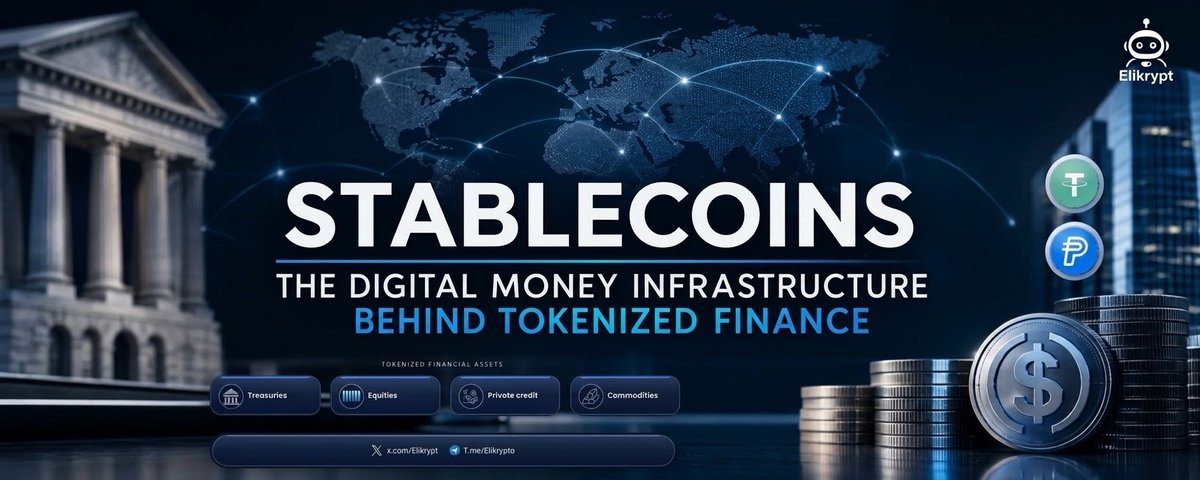
An in-depth look at stablecoins: their issuers, reserves, blockchain distribution, payment adoption, institutional use, regulation and risks and their growing role in the future of tokenized finance.
Elysium mainnet went live yesterday, and builders are already shipping like crazy.
This is not a testnet promise anymore. This is a proper Hyperliquid L2, live, with real teams building on day 2.
Here is who is already building:
Launchpads
@AscendLaunch
@MontraXYZ
@VoltaFamily
@Boxa_Elysium
@ElysiumPump
@TheKleos_
@arkhampad
@obolworld
@akadotfun
@Stockium
@Quoted_xyz
@RONSpadfun
@LaunchCraft_xyz
@Eleosfun
@tradeEvermor
@Clanker
@PerpMedfun
DEX / Trading / Liquidity
@RamsesExchange
@HyperFlow_fun
@Agora_elysium
@Heliosliq
@useAlixir
@Dawn
@fomo
NFTs & Collectibles
@ElysiumMachines
@Kalosfun
@AtlasHL
Games & Fun
@ClashforElysium
@Eloscape
@ELYSA.FUN
@FrogFlip
Infra & Tools
@Alchemy
@Allium
@Conduit
@ChainstackHQ
@0xproject
@Enso
@tryCodex
@Ellytradebot
@Hypesium
@ElyScreener
Different mechanics everywhere. Fee sharing to creators, buybacks, bonding curves, direct Uniswap v4 pools, stock-quoted launches. Not one cookie-cutter pad.
100ms blocks, HYPE gas, direct Hyperliquid alignment. That speed is clearly attracting real product teams, not just memes.
Day 3 of public mainnet, and the map is already dense. The next few weeks are going to be chaotic in the best way.
Who else is building on Elysium that I am missing? Drop it below.

ZCASH JUST MADE ITS BLOCKS 3X FASTER, AND QUIETLY LOCKED 12,224 ZEC AWAY FOREVER.
NU7 went live Nov 5, 2026, at block 3,543,405.
Block time went from 75 seconds to 25 seconds.
Issuance did not change. The subsidy dropped from 1.5625 ZEC to about 0.52083333 ZEC per block, by the same factor.
Daily issuance stays about the same. The 21 million cap stays. You just get faster first confirmations.
The important part is the Network Sustainability Mechanism.
40% of fees go to miners now.
60% goes into a public reserve.
That reserve is not burned. It comes back as block rewards starting around Feb 2031.
This is Zcash planning for a problem every proof of work chain has. Halvings cut the subsidy, fees have to replace it, and if fees are not enough, security drops.
NU7 starts building that future security budget today, without touching the cap or the halving schedule.
Whether it works depends on one thing: real fee activity over the next few years. If usage stays low, the reserve stays small. If usage grows, miners have a second income stream waiting for them.
Shielded capacity went up too, with guardrails.
Orchard throughput, about 2.9 to 6.6 TPS.
Worst case sync bandwidth for light wallets, down about 37%.
Per block limits across Orchard, Sapling and Ironwood keep one bad actor from overloading nodes and wallets.
More capacity, but not unlimited capacity. That trade off is deliberate.
And the cost is real.
Version 4 transactions are now invalid. Sprout only used version 4, so about 12,224 ZEC in Sprout is now unspendable.
Not burned, not redistributed. Recorded, but cannot move.
That is what a hard protocol upgrade looks like in practice. Progress for the chain, loss for the legacy pool.
My view is simple.
Privacy is the headline for Zcash, but it was never the whole problem. Speed, sync cost, validation cost, and long term miner pay matter just as much.
NU7 addresses all four at once, and it does it without breaking the monetary policy.
The fee reserve is the part to watch. If it grows, Zcash has solved a piece of the long term security puzzle. If it does not, we will know in the next few years.
For now, this is a solid upgrade. Faster, cheaper to sync, and thinking ahead to 2031.
Source: Zcash NU7, Nov 5 2026

CRYPTO’S L1 MIGRATION WAVE: WHY PROJECTS ARE CHANGING CHAINS
An interesting shift is taking place across crypto infrastructure.
Projects that once operated independent Layer-1 networks are increasingly looking toward established ecosystems such as Solana, Ethereum, Base, Sui and BNB Chain.
Here are nine notable examples:
• @akashnet → Solana:
Moving its decentralized compute marketplace to Solana to benefit from lower transaction costs, existing liquidity and deeper DePIN integration.
• @datafdn → Sui @SuiNetwork
Bringing its AI training data infrastructure into the Sui and Walrus ecosystem, combining programmable data ownership with storage and access controls.
• Extended (@extendedapp) → @Arc:
Transitioning from Starknet to Circle’s Arc ecosystem, with a focus on USDC-native infrastructure and faster settlement.
• ZetaChain (@zetablockchain) → @Solana:
Shifting toward private AI infrastructure, using Solana’s existing users, payment rails and agent ecosystem.
• @harmonyprotocol → @Ethereum:
Moving away from its independent network following persistent security challenges and cross-chain vulnerabilities.
• @MoonriverNW → @Base:
Transitioning from Kusama infrastructure to Base as part of Moonbeam’s broader strategic restructuring.
• @gnosischain → Ethereum:
Preparing to join the Ethereum Economic Zone, bringing its existing ecosystem closer to Ethereum’s shared liquidity and composability.
• @bouncebit → @BNBChain :
Moving away from its independent network following its security incident and consolidating its ecosystem around BNB Chain.
• (@Scroll_ZKP) → Ethereum:
Proposing a shift toward privacy-focused, application-specific infrastructure for AI while retaining an Ethereum connection.
WHAT THIS MEANS FOR THE INDUSTRY
Building an independent Layer-1 is expensive and demanding.
Projects must maintain validator infrastructure, security, liquidity, developer activity and user adoption. Having an independent chain does not automatically mean having a sustainable ecosystem.
Moving into an established network can reduce some of these burdens while providing access to existing infrastructure, users, liquidity and developer communities.
However, there is a trade-off. Projects may sacrifice some infrastructure independence and control in exchange for broader ecosystem access.
That does not mean independent Layer-1s are becoming irrelevant. Some applications still require specialised execution environments and greater control over their infrastructure.
The more important shift is that projects are reassessing whether operating their own chain actually creates enough value to justify the cost.
The next phase of blockchain competition may not be about who can launch another Layer-1, but who can build the most useful infrastructure on top of the networks that already have users, liquidity and adoption.
Source: @CryptoRank_io

Tizzy🐼 retweeted
THIS WEEK’S TOKEN UNLOCKS
November 8–14, 2026
Several notable token releases are scheduled this week, led by RAIN, PIEVERSE, ADI and PUMP.
TOP 10 TOKEN UNLOCKS
▹ NOV 10 | @Rain__Protocol ($RAIN)
✧ 35.90B RAIN · ~$195.42M · 5.03% of market cap.
▹ NOV 14 | @pieverse_io (ethereum:0x0e63b9c287e32a05e6b9ab8ee8df88a2760225a9)
✧ 86.38M PIEVERSE · ~$126.65M · 31.4% of market cap.
▹ NOV 9 | @ADIChain_ ($ADI)
✧ 6.99M ADI · ~$56.17M · 7.18% of market cap.
▹ NOV 14 | @Pumpfun ($PUMP)
✧ 6.87B PUMP · ~$25.03M · 1.5% of market cap.
▹ NOV 11 | @AlloraNetwork ($ALLO)
✧ 165.51M ALLO · ~$24.52M · 39.3% of market cap.
▹ NOV 12 | @aztecnetwork (ethereum:0xa27ec0006e59f245217ff08cd52a7e8b169e62d2)
✧ 705M AZTEC · ~$9.12M · 23% of market cap.
▹ NOV 8 | @Mey_Network (base:0x8bfac1b375bf2894d6f12fb2eb48b1c1a7916789)
✧ 202.06M MEY · ~$8.68M · 71.1% of market cap.
▹ NOV 10 | @JANCTION_Global (ethereum:0xc477b6dfd26ec2460b3b92de18837fd476ea7549)
✧ 1.17B JCT · ~$6.07M · 10.2% of market cap.
▹ NOV 12 | @incention_io ($CENT)
✧ 1.33B CENT · ~$4.10M · 13.6% of market cap.
▹ NOV 10 | @dappOS_com (ethereum:0x951f086a127e280724fd93ccc543f65065afeb5e)
✧ 14.58M DOS · ~$2.89M · 7.29% of market cap.
OTHER UNLOCKS:
NOV 8: $PORT3, $SCA, $OWN, $OPEN, $K, $GO4, $METRO, solana:HSGiunoB6k7SN2G55Ww4Gg16qiUarTg3W32XSKj8pump
NOV 9: $RCADE, $MOVE, $XOXNO, $NERO, $DRESS, $WET
NOV 10: solana:MEFNBXixkEbait3xn9bkm8WsJzXtVsaJEn4c8Sam21u, $CHEEL, $FHE, $TED, $OSHI, $VELVET, $UP, $PGPT, base:0xb3b32f9f8827d4634fe7d973fa1034ec9fddb3b3, $POP, $HOME, $KYO, $AAA, $CLONE
NOV 11: solana:8nV3xKVvhX7KVnoxVN93ahcvFSecrWovturHggMHruQn, $NYAN, $SQR, $AGI, $RMV, $MOCA, base:0x1c7a460413dd4e964f96d8dfc56e7223ce88cd85, $US, $XR, ethereum:0xf477ac7719e2e659001455cdda0cc8f3ad10b604
NOV 12: $ESP, $RBC, $TRIO, diam:native, $WAI, $RAVE
NOV 13: $DATA, $FANX, $BB, $UP
NOV 14: $HIGH, $BUBBLE, $KERNEL, $KII, $AORA
Unlocks do not automatically mean selling pressure. The impact depends on recipients, actual circulating supply, liquidity and demand.
Dollar values are estimates and schedules may differ across tracking platforms. Percentages shown above represent market-cap ratios, not circulating-supply percentages.
That’s it for this week’s token unlocks. See you on the next one.

Tizzy🐼 retweeted
THIS WEEK’S TOKEN UNLOCKS
November 1–7, 2026
Several notable token releases are scheduled this week, led by HYPE, BTW, KITE, M and STABLE.
TOP 10 TOKEN UNLOCKS
▹ NOV 6 | @HyperliquidX ($HYPE)
✧ Up to 9.92M HYPE · ~$873M headline value · 4.14%.
Scheduled maximum, not confirmed circulation. About $15.8M is currently tracked as committed.
▹ NOV 2 | @BitwayOfficial ($BTW)
✧ 101.62M · ~$111.8M · 3.37%.
▹ NOV 3 | @GoKiteAI ($KITE)
✧ 640M · ~$74.6M · 17.4%.
▹ NOV 1 | @MemeCore_M ($M)
✧ 56.11M · ~$53.1M · 2.4%.
▹ NOV 4 | @MMTFinance ($MMT)
✧ 252.7M · ~$32.6M · 294% of reported circulating supply.
▹ NOV 7 | @Stable $STABLE
✧ 888.89M · ~$23.3M · 4.9%.
▹ NOV 2 & 5 | @ethena ($ENA)
✧ 134.38M combined · ~$25.4M · 1.00%.
▹ NOV 1 | @SuiNetwork ($SUI)
✧ 13.15M · ~$11.8M · 0.3%.
▹ NOV 1 | @eigenlayer ($EIGEN)
✧ Approximately $6.37M in scheduled unlocks.
▹ NOV 1 | @zetachain ($ZETA)
✧ 44.26M · ~$1.72M · 2.67%.
OTHER UNLOCKS
NOV 2: $STO, $OPN
NOV 3: $KITE, $CHEEL
NOV 4: $LA, $SD
NOV 5: $KTA
NOV 6: $QUAI, $RESOLV
• XRP ESCROW
NOV 1: Ripple was scheduled to release 1B XRP, though much of it is typically relocked.
Unlocks do not automatically mean selling pressure. The impact depends on recipients, actual circulating supply, liquidity and demand.
Dollar values are estimates and schedules may differ across tracking platforms.
That’s it for this week’s token unlocks. See you on the next one.

THE BINANCE INCIDENT: AN ANALYSIS OF CRYPTO SECURITY BOUNDARIES
The biggest lesson from the Binance incident isn't just the scale of the loss. It’s a reminder of the hidden vulnerabilities in the systems trusted to secure billions in digital assets.
Here is a breakdown of what happened and what the industry must fix: 👇
THE ATTACK PATH & SYSTEMIC GAPS
▪️ Internal Compromise: Development and operations environments can easily become entry points into critical financial infrastructure.
▪️ Hot-Wallet Trade-offs: While convenient, online accessibility creates severe risks if transaction authorization systems are manipulated.
▪️ Control Failures: Moving from a single laptop theory to multiple points of compromise highlights critical questions regarding privilege separation and why independent circuit breakers didn't halt transfers.
WHAT EXCHANGES & PROTOCOLS MUST IMPROVE
▪️ Least-Privilege Access: Enforce hardware-backed authentication and strict isolation between developer environments and production wallet infrastructure.
▪️ Independent Authorization: Require multi-layered approvals with hard caps for anomalous transfers.
▪️ Risk-Based Circuit Breakers: Deploy automated logic to delay or block suspicious withdrawals before losses escalate.
KEY TAKEAWAYS FOR CRYPTO MARKETS
▪️ For Exchanges: Security extends beyond key management to every device and pathway capable of influencing a transaction.
▪️ For DeFi: Audited contracts don't protect against compromised privileged roles or deployment infrastructure.
▪️ For Users: Proof of Reserves and exchange reputation do not guarantee immunity against operational failure. Understand custody risk.
Crypto has mastered onchain transparency, but the systems controlling those transactions need an equally rigorous security standard. True safety is measured by how well infrastructure resists compromise and failure.
Assessment based on available info; not financial advice.


Tizzy🐼 retweeted
$34.1B IN REAL-WORLD ASSETS IS NOW ON-CHAIN. HERE’S WHAT HAPPENS NEXT.
I checked the October 30 @DefiLlama RWA dashboard, and the gap between tokenization and DeFi adoption is worth looking at.
↳ $34.092B total on-chain RWA AUM
↳ $30.689B active RWA AUM
↳ $4.316B DeFi active TVL
↳ $510.43M added over 30 days
DeFi active TVL grew approximately 13.4% monthly, representing around 14.1% of active RWA AUM.
⊹ THE PROTOCOLS CONNECTING RWAs TO DEFI
▹ Lending: @Morpho ($891.2M), @KaminoFinance ($425.4M), @aave ($378.3M) and @eulerfinance ($96M).
They provide lending markets, allowing eligible assets to support borrowing and capital allocation.
▹ Institutional credit: @GrovedotFinance ($395.1M).
Grove connects capital with institutional credit and financial strategies within the Sky ecosystem.
▹ Yield trading: @pendle_fi ($363.5M).
Enables users to separate and trade principal and future yield exposure.
▹ Stablecoin infrastructure: @fraxfinance ($96.7M).
Provides stablecoin infrastructure supporting liquidity and settlement.
▹ Decentralized trading: @Uniswap ($77.2M).
Provides exchange infrastructure for trading eligible tokenized assets.
▹ Institutional lending: @aave Horizon RWA ($122.6M) and Aave V4 ($90.1M).
Horizon targets institutional RWA lending, while V4 introduces a new lending architecture.
These figures represent tracked RWA-related DeFi TVL, not total protocol TVL or revenue.
⊹ THE ISSUERS MATTER TOO
According to @RWA_xyz’s October 29 asset-manager data:
↳ Tether — $3.029B
↳ BlackRock — $2.874B
↳ Franklin Templeton — $2.685B
↳ Circle — $2.374B
↳ Amundi — $2.124B
↳ Paxos — $1.796B
↳ Maple — $1.243B
↳ Blockchain Capital — $940.1M
↳ Anemoy — $899.3M
↳ JPMorgan — $890.8M
↳ WisdomTree — $784.5M
These figures cover different tokenized financial products, including Treasuries, private credit and other assets.
The opportunity goes beyond issuing tokens. It lies in making eligible assets usable, liquid and economically productive.
I’d focus on actual usage, liquidity, protocol revenue and whether that value reaches token holders.
Tokenization brings assets on-chain. Utility drives adoption. Sustainable economics create lasting value.
This is my opinion based on the data I’ve reviewed, not financial advice.

Ethereum has a much larger DeFi ecosystem, so I wanted to see how that difference showed up in actual trading activity.
The October 20 figures on @DefiLlama revealed an unexpected contrast.
BNB Chain recorded $6.26B in DEX volume over seven days, up 37.95%.
Ethereum recorded $7.78B, down 19.96% over the same period.
Ethereum still leads in absolute volume, but the gap is surprisingly narrow given the difference in capital held across the two ecosystems.
That led me to look beyond DEX volume and examine the aggregator data.
THAT’S WHERE THE DIFFERENCE BECOMES MORE INTERESTING.
BNB Chain’s DEX aggregator volume reached approximately $8.65B over 30 days, with the dashboard reporting a 100% weekly change.
Ethereum’s aggregator volume stood at approximately $18.44B over 30 days, down 10.08% on the dashboard’s weekly comparison.
Aggregators route trades across available liquidity sources to find suitable execution. Their volume helps show how traders access liquidity, but it should not be added to DEX volume because the same trade can be reflected at both layers.
The contrast is clear: BNB Chain’s reported DEX and aggregator activity is gaining momentum, while Ethereum’s has declined over the same weekly comparison.
NOW PUT THAT AGAINST THE CAPITAL BASE.
BNB Chain holds approximately $5.93B in DeFi TVL, compared with Ethereum’s $49.57B.
Ethereum therefore has roughly 8.4 times the TVL, yet its seven-day DEX volume is only about 24% higher.
Stablecoin supply reinforces the difference in scale.
• BNB Chain: $13.10B, down 0.89% over seven days.
• Ethereum: $143.76B, down 0.50%.
Using TVL as a rough reference, BNB Chain’s seven-day DEX volume was approximately 1.05 times its reported TVL. Ethereum’s was around 0.16 times.
That points to substantially higher trading turnover relative to reported TVL on BNB Chain during this period. It does not establish superior liquidity or capital efficiency. Trading can be concentrated in particular markets, and repeated transactions can increase volume without a corresponding increase in capital.
THE PART THAT NEEDS MORE INVESTIGATION
BNB Chain’s rising trading activity is notable, but its slightly declining stablecoin supply complicates the picture.
The available figures do not establish whether new capital is entering, existing capital is being traded more frequently, or activity is concentrated in a small number of markets. Nor do they establish that traders are moving from Ethereum to BNB Chain.
To assess the quality of this growth, I would examine protocol-level volume, fees, retained revenue, stablecoin and bridge flows, and whether the trend persists beyond this seven-day window.
Ethereum still has the deeper capital base. BNB Chain is showing stronger recent trading momentum.
Neither metric alone settles which ecosystem is healthier.
The distinction worth watching is how much sustained economic activity each chain generates relative to its capital base, and whether that activity translates into durable value for its protocols.

1
4
3,761
AI AGENTS DON’T JUST NEED WALLETS. THEY NEED AN ENTIRE FINANCIAL SYSTEM.
AI agents can interact with blockchain applications, execute transactions and pay for digital services. The bigger opportunity is building infrastructure that lets software operate economically without giving it unlimited control over capital.
Here are 10 projects worth researching, grouped by the problems they aim to solve.
▹ WALLETS & PAYMENTS
• @CoinbaseDev — AgentKit: Connects AI agents to crypto wallets and on-chain applications.
• @coinbase — x402: Enables internet-native payments for APIs and digital services.
• @nevermined_ai — Nevermined: Builds payment and monetization infrastructure for AI services.
▹ AGENT FRAMEWORKS & COORDINATION
• @elizaOS — ElizaOS: Open-source framework for building AI agents.
• @Fetch_ai — Fetch.ai: Tools for developing and coordinating autonomous agents.
• @autonolas — Olas: Infrastructure for coordinating autonomous services.
• @virtuals_io — Virtuals Protocol: Agent ownership, economic participation and commerce.
▹ FINANCE, COMPUTATION & EXECUTION
• @gizatechxyz — Giza: Autonomous agents focused on DeFi strategies.
• @ritualnet — Ritual: Infrastructure connecting AI models with blockchain applications.
• @PhalaNetwork — Phala: Confidential-computing infrastructure relevant to protected AI execution.
▹ THE RESEARCH FRAMEWORK: 5 QUESTIONS THAT MATTER
Before treating any of these projects as a serious contender, investigate five things:
→ REAL USAGE: Are independent users paying for agent services, or is activity primarily driven by incentives and speculation?
→ ECONOMIC VALUE: What revenue does the protocol generate? Do customers return, and can the business model cover its operating costs?
→ ON-CHAIN EVIDENCE: Can you verify transactions, active users, fees and actual service delivery? Transaction counts alone don’t prove product-market fit.
→ SECURITY & CONTROL: Can agents operate within enforceable spending limits? What happens if a model is manipulated, a key is compromised or a strategy fails?
→ TOKEN VALUE CAPTURE: Does protocol adoption create measurable demand for the token, or can the product succeed without benefiting token holders?
These questions separate technological potential from demonstrable adoption—and protocol growth from investment value.
My thesis: The biggest opportunity may not be the AI agents themselves, but the infrastructure that enables autonomous software to transact, purchase services and manage capital under enforceable rules.
The projects that matter most will be those that demonstrate genuine demand, sustainable economics and security beyond the marketing narrative.
Research the usage. Verify the revenue. Understand the token mechanics. Never confuse an interesting technology with a proven investment.
Not financial advice.

25
23
4,154
Tokenized Stock getting bigger and the traction is deserved 👏

Tokenization is one of blockchain's biggest drivers of adoption.
Grayscale Research attended @token2049 in Singapore, where tokenization was the buzziest topic. A key highlight was a partnership from @okx and @NYSE parent ICE.
Read more on The Stack: grayscale.com/the-stack/thre…

5
1,669
Tizzy🐼 retweeted
MIDWEEK ALPHA v.09
THE SECURITY GAP BEHIND HARDWARE WALLETS
The Ledger–CryptoBilis incident highlighted a risk many crypto users overlook: a hardware wallet can protect your private keys while another part of its security system remains vulnerable.
Ledger reported an unauthorized hardware implant that could capture recovery phrases during setup and transmit them over a mobile network.
This got me looking beyond brand names and into the security designs themselves.
▹ THE WEAKNESS IS NOT ALWAYS THE CHIP
✧ A PIN may protect a stolen device, but an exposed recovery phrase can allow someone to restore your wallet elsewhere.
✧ A Secure Element protects sensitive key operations but cannot guarantee every component is genuine.
✧ Air-gapped signing reduces certain network risks but does not eliminate physical tampering.
Protecting your keys is not the same as protecting your entire custody setup.
▹ DIFFERENT WALLETS, DIFFERENT APPROACHES
✧ @Ledger: Secure Element-based key protection.
✧ @Trezor: Open-source firmware, with Secure Elements on supported models.
✧ @COLDCARDwallet: Bitcoin-focused security and offline transaction signing.
✧ @KeystoneWallet: QR-based air-gapped signing.
✧ @ngrave_official: ZERO uses air-gapped communication.
✧ @CypherockWallet: X1 distributes recovery material using Shamir Secret Sharing.
✧ @gridplus: Lattice1 uses dedicated hardware for transaction signing.
These features address different threats. Open-source firmware improves inspectability, air-gapping reduces certain connectivity risks, and distributed recovery reduces dependence on one backup. None eliminates every attack.
▹ WHAT I WOULD CHECK
✧ DEVICE ORIGIN: Buy through a verifiable source and follow the manufacturer’s authenticity checks.
✧ RECOVERY: Generate your own recovery phrase during secure initialization. Never enter it into a website.
✧ TRANSACTIONS: Verify recipient addresses, amounts and permissions on the wallet before signing.
✧ BACKUPS: Consider distributed recovery or multisignature custody for substantial holdings, provided you understand the added complexity.
✧ EMERGENCY PLAN: If your recovery phrase is exposed, generate a new one on a trusted device and transfer your assets. Never reuse the compromised phrase.
▹ THE LESSON CT NEED TO TAKE:
I would not choose a hardware wallet based solely on its reputation or security features.
I would examine what it protects, what remains exposed and what happens when one layer fails.
The goal is not simply to keep your keys offline. It is to prevent one compromised component from putting your entire portfolio at risk.
That is the difference between buying a hardware wallet and understanding self-custody.
If you found this useful, leave a like and share your thoughts below.
See you on the next one.

Everyone is talking about tokenization. Very few people are talking about liquidity.
Putting an asset on a blockchain is becoming easier every year.
Creating real liquidity is much harder.
That distinction could determine whether the next phase of RWA becomes a financial revolution or simply a collection of tokenized assets with limited real-world use.
Today, billions of dollars worth of Treasuries, private credit, commodities and funds have already been tokenized.
The market continues to grow.
But one important question often gets overlooked:
Who can actually buy, sell, transfer and use these assets once they are on-chain?
Many people assume that tokenization automatically creates liquidity.
It doesn't.
A blockchain can record ownership.
It can settle transactions faster.
It can automate compliance.
But it cannot create buyers and sellers.
Liquidity still depends on market participants, regulations, custody, redemption mechanisms and trading infrastructure.
Think about it this way.
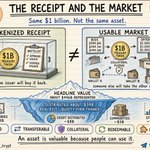
Imagine two tokenized Treasury products, each worth $1 billion.
One is actively traded across multiple platforms, accepted as collateral by lending protocols and supported by market makers.
The other sits inside a closed ecosystem where only a small group of approved investors can transact.
Both have the same market value.
But they don't have the same liquidity.
That is why tokenized value and usable value are not always the same thing.
This is also why infrastructure matters.
For tokenized assets to function like traditional financial instruments, they need much more than blockchain.
They need:
➢ Reliable custody
➢ Secure smart contracts
➢ Trusted price oracles
➢ Efficient settlement
➢ Clear legal ownership
➢ Fast redemption
➢ Deep secondary markets
Without these pieces, tokenization becomes little more than digital recordkeeping.
The industry is already moving beyond simple issuance.
Projects like @chainlink are helping connect on-chain assets with reliable external data.
@Securitize is working with major asset managers to tokenize investment products.
@Ondo is bringing Treasury-backed products on-chain.
@RWA_xyz continues tracking how quickly this sector is expanding.
Each project addresses a different part of the infrastructure needed to make tokenized assets useful—not just tokenized.
This is where I think many investors are focusing on the wrong metric.
Headline market value tells us how much has been tokenized.
It does not tell us how much can actually move through the financial system efficiently.
The next stage of RWA will not be won by the project that tokenizes the most assets.
It will be won by the projects that make those assets:
➢ Liquid
➢ Transferable
➢ Accepted as collateral
➢ Easy to redeem
➢ Interoperable across multiple platforms
Traditional finance already has trillions of dollars in highly liquid assets.
The opportunity isn't simply putting those assets on-chain.
The opportunity is making blockchain improve how they move, settle and interact with the broader financial system.
That's a much harder challenge.
But it's also where the biggest long-term value could be created.
My view is that the future of tokenization won't be measured only by how many billions are brought on-chain.
It will be measured by how useful those assets become once they're there.
Because in finance, an asset isn't truly valuable just because it exists. It's valuable because people can actually use it.
Do you think the next breakthrough in RWA will come from tokenizing more assets, or from making today's tokenized assets genuinely liquid and interoperable?
#RWA #DeFi #Tokenization #RealWorldAssets

Tizzy🐼 retweeted
IDENTITY MD ($IMD) THE AI WORKFORCE ECONOMY
$IMD started as a game token.
Identity MD is turning it into the economic layer for an AI workforce.
2,000 NFT seats → AI workers → verified jobs → onchain reputation → $IMD
$FP → Ethereum Oct 2025 → $VIBE Jan 2026 → $IMD May 2026.
The May rename introduced 2,000 free identity.md NFTs. Each is a work permit for one computer.
The holder supplies the machine and AI subscription, registers the agent through ERC-8004 @8004_org and runs the open-source worker.
Jobs include code, websites, research, audits, launches and oracle requests.
Job → seat → AI work → isolated verification → agent review → onchain reputation.
25 SEPTEMBER SNAPSHOT
✧ 380 seats enrolled
✧ 372+ agents online
✧ ~780 NFT owners
✧ 43,800+ accepted submissions
✧ ~17.3B inference tokens
✧ ~86% accepted
Top 10 seats produced ~8.5% of accepted work. Top 50 produced ~32%.
External users pay 0.5 $IMD per request through x402 @x402protocol.
✧ 115 paid orders
✧ 57.5 $IMD spent
✧ ~$560
This is the key number.
Large job counts show activity. Recurring external orders show demand.
$IMD pays for work and powers Community Coins, burn and staking mechanisms.
Contract:
0xD34a99Bc0f67aE1bbd63C660e6d0b0dd03E263B7
10M $IMD were originally minted. No new supply has been created.
~7.1M remained in the September snapshot, meaning ~29% had been removed.
Supply is bridged 1:1 across Ethereum @ethereum, Base @base and Robinhood Chain @RobinhoodChain.
POOL4 is the protocol-owned ETH and $IMD pool on Uniswap v4 @Uniswap.
Its hook caps $IMD inventory. When sells push the pool above the cap, excess is trimmed.
For every 100 $IMD:
✧ 85% burned
✧ 6% bonding reserve
✧ 4.5% stakers
✧ 4.5% NFT inference nodes
The 1% swap fee is protocol revenue, separate from the burn and reward flow.
Staking uses sIMD, an ERC-4626 vault share. The staking allocation is live; bonding and node allocations are currently reserves, not live products.
POOL4 is experimental and unaudited.
Community Coins lets anyone launch a token with bonding curves priced in $IMD rather than ETH.
Launch → trading → $IMD demand → burn
Early October:
✧ ~208 coins
✧ ~681 ETH volume
✧ ~3,957 $IMD burned
These are not official IMD products. Check the contract.
✧ @IdentityUnits — NFT creation and review
✧ @HIVE_imd — pooled seats and hosting
✧ @SuperIMD_eth — paid swarm jobs
✧ @blueprintimd — community-directed builds
✧ @imddrones — drone NFTs
✧ @imdusd — agent-priced stablecoin experiment
✧ @swarmpepes — swarm-created collection
✧ @IMDTools — jobs, launches and oracle
✧ @Pepesdotfamily — Robinhood Chain development
Identity MD’s first hackathon runs 7–21 October, with winners by 23 October and a $15K+ pool. Projects must launch through the explorer and build beyond a plain token.
The oracle is another potential use:
Question → multiple agents → quorum → signed result → smart contract
If protocols eventually pay for these answers, IMD could move toward machine-verifiable information infrastructure.
Still a thesis, not a proven market.
@virtuals_io:
One agent → its own token → users → revenue
IMD:
2,000 seats → shared workforce → one economic layer → jobs and verification
The difference is individual agent economies versus a coordinated machine workforce.
Hold or stake $IMD → bet on the token economy.
Run a seat → supply AI work and pay model costs.
Pay 0.5 $IMD → buy work from the swarm.
Identity MD already has the seats, agents, work history, token mechanics, launchpad, oracle and ecosystem.
The missing piece is sustained external demand.
Until strangers consistently pay for the output, Identity MD is an impressive AI coordination experiment, not a proven business.
That makes paid order count more important than NFT floor or agent count.

I think people are seriously sleeping on $FUN.
Everyone wants the shiny new coin while this 2017 dinosaur is quietly coming back to life 😂
Look at the structure dips bought, higher lows forming, trend still pushing up.
1c is the trigger for me.
Break + hold that and I want to see a run at 2.5c.
And while everyone watches the candles, FUN Free Play keeps building with 10 games already live.
Sometimes the old runners give you the biggest surprise.
#FUNtoken 👀🔥

Tizzy🐼 retweeted

Buyers now ask AI what to use.
Half of US consumers use AI search, but only 16% of big brands track what it says about them.
citeOS asks ChatGPT, Perplexity, Gemini, Claude and Google AI Mode the questions your buyers ask, and shows what they say about your brand.
Features:
- Visibility score for each AI engine
- Every answer, question by question
- Pages AI cites instead of yours
- Competitor comparison
- What to fix first
- Weekly alerts
Watch the demo.