



Agustin Blanco retweeted

25 years to understand the trends in clean energy, 11 minutes to explain them. Please watch and pass on.
ted.com/talks/michael_liebre…

Agustin Blanco retweeted

3 de mayo de 1945. Aunque hace tres días que Adolf Hitler se ha suicidado, la guerra sigue para la 2nd Tactical Air Force de la Royal Air Force. Los cazabombarderos Hawker Typhoon Mk-1B de los 'squadrons' 184º, 193º, 197º, 198º y 263º son rearmados para otra misión de ataque.

Agustin Blanco retweeted

Este contundente artículo de CincoDias sobre la CNMC y Red Eléctrica es el reconocimiento oficial de un fracaso regulatorio monumental y terriblemente caro.
El regulador abdica. ¿Para qué sirven tanto economista-jefe y tanto figurón funcionario? 🧵👇
cincodias.elpais.com/compani…
Agustin Blanco retweeted

This is probably my favourite chart I've produced on China's electricity transition because it leaves nowhere to retreat except ideology.
It shows both the share of China's electricity generation (%) and the absolute electricity generated (TWh) by each major electricity sector.
The story is hard to miss:
• Fossil fuels fell from 80% to 58% of generation.
• Renewables rose from 19% to 38%.
• Nuclear grew from ~1% to just 4%.
But the real story, hidden in the table below the chart, makes everything even more remarkable.
China's total electricity generation exploded from 1,350 TWh in 2000 to 10,600 TWh in 2025 — an almost 8-fold increase in just 25 years, one of the largest and fastest electricity system expansions in human history.
Within that unprecedented growth:
• Wind generation grew from effectively zero to 1,166 TWh.
• Solar generation grew from effectively zero to 1,166 TWh.
• Hydro's share fell from 19% to 14%, yet hydro generation still increased nearly sixfold, from 257 TWh to 1,484 TWh.
• Renewables generated 4,028 TWh in 2025, compared with 424 TWh from nuclear.
China didn't abandon fossil fuels. It built the world's largest fossil electricity system, then built an even larger clean energy system around it.
The data here, quietly destroys two common narratives simultaneously:
❌ "China is building coal, therefore renewables don't matter."
❌ "China's transition is mostly nuclear."
Neither is true.
The dominant story of China's energy transition isn't coal. It isn't nuclear.
It's scale — and an energy buildout driven relentlessly by economics and cost.
Because in energy, as in most industries, cost wins. And the accountants always beat the ideologues.

Agustin Blanco retweeted

Una reflexión out of the box a modo de 🧵
Esto de que ‘la IA va a beneficiar sobre todo a los jóvenes porque son nativos digitales y los mayores lo tienen chungo’
Creo que puede pasar justo lo contrario 1/n
Agustin Blanco retweeted

Las redes eléctricas son la nueva inversión de moda: estos son los motivos
Las grandes empresas eléctricas han anunciado un giro estratégico: reducir sus inversiones en renovables y para priorizar las redes. ¿Cuáles son los motivos?
windletter.substack.com/p/re…

Agustin Blanco retweeted

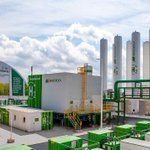
#evoZero llega al mercado: el primer #cemento del mundo con #captura de #carbono se entrega a clientes en toda Europa
Producto único, posible gracias a la tecnología de captura de carbono CCS de la planta de @hd_materialsES en #Brevik (Noruega)
tinyurl.com/4ytvf25f

ALT Vista aérea del proyecto alemán Dreihaus en Heidelberg. Copyright: Heidelberg Materials

ALT Vetle Houg, director general de Cemento Noruega; Per Ole Morken, director de Planta de Brevik, muestran las rimeras entregas de evoZero saliendo de la planta de Brevik. Copyright: Heidelberg Materials.
Agustin Blanco retweeted

🇫🇷 France’s #Carester is emerging as a rare earth powerhouse:
• €216M financing secured
• Partners: @SolvayGroup , @jogmec_jp , Iwatani
• 10-yr offtake with @Stellantis (3,400+ t REOs)
• Caremag (Lacq) → 2026 startup
~600 t/y Dy-Tb oxides (15% global heavy REE)
~800 t/y NdPr oxide
With @LynasRareEarths & @MPMaterials as the only ex-China producers, Carester is positioning Europe for real independence.
🔗 rareearthexchanges.com/news/…
#RareEarth #CriticalMinerals #EV #Defense

Agustin Blanco retweeted

China’s first onboard carbon capture system (OCCS) for newly built ships has completed trial operation aboard an 82,000-tonne bulk carrier. The system can cover the whole process of carbon absorption, desorption, compression, liquefaction, storage, and transfer, with an ability to achieve a CO₂ liquefaction rate of 99.9% and a liquid CO₂ purity of 99.9%.

polymerguru: Asahi Kasei to unveil PFAS-free polyamide and CFRP... polymerguru.blogspot.com/202…
16
Agustin Blanco retweeted

Electricity investments this year are set to be about 50% higher than the total amount being spent bringing oil, natural gas & coal to market – accounting for over half all energy investment
This signals the approach of a new Age of Electricity 👉 iea.li/43FIxCN

Agustin Blanco retweeted

Spain's booming services exports only partially reflect strong tourism. Much more important have been high value add business and related services.
Put simply, higher wages and labour shortages in East Europe mean South Europe is again competitive for services multinationals.


Agustin Blanco retweeted

📘 Este informe ofrece una visión panorámica sobre el potencial del puerto de #Bilbao como hub logístico portuario de la cadena de valor del #hidrógeno renovable y contrasta las opciones más viables para hacerlo.
🔗 buff.ly/mwVbMZS
@DeustoResearch | @BilbaoPort

It’s Time for Europe to Do the Unthinkable mahbubani.net/its-time-for-e…

10
Agustin Blanco retweeted

@JPMorganAM's 15th annual energy paper's bottom line on hydrogen? Read on for the key takeaways from this paper, which cites the work of the Hydrogen Science Coalition 👇 (1/4)
privatebank.jpmorgan.com/eur…

Agustin Blanco retweeted

Feels like these 33 companies will have no shortage of work in the years to come...

"Lo mejor que se puede hacer cuando una potencia demuestra haber perdido el norte, el criterio y el sentido común es empezar a apoyar a otras potencias, o tratar de convertirte en una para, al menos, equilibrar la jugada." @edans dixit
enriquedans.com/2025/02/cola…

11
Agustin Blanco retweeted

8/10: Biofuels, hydrogen, carbon capture and storage (CCS) and carbon removals are required to lower energy system emissions:
# Biofuel production could triple by 2050, particularly if advanced conversion technologies progress.
# Hydrogen produced from water using renewable electricity or from natural gas with CCS will also grow, but only for uses where electrification is not an option.
# CCS could be a billion-tonne-a-year industry by 2050.
# Natural and engineered carbon removal will be crucial in the second half of the century.


