Crypto Enthusiast • Web3 Guy • Defi • AI • RWA • Gamefi • Multichain Analysis • Marketing Strategist • NFA • Threador 🧵🦅
space
Joined November 2010
- Tweets24.3K
- Following2.6K
- Followers21.2K
- Likes39K






spacebyte ⛓ retweeted

𝗧𝗼𝗸𝗲𝗻𝗶𝘇𝗲𝗱 𝘀𝘁𝗼𝗰𝗸𝘀 𝗮𝗿𝗲 𝗺𝗼𝘃𝗶𝗻𝗴 𝗯𝗲𝘆𝗼𝗻𝗱 𝗵𝗼𝗹𝗱𝗶𝗻𝗴 𝗮𝗻𝗱 𝘁𝗿𝗮𝗱𝗶𝗻𝗴.𝗬𝗼𝘂 𝗰𝗮𝗻 𝗻𝗼𝘄 𝗯𝗼𝗿𝗿𝗼𝘄 𝗮𝗴𝗮𝗶𝗻𝘀𝘁 𝘁𝗵𝗲𝗺 𝗮𝗻𝗱 𝗯𝘂𝗶𝗹𝗱 𝗹𝗲𝘃𝗲𝗿𝗮𝗴𝗲𝗱 𝗲𝗾𝘂𝗶𝘁𝘆 𝗽𝗼𝘀𝗶𝘁𝗶𝗼𝗻𝘀 𝗱𝗶𝗿𝗲𝗰𝘁𝗹𝘆 𝗼𝗻𝗰𝗵𝗮𝗶𝗻.
I spent some time researching the latest development from @pendle_fi, and what caught my attention wasn't just the leverage. It was how three pieces of financial infrastructure are now working together on Base.
On October 22, Pendle introduced PendleLoop, allowing eligible users to build leveraged positions in tokenized US equities through @aave V4.
The supported assets include:
• AAPLc — Apple
• NVDAc — Nvidia
• GOOGLc — Alphabet
• TSLAc — Tesla
• AMZNc — Amazon
• MSFTc — Microsoft
• METAc — Meta
Here's what I found.
➊ 𝗙𝗶𝗿𝘀𝘁, 𝗵𝗼𝘄 𝗱𝗼𝗲𝘀 𝘁𝗵𝗲 𝗹𝗲𝘃𝗲𝗿𝗮𝗴𝗲 𝘄𝗼𝗿𝗸?
@aave already introduced lending markets for these equities in September.
@pendle_fi didn't create a new lending market. It built an interface that combines the transactions required to increase exposure.
Instead of manually buying tokens, supplying collateral, borrowing and repeating the process, users can manage the position through PendleLoop.
The mechanism works like this:
→ Purchase a tokenized stock.
→ Supply the tokens as collateral on $Aave V4.
→ Borrow $USDC against that collateral.
→ Use the borrowed $USDC to purchase additional stock tokens.
→ Repeat within the permitted collateral limits.
The result is a larger equity position than the capital initially committed.
At launch, available leverage ranged from approximately 2.6x to 4.2x, depending on the asset.
But leverage isn't free. Borrowing rates are variable, and a decline in collateral value can trigger liquidation.
➋ 𝗪𝗵𝗮𝘁 𝗮𝗰𝘁𝘂𝗮𝗹𝗹𝘆 𝗯𝗮𝗰𝗸𝘀 𝘁𝗵𝗲𝘀𝗲 𝘁𝗼𝗸𝗲𝗻𝗶𝘇𝗲𝗱 𝘀𝘁𝗼𝗰𝗸𝘀?
This is another detail worth understanding.
@coinbase Tokenized Stocks aren't simply synthetic assets following equity prices.
Each token represents a certificate issued by Coinbase Onchain SPV Ltd, with underlying shares held through Alpaca Securities (an SEC-registered broker-dealer).
The issuer holds those shares under a trust arrangement for token holders.
Corporate actions are also accounted for.
For example:
Dividends are reinvested into additional underlying shares (after applicable fees and taxes),rather than distributed directly to token holders.
This means the tokens provide economic exposure to the underlying equities, although their legal rights and redemption arrangements differ from holding ordinary shares through a brokerage account.
➌ 𝗡𝗼𝘄, 𝘄𝗵𝗮𝘁 𝗮𝗯𝗼𝘂𝘁 𝘁𝗵𝗲 𝗹𝗲𝗻𝗱𝗶𝗻𝗴 𝗺𝗮𝗿𝗸𝗲𝘁?
Aave V4's Equities Hub on @base supports the seven stocks as collateral for USDC borrowing.
At launch, the market had approximately:
• $29M in aggregate equity collateral caps.
• $32M USDC supply cap.
• $21M USDC borrow cap.
• Collateral factors ranging from 65% to 79%.
These are market limits, not actual deposits or borrowing volume.
And the collateral factors matter because they determine how much borrowing capacity each asset receives.
A token with a lower collateral factor generally requires more collateral for the same loan.
This also explains why PendleLoop cannot offer identical leverage across every stock.
➃ 𝗪𝗵𝗮𝘁 𝗱𝗼𝗲𝘀 𝘂𝘀𝗶𝗻𝗴 𝗣𝗲𝗻𝗱𝗹𝗲𝗟𝗼𝗼𝗽 𝗰𝗼𝘀𝘁?
Pendle is currently waiving its service fees on eligible non-PT looping positions until December 31, 2026.
However, that doesn't eliminate the cost of leverage.
Users still face:
• Variable USDC borrowing interest
• Transaction costs and slippage
• Liquidation risk when collateral values decline
Pendle has also announced borrowing incentives distributed through @Merkl_xyz.
Those incentives can reduce effective financing costs for qualifying positions, but they shouldn't be treated as permanent income.
➎ 𝗢𝗻𝗲 𝗿𝗶𝘀𝗸 𝗜 𝘁𝗵𝗶𝗻𝗸 𝗱𝗲𝘀𝗲𝗿𝘃𝗲𝘀 𝗺𝗼𝗿𝗲 𝗮𝘁𝘁𝗲𝗻𝘁𝗶𝗼𝗻
The lending market operates 24/7, but the underlying US stock market doesn't.
Aave uses Chainlink's tokenized equity price feeds, which publish prices 24/5.
During weekends and US market holidays, the feeds retain their last published prices.
That creates a pricing gap:
• A stock could experience a major development outside regular market hours
• while its onchain collateral valuation remains unchanged until the feed updates.
For leveraged positions, a sharp repricing when the feed resumes can become a liquidation problem.
So 24/7 access doesn't mean continuous price discovery or protection from market gaps.
✦ Conclusion
What I find significant is how the responsibilities are divided:
→ @coinbase handles the tokenized equity structure.
→ @aave provides the collateral and borrowing infrastructure.
→ @pendle_fi makes the transactions accessible through one interface.
Each component existed before this integration, but combining them reduces the work required to use tokenized equities in DeFi. And I think that distinction matters.
Issuing more tokenized stocks doesn't necessarily create more demand for them. The stronger test is whether holders are willing to supply those assets as collateral, borrow against them, and maintain positions after promotional incentives expire.
That's what I'll be monitoring:
▸ collateral deposits
▸ actual borrowing demand
▸ utilization
▸ how these markets behave during periods of equity volatility
Because the ability to tokenize a stock has already been demonstrated. Whether that stock can support a liquid, sustainable lending market is the more important question.

spacebyte ⛓ retweeted

Everyday I log in here I see that so many people still have a skill issue.
> being raped by memes on pumpdotfun ? pivot to NFTs join the best communities there are many out there.
> still can’t win from NFTs ? Pivot to trading perps and prediction markets take your time to learn how to trade before trading there are prop firms for Gods sake to use and practice how to trade.
> and if at the end of all these you still can’t make a little profit from crypto then build something of value that would provide services to teams in crypto.
Add a little fee for those services and it must be worth the price (MUST)
And if at the end of all these you are still unlucky and you still can’t win then Give up.
don’t run yourself to absolute zero cause you want to win in crypto.
I’m not a motivational speaker I’m just telling you the hard truth fren.
pivot to learning a trade or something don’t waste your youthful years aping memes and trading perps to absolute zero.
As always happy Sunday lads❤️


spacebyte ⛓ retweeted

Aave just recorded its strongest quarter ever, with total deposits surpassing $33B. 👀
The numbers tell an important story about where DeFi lending is heading.
➤ In Q3 2026:
• Total deposits grew by $9.5B, up 40%.
• Aave V4 deposits increased 6x to over $1.4B.
• Active loans reached approximately $13B.
• Aave DAO generated $84M in revenue year-to-date.
But the development is what @aave is building beyond these numbers.
Aave is expanding its lending infrastructure to support more than traditional crypto assets.
Tokenized stocks from @coinbase are already live on V4, with deposits reaching $16.5M and active loans exceeding $5M.
Native Bitcoin collateral and institutional custody-based lending are also in development.
➤ Why does this matter?
Bitcoin holders could access borrowing without wrapping their $BTC into another asset, while tokenized stocks could allow users to borrow against assets like @Apple, @amazon, and @Google.
This opens new ways to connect traditional financial assets with DeFi lending.
Meanwhile, Aave App has attracted over $40M in deposits in just two months, showing demand for simpler ways to access on-chain financial services.
Aave is also preparing Tokenomics 3.0, built around three components: buybacks, staking, and token burns.
My opinion: DeFi lending is expanding beyond the crypto assets it started with.
The next stage is about connecting more assets, more capital, and more users to on-chain credit markets.
Aave is positioning itself for that expansion.

spacebyte ⛓ retweeted

crypto keeps building faster ways to move money, but one weak point isn't going away
ai is making phishing and social engineering more convincing, and even the best blockchain can't protect users who are tricked into signing a malicious transaction
this is where wallets like binancecoin:native ecosystem projects and self custody tools need to compete on more than fees and speed
clear transaction previews, smarter warnings and safer recovery can matter more than another feature launch
the next big wave of adoption won't come from making crypto easier to use alone
it'll come from making it harder to lose everything by mistake

spacebyte ⛓ retweeted

there are dozens of crypto wallets, but not every wallet supports the same blockchains.
here’s a simple breakdown of the major options ↓
1/ broad multi-chain software wallets
best for managing assets across multiple blockchains.
→ @BitgetWallet > 130+ chains
→ @TrustWallet > 100+ blockchains
→ @TokenPocket_TP > 100 to 1,000+ claimed networks
→ @GemWallet > 100+ blockchains
→ @MathWallet > 200+/223+ public chains
→ @GuardaWallet > 70+ blockchains
→ @CoinomiWallet > 50+ blockchains, 10,000+ tokens
→ @imTokenOfficial > Ethereum, Bitcoin, TRON, Cosmos, and more
→ @exodus > major blockchains + hundreds of tokens
→ @EdgeWallet > 130+ assets
→ @CoinbaseWallet > EVM chains, Solana, Bitcoin, and more
→ @Blockchain > Bitcoin, Ethereum, Solana, and other supported networks
→ @BinanceWallet > 30–60+ chains
2/ specialized software wallets
best for specific blockchains, ecosystems, or DeFi activities.
→ @Blockstream Green > Bitcoin, Lightning, and Liquid
→ @monero GUI > Monero only
→ @MyMonero > Monero only; check current service status
→ @MetaMask > EVM networks, plus supported Bitcoin, Solana, and TRON features
→ @myetherwallet (MEW) > Ethereum and ERC-20 tokens
3/ hardware wallets (cold storage)
best for users who want dedicated devices to protect their private keys.
→ @Ledger > 50+ blockchains
→ @Trezor > major blockchains and thousands of supported assets
→ @Tangem > 80–100+ networks, 16,000+ tokens
→ @ELLIPAL Titan 2.0 > 40+ blockchains, 10,000+ tokens
→ @KeystoneWallet 3 Pro > multiple major blockchains
→ @BitBoxSwiss > Bitcoin, Litecoin, Ethereum, and selected other assets
→ @SafePal S1 > 200+ claimed blockchains
so, which should you use?

spacebyte ⛓ retweeted
A company paying salaries onchain shouldn't have to expose every employee's paycheck.
That's one of the practical problems @primus_labs and @allscaleio tested on BNB Chain.
On September 1, both teams completed a technical validation of confidential stablecoin payroll, involving four fictional employees and four sample payments.
The results were straightforward:
• All four payments were recorded onchain.
• Individual salary amounts remained encrypted.
• Authorized users successfully recovered the correct salary figures.
✦ So how does this work?
AllScale handles payroll preparation, settlement, and reconciliation, while Primus uses FHETransform to encrypt salary amounts before they’re submitted to the smart contract.
Employees can then access their salary details by signing a wallet message, without paying gas to view them.
However, this doesn’t make payroll completely anonymous.
- Company wallets
- Recipient addresses
- Timestamps
- Transaction records
…remain visible. The protection applies to compensation amounts.
That’s an important distinction.
Businesses can retain public settlement records without exposing individual salaries.
The validation involved only four sample payments, so larger-scale deployment and operational readiness still need further testing.
Now, with @primus_labs Epoch 2 underway, there's also an opportunity for creators researching these technical developments.
✦ Here’s what participants should know:
→ 0.3% of the $PRIM supply is allocated to the campaign.
→ The top 450 creators across three language regions qualify for rewards.
→ Your four highest-scoring eligible posts determine your Mindshare score.
→ Each creator can submit up to 10 posts per epoch.
There’s also a referral multiplier tied to Primus XP activity, which can contribute to your final score.
For me, the useful part of this campaign is having more reasons to examine what Primus is actually building, from confidential payroll to verifiable offchain data.
If you're planning to participate in Epoch 2, you can join through my referral link:
s.kaito.ai/RsenLO4

spacebyte ⛓ retweeted

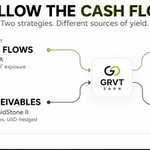
why should fixed-income opportunities be mostly associated with banks and large investors?
i think this is one area where bringing traditional finance on-chain could make a real difference...
and it's something @grvt_io is working towards with grvt earn
for years, fixed-income strategies have been an important part of how institutions manage their capital
but accessing similar opportunities hasn't always been simple for everyday users
grvt wants to change that by bringing tokenized fixed-income strategies to its self-custodial platform
here's what makes it interesting
> access to strategies traditionally associated with institutional investors
> eligible assets targeting up to 11% apy, not guaranteed
> opportunities brought on-chain through tokenization
> more control over assets through a self-custodial approach
and there's a much bigger picture here
the traditional fixed-income market is estimated at around $160T
grvt isn't trying to move all of that on-chain, but making even a small part of these opportunities more accessible is an interesting direction
personally, i think the real value isn't just the potential yield
it's giving more people access to financial strategies that were traditionally harder to reach
of course, institutional-style strategies still carry risks, and higher target yields don't mean guaranteed returns
but if grvt can make these opportunities easier to access and understand, that's a meaningful step towards connecting traditional finance with crypto...

spacebyte ⛓ retweeted

1|7 As a quantum project, you're either building in one of these categories:
• quantum chain (L1/L2)
• privacy going post-quantum
• quantum as plug-in
• wallet/ security infra
• quantum computing
Or you're just simply quantum branded.
I've curated the top quantum coins that are worth watching this cycle👇


Quantum Tier List (2026)
Everyone says their chain is quantum ready but only a few can prove it.
👇 I ranked 34 "quantum" projects including the 28 on @Mars_DeFi's list based on
• quantum safety
• upgradability
• testnet/mainnet
• age + size
• privacy feature
S
.@QRLedger - every wallet has used XMSS feature, a hash-based signature quantum computers can't crack, it has been live since 2018, with multiple audits.
A
.@QuantusNetwork - uses quantum-safe ML-DSA signatures by default, but mainnet only launched this September.
.Abelian - quantum-safe lattice signatures since 2022, but its own custom design haa no public crypto audit.
.@tidecoin - uses Falcon, a quantum-safe signature, on every transaction since 2020, but it's a tiny network.
.@cellframenet wallets use Dilithium, a quantum-safe signature, by default, but adoption is small.
.@QoreChain - every transaction needs a quantum-safe ML-DSA signature, but mainnet only went live in June this year.
.@NeptunePrivacy - spending uses hash-based proofs, but it's a young chain.
.@NEARProtocol - quantum-safe ML-DSA keys are live since Jul 2026, and you can switch your account to them anytime.
.@Algorand - quantum-safe Falcon accounts are live since Aug 2026, and you can move an existing wallet over.
B
.@Starknet - its proofs are quantum-safe, but your wallet keys aren't yet, and the safe wallet is just a demo.
.@solana - an outside team built a quantum-safe vault you can opt into, the chain itself isn't quantum safe.
.@NervosNetwork - an optional quantum-safe lock exists, but you have to move funds into it.
.@trondao - quantum-safe Falcon and ML-DSA keys are being tested on its testnet.
.@tezos - testing quantum-safe ML-DSA accounts on a special testnet.
.@QANplatform - is integrating quantum-safe Dilithium signatures, but still on testnet only.
.@quipnetwork - building earky stage quantum-safe accounts for coins on other chains, still on testnet.
.@Aptos - its quantum-safe SLH-DSA accounts are coded but still waiting for a governance vote to switch it on.
.@SuiNetwork - made its first quantum-safe transaction on a dev network this month, and mainnet is targeted for 2027.
.@Tensorcash - you can create quantum-safe ML-DSA addresses, but it's a small, new network.
.Bitcoin BIP-360, a proposal for quantum-safe addresses, is still a draft
C
.@ethereum - still researching quantum-safe upgrades, most likely years away.
.@zksync - its proofs are quantum-safe, but user accounts aren't.
.@Zcash - plans for quantum-safe signatures, but nothing shipped yet.
.Qoneqt - claims a quantum-safe vault, but can't verify anything yet.
.@injective - said last week it started building toward a quantum future, but no details yet.
.@monad - quantum-safe keys are still on their roadmap.
.@aztecnetwork no quantum plan or anything substantial published yet but Mars included it in his list
.@mindnetwork_xyz - focuses on encryption, not quantum-safe signatures but seems they frame that as quantum
.@NexusMutual - security-focused imo, no quantum plan
.@Qubic - quantum-themed only, maybe to join the hype, but little real quantum-safe tech.
.@GeeqOfficial - only security claims, no quantum details
.AME Chain - claims to be quantum-secure, little public proof
.QuStream - quantum claims, little public detail
Bottom line:
Most of crypto still runs on keys a quantum computer could break. Only one project here clears every bar today and that's @QRLedger.
But there's room for growth and tech like this would take years to perfect👌






spacebyte ⛓ retweeted

. @muneeb on stage at @kbwofficial: Bitcoin's Next Frontier
1. Capital Markets
2. Privacy
3. Post-Quantum
@Stacks is already live on #1: self-custodial BTC staking launched this month, earn BTC without handing over your keys
@21shares, @nakamoto & @HashKeyCloud all maxed their Genesis Bond allocations
Next cap increase in October

spacebyte ⛓ retweeted
1/ ve(3,3) has proven itself as one of DeFi's most powerful liquidity coordination models.
By aligning protocols, LPs + token holders around a common incentive marketplace, liquidity can be directed towards where it's valued most.
But as the model matured, several structural inefficiencies became increasingly apparent:
🔸 Persistent unoptimised inflation from emissions
🔸 Incentives that aren't always tied to economic productivity
Beyond tokenomics, most implementations also remain confined to individual chains while participation introduces operational complexity + meaningful value continues to leak externally.
The underlying coordination model works, but the economics surrounding it can be improved.
@namidefi's answer is d(3,3) → an adaptive + multichain evolution of ve(3,3), designed to make emissions more economically productive while capturing + recycling more of the value generated within the system.
Let's unpack 🧵

spacebyte ⛓ retweeted
Hyperliquid has 43% of daily perp volume.
But 57% of the market’s open interest.
Across onchain perps:
→ Total OI: $14.6B
→ Hyperliquid OI: $8.38B
→ Daily volume: $25.70B
→ Hyperliquid volume: $10.92B
That gap is more important than the volume ranking.
Hyperliquid isn’t just processing trades.
A much larger share of the market’s outstanding positions is staying there.
Volume tells you where traders are active.
OI tells you where exposure remains.