
Hands off Eritrea!
Virginia
Joined August 2009
- Tweets7.3K
- Following317
- Followers810
- Likes3.2K






Once a self-styled dissident, now a shameless Abiy Ahmed lackey, @Jawar_Mohammed cannot open his mouth without beating the drums of war against #Eritrea. Peace loving #Ethiopians and #Eritreans have repeatedly called out this bloodthirsty troll to stop inciting bloodshed. Instead, he doubles down, spewing crude, belligerent propaganda under the transparent guise of third-rate political commentary. #Eritrea #Ethiopia
🤖 Made with AI


The Day After Isaias: Security, Sovereignty and Eritrea's Political Transition
In a previous article titled “If Ethiopia Breaks Eritrea’s Defences, What Comes Next?”, I argued that Abiy Ahmed would face two choices: either advance towards Asmara to neutralise the security threats emanating from Isaias’s regime or limit the military operation to capturing the Port of Assab.
I also outlined three potential scenarios if Abiy chose to advance towards Asmara: the Eritrean army removes Isaias and negotiates a settlement before ENDF reaches the capital; Isaias retreats to the Sahel region to wage an insurgency; or ENDF marches on Asmara, forcing Isaias to flee the country.
With diplomatic efforts by multiple international actors failing to resolve the standoff, and reports of direct engagements between Eritrean and Ethiopian forces along the border, the Ethiopian government, the Eritrean opposition, and the international community should be preparing for what might follow if ENDF breaches the border and Isaias loses control of Eritrean affairs.
For Ethiopia, removing the threat posed by Isaias as an Egyptian proxy would achieve little if Eritrea subsequently descended into prolonged instability. Preserving the country's state institutions and preventing another security vacuum along Ethiopia's northern border should therefore be major priorities.
The Humanitarian Challenge: Opening the Open-Air Prison
One immediate consequence of an ENDF advance across the border could be a mass influx of Eritreans into Ethiopia, further overwhelming an already severely strained humanitarian situation in northern Ethiopia. Eritrea's current situation bears some resemblance to East Germany on the eve of the fall of the Berlin Wall.
Under Isaias, Eritrea has effectively become one large prison, particularly since the 1998–2000 war. The country has become almost completely sealed off from its neighbours, diplomatically isolated from much of the international community, and disconnected from the wider world in an age of digital communication, with internet access severely restricted. Eritrean youth have risked landmines and gunfire from border guards to flee the country, often using Ethiopia as a stepping stone on their journey to Europe and elsewhere.
Ethiopia has already hosted large numbers of Eritreans fleeing Isaias's rule. According to UNHCR, the country sheltered 181,264 Eritrean refugees at the end of 2020. As of October 2026, approximately 117,000 Eritrean refugees and asylum seekers remained registered in Ethiopia.
Before the Tigray war, Eritrean refugees were accommodated in four camps in Tigray and two in Afar, alongside those living outside the camps. Several of these facilities were destroyed during the war, forcing refugees to relocate elsewhere in Ethiopia. New sites were subsequently established in Amhara and Afar. With much of the original refugee infrastructure lost or disrupted, another large influx following an ENDF advance would be particularly difficult to manage.
ENDF must therefore prepare safe-passage corridors to protect fleeing civilians from landmines and other dangers along the border. New arrivals would also put additional pressure on Tigray and Afar, two regions already grappling with multiple humanitarian crises. The Ethiopian government, both regional administrations, and international humanitarian organisations should prepare arrangements for receiving, sheltering, and protecting those fleeing the fighting.
A transition would also have to address the fate of political prisoners and thousands of young Eritreans trapped in indefinite national service. Their release, demobilisation, and reintegration would be essential to restoring normal civilian life. In particular, securing the release of prominent political dissidents who have languished in prison for more than two decades should be a paramount priority, both on humanitarian grounds and as a means of establishing political legitimacy for the transition.
Avoiding a Security Vacuum
If Isaias is removed, particularly following an ENDF advance on Asmara without prior intervention by the Eritrean army, Eritrea could face serious internal instability and threats to maritime security.
Communal and sectarian tensions in multiethnic Eritrea, long suppressed by the regime's repressive apparatus, could resurface as its control weakens. Those preparing for a transition would need to identify potential flashpoints and establish mechanisms to contain tensions before they turn violent.
The disintegration of the army and security institutions could create a dangerous vacuum before a new government is able to establish control. Engaging moderate elements within the armed forces and retaining as much of the existing security apparatus as possible, subject to appropriate reorientation and vetting, would help reduce that risk.
The lesson from the US decision to disband the Iraqi army after the 2003 invasion should not be forgotten. That decision left thousands of disgruntled and unemployed officers and soldiers, some of whom went on to form or join insurgent and terrorist groups, contributing to years of prolonged conflict.
Given the collapse of neighbouring Sudan, extraordinary care will also be needed to prevent insecurity from spilling across borders and further complicating Eritrea's post-Isaias transition.
An interim government bringing together the opposition and moderate elements of the former regime should be established alongside efforts to preserve the security institutions. Ethiopia must avoid becoming an occupying power or even being perceived as having such intentions. Its military presence inside Eritrea should be limited to what is strictly necessary to facilitate a transition and enable Eritreans to establish their own administration. That administration must have credible Eritrean leadership and a clear path towards civilian government, rather than becoming a political order that rival factions could portray as an Ethiopian project.
Maritime security presents another challenge. Securing Eritrea's territorial waters and protecting the Red Sea trade route, particularly amid threats emanating from Yemen, will require advance preparation. Ethiopian authorities are reportedly already in discussions with partners about jointly deploying naval assets to secure the territorial waters. ENDF is also reported to have trained approximately 7,000 naval personnel and to have ordered several ships.
Respecting Eritrean Sovereignty
Any Ethiopian military advance could create lasting political problems if its actions or rhetoric alienate Eritreans, inflame nationalism, or undermine efforts to stabilise the country. The Ethiopian government and ENDF must learn from their latest military campaigns in Tigray, where they have been perceived more positively than in previous engagements. In confronting Isaias, they should be even more careful to respect the symbols, monuments, and historical legacy of Eritrea's national liberation struggle.
During my travels in Europe, several African countries, and the United States, I have met former fighters of the Eritrean People's Liberation Front, young Eritreans who fled the country, and others who grew up abroad. Many were deeply critical of Isaias and wanted political change, but they were equally determined to defend their country's independence. They made it clear that removing him must not come at the expense of the sovereignty for which so much was sacrificed.
During one of those trips, I met a young Eritrean woman named Harnet (ሓርነት), around 21 years old, who was born in Europe to Eritrean parents and had never visited Eritrea. Born more than a decade after independence in 1993, her name means liberation or freedom in Tigrinya. In our short conversation, she connected its meaning to Eritrea's sovereignty, something she had learned about from her parents. What struck me was how strongly she identified with a country she had never visited. Her attachment reflected the same commitment to independence I had encountered among former liberation fighters and young Eritreans who had fled the country.
The Ethiopian government and ENDF must take this deep attachment to independence seriously. They must consistently reassure Eritreans, through both words and actions, that their country's sovereignty will be respected and preserved.
While neutralising the security threats posed to Ethiopia by Isaias's regime may be a legitimate objective, all other bilateral matters, including access to ports, must be resolved through negotiations once a new Eritrean government is constituted. They must not be imposed through military force.
Transitional Justice and Reconciliation
Eritreans will also have to confront the abuses of the past without allowing revenge to determine the country's future. Those responsible for serious crimes must face justice, but ordinary soldiers, civil servants, and their families should not be punished simply because of their association with the former regime. A transition driven by collective punishment could create new divisions and undermine the stability Eritrea desperately needs.
A Historic Opportunity for Eritreans
I urge Eritreans, particularly those in Ethiopia and the diaspora, to bridge their factional divisions and prepare to seize the opportunity should political change come. They need to develop a common transitional programme rather than wait for Isaias's departure before beginning another struggle over political power. They must be ready to transform their hard-won independence into an inclusive democratic system and embark on a path of sustainable development founded on peaceful coexistence within Eritrea and with its neighbours.
The end of Isaias's rule, if it comes, should not simply mark the removal of one authoritarian leader. It should open the way for Eritreans to reclaim their country, preserve their independence, and build a state that serves all its citizens. For Ethiopia, the lasting gain would be a secure northern border and a stable Eritrean neighbour with whom unresolved disputes could finally be settled through negotiations.
There is an idiot, and there is an idiot with a lot of followers: the first is a private tragedy; the second is a weapon of mass delusion.
🤖 Made with AI

I can understand why Getachew Asefa of the TPLF would want a rematch, this time deploying his well-trained former NISS disinformation operatives. But the Eritrean regime’s ambition to defeat us in a social media information war is comedy of the highest order.
Guys, perhaps start by making the internet accessible to your own citizens before dreaming of mobilizing them for mass trolling abroad. You cannot wage a digital war when your own population is largely cut off from the digital world.
Until then, stick to what you know best: arming rebel groups and running proxy wars. Leave the digital battlefield to those who actually have internet access. Even Abiy Ahmed, with his well-funded, institutionalized million-man social media army, has struggled to keep up. What makes you think you can do better?
የኢትዮጲያን እና የአፍሪካን ቀንድ ፖሊቲካ በሶሻል ሚዲያ ማንቀሳቀስን ያስተዋወቅን፣ አኩሪ ውጤም ያስመዘገብን pros መሆናችን ተረሳ እንዴ ጓዶች?
BinTake retweeted

Getachew Reda’s latest remarks about H.E. President Isaias Afwerki reveal far more about his own political predicament than about the self-less Eritrean leader he seeks to criticize.
He could not walk a single day in President Isaias’s shoes. He can’t possibly comprehend the sacrifices, strategic resolve, and political endurance required to defend a nation's hard-won independence and sovereignty in a neighborhood where political servitude has become all too familiar… and independent-minded leadership an increasingly rare commodity.
Abiy Ahmed has cultivated a political culture in which generals, senior officials, and even members of his own Prosperity Party are systematically emasculated, stripped of independent judgment, political dignity, and the courage to challenge his authority. They are expected to submit, conform, and echo his dictates. ኣንጃል Getachew Reda appears to have embraced this role with little hesitation.
What kind of political leader watches his own countrymen being slaughtered by short-range ballistic missiles, guided rockets, surface-to-air missile systems, and drones; women being raped; civilians brutally assaulted; and communities subjected to the systematic pillaging of their homes, businesses, and industries…and yet finds his voice only when commenting on the President of #Eritrea.
This is more than political opportunism. It is an appalling abdication of moral and national responsibility. A leader who cannot confront the suffering of his own people, demand accountability for their destruction, or defend their dignity has forfeited any credible claim to principled leadership. The people of #Tigray, #Afar, #Amhara, #Oromo, #Somali, #Benishangul and other suffering people of #Ethiopia deserve leaders who defend their lives, dignity, and interests, not political operatives who trade independent judgment for proximity to power.
BinTake retweeted

Abraham Teklu Lemma, 54, a former information technology contractor at the U.S. Department of State, the U.S. Department of Justice, and the National Reconnaissance Office, pleaded guilty today to conspiring to commit espionage on behalf of the government of the Federal Democratic Republic of Ethiopia, announced @USAttyPirro.
justice.gov/usao-dc/pr/forme…

BinTake retweeted

ETHIOPIA’S OVERTLY DECLARED WAR AGENDA AGAINST ERITREA
(Verbatim Statements by Ethiopian Government Senior Officials regarding Eritrea’s Sovereignty)
Abiy Ahmed Ali, Prime Minister of Ethiopia
· "Sovereign access to the sea by any means necessary - through negotiations if possible and by force if necessary, Ethiopia would not remain a prisoner of geography."
· "Regarding the Red Sea, and speaking about it repeatedly, let me say it again to make my stance clear; why does Israel hold the Golan Heights? Israel holds the Golan Heights because it believes problems regarding national security, survival and its existence… People are born, grow, age and people die, this is natural. Red Sea access and Ethiopia are just like that."
· “We have found no document – in Cabinet, Parliament and other Government Archives - that asserts Eritrea's independence”. Taking their cue from the Prime Minister’s incendiary statement, Prosperity Party state media channels actively called on citizens to mobilize and ‘withdraw’ recognition of Eritrea's 1993 sovereignty, labeling it a ‘historical mistake’."
· "Adulis, located on the Eritrean Gulf, can be considered one option. Massawa and Assab can also be considered other options. We do not necessarily hold the position that it must be Assab or Massawa. What we seek is simply a breathing (sovereign) outlet, access to the sea."
· "As you know, five or six years ago we established a navy. Did we establish it so that it [the Navy] could swim around in this glass [container]? I am a million percent certain; Ethiopia will not remain landlocked-whether anyone likes it or not."
· "For Ethiopia, losing access to the Red Sea took about 30 years [Eritrea’s legitimate struggle for liberation] - after the 30 years’ war, Ethiopia lost it. Now, however, I do not think Ethiopia needs another 30 years to retake it".
· "Therefore, efforts will be made to resolve the issue and minimize losses. Whether it happens through peace or through force, it is inevitable".
· "If fighting breaks out, the outcome is clear. After that, crying and wailing will be of no use. If we enter [the war], the outcome is clear. We have sufficient and dependable capability. There is no force that can stop us. This must be clear”.
Field Marshal Berhanu Jula, Chief of Staff of the Ethiopian National Defense Forces (ENDF)
· "We will strengthen our army. We will accelerate our development. We will obtain access to the sea, whether through peace or through force; through negotiations if possible and by force if necessary - through Bale or Bole".
General Abebaw Tadesse, Deputy Chief of Staff of the ENDF
· "The offensive launched in Tigray will not stop there. Mekelle is a mere stop-over; our ultimate destination is Assab; our main objective is to raise our flag in the Red Sea".
Ethiopian Air Force Commander General Yilma Merdasa
· “The main goal is the recovery of sovereign sea access, particularly through the Eritrean port of Assab.”
Maj-Gen. Teshome Gemechu: Director-General of International Relations and Military Cooperation (ENDF)
· "Ethiopia is not a landlocked nation. We are not landlocked. Rather, we are an ocean-linked country. Ethiopia had it. And even though the matter hasn't been resolved yet, we are not landlocked".
· "We were created together with the water. We used to have water. The water used to be ours as well as the port. Because it is a special case, we have a double right to demand it".
· "The Red Sea belongs to Ethiopia. We will take it back at any cost! Assab is Ethiopia's Red Sea province".
· "The port of Assab, even its design was made in such a way that it only serves Ethiopia, or starting from the Afar region, focusing only on serving through that route - take this into account as well: in international law, it can serve for a dispute".
Military Commanders
· Public displayed, at the Inauguration of Military Recruits few months ago, of an official Map of Ethiopia that unlawfully incorporates the port city of Assab and Eritrea's southern coastal territories.
L. General Alemshet Degife, Advisor to the ENDF and Chief of Staff and Board Chairman of the Defense Engineering Industrial Corporation (DEIC)
· "We have entered a process about a territory we do not control, which connects [us] to other continents, could allow those whom we have historically regarded as our enemies to establish themselves directly within 60 kilometers of us without asking our permission".
Shimelis Abdisa, President of the Oromia Region
· " Irrecha [traditional Oromo celebrations] will be celebrated in the Red Sea (Assab), next year."
General Bacha Debele, Former Ethiopia's Ambassador to Kenya
· "When we say Assab belongs to Ethiopia, it is because it belongs to Ethiopia. What you [Eritrea] took by force, we will return by force".
· "Once war breaks out, there will be no such thing as the Government of Eritrea. This must be clearly understood. Geography will change. Governments will change. The borders of countries will also change. The border that exists between Eritrea and Ethiopia will cease to exist".
· "If the Eritrean Government ceases to exist, what could possibly happen? It will collapse on its own and it will be gone. Isn't this war? Once a war breaks out like this, there is no distinction between the rear base and front line. In modern warfare, there aren’t separate rear base and front lines. Any place becomes a front line. Asmara cannot remain a rear base area [no-combat zone], while Badme is the front line. Both are the front lines".
General Tsadkan Gebretensae, Military Advisor to the ENDF
• "I have begun raising the idea that we should correct the mistakes we made previously and seize Assab from them [Eritrea]".
• "At present, our relationship with Eritrea is not merely an issue of national security, nor merely about raising the question of ports or discussing the Eritrean government. I believe we must recognize, in light of history, that the manner in which we answer the Eritrean question is connected to our very existence”.
Ambassador Dina Mufti, Member of the Federal Parliament's Foreign Affairs Committee
· “Ethiopia's quest for sovereign sea access is non-negotiable”; and he proceeded to aggressively demand international pressure against Eritrea!
Daniel Kibret, Social Affairs Advisor to Ethiopia's Prime Minister
· "Once Ethiopia obtains access to the sea, the reason for Eritrea being Eritrea will cease!"
Adanech Abebe, Mayor of Addis Ababa City
· "Are we supposed to live forever with the question of our sea closed off to us? There is no young person who will accept living with it closed; at one time it was close to us and we lost it. But this generation will not accept that”.
Lencho Bati, Director General at MoFA of Ethiopia's Diaspora Service
· "The Ethiopian military that suffered in the deserts of Tigray, will not stop before taking off its shoes by the Red Sea and wash its feet on Eritrean Red Sea waters”.

BinTake retweeted

The hand prints of Abyi is all over this story.
Abraham Lemma betrayed USA by committing espionage on behalf of the #Ethiopian government.
Lemma conspired with senior Ethiopian government officials to collect and transmit dozens of highly classified documents, notes, materials, and photographs, classified up to the Top Secret/Sensitive Compartmented Information (TS/SCI) level, to Ethiopian government officials
Former U.S. Government Contractor Pleads Guilty to Spying for #Ethiopia
justice.gov/opa/pr/former-us…

BinTake retweeted
Please someone tell me this is an AI video showing Abiy Ahmed humiliating his cabinet ministers kneeling down and hugging each other in total submission and now he’s putting his new ministers through military training. It's a groundhog's day in Abiy’s world. #Ethiopia @BBCWorld @BBCAfrica @trtafrika @ReutersAfrica @dagmawi_belay @NeaminZeleke @mamamesay @StalinTeklu
BinTake retweeted

🇷🇺🇪🇷 Russia and Eritrea are exploring cooperation to modernize Eritrea's port and railway infrastructure.
It was announced following high-level talks between President Isaias Afwerki and Transport Minister Dmitry Yadrov.
Russian companies expressed readiness to assist with port construction and provide technical consulting for the country's transport networks.

BinTake retweeted

"Abiy is an imbecile, he is a megalomanic who thinks he is the next king. He is very tribal and he is going to be the one who watched over the disintegration(😡) of Ethiopia!" - A Keniyan PM
በዚህ ልክ በጎረቤት ሀገር ተሰድቦ ሀገር ያሰደበ የኢትዮጵያ መሪ በታሪክ የለም 😡😡
BinTake retweeted

Ethiopia's national debt reached at high level approximately $112.79 billion, with a debt-to-GDP ratio of roughly 41.8%😂😂

BinTake retweeted

Even though he personally lived in Ethiopia for decades (28 years), he states that he and his ancestors are committed—in life and in death—to preserving Dankalia as an integral part of sovereign Eritrea.
በቪዲዮው ላይ የሚታዩት ኤርትራዊ የአፋር ተወላጅ አጠር ያለና ጠንካራ መልእክታቸውን እንደሚከተለው አቅርበዋል፡
የታሪክና የሉአላዊነት አቋም፡ የአፋር ህዝብ ከሌሎች ኤርትራውያን እህትና ወንድሞቹ ጋር በመሆን ለኤርትራ ነፃነትና ሉአላዊነት ከፍተኛ መስዋዕትነት የከፈለ ህዝብ ነው።
ዳንካሊያ (የቀይ ባሕር ዳርቻ) ወይም አሰብ ወደ ኢትዮጵያ እንዲካተት የሚደረግን ማንኛውንም የፖለቲካ ጥያቄና እቅድ በጽኑ ያግዛሉ።
የማይናወጥ ቃል ኪዳን፡ በህይወትም ሆነ በሞት፣ ዳንካሊያ የማይደፈርና የማይነካ የሉአላዊቷ ኤርትራ አካል ሆኖ እንደሚቀጥል በግልጽ አረጋግጠዋል።
Billions in foreign aid. Millions living under multidimensional poverty. Civilians dying in multiple conflicts.
Yet Ethiopia's government is acquiring advanced Russian fighter jets and air-defense systems.
When a nation depends on the world's generosity to feed its people, how does it justify prioritizing weapons of war? #Ethiopia #Eritrea
🤖 Made with AI

BinTake retweeted

Here we go... The Potemkin Party’s Navy has finally found its calling: navigating the flooded streets of Addis Ababa! 😂⚓️🏊♂️😂
@DanielsonKassa1 @ethiopiansone @Chakham_Analyst @BehiwotTilahun @KiyaEthiopia @Semibintjemal3 @BikiltuMosisa1 @SamuelthThomas @freshben2022 @dany_daba – at Eritrea

The ritual is predictable and repugnant as ever!
Potemkin Party's broken gramophone has to emit- almost every other day - the same stale chorus.
Its senior political and military leaders have apparently been instructed to renew their loyalty pledges to the delusional project in some pre-arranged shift system - "ጸማም ሓደ ደርፉ!" እዩ እቲ ነገሩ።
For the umpteenth time, let us underline that the countries and peoples of the Horn do not deserve another cycle of war and turmoil that stem from, and are stoked by, the Potemkin Party's pipedreams of "grandeur" through brazen violation of the inviolable sovereignty and territorial integrity of its neighbors.

I wonder what the big mouth @reda_getachew is going to say about this. teapawt.net/GirmaTelk/status/21162…

🔴 #Breaking | Sudan’s Sovereignty Council Chairman, General Abdel Fattah al-Burhan, has been awarded an honorary doctorate by Moscow State University for the Humanities, highlighting the growing ties between Sudan and Russia.
19
BinTake retweeted

The ritual is predictable and repugnant as ever!
Potemkin Party's broken gramophone has to emit- almost every other day - the same stale chorus.
Its senior political and military leaders have apparently been instructed to renew their loyalty pledges to the delusional project in some pre-arranged shift system - "ጸማም ሓደ ደርፉ!" እዩ እቲ ነገሩ።
For the umpteenth time, let us underline that the countries and peoples of the Horn do not deserve another cycle of war and turmoil that stem from, and are stoked by, the Potemkin Party's pipedreams of "grandeur" through brazen violation of the inviolable sovereignty and territorial integrity of its neighbors.

BinTake retweeted
#Eritrea’s Coveted Geopolitical Location and Irreplaceable Strategic Role in the Red Sea and the Horn of Africa
Research and Documentation Division
Ministry of Foreign Affairs
29 October 2026
*"...Eritrea’s geopolitical significance and strategic role is deeply rooted in its geography, history, and the resilience of its people and statehood. From the earliest human migrations and the development of ancient civilizations to the emergence of the modern international system, the territory of present-day Eritrea has occupied an important position at the crossroads of Africa, the Middle East, and the wider world. Its strategic importance, already considerable in antiquity (part of this history is covered in the book ‘Periplus of the Erythraean Sea’), has assumed even greater significance in the modern era...".
*"...For countries such as Eritrea, the central challenge is to safeguard sovereignty and national security while navigating an increasingly contested geopolitical environment. The ability to withstand external pressure and maintain an independent foreign policy is consequently a significant dimension of the country’s regional position".
*"...Against this background, Eritrea’s self-reliant stance; independent foreign policy; resistance to alien/colonial occupation, sanctions and external pressures are important elements in understanding its contemporary geopolitical posture. The country’s political trajectory has been shaped by a determination to defend its sovereignty and preserve its independence under difficult regional and international circumstances".
*"...Eritrea’s contribution to regional stability must therefore be assessed in terms of both its strategic position and its conduct. Its constructive engagement with neighboring countries, solidarity with countries and peoples facing complex nation building challenges, support for peaceful settlement of disputes, respect for sovereignty and territorial integrity, and opposition to destabilizing external interference all contribute to a more secure regional environment".
shabait.com/2026/10/29/eritr…

BinTake retweeted

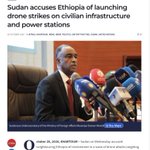
🧵 Since Feb 2026, a total of 64 drone attacks in Sudan 🇸🇩 have been confirmed as originating from Ethiopian territory 🇪🇹, including ENDF airbases and airports, in support of the RSF.
Strikes have targeted power stations across Sudan and caused dozens of civilian casualties. 1/

