





Mr. C64 retweeted
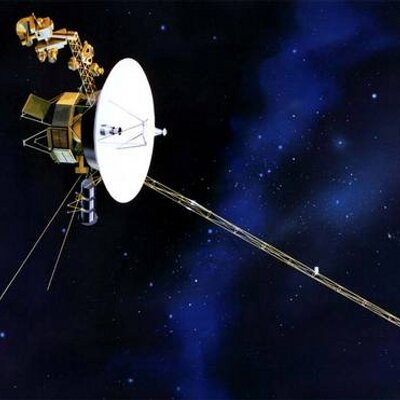
Sister ship Voyager 1 is currently ~24h 00m 00s of light travel time from Earth, or 25,902,000,000 km / 16,095,000,000 mi / 173.145 AU (2026:322:120000:1L) ONE LIGHT-DAY from Earth! …
Non sono tifoso né della Roma né del Cagliari, ma le telecronache di Pier su @DAZN_IT sono così ricche di entusiasmo ed energia tali da rendere la partita avvincente anche per me! #SuperPier
96
Mr. C64 retweeted

Wow! CERN Transitioning To Debian After Being A Longtime RHEL Institution
From the former maintainers of Scientific Linux, this wasn't on my bingo card.
phoronix.com/news/CERN-Goes-…

When I learned OpenGL in the late 1990s (OpenGL 1.1-1.2, 1997-1998), I recall drawing a triangle was much *simpler*, e.g.:
glBegin(GL_TRIANGLES);
// 3 glVertex calls to define each vertex coord
...
glEnd();
I miss the elegant simplicity of those days!
/cc:@ID_AA_Carmack


1
3
366
Mr. C64 retweeted

Do you know why the integral sign looks like a fancy, elongated S?
In Paris in the autumn of 1675 Leibniz was trying to find areas under curves by summing infinitely many extremely thin rectangles. Until then he abbreviated that sum with the awkward “omn.” (from omnia, “all the lines”).
On 29 October, sitting with his unpublished notebook Analyseos tetragonisticae pars secunda, he decided a single mark would be more elegant.
He stretched the old long-S that began the Latin word summa (“sum”) into the tall symbol ∫ and wrote that ∫l would now stand for the sum of all the l’s.
Two weeks later, on 11 November, he placed dx after the new sign. The notation stayed private until it appeared in print in 1686 and quickly became the standard integral we still use.


When I bought my first house, I met my neighbors. And across the street was Rod, also known as "Ripple".
Turns out Rod was an F-14 Aviator in the US Navy, flying off carriers in the 70s. Then he went straight to the 747 and flew for Northwest until retirement. He's flown the actual plane now in the Smithsonian, and I think his uniform might be in there too! One day, he might be :-)
In any event, about 30 years later, I finally sat down to ask him all the things about being an F-14 and 747 pilot that I always wanted to know, and I filmed it.
Here is that interview. It was a terrible fit for my channel, but if you enjoy it, please give it a share somewhere!
youtu.be/t19J9MOUjRM?t=61

103

Mr. C64 retweeted
One equation creates infinite worlds.
Iterate zₙ₊₁ = zₙ² + c, z₀ = 0. The Mandelbrot set is every complex c whose orbit stays bounded—main cardioid, seahorse valleys, Douady rabbits, mini-copies forever.
These self-similar structures power procedural terrain in games, fractal antennas, and chaos models in physics and ML.
A finite region whose boundary has infinite length.
Which self-similar structure in nature or code still surprises you?


Mr. C64 retweeted

In 1994, open-source software quietly revolutionized supercomputing.
By chaining 16 off-the-shelf Linux PCs together (the Beowulf architecture), researchers matched mainframe power at a fraction of the cost.
This breakthrough democratized high-performance computing, laying the groundwork for modern data centers and cloud infrastructure.
bit.ly/4zkX8CC
Image credit: Vcarceler / Wikimedia Commons (CC BY-SA 3.0)
#Linux35

Simplifying and Refactoring Introductory Calculus
arxiv.org/abs/1811.03459

63
Mr. C64 retweeted

Codex again writing bullshit code...
I have an efficient battle tested render pipeline in my code base (copied from older project).
Asked it to write simple instanced rendering for enemies. One per type. What it did instead was to add a full G-buffer pass per enemy type. Now we have five G-buffer passes :D
This is why you NEED a professional to review all AI code. AI can completely cripple your performance in one commit if you are not careful.
@cnn What a great surprise to select the CNN channel after some time, and see the great @KateBolduan! :)
2
120


Mr. C64 retweeted
Two charges feel a force falling with the square of distance via Coulomb's Law F = kₑ q₁q₂/r². Electric field becomes E = kₑ q/r² r̂ and Gauss's Law sets ∮_S E·dA = Q_enc/ε₀. Potential reads V = kₑ q/r with capacitance C = Q/V. Lorentz force is F = q(E + v × B). Biot-Savart gives dB = μ₀ I dl × r̂/(4π r²), Ampère's Law ∮_C B·dl = μ₀ I_enc, and Faraday's Law ℰ = −dΦ_B/dt.
Transformers in power stations use Faraday's Law to step voltages for long-distance transmission while electric motors in industrial robots convert current into precise mechanical motion via the Lorentz force.

Jurassic Park computers in excruciating detail:
fabiensanglard.net/jurrasic_…
#RetroComputing #JurassicPark
90
AI output cannot be 100% trusted. For example, here Claude signaled a bug that actually is *not* there in the codebase, as the Win32 API RegGetValue *always* returns a NUL-terminated string:
giodicanio.com/2026/07/28/wh…
#cpp #AI #bugs
1
115
Mr. C64 retweeted
Cylindrical coordinates make it straightforward to handle shapes with round symmetry by splitting the space into cells based on radius, angle, and height.
One such cell is given by
B_ijk = [r_{i-1}, r_i] × [θ_{j-1}, θ_j] × [z_{k-1}, z_k], with a point (r^*_{ijk}, θ^*_{ijk}, z^*_{ijk}) picked inside it.
The mesh lines show the constant coordinate surfaces, and the orange shading outlines the angular sector between α and β on the bottom plane.
This gridding method helps compute solutions for fluid movement in round pipes or temperature distribution in cylindrical tanks.

Mr. C64 retweeted

One of the most interesting Windows kernel internals is "PsActiveProcessHead", the global doubly-linked list that connects every live "EPROCESS" through "ActiveProcessLinks". Process creation inserts into this list, process exit removes from it, and kernel debuggers can walk it to enumerate active processes.
Security researchers love it because many classic rootkits used DKOM (Direct Kernel Object Manipulation) to unlink their "EPROCESS" from "PsActiveProcessHead", effectively hiding a running process from tools that trusted the list. Understanding "PsActiveProcessHead" is often the first step into Windows rootkits, process hiding, forensic detection, and kernel debugging.

