





Mr. C64 retweeted
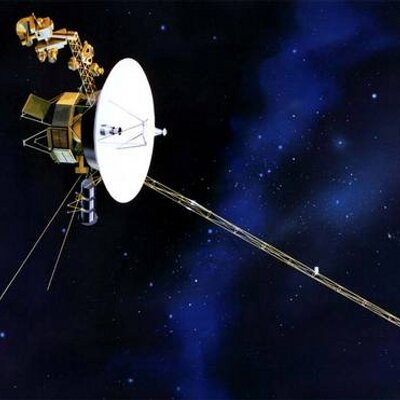
Sister ship Voyager 1 is currently ~24h 00m 00s of light travel time from Earth, or 25,902,000,000 km / 16,095,000,000 mi / 173.145 AU (2026:322:120000:1L) ONE LIGHT-DAY from Earth! …
Mr. C64 retweeted

Wow! CERN Transitioning To Debian After Being A Longtime RHEL Institution
From the former maintainers of Scientific Linux, this wasn't on my bingo card.
phoronix.com/news/CERN-Goes-…

Mr. C64 retweeted

Do you know why the integral sign looks like a fancy, elongated S?
In Paris in the autumn of 1675 Leibniz was trying to find areas under curves by summing infinitely many extremely thin rectangles. Until then he abbreviated that sum with the awkward “omn.” (from omnia, “all the lines”).
On 29 October, sitting with his unpublished notebook Analyseos tetragonisticae pars secunda, he decided a single mark would be more elegant.
He stretched the old long-S that began the Latin word summa (“sum”) into the tall symbol ∫ and wrote that ∫l would now stand for the sum of all the l’s.
Two weeks later, on 11 November, he placed dx after the new sign. The notation stayed private until it appeared in print in 1686 and quickly became the standard integral we still use.

Mr. C64 retweeted
One equation creates infinite worlds.
Iterate zₙ₊₁ = zₙ² + c, z₀ = 0. The Mandelbrot set is every complex c whose orbit stays bounded—main cardioid, seahorse valleys, Douady rabbits, mini-copies forever.
These self-similar structures power procedural terrain in games, fractal antennas, and chaos models in physics and ML.
A finite region whose boundary has infinite length.
Which self-similar structure in nature or code still surprises you?

Mr. C64 retweeted

In 1994, open-source software quietly revolutionized supercomputing.
By chaining 16 off-the-shelf Linux PCs together (the Beowulf architecture), researchers matched mainframe power at a fraction of the cost.
This breakthrough democratized high-performance computing, laying the groundwork for modern data centers and cloud infrastructure.
bit.ly/4zkX8CC
Image credit: Vcarceler / Wikimedia Commons (CC BY-SA 3.0)
#Linux35

Mr. C64 retweeted

Codex again writing bullshit code...
I have an efficient battle tested render pipeline in my code base (copied from older project).
Asked it to write simple instanced rendering for enemies. One per type. What it did instead was to add a full G-buffer pass per enemy type. Now we have five G-buffer passes :D
This is why you NEED a professional to review all AI code. AI can completely cripple your performance in one commit if you are not careful.
Mr. C64 retweeted
Two charges feel a force falling with the square of distance via Coulomb's Law F = kₑ q₁q₂/r². Electric field becomes E = kₑ q/r² r̂ and Gauss's Law sets ∮_S E·dA = Q_enc/ε₀. Potential reads V = kₑ q/r with capacitance C = Q/V. Lorentz force is F = q(E + v × B). Biot-Savart gives dB = μ₀ I dl × r̂/(4π r²), Ampère's Law ∮_C B·dl = μ₀ I_enc, and Faraday's Law ℰ = −dΦ_B/dt.
Transformers in power stations use Faraday's Law to step voltages for long-distance transmission while electric motors in industrial robots convert current into precise mechanical motion via the Lorentz force.

Mr. C64 retweeted
Cylindrical coordinates make it straightforward to handle shapes with round symmetry by splitting the space into cells based on radius, angle, and height.
One such cell is given by
B_ijk = [r_{i-1}, r_i] × [θ_{j-1}, θ_j] × [z_{k-1}, z_k], with a point (r^*_{ijk}, θ^*_{ijk}, z^*_{ijk}) picked inside it.
The mesh lines show the constant coordinate surfaces, and the orange shading outlines the angular sector between α and β on the bottom plane.
This gridding method helps compute solutions for fluid movement in round pipes or temperature distribution in cylindrical tanks.

Mr. C64 retweeted

One of the most interesting Windows kernel internals is "PsActiveProcessHead", the global doubly-linked list that connects every live "EPROCESS" through "ActiveProcessLinks". Process creation inserts into this list, process exit removes from it, and kernel debuggers can walk it to enumerate active processes.
Security researchers love it because many classic rootkits used DKOM (Direct Kernel Object Manipulation) to unlink their "EPROCESS" from "PsActiveProcessHead", effectively hiding a running process from tools that trusted the list. Understanding "PsActiveProcessHead" is often the first step into Windows rootkits, process hiding, forensic detection, and kernel debugging.


Mr. C64 retweeted
These equations model key physical behaviors in two dimensions.
- The Laplace equation ∂²u/∂x² + ∂²u/∂y² = 0 represents equilibrium states.
- The heat equation ∂²u/∂x² + ∂²u/∂y² = ∂u/∂t describes diffusion over time.
- The wave equation ∂²u/∂x² + ∂²u/∂y² = ∂²u/∂t² captures wave motion.
The graphic below shows example solution curves with matching one-dimensional versions.
It is used to predict heat flow in circuit boards and vibration patterns in bridges.

Mr. C64 retweeted

In Memory of Jay Miner, the Father of the Amiga
Today, June 20, marks 32 years since we lost Jay Miner — the brilliant engineer and visionary who gave the world the Amiga.
Born on May 31, 1932, Miner’s passion for pushing hardware to its creative limits changed computing forever. His legacy still inspires retro enthusiasts, game developers, and tinkerers decades later.
Jay is best remembered as the driving force behind the AMIGA, launched in 1985 by Commodore. The Amiga 1000 was revolutionary: stunning graphics (up to 4096 colors), rich 4-channel stereo sound, and true preemptive multitasking years before it became standard on other platforms. Powered by a Motorola 68000 CPU and Miner’s custom chips — Agnus, Denise, and Paula — it became the ultimate machine for gamers, artists, musicians, and video creators.
From Defender of the Crown and Deluxe Paint to the Video Toaster, the Amiga didn’t just run software — it unleashed creativity like nothing before it. "Only Amiga Makes it Possible" was how Amiga was known!
Before the Amiga, Miner helped define home gaming and computing at Atari. He co-designed the groundbreaking TIA chip for the Atari 2600 (the heart of classics like Space Invaders and Pong) and led the graphics architecture for the Atari 400/800 computers.
Jay didn’t just build machines — he built dreams. He believed computers should empower people to create, play, and imagine. On June 20, 1994, we lost a true pioneer and every modern system owes a debt to his forward-thinking designs.
What did Jay Miner’s work mean to you?
RIP Jay Miner. Thank you for the Amiga

Mr. C64 retweeted

Creator of Sqlite on pull requests: "You say, oh, it's free. No. It's not free. What you're doing is asking me ... to maintain it for you, to to document it for you, to test it for you, to maintain it for you for the next 25 years. That's not free." Yep.
Wise words from a wiser man than me. I've told people for the past decade and I have recent posts on here saying the same: the merge button is the easy part. Its the decade+ (Richard says 25 years) that follows where you've accepted the transfer of maintenance thats hard.
Mr. C64 retweeted
Parametric equations describe the geometry of surfaces in three dimensions.
For S = f(u, v), the tangent vectors are
fᵤ = df/du and fᵥ = df/dv.
The unit normal vector is
m = (fᵤ × fᵥ) / ||fᵤ × fᵥ||.
The first fundamental form has coefficients
E = fᵤ · fᵤ, F = fᵤ · fᵥ, G = fᵥ · fᵥ, which define the inner product I(x, y) = xᵀ [[E, F], [F, G]] y.
The second fundamental form has coefficients
e = fᵤᵤ · m, f = fᵤᵥ · m, g = fᵥᵥ · m.
These quantities are used to compute surface curvatures for realistic rendering in computer graphics and precise modeling in CAD systems.

Mr. C64 retweeted
Calculus defines the derivative as the slope of a function at a point and the integral as the area under the curve.
The left graph shows df(x)/dx at x=a as the slope via the tangent line touching f(x). The right graph shows the integral ∫f(x) dx from b to c as the shaded area under the curve.
GPS devices calculate current speed from position changes using derivatives and total distance from speed variations using integrals.

Mr. C64 retweeted

My reply to someone considering starting a video game company:
The distribution of possible rewards for starting a video game company are generally not very good today. The market is well served, and gaining a foothold requires strong execution on both business and product issues, along with a substantial amount of luck. Plan to burn through seven figures with a not-great chance of making it back.
If you do go for it, some bits of advice:
Identify your customers clearly before you start. Not just a broad community, but specific people, and imagine them as you make decisions.
Initially, build the smallest, most concise game you can imagine anyone paying for. It will still take much longer than you expect.
Once something exists, hill-climb the value. Hopefully you will have some elements that clearly bring joy to people, which you can magnify. There will inevitably be tons of things that people find confusing, frustrating, or just boring that you will need to fix.
Mr. C64 retweeted

Oh I love it. Not because I can imagine anything useful off the top of my head, but holy smokes it looks FUN! We need computers to be more like this more of the time. A little GeoCities. A little more crazy. A little more TempleOS.

I'm so excited to announce a new terminal emulator! 🎉
Meet "Ratty"🐀
🧀 A GPU-rendered terminal emulator with inline 3D graphics.
🪤 Try it out: ratty-term.org
⭐ Source: github.com/orhun/ratty
#rustlang #terminal #ratty #ratatui #opensource


Mr. C64 retweeted

Software horror: litellm PyPI supply chain attack.
Simple `pip install litellm` was enough to exfiltrate SSH keys, AWS/GCP/Azure creds, Kubernetes configs, git credentials, env vars (all your API keys), shell history, crypto wallets, SSL private keys, CI/CD secrets, database passwords.
LiteLLM itself has 97 million downloads per month which is already terrible, but much worse, the contagion spreads to any project that depends on litellm. For example, if you did `pip install dspy` (which depended on litellm>=1.64.0), you'd also be pwnd. Same for any other large project that depended on litellm.
Afaict the poisoned version was up for only less than ~1 hour. The attack had a bug which led to its discovery - Callum McMahon was using an MCP plugin inside Cursor that pulled in litellm as a transitive dependency. When litellm 1.82.8 installed, their machine ran out of RAM and crashed. So if the attacker didn't vibe code this attack it could have been undetected for many days or weeks.
Supply chain attacks like this are basically the scariest thing imaginable in modern software. Every time you install any depedency you could be pulling in a poisoned package anywhere deep inside its entire depedency tree. This is especially risky with large projects that might have lots and lots of dependencies. The credentials that do get stolen in each attack can then be used to take over more accounts and compromise more packages.
Classical software engineering would have you believe that dependencies are good (we're building pyramids from bricks), but imo this has to be re-evaluated, and it's why I've been so growingly averse to them, preferring to use LLMs to "yoink" functionality when it's simple enough and possible.

Mr. C64 retweeted
Did you know the Commodore Amiga 2000 won product of the year?
Back in April 1989, at the NAB show, the Commodore Amiga 2000 was named Product of the Year by readers of AV Video and Video Manager magazines. It was a huge win for the Amiga line, voted on by the pros who used video and graphics gear every day.
The Amiga 2000 was built for exactly this kind of work: big Zorro expansion slots, genlock support to sync with broadcast video, and rock-solid handling of both PAL and NTSC signals.
It also had killer graphics and multitasking, and you had a machine that let broadcasters, video producers, and creatives do things that were out of reach—or way too expensive—on other systems at the time.
It also set the stage for tools like the NewTek Video Toaster, which would go on to change affordable video effects and editing. The Amiga 2000 wasn’t just a computer—it was a serious tool that earned its spot in professional environments.
Only Amiga Makes it Possible!

ALT Commodore Amiga 2000 computer setup from 1989, featuring a monitor, keyboard, and mouse, highlighted as "Product of the Year."
Mr. C64 retweeted

For that matter, Microsoft Word 2002 used about 25MB of RAM. Now Word uses 10x that much memory to display the same 584kb document. What the heck is it doing to that text now that it wasn't doing before?

ALT Screenshot of Microsoft Word displaying some DirectSound documentation from 1996. In front of it is Windows Task Manager, showing that Word is using 240.6MB of memory.
