

Post quantum at Cloudflare. Opinions are my own. Also on Bluesky (https://xitter.cf/t.co/JNf0UuXmB6)
San Francisco, CA
Joined July 2009
- Tweets3.1K
- Following483
- Followers927
- Likes11.3K


Christopher Patton retweeted

Cloudflare previous CTO sent this into our bug bounty. We are investigating.

Christopher Patton retweeted

Philomena: Some people have been writing PHP for over 20 years. Is that because it's particularly difficult to finish?
Expert: No, software is constantly evolving.
Philomena: So they've been writing the same website for 20 years?
Expert: No, different projects.
Philomena: Have they tried finishing one before starting another?
Expert: That's not how software development works.
Philomena: My mate Paul spent 20 years building a shed. Turned out he was just an alcoholic.
Expert: Right.
Philomena: Is PHP like that?


Christopher Patton retweeted

Two classes extremely bad cyber vulnerabilities disclosed in the last 24 hours. The first potentially impacts everyone online. The second impacts nearly everyone running a server.
tl;dr: Everyone should upgrade their OS and Browser as soon as possible. If you run a server you should upgrade PHP (or ensure it’s removed if you’re not using it) as soon as possible.
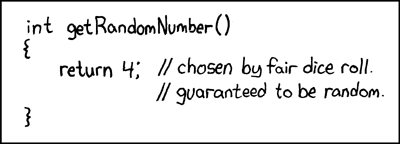
The first class of vulnerabilities is a set of root TLS certificates that were discovered to have a trivial private key. Literally the number 4. These roots were controlled by #eMudhra. The problem is that with that an attacker could create a certificate and, if they could get in the traffic flow, intercept traffic to any site or service. The solution is to stop trusting certificates issued by these vulnerable roots. Upgrading your browser and OS is the fastest way for most Internet users to do this.
The second class of vulnerabilities doesn’t apply to most consumers directly, but does apply to most anyone running a server. These vulnerabilities have been dubbed #php2shell. PHP is one of the most widely used web programming languages. It’s estimated 70% of websites run on PHP. These vulnerabilities allow an attacker to send a crafted set of queries to a server running PHP and potentially take over the server. From there they could potentially read, modify, delete, or repurpose anything on the server. The solution is to upgrade PHP to the latest version ASAP. Even if you’re not using PHP for your web development, it’s often included by default. So make sure it is either upgraded or fully removed.
@Cloudflare received advanced warning of both of these classes of vulnerabilities. We’ve ensured that where we act as a proxy we are no longer trusting the vulnerable roots. We are also reviewing certificate transparency (CT) logs for any sign the vulnerability was exploited before its disclosure. We have not found any evidence but CT logs are not perfect and a sophisticated attacker who knew about the weakness could have exploited it without a new certificate being logged.
For the PHP vulnerabilities, we have deployed mitigations available for all customers for free. Because of the complexity of the vulnerabilities and number of ways it can be exploited, we also released new WAF capabilities that are unique in the industry to catch the exploit based on the response. These too are available for every Cloudflare customer for free.
Even if you are taking advantage of Cloudflare’s protection, it is important to upgrade your OS, browsers, and PHP installations as soon as possible. We can provide a strong bandaid, but the best protection is to fix the underlying problem.
If you’re interested in learning more, you can read our blogs:
Vulnerable roots: blog.cloudflare.com/emudhra-…
PHP vulnerabilities: blog.cloudflare.com/php-vuln…

Christopher Patton retweeted
PHP sites behind Cloudflare already have an initial set of WAF rules deployed for the known exploit vectors in these vulnerabilities. The rules are available to all customers, including free.
We are seeing early attacks emerging and are updating mitigations as new vectors show up.
This is a STOPGAP only. Patch as soon as @ThePHPF releases the update at 14:00 UTC today.


Christopher Patton retweeted
Except when it wasn’t and turns out brought to you by the #4 . Big thanks to everyone working to make us safer last 24 hours. imgs.xkcd.com/comics/random_…


Internet Security starts with randomness… atlasobscura.com/videos/thes…


Christopher Patton retweeted

Module SIS has been around since Micciancio’s 2002 paper, and module structure since 1996 NTRU.


Christopher Patton retweeted


CLAUDE FOUND THE SEEDS
anthropic.com/research/ecdsa…

Guess who standardized time: *NIST* nist.gov/si-redefinition/sec…

Christopher Patton retweeted

When the Loma Prieta earthquake hit on Tuesday October 17, 1989, BART was put to the test like never before.
Not only did service resume just a few hours after the quake, BART ran 24-hours a day, seven days a week for about a month while the Bay Bridge was closed.
Christopher Patton retweeted

A woman gets assaulted at a Trump rally, and the crowd chants “USA! USA!”
There’s something deeply sick about turning violence into patriotism.
I’m not sure I’ll ever hear that chant the same way again after the Trump era. And that pains me.


Christopher Patton retweeted

Can you build blind signatures from ML-DSA? Yes of course you can! But what will the performance be?
In recent work, we looked at the efficiency of Non-Interactive Zero-Knowledge proofs of knowledge of an ML-DSA signature.

Christopher Patton retweeted

Indeed. There is a best algorithm to break RSA-2048 that only God knows. It might be classical or quantum. The quantum one is practical. We hope the classical one isn't. AI helps us answer that question faster. AI doesn't break cryptography: it lets us know it was broken faster.

"discrete log is just like a math conjecture, it's a matter of time and tokens"
No. AI may optimize the best known algorithms and/or implementations, but if factoring/DL are hard (although not NP-complete, if P!=NP we know such hard "NP-intermediate" exist), then no efficient solver exists, ergo no AI can find one. Most likely P!=NP.
< insert caveats about worst/average-case hardness>