

A MILLION TIMES OVER #Aviation_enthusiast #slammer #Howling_Vampire #winder_whooper #Hardcore_Imranist #PTI https://teapawt.net/t.co/8qB73xw8CS
5th Floor of SERENA, KABUL
Joined October 2020
- Tweets10.2K
- Following1.1K
- Followers2K
- Likes6K





Pinned Tweet
#PakistanAirForce
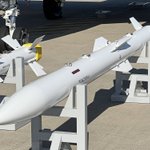
Video of H4 SOW moving towards its target(Indian weapon depot) , launched by Pakistani Mirage Aircraft, deliberately TDB was shifted away to send a message across
@AOBPSF
@ForumStrategic


The PL-15 (霹雳-15) is a Chinese long-range, active-radar-guided beyond-visual-range air-to-air missile designed around a combination of extended reach, high terminal energy, networked guidance, electronic-countermeasure resistance, and autonomous terminal interception. It is generally regarded as the successor to the PL-12 and is associated with aircraft such as the J-10C, J-16 and J-20. Its exact specifications remain classified, so figures frequently circulated online should be treated carefully; open-source assessments generally place the domestic PL-15 in roughly the 200-km class, while the export PL-15E is commonly reported at approximately 145–150 km, with actual useful engagement range depending heavily on launch altitude, launch speed, target aspect, target maneuvering and atmospheric conditions. The missile's most important technological feature is its active electronically scanned array (AESA) radar seeker, which replaces the mechanically scanned seeker concept found in many older-generation missiles. An AESA seeker can electronically steer its radar beam without mechanically moving the antenna, allowing extremely rapid beam positioning and sophisticated search and tracking modes. This potentially provides improved target discrimination, better resistance to electronic jamming, and greater flexibility during terminal interception. The exact seeker frequency, antenna dimensions, transmitter power, processing architecture, detection range and electronic-countermeasure algorithms are not publicly confirmed, so precise claims about seeker range or guaranteed performance against particular aircraft should be treated as estimates rather than established specifications. The PL-15's guidance architecture is equally important: rather than relying on its onboard radar throughout the entire flight, it can use inertial navigation during the early and mid-course portions of the engagement, while receiving target updates through a two-way datalink. This allows the launching aircraft, and potentially the wider sensor network, to provide updated information about the target's position, altitude, heading and velocity while the missile is still travelling toward the predicted intercept area. This is particularly valuable at long range because a target can travel many kilometres or change its heading substantially during the missile's flight. The missile therefore does not simply fly toward the target's position at launch; its trajectory can be updated as the target's track evolves. The concept can be summarized as detect, track, launch, inertially navigate, receive updates, activate the seeker, acquire the target and conduct terminal interception. Network-centric operation potentially makes the missile even more significant because the information used to guide it does not necessarily have to originate exclusively from the launching fighter's radar. Modern Chinese fighters and supporting aircraft can operate within a broader sensor and datalink architecture, allowing information from other platforms such as airborne early-warning and control aircraft to contribute to the overall air picture. This means the missile should be viewed as part of a larger combat system rather than as an isolated weapon. Another major characteristic is its dual-pulse solid-propellant rocket motor. A conventional single-pulse missile burns most or all of its propellant during the initial powered phase and subsequently coasts, gradually losing velocity because of aerodynamic drag. A dual-pulse motor divides the available propulsion into separate portions, allowing a second burst of thrust later in the engagement. The tactical significance is not simply a higher maximum speed; it is the ability to retain or restore kinetic energy during the terminal phase. At long range, missile energy becomes critical because a target can respond defensively by turning, diving, climbing or changing speed.
A missile that reaches the target area with little remaining energy may struggle to perform the high-energy terminal maneuver required for interception. A second propulsion pulse can therefore improve the missile's ability to accelerate or maneuver late in flight. Open-source sources commonly associate the PL-15 with speeds around Mach 5 or above, although the missile does not travel at its maximum quoted speed throughout its entire trajectory. Actual velocity changes continuously with altitude, atmospheric density, drag, propulsion state, maneuvering and flight profile, making terminal energy more meaningful than a single maximum-speed figure. The missile's long-range capability also needs to be understood correctly: maximum advertised or theoretical range is not equivalent to effective combat range or no-escape zone (NEZ). Maximum range describes how far the missile might travel under favorable conditions, whereas effective engagement range depends on whether the missile can still detect, maneuver against and defeat a target at that distance. NEZ is a narrower and more tactically meaningful concept referring to an engagement region where a properly employed target has considerably less ability to defeat the missile through kinetic maneuvering alone. Public sources do not provide reliable classified NEZ figures for the PL-15, so claims of exact NEZ distances should be treated cautiously. The PL-15's AESA seeker and electronic-countermeasure resistance are particularly important because modern air combat increasingly involves electronic warfare. A target may employ radar warning receivers, jamming, deceptive techniques, chaff and aggressive maneuvering to defeat an incoming missile. An AESA seeker potentially gives the PL-15 greater flexibility in dealing with interference because electronically scanned arrays can employ sophisticated beam-management and signal-processing techniques. The missile is also reported to possess passive guidance capabilities, although the exact modes and their operational limitations are not publicly documented in sufficient detail to establish precisely how they are implemented. The combination of active radar guidance, potentially passive sensing, inertial navigation, datalink updates and terminal autonomous guidance gives the missile multiple sources of information rather than forcing it to depend on a single guidance mechanism. Another important concept is seeker activation timing. At long range, continuously transmitting from the missile's own radar from launch would not necessarily be desirable because it could provide the target with warning and potentially give electronic-warfare systems more information. Instead, the missile can travel using inertial navigation and external updates before bringing its own seeker into the engagement. Once the target is sufficiently close, the AESA seeker can search for and acquire the target, after which the missile transitions into terminal active radar homing. This is often described as a fire-and-forget capability, but that phrase should not be misunderstood: fire-and-forget means the missile can ultimately guide itself without requiring continuous target illumination from the launching aircraft; it does not mean that mid-course updates are irrelevant. In fact, the ability to receive updates can substantially improve the quality of the terminal intercept solution. The PL-15's design also reflects the requirements of the J-20, which needs missiles capable of internal carriage to preserve the aircraft's low-observable configuration. The missile therefore incorporates aerodynamic and packaging characteristics compatible with internal weapons bays, while external carriage is possible on aircraft such as the J-10C and J-16.
The J-10C–PL-15 combination is particularly significant because the aircraft combines an AESA fighter radar, modern mission computer, electronic warfare systems and datalink capabilities with a missile designed to exploit exactly those kinds of information sources. Consequently, the missile's effectiveness cannot sensibly be measured by its range alone. Its real combat capability depends upon the complete kill chain: sensor detection, target identification, tracking quality, fire-control solution, launch conditions, missile navigation, datalink updates, electronic warfare, seeker acquisition and terminal maneuvering. Against a maneuvering fighter, for example, the missile's actual probability of success could be very different from its theoretical range because the target's aspect, altitude, speed, radar cross-section and defensive actions all influence the engagement. Against larger high-value aircraft such as AEW&C platforms, tankers or ISR aircraft, the missile's long-range characteristics can potentially create a significant threat because those aircraft generally cannot maneuver like fighters and are strategically valuable. Nevertheless, the missile's ability to engage such targets depends upon the quality and persistence of the sensor track, target awareness, electronic warfare and rules of engagement. The PL-15E, the export variant, is closely related to the domestic missile but should not automatically be assumed to have identical performance. Publicly reported range is generally lower, around 145–150 km, although the exact reasons for differences between variants including propulsion, seeker, software, export restrictions or other configuration differences are not fully documented publicly. Overall, the PL-15's significance comes from the way its individual technologies work together: the AESA seeker provides sophisticated terminal sensing; the inertial navigation system allows autonomous mid-course flight; the two-way datalink permits continuing target updates; networked sensors can potentially provide information beyond the launching fighter; the dual-pulse motor helps preserve terminal energy; active radar homing provides autonomous final guidance; and electronic-countermeasure-resistant design aims to improve performance in a heavily contested electromagnetic environment. In other words, the PL-15 is best understood not simply as a “200-km missile,” but as a network-enabled, long-range interception system whose effectiveness comes from combining offboard sensing, mid-course guidance, advanced terminal radar, electronic warfare resistance and late-flight propulsion. Many of its most important parameters including exact seeker detection range, radar power, ECCM algorithms, true effective range, terminal maneuver envelope and NEZ remain classified, which means that highly precise figures circulating online should be distinguished from publicly supported information.

Falcon A Goraya(7-0) 🇵🇰 retweeted

Lmao ok fine I’ll buy it
Readers added context they thought people might want to know
This video is an AI-generated/CGI promotional concept for a fictional F-14 toaster prototype, not real footage of an available product. Its creator describes it as such.
youtube.com/watch?v=z7OYMN…
PAF F-16s equipped with AN/APG-68(V)9 versus the IAF Mirage 2000H/I upgraded toward the Mirage 2000-5 standard, the radar comparison is quite interesting. The exact performance figures are classified, so advertised “maximum ranges” should not be treated as guaranteed combat detection ranges.
1. APG-68(V)9 .. what makes the PAF F-16 radar strong?
The APG-68(V)9 is a mature but substantially upgraded version of the APG-68 family.
Northrop Grumman stated that compared with earlier V7/V8 versions it provided approximately a 30% increase in detection range, improved false-alarm performance and interference rejection, improved TWS performance, and a larger search volume.
For Pakistan specifically, the U.S. DSCA documentation confirms APG-68(V)9 installation on the F-16 Block 52 aircraft supplied to Pakistan, together with the ALQ-211(V)9 defensive EW suite.
So the important point isn't simply "APG-68 is old." The V9 is considerably more capable than the early APG-68 versions.
Particularly important characteristics
High-quality pulse-Doppler processing
The radar is optimized for detecting aircraft against ground clutter. That's critical in South Asian air combat because a target isn't necessarily sitting against a clean sky background.
TWS
The V9 improved the F-16's ability to maintain multiple tracks while continuing to search. Lockheed specifically reported improved TWS tracking performance
SAR/ground modes
It isn't exclusively an air-to-air radar. The V9 adds high-resolution SAR and improved ground/sea modes, making it a genuinely multimode fire-control radar.
2. Mirage 2000's RDY radar
This is where the comparison becomes much closer.
The original Mirage 2000H configuration was not equivalent to the modernized aircraft. India's modernization program replaced/modernized major avionics and radar components. The Indian government says the modernization enhanced avionics and weapons-delivery capability, while its Ministry of Defence documentation specifically describes the upgrade as including a more powerful upgraded radar.
Jane's identifies the Indian upgraded configuration as incorporating the RDY-3 multimode long-range radar.
The RDY family was designed specifically around multitarget air interception.
Reported RDY-2 characteristics include:
multiple-target detection
TWS
up to 24 tracked targets
eight targets represented/tracked in TWS
firing solutions for multiple priority targets
air-to-air and air-to-ground modes
ECCM capability
That makes the upgraded Mirage's radar considerably different from the original Mirage 2000 radar.
3. Detection range -don't compare the headline numbers directly
This is probably the most misunderstood part.
You will sometimes see figures such as:
APG-68(V)9: ~30% greater range than earlier APG-68
and
RDY: ~120–150 km-class figures under particular conditions.
Those numbers cannot legitimately be converted into:
"Radar A sees the fighter at 120 km, therefore it wins."
Radar detection depends heavily upon:
target RCS
target aspect
altitude
closure rate
look-up/look-down geometry
radar mode
PRF/waveform
search volume
scan bars
atmospheric conditions
electronic attack
target maneuvering
detection probability
required track quality
For example, published technical material on the RDY describes different waveforms producing substantially different detection performance depending upon geometry and target conditions.
So range needs to be treated as a set of conditions rather than a single number.
4. Look-down performance
This is an important area for both.
Both radars use Doppler processing to discriminate aircraft from ground returns.
APG-68(V)9
The V9 represents a significant refinement of the APG-68's signal processing and false-alarm/interference rejection. Lockheed specifically highlighted improvements in false-alarm rate and track performance.
RDY
Look-down capability was central to the RDY's design philosophy. Published descriptions of the RDY family emphasize detection of low-altitude targets and multiple-target tracking.
Bottom line: neither aircraft has an inherent "can't see targets near the ground" problem. The interesting difference is how each radar handles clutter, search volume and track quality under specific geometries.
5. Multitarget tracking
Here the Mirage/RDY architecture is particularly interesting.
The RDY family was designed around automatic multitarget interception. Published RDY-2 information describes 24 tracked targets and eight displayed in TWS, with firing calculations for four priority targets.
The APG-68(V)9 also substantially improved multitarget tracking compared with earlier APG-68 versions. Lockheed explicitly reported that its situation-awareness mode increased the number of simultaneously tracked targets from two to four, while TWS performance was improved.
However, raw track count isn't equivalent to combat effectiveness.
What matters is:
detection → classification → stable track → weapon-quality solution → missile launch → midcourse support → terminal seeker acquisition.
A radar can have more tracks but still not produce a better firing opportunity against a particular target.
6. Radar + missile interaction
This is arguably more important than radar range itself.
PAF F-16
The APG-68(V)9 is paired with the AIM-120 AMRAAM on the relevant PAF F-16 configuration.
That gives the F-16 a very mature radar/active-radar-missile combination.
The radar can establish and maintain the target track while the AMRAAM eventually transitions to its own active seeker.
IAF Mirage 2000
The upgraded Mirage was designed around MICA, including the radar-guided MICA RF.
India's modernization contract explicitly included MICA procurement.
MICA also has an active radar seeker in the RF version, so the fundamental engagement architecture is broadly comparable:
fighter radar → target track → missile launch → midcourse updates → active terminal seeker.
Therefore, the radar doesn't need to maintain a continuous conventional illumination beam all the way to missile impact in the same way a semi-active missile would.
7. Electronic warfare is the big unknown
This is where open-source comparisons become much less reliable.
The F-16 Block 52 package supplied to Pakistan included the ALQ-211(V)9 AIDEWS, while the Mirage modernization included an integrated electronic-warfare/self protection Jamming suit.
That means an actual engagement isn't simply:
APG-68 vs RDY
It is closer to:
APG-68 + F-16 processing + EW + datalink + AWACS/GCI + AMRAAM
versus
RDY + Mirage processing + EW + networking + MICA + AWACS/GCI.
And the classified details that would tell us exactly how each system performs under sophisticated jamming aren't publicly available.
8. Datalink changes the equation
This is particularly important for the PAF F-16.
U.S. documentation for the F-16 Block 50/52 configuration identifies Link 16 among the aircraft's advanced systems.
That means the F-16 does not necessarily have to discover every target exclusively through its own nose radar.
In a networked environment:
AWACS/GCI → datalink → F-16 → onboard radar → AMRAAM
can reduce the amount of time the F-16 has to radiate while searching.
The Mirage similarly operates within India's broader networked air-defense architecture, so this shouldn't be interpreted as "F-16 has networking and Mirage doesn't." Rather, the quality of the entire sensor/network architecture becomes critical.
9. One major caveat about the Indian Mirage fleet
This is important in a 2026 comparison.
India's Mirage upgrade has not been a simple overnight conversion of every aircraft. The program has experienced delays, and Jane's previously reported that only about half of the fleet had been upgraded at the time of its reporting.
More recently, an Indian government procurement notice from April 2026 concerns replacement/upgrading of the transmitter's I-level setup for the RDY radar on Mirage 2000 aircraft. That indicates the RDY-equipped fleet remains an active sustainment issue rather than a completely static system.
So when someone says "IAF Mirage 2000 radar", we need to know whether they're talking about:
original Mirage 2000H radar configuration, or
upgraded Mirage 2000I/5-standard aircraft with RDY-series radar.
Those are substantially different comparisons.
In practical terms
Area
Edge
Raw radar maturity
F-16
Detection/processing
F-16
TWS capability
F-16 / roughly comparable depending on configuration
ECCM/interference handling
F-16
Radar + missile integration
F-16 with AMRAAM
Multimode capability
Comparable
Overall radar advantage
F-16


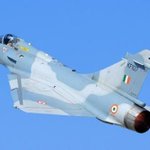
Indian Air Force Mirage 2000H/I/TI, its main shortcomings today are less about the basic airframe which remains a capable delta-wing fighter and more about age, sustainment, sensors, weapons, and upgrade limitations.
Main shortcomings
Aging airframe
The Indian fleet was inducted in the 1980s and is now roughly four decades old.
The IAF has been operating these aircraft on extended lifecycles, limiting how much further modernization makes economic sense.
No AESA radar
The upgraded Indian aircraft use the RDY-3 mechanically scanned radar, rather than a modern AESA.
This is a significant limitation compared with newer fighters equipped with contemporary AESA sensors, particularly in multi-target tracking, electronic-counter-countermeasures potential and low-probability-of-intercept operation.
Limited BVR weapon growth
The principal modern A2A weapon associated with the upgraded fleet is MICA.
MICA provides both RF and IR variants, but the aircraft lacks the larger weapon-growth margin of newer fighters designed around longer-range BVR weapons.
Older engine technology
The SNECMA M53 family is an older-generation engine. There has been no comparable new-engine modernization giving the aircraft a major increase in thrust, efficiency or electrical/thermal capacity.
This matters because modern sensors, EW and weapons increasingly demand greater onboard power and cooling.
Electronic-warfare limitations
The upgrade introduced an improved integrated EW suite, but the platform's age limits how far its EW architecture can be modernized.
The aircraft does not have the same growth potential as a modern fighter designed around contemporary digital EW architecture.
Network-centric limitations
Compared with newer fighters, the Mirage's original architecture was not designed around modern network-centric warfare.
It can receive upgraded communications/data-link capabilities, but integrating contemporary networking into a 1980s platform is inherently more constrained.
Maintenance and spare-parts problem
This is probably one of the most important practical weaknesses.
Dassault stopped producing the Mirage 2000, while India did not manufacture the aircraft under licence. Consequently, obtaining components and maintaining the fleet has become increasingly difficult and expensive. India has even acquired retired Mirage 2000s for spares/cannibalisation.
Upgrade programme itself has suffered delays
The 51-aircraft modernization programme encountered delays involving engines/components and integration issues. Jane's reported that only about half had been upgraded by the time of its assessment.
Earlier maintenance-support arrangements also ran into contractual difficulties
Limited payload and growth compared with heavy fighters
Its relatively small airframe limits fuel, weapons payload and internal growth compared with aircraft such as the Su-30MKI.
It is consequently less suitable for missions requiring very long endurance or large stand-off weapon loads.
Future obsolescence
The biggest underlying issue is technology-to-airframe mismatch: putting modern avionics into a 1980s fighter can extend its usefulness, but eventually the airframe, engine, electrical architecture and physical space become limiting factors. Indian defence analysis has consequently identified the Mirage fleet as approaching the latter part of its useful life.
In a BVR fight
The key weaknesses are therefore not that the Mirage 2000 is inherently a poor fighter. Rather, an Indian Mirage 2000I/TI faces disadvantages from its mechanically scanned radar, aging airframe/engine, constrained upgrade potential, limited weapon-growth options and sustainment problems.
Its 2010s modernization substantially improved it adding upgraded avionics, RDY-3 radar, EW systems, MICA and improved navigation/weapon-delivery capabilities so comparing an upgraded Indian Mirage with an original Mirage 2000H would be misleading

MiG-29UPG, its main operational weaknesses are less about basic maneuverability and more about age, sustainment, availability, and the limitations of an older airframe design.
Main operational flaws
Aging airframe
The underlying MiG-29 airframe is an older-generation design. Indian sources have noted that later-life airframes require increasingly extensive maintenance.
A DRDO-hosted publication specifically described the MiG-29UPG as having roughly 4,000-hour airframe/engine life, lower than the ~6,000-hour figure cited for some Western fighters, with deterioration becoming more demanding later in life.
High maintenance burden
The original MiG-29's twin-engine configuration and older Soviet/Russian design philosophy can produce a substantial maintenance workload.
Engine, airframe and systems upkeep becomes particularly important as the fleet ages.
Serviceability/availability concerns
One of the biggest practical disadvantages is that an aircraft's combat value depends on how many can actually be generated for sorties.
The DRDO-hosted assessment explicitly characterized MiG-29UPG serviceability/availability as lower than Western fighter.
Don't confuse this with the MiG-29K/KUB naval fleet: CAG separately documented very poor serviceability for those aircraft, but those figures shouldn't be transferred directly to the IAF's MiG-29UPG.
Comptroller and Auditor General of India
Electronic-warfare modernization lag
The IAF's MiG-29 upgrade originally faced a significant EW-suite issue. CAG reported that the D-29 EW system evaluation had been delayed and that the existing Tarang 1B RWR lacked a special protection jammer. CAG consequently regarded Tarang 1B as inadequate as a substitute for an effective EW system.
Comptroller and Auditor General of India
This is particularly relevant in modern BVR combat, where RWR + jammer + missile warning + datalink + sensor fusion matter as much as raw aircraft performance.
Older-generation BVR architecture
The MiG-29 was designed primarily around air superiority/close combat concepts of an earlier era.
The UPG substantially improves its radar, cockpit, EW and weapons integration, but it doesn't completely erase the limitations imposed by the original architecture.
Consequently, against newer fighters with sophisticated AESA radars, integrated EW, better sensor fusion and modern networking, the UPG can face disadvantages depending on the exact configuration and support environment.
Logistics and Russian-origin dependency
Maintaining an older Russian-origin fleet creates dependence on a complex supply chain for engines, spares, overhaul and specialized components.
Delays in modernization and component availability can translate directly into reduced aircraft availability
Bottom line: the MiG-29UPG is not a poor fighter. Its strongest attributes remain maneuverability, acceleration, twin-engine survivability, and a substantially improved avionics/weapons suite. Its principal operational problem is that you're trying to keep an older airframe and propulsion architecture highly available and competitive in a rapidly modernizing BVR/EW environment.

Falcon A Goraya(7-0) 🇵🇰 retweeted

Indian Navy Vice Admiral (R) says Pakistan’s eight Hangor-class submarines will be a “massive headache” for India.
“Pakistan’s eight Hangors are going to be a BIG headache for us. I would love to be the operational commander on the Pakistani side.”
— Vice Admiral (Retd.) Sanjay Mahindru
Operational shortcomings of LCA Tejas
Limited fleet availability
The IAF has historically operated only a small number of Tejas aircraft; as of late 2025, it had two operational Tejas squadrons.
This limits the aircraft's ability to generate large numbers of sorties or replace retiring fighters quickly.
Slow production and delivery
The biggest operational problem has arguably been availability of aircraft rather than the airframe itself. Mk1A deliveries have faced substantial delays, including problems involving F404 engines and weapons/radar integration.
Engine dependency
Mk1/Mk1A relies on the GE F404, rather than an indigenous engine. Supply delays have directly affected aircraft deliveries.
The original Kaveri engine programme failed to mature into a Tejas powerplant, leaving India dependent on an imported engine.
Limited payload
Tejas Mk1A's stated external payload is around 3 tonnes, substantially below aircraft such as the F-16 and Gripen.
This constrains the combination of fuel, weapons and external stores that can be carried on a particular mission.
Limited combat radius/endurance
Its relatively small airframe limits internal fuel capacity. Indian Express has cited an escort range of roughly 300 km for Mk1A and substantially longer figures for comparable F-16/Gripen configurations.
Consequently, demanding deep-penetration or long-duration missions place greater importance on tanking and external fuel.
Turnaround/maintenance burden
Earlier Tejas variants faced maintainability concerns, which the Indian government acknowledged. The Mk2 programme was intended to address several of these shortcomings
A 2025 analysis cited preparation time of more than 60 minutes for Tejas versus shorter figures for Gripen and F-16, although such comparisons depend heavily on mission configuration and support arrangements.
Mk1A capability-delivery gap
The Mk1A is supposed to bring AESA radar, an improved EW suite/jammer and enhanced BVR capability, but delays in integrating these systems have affected delivery.
In February 2025, IAF Chief ACM A.P. Singh publicly complained that the aircraft presented to the IAF did not yet meet all its requirements.
Survivability/EW limitations of early Mk1
The original Mk1 was officially associated with shortcomings involving survivability, maintainability and performance, including the absence of an internal jammer at that stage
Mk1A substantially improves the EW side, so this should not simply be treated as a criticism of the current Mk1A configuration.
Small-aircraft limitations
Tejas's lightweight design is advantageous for agility and operating costs, but it also means less room for fuel, weapons, cooling, avionics and growth compared with larger fighters.
This becomes particularly relevant when carrying multiple BVR missiles, external tanks and electronic-warfare equipment simultaneously.
Fleet-support and industrial maturity
Operational effectiveness depends not just on aircraft specifications but on spare parts, engines, weapons, software, trained maintainers and production throughput. The repeated delivery problems demonstrate that the broader support ecosystem has been a significant weakness.
Bottom line
Tejas's principal operational weakness is not that it is inherently incapable; it is that its relatively small airframe, limited payload/endurance, dependence on the F404 supply chain, historically slow production, and evolving Mk1A systems have constrained fleet availability and mission flexibility.


Low fleet availability: Tejas has historically faced difficulty maintaining high aircraft availability, with serviceability affected by spares, maintenance and technical issues.
problems affecting the Tejas's day-to-day combat availability, sortie generation, maintenance, and deployment not design specifications the main publicly reported concerns are:
Spare-parts shortages: Delays in obtaining components have been repeatedly associated with aircraft being unavailable for operations.
Slow production and replenishment: HAL's production ramp-up has been slower than the IAF's desired induction rate, making it difficult to build a large operational fleet quickly.
Engine supply problems: Dependence on GE engines has exposed the program to delivery/supply-chain constraints, potentially affecting aircraft induction and fleet expansion.
Maintenance burden during early service: As with a relatively new aircraft, operators have had to deal with immature logistics, troubleshooting and component reliability compared with mature fleets.
Limited fleet numbers: Small numbers reduce squadron-level redundancy and make it harder to sustain intensive operations while aircraft undergo scheduled or unscheduled maintenance.
Operational deployment constraints: Tejas's relatively limited internal fuel and payload compared with heavier fighters can constrain certain long-range/high-payload missions.
Training and conversion burden: A newer aircraft requires development of its own maintenance personnel, technical procedures, simulators, spares inventory and operational doctrine.
Integration delays: Introduction of new weapons, sensors and avionics has sometimes progressed more slowly than the aircraft's basic airframe development.
Logistics maturity: Indigenous systems can require a developing domestic supply chain, meaning availability can be affected by the reliability and capacity of individual component suppliers.
Important distinction: these are operational/logistical shortcomings, not evidence that Tejas is inherently unreliable or incapable of combat. Some of the worst availability figures reported during the program's earlier years should not automatically be applied to the latest Mk1A fleet, because the aircraft and its support ecosystem are evolving.

The Su-30MKI’s AL-31FP is a powerful engine and its thrust-vectoring capability gives the aircraft exceptional low-speed maneuverability, but its weaknesses have historically been reliability, overhaul burden, lubrication/bearing problems, and sustainment rather than lack of raw thrust.
Major shortcomings of the AL-31FP
Historically high engine-failure rate
This is the biggest documented weakness. India reported 69 engine-related failures/investigations over roughly 2012–2015, including 35 technical problems during 2013–14 alone. The problems were serious enough to produce multiple single-engine landings and concerns about fleet availability.
Bearing and metal-fatigue problems
A significant number of failures were associated with bearing deterioration/metal fatigue. Metal particles generated by damaged bearings could contaminate the lubrication system and create secondary problems elsewhere in the engine. Parliamentary reporting attributed 33 of the 69 cases to metal chips in the oil system.
Lubrication/oil-pressure vulnerability
Low lubricating-oil pressure was another documented failure mechanism. Eight of the reported cases were attributed specifically to low oil pressure. Russia and HAL subsequently introduced lubrication-related modifications, including changes to lubrication practices and bearing arrangements.
Shirt overhaul intevrals
HAL's current specification lists approximately 1,000 hours TBO and 2,000 hours total technical life, while the thrust-vectoring controlled nozzle has a 500-hour overhaul interval. That is a substantial sustainment burden for a twin-engine fighter
Thrust-vectoring nozzle adds maintenance complexity
The AL-31FP's TVC system is a major aerodynamic advantage, but mechanically it is more complicated than a conventional fixed exhaust nozzle. The controlled nozzle's 500-hour overhaul interval illustrates the additional maintenance requirement.
Sensitivity to operating conditions and consumables
India's investigation found problems associated with fuel/oil contamination and engine vibration, rather than simply one fundamental design defect. This means engine reliability can be strongly influenced by fuel quality, lubrication and maintenance standards.
Engine replacement can remove an aircraft from operations
When an engine problem occurs, replacing the engine is not a trivial turnaround. Contemporary reporting indicated that removing and replacing an AL-31FP could take around four to five days, potentially longer if damage was extensive.
Impact on aircraft availability
The engine problems translate directly into lower fleet availability. In 2014, the IAF reportedly shortened engine servicing from the nominal 1,000-hour interval to 700 hours as a precaution, increasing maintenance downtime
Relatively old-generation engine architecture
The AL-31 family originated in the Soviet-era design generation. The AL-31FP remains powerful, but newer Russian engines such as the AL-41F-1S offer improvements in thrust, efficiency and engine life. India's own current defence-industrial material describes the AL-31FP as a 7,770 kgf dry / 12,500 kgf afterburning engine, with a 1,000-hour TBO and 2,000-hour life
Fuel efficiency is not its strongest attribute
Its primary design priorities were high thrust, ruggedness and performance rather than the fuel economy expected from newer-generation turbofans. This matters particularly for the Su-30MKI because the aircraft is already a large, heavy fighter carrying two engines and substantial fuel.
The important distinction
It's worth separating design shortcomings from historical Indian maintenance problems. Saying “the AL-31FP is an unreliable engine” without qualification is too simplistic. The IAF's serious problems led to modifications, and HAL has subsequently developed substantial domestic overhaul capability. In 2026, HAL reported completing its 1,000th AL-31FP overhaul, demonstrating that India's sustainment ecosystem has matured considerably.
Bottom line: the AL-31FP's biggest weakness isn't that it lacks thrust it has plenty. Its Achilles' heel is the combination of high maintenance burden + relatively short overhaul/life intervals + historical bearing/lubrication failures + TVC-system complexity + associated aircraft downtime

The Su-30MKI’s service-availability problem has historically been one of the biggest weaknesses of the Indian fleet, although it is important to distinguish the older, well-documented problems from the improvements made later.
1. The basic problem: too many aircraft unavailable
“Serviceability” essentially means the proportion of the fleet that is technically fit and available for operations. The IAF’s Su-30MKI fleet had periods where serviceability was dramatically below the roughly 70–75% level generally sought for a fighter fleet.
In 2014, Indian government figures reported serviceability of only about 48–55%. At the 55% level, roughly 87 of 193 aircraft would not have been available at a given time.
A 2015 CAG-related report put Su-30MKI serviceability around 55–60% against a prescribed 75% figure, and attributed poor operational readiness to aircraft-on-ground (AOG) rates, low serviceability and insufficient flying hours.
Former Defence Minister Manohar Parrikar subsequently said that when he took office, Su-30 serviceability was around 46%, describing after-sales support as a major problem.
So this wasn't simply an internet criticism of the aircraft it was acknowledged by Indian defence authorities.
2 Spare-parts shortages were a major bottleneck
One of the most persistent problems was availability of spares and aggregates.
The Parliamentary Public Accounts Committee documented that the original spare-parts arrangements for the Su-30K/MKI had run into problems, including difficulties over pricing and procurement. It concluded that poor product support from the manufacturer had affected the serviceability and availability of the Su-30 fleet.
This creates a nasty maintenance cycle:
component failure → spare unavailable → aircraft grounded → cannibalisation/repair → longer turnaround → reduced fleet availability.
The problem becomes particularly serious with a sophisticated aircraft containing Russian, Indian and other foreign-origin subsystems.
3. Dependence on Russian OEM support
The Su-30MKI isn't simply a Russian Su-30 assembled in India. It is a highly customised Indian variant with a mixture of Russian, Indian, French and Israeli-origin systems.
India therefore developed a substantial domestic production and maintenance capability through HAL, but didn't immediately eliminate dependence on Russian OEMs.
A 2017 report noted that HAL was responsible for after-sales support, repairs, modifications, upgrades and obsolescence management, but was experiencing delays because required spare parts were not arriving quickly enough.
That means the aircraft could be physically sitting at an Indian base but still remain unavailable because the required component had to come through a complicated international supply chain.
4. Repair turnaround time was another major issue
This is slightly different from simply saying “there aren't enough spares.”
Even when a component exists, repairing it quickly enough is crucial.
Contemporary reporting identified problems with the turnaround of line-replaceable units and shop-repairable units. The issue was therefore partly:
availability of new components;
availability of repaired components;
repair capacity;
overhaul capacity;
technical assistance;
logistics;
and procurement bureaucracy.
That distinction matters because a fighter fleet can have plenty of spare parts on paper and still have poor availability if defective components spend too long waiting for repair.
5. Engine reliability affected availability
The Su-30MKI's AL-31FP engines have also been an important part of the availability story.
The Indian Ministry of Defence stated that between April 2014 and March 2016 there were 34 occasions in which Su-30MKIs had to land on a single engine because of mid-air engine problems. India subsequently implemented modifications, overhaul changes and predictive-maintenance measures with Russian OEM assistance
Earlier investigations identified issues involving things such as:
oil-system problems;
bearing-related problems;
vibration;
metallic particles/chips in oil;
lubrication-related problems;
premature component wear.
These don't necessarily mean the AL-31FP is an inherently poor engine. The more important point is that engine maintenance and overhaul requirements contributed to aircraft downtime.
6. High AOG rates
Aircraft-on-ground (AOG) status is particularly important.
An aircraft can be technically intact but unavailable because of:
engine maintenance;
radar problems;
avionics defects;
hydraulic issues;
flight-control-system problems;
structural inspection;
scheduled overhaul;
unavailable components.
The 2014 breakdown reported to the Indian defence ministry showed approximately:
20% undergoing first- or second-line maintenance/inspection;
11–12% undergoing major repair/overhaul;
13–14% classified as AOG awaiting major systems or repairs.
That combination explains how the fleet could have a large number of aircraft on the books while having a much smaller number actually ready for combat.
7. HAL's role created another layer
HAL became central to keeping India's Su-30MKI fleet operational.
That has advantages India gradually gained much greater indigenous capability but historically there were concerns about repair/overhaul capacity and turnaround time.
India's own government has acknowledged that indigenous Su-30MKI production involved imported raw materials and proprietary components from Russia. At the same time, the government argued that greater indigenous manufacturing would eventually reduce OEM dependence and improve turnaround and support.
8. Fleet complexity makes logistics harder
The Su-30MKI is an unusually complex aircraft.
It combines:
Russian airframe;
Russian engines;
Russian flight-control architecture;
Indian mission systems;
Indian electronic warfare elements;
French-origin avionics/components;
Israeli-origin systems;
multiple generations of upgraded equipment.
That produces a logistics and configuration-management challenge.
Different batches can have different equipment configurations, upgrades and component standards. Maintaining commonality across such a fleet is considerably more complicated than maintaining a relatively standardised aircraft.
9. Cannibalisation can become a symptom
When a critical spare isn't immediately available, one aircraft can sometimes be used as a source of components for another.
That's known as cannibalisation.
It's useful as an emergency technique because it can get one aircraft flying quickly, but excessive dependence on it is a warning sign: you're effectively sacrificing one aircraft's availability to restore another.
Indian audit material has documented cannibalisation being used where spares were unavailable in IAF aircraft maintenance contexts.
10. Why the problem is operationally significant
This is where serviceability becomes much more important than simply saying:
“The Su-30MKI is a good/bad aircraft.”
A fighter's combat effectiveness depends on:
aircraft quality × weapons × sensors × pilots × sortie generation × availability.
You can have an excellent radar and long-range missile, but if a substantial portion of the fleet is sitting in maintenance, the squadron cannot generate the same number of sorties.
For a large fighter such as the Su-30MKI, this becomes especially important because it is one of the IAF's principal heavy fighters.
The historical Su-30MKI availability problem was not caused by one single technical defect. It was a systemic combination of:
spares shortages + Russian OEM dependence + lengthy repair cycles + engine issues + limited repair/overhaul capacity + complex multinational components + AOG aircraft + procurement/logistics delays.
The result was periods of roughly 50–60% serviceability, substantially below the ~75% target cited by Indian authorities. The subsequent Indian/Russian support and indigenous-maintenance programmes were specifically aimed at correcting this weakness.
