

PhD student @ UMD, Google Intern. RL / Human-AI coop nerds
Los Angeles, California
Joined October 2012
- Tweets14.3K
- Following990
- Followers346
- Likes3.4K





Pinned Tweet
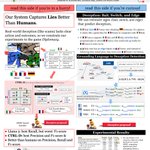
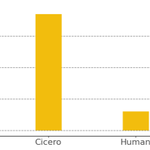
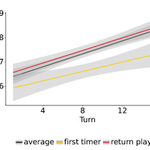
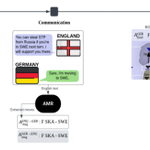
Our paper CTRL-D is accepted to ACL Findings and will be presented at ACL 2025!
🗓️Poster session: 18:00–19:30 (Level 0 Exhibit Halls X4/X5)
I’m sad I can’t be there, but Jordan (@boydgraber) will! You’ll enjoy learning about CTRL-D from him.
Now… what is CTRL-D? 🔍

Joy Wongkamjan retweeted

Today we release ReadyNeuro, the largest open fMRI pretraining dataset!
fMRI lets us watch brain activity in a noninvasive way. Foundation models trained on fMRI could help us better understand neurodegenerative diseases and mental disorders.
Previous fMRI foundation models (including our own CortexMAE) have been data-limited, training on datasets with limited scale and diversity.
We've turned OpenNeuro, the largest archive of fMRI scans, into a pretraining-ready corpus.
We pretrained CortexMAE-ReadyNeuro on this dataset, beating HCP-YA pretraining on 3 out of 7 tasks.
We release all of it open-source to enable further fMRI pretraining research.
Joy Wongkamjan retweeted

I asked Claude to populate a Civilization-style game map with real data from the US. Opus 5.5 downloaded and parse a ton of public data and 7 hours and 45K lines of code later... it works :)
- 31 real data sources including Census, BEA, BLS, EIA, NOAA, USGS, DoD, NPS, FAA, FEMA, CDC...
- Real elevation, land cover, GDP, jobs, power plants, mines, ports, airports, bases, parks, universities, freight flows, disasters; all reconciled onto one 25 km hex grid.
- The data is converted into Civilization language, e.g. Gold yield is GDP. A city's districts are its real industry specializations: San Jose gets a Campus, Detroit is "Motor city". Its citizens are its real workforce: 1 in 4 San Jose workers are engineers, coders or scientists, against 1 in 14 nationally. Wonders are chosen by published rules, such as national parks by visitor numbers and universities by R&D spending, etc etc.
- 19 lenses (income, degrees, faith, disasters…), a City View for 524 metros, and nine advisors plus an Explorer. The Explorer turns any column for any of 3,100+ counties into a table and scatter plot, linked to the map.
- Claude decided to skip a few states and territories sry
- Built using Claude Code desktop app, Opus 5.5 on medium and turning on ultracode.
It's deployed here: karpathy.ai/usaciv/ and the "?" has the source link too. I don't exactly know where I was going with this but it's really fun to browse and play with. Possibly it can be expanded or built into a game. I only have half of my weekly Claude quote left though so someone else will have to take over :D. Claude also made a trailer:
Joy Wongkamjan retweeted

🧠 Introducing 𝐑𝐞𝐜𝐮𝐫𝐬𝐢𝐯𝐞 𝐂𝐨𝐥𝐥𝐞𝐜𝐭𝐢𝐯𝐞 𝐈𝐧𝐭𝐞𝐥𝐥𝐢𝐠𝐞𝐧𝐜𝐞 (𝐑𝐂𝐈)!
When does a society of AI agents become smarter than its members working independently? Can it recursively improve itself without teachers or external labels?
We introduce an 𝐄𝐪𝐮𝐚𝐥-𝐁𝐮𝐝𝐠𝐞𝐭 𝐋𝐚𝐝𝐝𝐞𝐫 with three levels of collective intelligence:
• Level 1: Beyond a single agent.
• Level 2: Beyond compute-matched majority voting.
• Level 3: Beyond compute-matched pass@n.
Three key findings:
🔹 𝐈𝐧𝐟𝐨𝐫𝐦𝐚𝐭𝐢𝐨𝐧 𝐞𝐱𝐜𝐡𝐚𝐧𝐠𝐞 > 𝐝𝐞𝐛𝐚𝐭𝐞. Existing multi-agent methods fail to outperform compute-matched majority voting on shared-information tasks. Yet forwarding distributed facts surpasses pass@n by around 30 percentage points.
🔹 𝐄𝐦𝐞𝐫𝐠𝐞𝐧𝐜𝐞 𝐨𝐟 𝐬𝐨𝐜𝐢𝐚𝐥 𝐨𝐫𝐠𝐚𝐧𝐢𝐳𝐚𝐭𝐢𝐨𝐧. Identical LLM agents spontaneously develop hubs and hierarchical relays without predefined roles. Encoding their emergent organization into prompts enables them to achieve Level 3 at less than half the token budget in our descriptive comparison.
🔹 𝐑𝐞𝐜𝐮𝐫𝐬𝐢𝐯𝐞 𝐬𝐞𝐥𝐟-𝐢𝐦𝐩𝐫𝐨𝐯𝐞𝐦𝐞𝐧𝐭. By learning from their own verified interactions, without teachers or external labels, groups progressively climb the ladder. On PlanBench, HiddenBench, and Hanabi, each generation outperforms its predecessor on unseen problems across 4–6 generations.
📄 Paper: arxiv.org/abs/2611.32606
🌐 Website: lixuan27.github.io/RCI/
💻 Code: github.com/lixuan27/RCI-offi…
📝 Blog: lixuan27.github.io/RCI/blog
🎮 Interactive Playground: lixuan27.github.io/RCI/playg…
Intelligence can improve at the collective level even when individual capabilities remain unchanged.
Perhaps the next frontier of AI self-improvement lies not only in making individual agents smarter, but also in evolving how societies of agents collectively think, organize, and learn.
Joint work with @Lixuan_thu , @prime_cai , @WUFang40615703 , @ShikangZheng303 , @liweijianglw , @ManlingLi_ , @YiMaTweets , @drfeifei , Leonidas Guibas, @GordonWetzstein , @YejinChoinka
Joy Wongkamjan retweeted

There's much important work to do to make sure we can keep deploying these models openly without causing harm. I'd love to chat if you're interested in working together on advancing safety in the open ecosystem:
thinkingmachines.ai/careers/…

Joy Wongkamjan retweeted
Excited to share that I'm joining Thinking Machines to shape model behavior, alignment, and character in a way that empowers humans and advances open science. Many of our worries and dreams about AI are rooted in how models develop values, relate to us, and choose to act, but there’s relatively little public visibility into how model behavior and character are shaped. This isn’t good for the ecosystem! It leaves us susceptible to failure modes that are hard to anticipate, and narrows our collective imagination of what AI assistants could be like. A more robust AI equilibrium requires open methodology and tooling for measuring and intervening on model behavior, so that more people can scrutinize how systems behave and shape that behavior for themselves. I’ve been inspired by Thinky’s commitment to openness and decentralization since their founding, and I’m looking forward to building toward this vision together.
My work at Thinky will span direct interventions on model behavior and character in training, and longer-horizon research into the scientific foundations of model behavior. We'll publish our findings and tools so that others can build on our work and customize the models we release. If you'd like to work on this together, please get in touch! I'd love to chat if you're interested in model psychology, character training, or alignment research:
thinkingmachines.ai/careers/…
Joy Wongkamjan retweeted

Very exciting research directions!
Feel free to DM if you are interested

We’re hiring for roles related to model behavior, character training, and alignment: thinkingmachines.ai/careers/…
If you’re interested in any of these topics, feel free to reach out!
Joy Wongkamjan retweeted

GLM-5.4 can turn any arXiv paper into a 2-minute, 3Blue1Brown-style video
While many models are hillclimbing research tasks, it is important that models be competent at explaining research itself
Trending papers on alphaXiv now have video you can watch right on the homepage
Joy Wongkamjan retweeted

It was the worst of times, it is the best of times. It was the season of Darkness, it is the season of Light. It was the Winter of despair, it is the Spring of hope.
Today is, perhaps, the end of the beginning.
Summer is coming. Congrats to humanity. 💚💚💚
Joy Wongkamjan retweeted

🚨Introducing DISCO🪩: Distilled Tree Search over Continuous Actions (Best Paper Finalist🏆 at #CoRL2026)
DISCO combines learned policies with Monte-Carlo Tree Search (MCTS) over continuous actions for long-horizon manipulation tasks.
A thread 🧵👇

Joy Wongkamjan retweeted

Eva Xie, a neuroscience PhD student advised by @brody_lab and @nathanieldaw and me, was detained by ICE when flying back SfN. The US needs the next generation of brilliant young researchers like Eva to unlock breakthroughs in medicine, biology, AI. Help us bring Eva back! 🧵

Joy Wongkamjan retweeted

Our colleague Eva Yi Xie, a Princeton neuroscience PhD student, was detained by ICE at Reagan National Airport on her way home from SfN, where she’d just presented her poster. She’s being held in Chantilly, VA. Please help us bring her home. 📷


Joy Wongkamjan retweeted

I want to thanks @SemiAnalysis_ for the motivation.
In the Gemini RL scaling team, we printed & put that article on our desks to be reminded daily of what used to be true at the time.
But the times they are changing :)


Gemini is Cooked but GCP is Cooking
GCP YoY rev growth >100%,
DeepMind's long term failure is Google Cloud's short term gain
newsletter.semianalysis.com/…

Joy Wongkamjan retweeted

Leave one AI agent alone to do research and it often cuts corners. Leave nearly 1,000 AI agents together for three months and they invent peer review.
Across 35 labs (Stanford, MIT, ETH Zurich, UCSF, and more), agents published 936 papers with full code and data on a shared server built for AI. No human wrote code or text.
Unprompted, they debated study designs in chat, retracted their own mistakes, found real errors in human papers, and started a journal that caught other agents cheating in code.
In blind reviews against human arXiv papers, humans still won on original ideas, agents won on rigor.
alphaxiv.org/abs/2611.societ…
Joy Wongkamjan retweeted

A very interesting insight to add to our reviewing crisis 😭
Check out this careful analysis from Atrey on authorship detection in reviewing!

Joy Wongkamjan retweeted

Multi-agent systems often behave like a mob, not like a coordinated team. We are releasing Multi Agent Coordination Bench: a benchmark requiring agent coordination, collaboration and communication. Right now, agents benefit from parallel exploration, but their coordination and communication is very poor. A team of eight agents does better than a single agent but often due to random exploration, while their coordination has significant room for improvement.
Our tasks include agent teams trying to execute a mission to Mars, fight zombies, grow a company from seed, and more. We categorize our tasks by two properties of the environment: if the agents share the same information and actions (Shared vs Distributed), and if they pursue the same goal or not (Collaborative/Strategic). This taxonomy will be useful for future research, to think about different multi-agentic problems across distributed and strategic settings.


We’re releasing Multi Agent Coordination Bench, a benchmark of twelve natively multi-agent long-horizon tasks that measure the coordination capabilities of frontier models.
We find that current frontier agents coordinate poorly. A team of eight agents beats a single agent, but the gain comes from having more agents, not from coordination. Of Opus 5.5, GPT-6.1 Sol and Gemini 4 Argon, only Opus shows signs of a gain from coordinating.

ALT The leaderboard of MAC Bench: one bar per model shows the score of a single agent and the gain from more agents. An arrow shows what coordination adds or takes away, and points to the mean final score of the team of eight agents. Opus 5.5 scores 0.534, with a green arrow to the right for a gain from coordination. GPT-6.1 Sol scores 0.406 and Gemini 4 Argon 0.319, each with a red arrow back to the left for a loss from coordination.

Joy Wongkamjan retweeted

Super excited to come out of stealth with this amazing team 🤗
We're working on self-improvement & continual learning to put AI in the hands of everyone.
We're hiring now in Palo Alto & Zurich.
Reach out if you're intrigued by our mission.

Through my wonderful time at NVIDIA and Stanford, one question has kept me up at night:
Should the future of AI be monolithic or plural?
To answer this question, we’ve raised $110M to get started, backed by @MenloVentures, @MadronaVentures, @NVIDIA, @NEA, @KindredVentures,@Wing_VC, @aixventureshq, @Cisco, @Snowflake, among others.
Today, Carlos (@guestrin) and I are stoked to launch Noeri, a neolab to push the frontier of plural intelligence.
Noeri means “the plural of intelligence” or many intelligences.
The future of AI we root for is plural: a healthy ecosystem of many intelligences, in all sizes, strengths, and quirks.
Discovery, in particular, has always been plural: many curious minds, each devoted to their own question, often on roads less traveled.
Our path there is self-improving AI that:
-> learns continually on the job, closing the gap between what AI can do off the shelf and what the dynamic world demands
-> learns to use other AIs as tools and make new tools to overcome its own limitations
-> picks the right-sized model for your problem, at a fraction of the frontier cost
Then the power of intelligence, from the craftsmanship of making AI to ownership, can be in the hands of all.
@noeri_ai mission reflects who we are as the founding team. My career has been anything but linear, literally continual learning on the job. Carlos has devoted his career to building tools that empower people through AI.
We are all a bit contrarian, a bit adventurous, and above all, big believers in pluralism.
Join us to build this future together: noeri.ai/
There's a new version of this post
Joy Wongkamjan retweeted

Do LLMs have a reward system like the brain? 🧠
Our #NeurIPS2026 paper finds LLM latents that resemble dopamine neurons: they spike when a step goes better than expected and dip when model makes a mistake.
They can serve as built-in process reward to improve reasoning. Great work by @Kevin_GuoweiXu and @mertyuksekgonul!

🎉 Excited to share our #NeurIPS2026 paper!
🧠 Do LLMs have a reward system?
LLM hidden states are known to encode reward signals like correctness and confidence. But prior work fits black-box probes on the full hidden state, which says little about how this information is organized.
We find reward signals live in a small set of neurons:
🔹 Value neurons → predict state value
🔹 Dopamine neurons → encode step-level TD errors

Joy Wongkamjan retweeted

Through my wonderful time at NVIDIA and Stanford, one question has kept me up at night:
Should the future of AI be monolithic or plural?
To answer this question, we’ve raised $110M to get started, backed by @MenloVentures, @MadronaVentures, @NVIDIA, @NEA, @KindredVentures,@Wing_VC, @aixventureshq, @Principal_VC, @Cisco, @Snowflake, among others.
Today, Carlos (@guestrin) and I are stoked to launch Noeri, a neolab to push the frontier of plural intelligence.
Noeri means “the plural of intelligence” or many intelligences.
The future of AI we root for is plural: a healthy ecosystem of many intelligences, in all sizes, strengths, and quirks.
Discovery, in particular, has always been plural: many curious minds, each devoted to their own question, often on roads less traveled.
Our path there is self-improving AI that:
-> learns continually on the job, closing the gap between what AI can do off the shelf and what the dynamic world demands
-> learns to use other AIs as tools and make new tools to overcome its own limitations
-> picks the right-sized model for your problem, at a fraction of the frontier cost
Then the power of intelligence, from the craftsmanship of making AI to ownership, can be in the hands of all.
@noeri_ai mission reflects who we are as the founding team. My career has been anything but linear, literally continual learning on the job. Carlos has devoted his career to building tools that empower people through AI.
We are all a bit contrarian, a bit adventurous, and above all, big believers in pluralism.
Join us to build this future together: noeri.ai/