
A random Kashmiri trying to make sense of things.
Joined October 2026
- Tweets378
- Following181
- Followers28
- Likes426







Pinned Tweet
We don't mind people from different parts of India celebrating Diwali in Kashmir.
But it also solicits a importany question:
Is it possible for a Kashmiri Muslim to go to, say UP, and celebrate Eid on some road there?
Is it possible for even a UP Muslim?

Reducing Kashmir's transition to Islam to forced conversions is historically misleading.
King Rinchan embraced Islam in the year 1320.
It took common Kashmiris another 100 years.
We embraced Islam gradually over generations, largely through Sufi traditions.

We can’t create a cage for Kashmiri pandits and call it ghar wapasi. Listen to the full video
When I say certain elements won’t let communal harmony exist, I mean that they are not just a threat to Hindus or to social harmony; they are equally a threat to members of their own community who genuinely believe in coexistence and want to live peacefully with Hindus.
Their actions, radical ideology and hostility end up putting an entire community at risk, including those who want nothing to do with extremism.
Kashmiri Apologist retweeted

Blogging Theology has a new home alhamdulilah!
I am delighted to announce that our newly designed website is now available with links to all the content, new projects and future book publications inshaAllah.
Visit the official Blogging Theology website: blogging-theology.com/

Why can't the Kashmiri government conduct even a single fair SSB exam?
Then, I'm equally baffled by Kashmiris who pay to cheat.
How do they make peace with earning haraam and feeding their families with it for the rest of their lives?
39
You're entitled to your opinion, and I completely agree with it.
However, please refrain from declaring something haram on your own.
Such rulings should be left to qualified fuqaha and recognized Islamic legal institutions.
JazakAllah.
This Post is from an account that no longer exists. Learn more
38
I am one of the indigenous Kashmiris.
I do remember what happened.
Most of us embraced Islam 700 years ago.
Alhumdulillah.

3
45
For me, Maulana Syed Abu Ala Moududi would never know the impact he had on a highschooler. His writings gave me a perspective that I would probably never have otherwise.
Have seen E Syed only in videos. Look forward to read these.


1
77
Kalhana's Rajatarangini is an important literary record.
But it's childish to treat it as ancient history of Kashmir.
With all its tales of gods and demons, much of it is mythology.
How can 12th century's Kahana write about what happened thousands of years before him?

Rajatarangini is Kalhana’s historically and geographically rooted mode of Kashmir’s self-assertion and literary self-awareness unknown to the Indic world, the Greeks, the Chinese, or the Persians. My take following its recent inclusion on the UNESCO register.
kashmirlife.net/rajatarangin…


24


Kashmiri Apologist retweeted
Meet Dr Mohammad S. Khuroo, a world-renowned Kashmiri doctor and scientist.
He discovered Hepatitis E virus while working in Sopore.
This is the direction Kashmiri academia should have taken.
Instead, among other things, a morbid obsession with government jobs ruined us.

Thanks for sharing. This a great way to spend one hour, learning about nature of the Hadith science.
Also, I think it's good lesson for people who read one Hadith and then say, oh! I now need to change my maddhab.

Verifying & Understanding Hadith
By Professor Jonathan Brown
In this lecture, Dr. Jonathan Brown explains how to navigate the Hadith tradition, which serves as a major source of Islamic law and belief but is often misunderstood due to its historical and cultural distance from modern times.
Key Principles for Understanding Hadith:
Not all Hadith collections are equally reliable. Many books contain weak or forged narrations, so it is necessary to verify the authenticity of every Hadith rather than assuming validity based on its source.
Hadith are individual data points that should be fit into the broader system of Islamic scholarship and scripture. They are not intended to be interpreted in total isolation.
There are often multiple versions of the same Hadith. Scholars examine these variations to determine the intended message, as specific narrations may omit critical context that explains the Prophet’s actions or words.
The Prophet's speech often utilized hyperbole, using extreme language to emphasize a point or discourage a behavior. Scholars use specific filters to interpret this, such as understanding that "severity" is a form of discouragement rather than a literal command, or that phrases like "not from amongst us" mean "this is not the path of a Muslim" rather than a literal declaration of apostasy.
The Quran and Hadith do not employ modern scientific terminology. They address the world in the language of human beings. Attempting to force modern scientific theories onto ancient texts can create unnecessary conflict and lead to misunderstandings.
youtu.be/heitI0S9BCo?is=p82I…

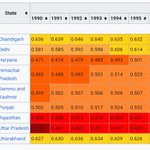
A few years ago it was ~25 % and nothing on ground seems to have changed.
Why so low numbers?
I checked the criterion of the PLFS survey being quoted here:
You are considered "employed" if you worked atleast 1 hour in the past 7 days.
Who works for 1 hour? This is not the US.

JKSA National President Advocate Umar Jamal reacts to J&K’s 9.4% unemployment rate, nearly double the national average of 5.1%.
@ummar_jamal @JKSTUDENTSASSO
41
Kashmiri Apologist retweeted
Mughals ruled India for 300 years without imposing their religion.
In the 1700s, Mughal India accounted for nearly 25% of the global economy.
Their rule helped lay the foundations of a unified India.
Today, Mughal architecture defines India's global image.

ALT Taj Mahal built by Mughal emperor Shah Jahan in 1600s

Meet Dr Mohammad S. Khuroo, a world-renowned Kashmiri doctor and scientist.
He discovered Hepatitis E virus while working in Sopore.
This is the direction Kashmiri academia should have taken.
Instead, among other things, a morbid obsession with government jobs ruined us.
The fact India remains Hindu-majority is testament that Mughals didn't force Islam.
Why so? Islam prohibits it.
Could they? Yes. Mughal was India mighty, accounted for 25% of world GDP.
Example: In Kashmir, commoners embraced Islam 100 years after King Rinchan converted.


4
72
Mughals ruled India for 300 years without imposing their religion.
In the 1700s, Mughal India accounted for nearly 25% of the global economy.
Their rule helped lay the foundations of a unified India.
Today, Mughal architecture defines India's global image.
ALT Taj Mahal built by Mughal emperor Shah Jahan in 1600s


