

We focus on health systems strengthening,research,advocacy,social behaviour change,and clinical trials to improve RMNCAH+N, immunization, PHC service delivery.
Upper Hill, KMA Centre-Nairobi
Joined July 2020
- Tweets1.3K
- Following161
- Followers713
- Likes4.3K




Pinned Tweet
Your next read is here - Keprecon Issue 8 is out
keprecon.org/wp-content/uplo…
From health innovations and evidence to advocacy, policy and research, this issue takes you into the work shaping stronger health systems.
Explore the latest from ALIGN Kenya, efforts to strengthen health products and technologies, the role of advocacy in advancing private-sector health policy, new approaches to hypothermia care, and research into a natural product-based contraceptive.

Innovation is one thing. Making it last is another.
Which health challenges need attention most? Which technologies can address them? And what will it take to make these solutions accessible, affordable and sustainable in the long term?
Answering these questions requires reliable data, clear priorities and a better understanding of the health technology market to guide decisions on what to invest in, adopt and sustain.
Sustainable health innovation is not just about finding solutions today, but ensuring they continue to deliver value for years to come.
#AlignKenya #HealthInnovation #AlignConsortium #HealthInnovation
@MOH_Kenya @KenyaMedics_KMA @MediaCouncilK
@kenyadental @PSofKenya @RuphaKenya @DukeGhic
@ppbkenya @KenyaGovernors @Kmtc_official

Today, we celebrate you and the difference you make in building a healthier nation. Wewe ni #Shujaa
#MashujaaDay2026 #mashujaa #MashujaaDay
#happymashujaaday2026

The ALIGN Kenya project team led by @FredWere14 Were paid a courtesy call on Eng. Anthony Lenaiyara, Chief Executive Officer of the Digital Health Agency (@DHA_Kenya ). The visit aimed to share progress on co-creation of the ALIGN Market Intelligence Hub.
The engagement also focused on strengthening collaboration between Keprecon, DHA and the Ministry of Health to support evidence-based decisions on which health products to prioritise for Kenya’s health system.
The Hub aims to consolidate data on emerging health products, assess their potential impact and alignment with national priorities, and support transparent decision-making on adoption and resource allocation.
Discussions also explored opportunities to align the Market Intelligence Hub with existing government systems, avoid duplication and ensure that the platform complements ongoing efforts to strengthen health systems and advance locally relevant health innovations.
#AlignKenya #HealthInnovation #AlignConsortium #HealthInnovation


A health innovation can be promising, but how do we get it to the people who need it?
It takes reliable evidence to guide decisions, clear priorities to inform planning, and market intelligence to understand which products are needed, who needs them, and how they can be made accessible, affordable and sustainable.
This is what the ALIGN Consortium seeks to achieve: strengthen country-led health innovation by connecting evidence, planning and market insights to help ensure the right innovations reach the right people at the right time.
@MOH_Kenya @KenyaMedics_KMA @MediaCouncilK
@kenyadental @PSofKenya @RuphaKenya @DukeGhic
@ppbkenya @KenyaGovernors @Kmtc_official

KEPRECON retweeted

Murang’a health system shutdown
Govt shuts down Murang’a’s Afya-KE digital health system
Kang’ata says shutdown has disrupted healthcare services
Kang’ata warns patient data may be lost, records inaccessible
#JKLive
KEPRECON retweeted

The survival of mothers and newborns in many parts of the world sometimes feels like a game of Russian Roulette.
We have focused so much on just keeping them alive that we sometimes forget two important things:
1. What morbidities do they end up living with, when they survive?
2. In the quest to keep them alive, do we remember to do so in a manner that retains their dignity, autonomy and confidentiality?
Come let's explore together what a Rights-Based Approach to Accountability for Maternal and Newborn Health needs to look like.
us02web.zoom.us/webinar/regi…
Join this Webinar later today, 1600hrs EAT, as we put our heads together to explore exactly what kind of health women and newborns want. – at Nairobi, Kenya

Local manufacturing plays a vital role in building resilient health systems and supporting access to safe, quality and affordable medicines.
Realising its full potential requires strong procurement systems, accurate forecasting and effective hospital pharmacy management to ensure locally produced medicines move efficiently from production to the point of care.
Aligning local production with efficient distribution and timely allocation of resources strengthens the pharmaceutical value chain and supports better health outcomes.
#AlignKenya #HealthInnovation #AlignConsortium #HealthInnovation
@MOH_Kenya @KenyaMedics_KMA @MediaCouncilK
@kenyadental @PSofKenya @RuphaKenya @DukeGhic
@ppbkenya @KenyaGovernors @Kmtc_official

KEPRECON retweeted

PS Medical Services Dr. Ouma Oluga has called for stronger hospital pharmacy systems to ensure medicines reach patients. While KEMSA’s order fill rate is 90–92%, access to essential medicines remains as low as 51% in some facilities. 1/2

Reliable supply chains, robust quality assurance and sustainable financing play a vital role in ensuring the consistent availability of essential medicines and health products to support quality healthcare delivery.
Strong regulatory frameworks, digital systems and a skilled health workforce further enhance the safety, efficacy and affordability of these products while strengthening accountability across the health sector.
Continued investment in these areas reinforces health system resilience, supports continuity of care and contributes to better health outcomes.
#AlignKenya #HealthInnovation #AlignConsortium #HealthInnovation
@MOH_Kenya @KenyaMedics_KMA @MediaCouncilK
@kenyadental @PSofKenya @RuphaKenya @DukeGhic
@ppbkenya @KenyaGovernors @Kmtc_official

A healthy environment is the foundation of healthy populations. #HappyMazingiraDay #MazingiraDay

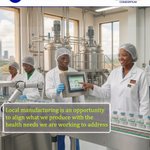
As Kenya works to address its evolving health needs, strengthening local manufacturing of essential medicines, medical devices and other health products and technologies will help build a more responsive and resilient health system.
The focus is not simply on producing more locally, but on building the capacity to develop and manufacture products that respond to Kenya’s health priorities, supported by the right skills, technology, investment, policies and partnerships.
A stronger local manufacturing base will strengthen health security, create jobs, support innovation and reduce reliance on imports.
Local manufacturing is an opportunity to align what we produce with the health needs we are working to address.
#AlignKenya #HealthInnovation #AlignConsortium #HealthInnovation
@MOH_Kenya @KenyaMedics_KMA @MediaCouncilK
@kenyadental @PSofKenya @RuphaKenya @DukeGhic
@ppbkenya @KenyaGovernors @Kmtc_official

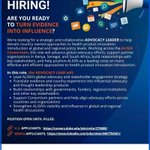
An exciting opportunity to work with the ALIGN Consortium.
The Consortium is looking for an Advocacy Lead to support advocacy, stakeholder engagement and policy influence around country-led health innovation decision-making.
If this sounds like you or someone in your network, this could be a great opportunity to explore.
U.S. applicants, learn more and apply: lnkd.in/eehmC_A2
Kenya applicants, learn more and apply: lnkd.in/eRcfwKHC

This week, we celebrate the people and partnerships whose dedication and expertise strengthen health systems every day.
We appreciate your commitment to excellence and the role you play in building stronger, more responsive health systems that deliver better outcomes for the people we serve.
Keprecon — Health Systems Performance Catalysts.
#happycustomerserviceweek #customerservceweek

What happens when the next TB vaccine arrives—but the evidence needed to make a decision isn’t ready yet?
Because by the time a vaccine is ready, Kenya will need more than the vaccine itself, it will need the evidence and decision-making systems to determine whether, how and when it should be introduced.
That is what the Tuberculosis Integrated Model-Based Evidence and Recommendations (TIMBER) study is working to support: strengthening how Kenya is generating, assessing and communicating evidence including modelled evidence to inform timely, country-led TB vaccine policy decisions.
At the TIMBER inception meeting, experts and partners are coming together to explore what this preparedness should look like for Kenya.
Opening the meeting, Prof. Fred Were emphasized the importance of engaging National Immunisation Technical Advisory Groups (NITAGs) early. With vaccines still in development, Kenya may not have enough local data to answer every question when decisions need to be made.
Dr. Marybeth Maritim, Co-Chair of Kenya National Immunization Technical Advisory Group (KENITAG), highlighted the range of evidence being considered in Kenya’s vaccine decision-making, from disease burden, vaccine safety, efficacy and effectiveness to health-system readiness, financing and programme fit.
Representing the National Vaccines and Immunization Programme (NVIP), Dr. Namu underscored the need to understand how a new TB vaccine will fit within Kenya’s existing immunisation programme, while considering vaccine safety, efficacy and sustainable financing.
TIMBER is bringing together country-specific evidence, modelling, demand research, communication and early NITAG engagement, with country-led co-creation at its core.
The ambition is going beyond preparing for one vaccine: TIMBER is helping Kenya strengthen how emerging evidence is being translated into timely, context-specific policy decisions on TB vaccines and future health innovations.


Turning health innovation into solutions that can last requires more than a good idea. It requires the capacity, systems and investment to take that idea from development to production and practical use.
Local manufacturing provides an important link between innovation and impact. When we strengthen the ability to develop and produce medicines, health technologies, equipment and other essential products locally, we create more opportunities for research and innovation to translate into solutions that respond to our health needs.
This means investing not only in infrastructure and technology, but also in the people, skills, financing and systems that make sustainable production possible. It also creates opportunities for local expertise and enterprise to grow while strengthening health supply chains.
#AlignKenya #HealthInnovation #AlignConsortium #HealthInnovation
@MOH_Kenya @KenyaMedics_KMA @MediaCouncilK
@kenyadental @PSofKenya @RuphaKenya
@DukeGhic @ppbkenya @KenyaGovernors @Kmtc_official

As conversations continue around the efficiency and effectiveness of our health products and technologies introduction regimen, the bigger question is: Are we choosing the right innovations for the right health needs, and can they be sustained?
The ALIGN project is working to answer these questions. ALIGN brings on the table relevant stakeholders to participate in deciding which health innovations to prioritize for introduction into Kenya’s health system. The goal is to embed the use of health data, health technology assessment, and other evidence-based processes in deciding which health innovations to bring into the health system, for whom, and how to sustain their use.
Through ALIGN, we are advocating that the right innovations, solve the right problems, at the right time and cost, and get prioritized for introduction.
#AlignKenya #HealthInnovation #AlignConsortium #HealthInnovation
keprecon.org/advancing-count…

What does a stronger, more resilient health system look like? It looks like making more of what we need, right here at home.
Strengthening local manufacturing means building the capacity to produce essential medicines, health technologies, equipment and supplies within the country.
It is also about investing in the people, skills, technology, financing and systems that support sustainable production. A strong local manufacturing base strengthens supply chains, supports local innovation, creates jobs and contributes to a more resilient health system.
By strengthening local production, we are creating greater opportunities to grow our health sector, support innovation and build a more sustainable future for healthcare.
#AlignKenya #HealthInnovation #AlignConsortium #HealthInnovation
@MOH_Kenya @KenyaMedics_KMA @MediaCouncilK
@kenyadental @PSofKenya @RuphaKenya
@DukeGhic @KEMRI_Wellcome @ppbkenya
@KenyaGovernors @Kmtc_official

We joined the Kenya Healthcare Federation (KHF) @KenyaHealthFed Members' meeting held under the theme “Innovating for Impact: Strengthening Kenya's Private Health Sector through Scalable Health Innovations,” bringing together players across the private health sector market to explore how innovation, investment and stronger systems can shape the future of healthcare.
In his keynote remarks, Dr. Juma Mukhwana, Principal Secretary, State Department for Industry @IndustryKE, challenged the sector to look beyond healthcare as a consumer market and embrace opportunities to produce, add value and manufacture locally.
He emphasised that Kenya’s growing healthcare market presents an opportunity to strengthen local manufacturing of pharmaceuticals, medical devices and other health products, while creating jobs, strengthening health security and reducing dependence on imports.
The conversation also highlighted the need for stronger public-private collaboration, supportive policies, investment and innovative financing to move local manufacturing from ambition to action.
Building on this conversation, Dr. Dan Odallo, representing Keprecon, shared insights on Advancing Country-Led Innovation Introduction through Government Engagement and Evidence (ALIGN) Project.
The ALIGN project seeks to strengthen the systems and decision-making processes that determine how health innovations are prioritised, introduced and ultimately reach the people who need them.
Dr. Odallo expounded for KHF members the whole-of-market concept that intends to institutionalize engagement of private health players including developers, manufacturers, researchers, distributors, professional associations, health providers, regulators, civil society and funders in government-led and data-driven decision-making in Kenya's health innovation landscape.
Keprecon’s partnership with KHF provides a platform for these voices to come together, identify barriers and strengthen the pathways through which innovations move into the health system.
From local manufacturing to better coordination, data, market engagement and regulatory pathways, the discussions reinforced one key message: transforming healthcare requires us to move beyond consuming innovations to creating, introducing and scaling solutions that respond to Kenya's real health needs.


