

Stand up for the dark horses. Hope makes the blood change courses.
Joined January 2024
- Tweets2.1K
- Following0
- Followers115
- Likes6K


Pinned Tweet
You don't have to be stupid to be fooled by psychiatry.
Plenty of smart people have been gullible enough to believe it's a legitimate medical specialty.
But once you see it, you can't unsee it.
You've let a glorified drug dealer play Russian roulette with your neurochemistry.
You're a sinner with a broken brain, but there's Good News!
Big Pharma loves you so much that they sent all these psychiatrists to save you from yourself.
Repent, and you'll be transformed by allowing them to work through you.
The DSM says so!
Drugs work in mysterious ways.
2
30
Great question. I wonder how many people still don't realize that the whole "chemical imbalance" thing is based a disproven hypothesis that turned into highly successful marketing materials used to train the psychiatrists and get people dependent on their drugs.

I have a question for you: If depression is related to a chemical imbalance in the brain and SSRI's are said to fix that imbalance, then why aren't those imbalances physically tested for before getting on an SSRI and then thereafter to prove it worked?
1
27
A retweeted

Hilary Mantel went to her doctor at 19 with pain in her legs and her belly, and within a couple of years she was in a psychiatric clinic, on antipsychotics, being advised to stop writing.
She was a law student from a mill town in Derbyshire, the first in her family at university, sharp and ambitious. The pain had been coming every month since she was 11. Her GP could find nothing, decided it was nerves, and prescribed antidepressants. When those didn't work she was referred to a psychiatrist.
His view was that the trouble was ambition. A girl of her background was straining after too much. He gave her Valium, which made her rage, and when she raged he gave her an antipsychotic.
The antipsychotic gave her akathisia, a side effect in which the body cannot keep still and the mind fills with a horror that has no object. She paced, could not sit, could not read. She said afterwards it was the worst thing that ever happened to her. On the ward it was written down as her illness getting worse, and the dose was reviewed accordingly.
The more she said the problem was in her body, the surer they became it was in her head. She was told that writing was bad for her.
She got herself off the drugs and out of the clinic. A few years later, living in Botswana, she sat down with a medical textbook and worked out the diagnosis herself. She had endometriosis: tissue like the lining of the womb growing through her pelvis and bleeding every month with nowhere to go.
By the time a London surgeon opened her up to confirm it she was 27, and the disease had got so far that he took out her womb, her ovaries and sections of her bowel and bladder. She woke up in the menopause. The hormones she was given afterwards changed her body beyond recognition.
Then she wrote Wolf Hall and Bring Up the Bodies and became the first woman to win the Booker Prize twice.
It took eight years, six doctors and a psychiatric admission to diagnose one of the commonest conditions in women. In the end it was done by the patient, in Africa, with a library book.

Why do these tragedies always involve psych drugs?

A 14-year-old girl shot her mother three times at home. Then she picked up her mom’s phone and texted her stepdad: “Are you almost home, honey?” He walked in 49 minutes later. At trial she was offered a deal for 40 years. She turned it down, and the jury gave her this:
Life in prison. Her name is Carly Gregg, and in August the Mississippi Supreme Court upheld the sentence. Her mother was a teacher, and the whole thing started with something a school friend told her that afternoon:
Carly was hiding weed and secret phones in her bedroom. A few hours later her mother was dead.
On March 19, 2024, in Brandon, Mississippi, Carly took a .357 Magnum from under her parents’ mattress. The home cameras recorded her walking through the house with the gun hidden behind her back. Then three shots.
After that she texted a friend to come over. When her stepdad Heath opened the front door, she started firing. One bullet hit him less than six inches from his face. He wrestled the gun away from her, and she ran out the back door with the friend. Police later found one of the kitchen cameras hidden inside the refrigerator.
In court the prosecutor repeated what Carly said that day: “I put three in my mom and I got three more waiting for my stepdad.” Her lawyers argued that a new antidepressant had pushed her into a mental health crisis. The state’s psychiatrist said she understood exactly what she was doing. The jury found her guilty in about two hours.
In the video below, Carly stands at the podium while the judge reads the verdict: guilty on all three counts. She cries. Less than an hour later the same jury gives her life in prison, and when the judge reads it out she doesn’t cry at all. She just nods.
So people split on this one: is life in prison right for a girl who planned an ambush, faked a text and hid the camera, or should a 14-year-old on brand-new medication get a chance to walk out one day?
13
A retweeted

“In 2026, to publicly doubt that antidepressants work at all is, frankly, embarrassing.”
What exactly do you mean by ‘work’ in this context? That’s a rather important distinction. Do you mean they reduce scores on depression questionnaires, suppress certain emotional responses or make someone feel less distressed? Or do you mean they genuinely restore someone’s ability to experience happiness, love, connection, motivation and a fulfilling life?
If someone takes an antidepressant and becomes so emotionally blunted that they struggle to feel love for their own family, lose their ability to experience joy from music, nature and relationships and feel disconnected from their own identity (arguably some of the most fundamental parts of being human) but simultaneously find themselves less emotionally affected by losing their job or experiencing personal hardship, would you consider that a successful outcome?
We need to move beyond the simplistic argument that because a drug produces a measurable change in certain symptoms it must therefore be working in any meaningful sense.
There’s a world of difference between a statistical improvement on a clinical rating scale and a genuine improvement in someone’s quality of life. We should also be asking how much benefit is attributable to the drug itself, how durable that benefit is, how many people experience little or no meaningful improvement and what adverse effects they’re expected to tolerate.
In 2026, surely the embarrassing position is psychiatry refusing to have a more honest and nuanced discussion about what ‘working’ actually means, who these drugs help, who they harm and what people are expected to sacrifice in the process.
This is exactly the type of neurological activity that "must" be treated with antipsychotics. For her own good, of course.

Taylor Swift says she came up with the idea for her song Elizabeth Taylor while riding in the car with Travis Kelce and ranting about the actress's violet eyes:
Taylor Swift: During the car ride, she went on and on explaining to Travis why she admires Elizabeth Taylor for fighting for artists' rights and keeping her humor and passion for life despite being exploited.
She kept talking about the debate over whether Elizabeth Taylor's eyes were blue or violet, insisting that she thought they were violet.
The moment they arrived home and Travis stepped out of the car, an intrusive melody suddenly popped into her head with the lyrics about crying her eyes violet like Elizabeth Taylor.
She immediately scrambled to open the voice recorder app on her phone to capture the tune, describing moments like that as spontaneous ideas floating down like a cloud that she just has to grab out of nowhere.
16
A retweeted
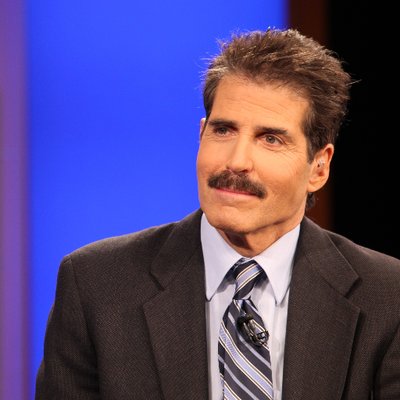
Millions are in therapy. Is that counterproductive?
“The more that you talk about everything that's wrong in your life, the more miserable you're going to be," says psychologist @DrMcFillin.
Stossel TV Fellow @AdamOmaryPhD explores failures of the mental health industry:
A retweeted
In December 1952 a young New Zealand writer was days away from a lobotomy, with her mother's signature already on the consent form. The operation was cancelled only because the hospital superintendent happened to read in his newspaper that her first book had won the country's top literary prize. She had never had the illness they were treating.
Janet Frame was a shy, red-haired teacher's college student from a poor railway family in Otago. In 1945, at 21, she had a breakdown, and within weeks she was committed to Seacliff Mental Hospital outside Dunedin and diagnosed with schizophrenia. She looked the condition up in a textbook and found it described as a slow, incurable deterioration of the mind. She spent most of the next eight years being proved right by the people treating her.
Over those years she was given more than 200 rounds of electroconvulsive therapy, unmodified, with no anaesthetic and no muscle relaxant. She said later that it shredded her memory. In between she wrote. A friend gathered her stories and got them published in 1951, as The Lagoon, while she was still a patient.
By late 1952 the doctors had decided the next step was a prefrontal leucotomy, cutting the connections at the front of her brain to make her calmer. Her mother, told it was for the best, signed. Janet counted down the days.
Then the superintendent, Dr Geoffrey Blake-Palmer, came onto the ward holding a newspaper. The Lagoon had won the Hubert Church Memorial Award. He told her he had decided she should stay as she was. The operation was cancelled.
In 1957, at the Maudsley Hospital in London, a team of psychiatrists examined her properly and told her she had never had schizophrenia. They said she should never have been put in a mental hospital at all, and that most of what was wrong with her by then had been caused by her time on the wards.
She went on to become New Zealand's greatest novelist. Her autobiography became An Angel at My Table, Jane Campion's film. She received the Order of New Zealand, the country's highest honour, and was talked about for the Nobel Prize. She died in 2004, at 79, with her mind intact.
The women in the beds around her at Seacliff had no book in the newspaper.

This is a shockingly accurate description of psychiatry (no pun intended)

Holy F-ing shit. You simply have to listen to this.
THIS is an absolute bombshell!
This is EXACTLY the world we live in today. She nailed it.
Hannah Arend: They Don't Need You to Believe (1967)
Readers added context they thought people might want to know
This video is AI-generated fictional dramatization, not a real 1967 recording or direct quote from Hannah Arendt. Its creator describes the script as "inspired by" her book but "a dramatized synthesis in her voice — not a direct quotation" and "fictional, AI-generated."
youtube.com/watch?v=WQmpLq…
12
A retweeted

"For decades, people have been told that depression is a biological disorder and that antidepressants 'work”' and 'save lives', as if these are indisputable facts. They are not. They are part of a myth – one that conveniently supports the interests of the multibillion-dollar pharmaceutical industry.
Since I first became a psychiatrist in the early 1990s, there has been a more than fourfold increase in antidepressant use. Currently, 96 million prescriptions are issued each year. In July, new figures showed the number of people taking antidepressants has risen from 8.9 million last year to 9.1 million users. That’s about 19 per cent of the adult population.
I don’t just think antidepressants are overprescribed, I’m not convinced they’re useful at all. Antidepressants don’t rectify a chemical imbalance or any other biological process, as people were led to believe; they numb emotions. The question is, is this useful, and how harmful are they?
When I was working as a junior doctor, seeing people with depression, I didn’t understand why people thought antidepressants were effective. Sometimes people got better when they started antidepressants, of course, but usually, other things in their lives had changed – they got a new job or patched up a broken relationship – which explained their improvement just as convincingly. I remember mentioning this to my senior registrar. His reply came as a shock. 'Yes, of course,' he said. 'Antidepressants are just active placebos.' It was a light bulb moment for me."
#MentalHealth #antidepressants
buff.ly/Zroe4CG

A retweeted

Hayatın zor olmasından dolayı mutsuz olduğunuzu düşünüyorsunuz.
Yanlış..
Mutsuzsunuz çünkü hala bebek seviyesindeki bencillikle yetişkin seviyesindeki beklentilerle hareket ediyorsunuz.
Mutluluk, şükran günlüklerinde veya olumlu düşünmede bulunmaz.
Mutluluk, yetenek yığınınız ile bencil olma ihtiyacınız arasındaki TERS ilişkide bulunur.
Doğduğunuzda %100 bencil, %0 yeteneklisiniz. Mükemmel denge. Toplum sizden hiçbir şey beklemiyor.
Kronolojik olarak yaşlanırlar ama yetenek açısından değil. 30, 40, 50 yaşına gelirler... hala kıtlık içinde hareket ederler, hala hayatta kalma modundadırlar, hala verdiklerinden daha fazlasını alırlar.
Hissettiğiniz stres mi?
Bu, bulunduğunuz yer (yüksek bencillik, düşük yetenek) ile gelişim eğrisinde olmanız gereken yer arasındaki bilişsel uyumsuzluktur.
Anlam yolculuğunuz matematikseldir:
Yetenekleri biriktirin → Kişisel kıtlığı ortadan kaldırın → Bencil ihtiyaçları azaltın → Dışa dönün → Anlamı deneyimleyin
Eğrinin altında kaldığınız her an... yüksek bencillik, düşük yetenek... psikolojik borç içindesiniz. Faiz, stres, kaygı, boşluk olarak birikir.
Çözüm "daha az bencil olmak" değil. Bu erken bir ahlak anlayışı.
Çözüm, bencillik isteğe bağlı, gerekli olmayan bir hale gelene kadar yetenek edinimi yoluyla GÜÇ İNŞA ETMEKTİR.
Ancak o zaman mutluluk erişilebilir hale gelir. Ancak o zaman anlam ortaya çıkar.
İrade gücüyle bencilliği aşamazsınız.
Bencilliği yetkinlikle aşarsınız.
A retweeted

Absolutely anything can be reframed and the way psych does it solidifies the assertion that it is primarily carceral, not care. It serves institutions and people of power, not the individual. In many cases the systems and people it serves are very ones that harmed the individual in the first place.
Forcing people’s experiences of themselves, their relationships, and the world into a pathologised institutional box is by its very definition dehumanising and epistemically violent. It feels violating because it is. Then they can pathologise the response of feeling violated too. Humanity is stripped, over and over again. A Russian doll of degradation.
For an industry that declares people delusional, it has very little grounding in reality itself, and simultaneously seems unable to recognise this. Or if it does, it is wilful blindness in service of power.
#antipsych

It’s getting harder and harder to take anything mental health professionals say at face value when the whole culture feels so toxic it starts reminding you of a traumatic upbringing. Sessions turn manipulative fast, select words to misdirect, asking direct questions about trust hoping to pathologise the answer, and the basic wish to just get discharged with liberty restored, is met with framed concern. When acting like wanting respect for who you are and what you’ve achieved is somehow a symptom is met with surprise, you really do question agendas. Having faith that professional standards are the main principle results in confusion as to why power corrupts in the way it does. The disorientation this causes is real; you’re trapped listening to words you can’t trust while everything about the place works against basic dignity, while being simultaneously created to heal. The paradox of wellness combined with severe illness is quite the argument against the reliability of psychiatry. It’s madness.
A retweeted

This 30-year-old woman has spent almost her entire life on pharmaceutical drugs.
“My life was stolen from me.”
“My entire brain development happened under the influence of psychiatric drugs.”
“I don’t know who I am underneath it all … ”
And she’s not alone.
Gansky: “We’re conducting a mass experiment on children’s developing brains.”
“With little understanding of the long-term consequences.”
Alex Clark: “You’ve never been without pills?”
Gansky: “No.”
And her parents were never told the risks.
Clark: “At any point did doctors sit your parents down and say, ‘Here are the risks and side effects that Danielle could experience going on these meds?’”
Gansky: “My parents were never given the information needed to make a truly informed decision on my behalf.”
“No one told my parents that the long-term effects of antidepressants on the developing brain had never been properly studied.”
“I often wonder a lot who I might have been without them.”
@DanielleGansky @Realalexclark
A retweeted

"She had been prescribed a variety of drugs following her psychiatric care.
In a statement read out in court, Richard (her father) said that prior to her death 'she was having bad reactions to medications which she stopped weeks previously.'"
Very sad.
dailymail.com/news/article-1…

A retweeted

"A fifth of the population is on a psych med, and we can't really explain how they actually work. There are a bunch of side effects—maybe even permanent damage caused by them. Why do they continue to be distributed, dished out like candies?"
@elliotbewick summarizes the problem.
A retweeted

Most people think once the spiral starts, you’re just along for the ride.
But the spiral is not in charge of you. You are in charge of the spiral.
I’ve spent three decades watching what actually changes a brain under pressure, and I’ve had to stop my own spirals more times than I can count.
Here are the top four things I've learned that help when my thoughts start spiraling:
1. This thought is not me.
The moment you say that out loud, you create distance.
Your brain can’t keep running the same loop at full speed once you refuse to fuse with it.
2. Most of what I’m thinking right now is not true.
Neuroscience is clear: the large majority of automatic thoughts in a spiral are distortions.
You don’t have to debate every one. You just have to stop treating them as facts.
3. I can choose a different command.
Your mind decides. Your brain follows.
One spoken sentence is enough to start redirecting the circuitry.
4. One true sentence is enough to start.
Don’t try to fix the whole spiral. Just pick one true sentence, scripture, a fact, or a simple command, and say it out loud.
That’s the incision. Everything else follows from there.
This isn’t positive thinking.
It’s taking the thought captive and giving your brain a different command.
Romans 12:2 has been saying this longer than neuroscience has.
Hit that follow button, and together we will build brains that know how to stop the spiral.
Save this for the next time it happens to you, and share with a friend who needs help.
Click the link in my bio to learn more about self-brain surgery.
A retweeted

A Channel 4 documentary, and particularly the reactions to is, revealed that ADHD is a bluff. The emperor is naked. You cannot “have” ADHD, ADHD cannot “cause” or “explain” anything, it is just a name for certain behaviours many of us have, it is not a “neurodevelopmental disorder,” and the latest fad where people say, “I am neurodiverse!”, is bullshit because neurodiversity only means that we are all different, unless we are identical twins.

Psychiatrization is like this except you've got someone in a white coat telling you the yellow pill is correcting your chemical imbalance and diagnosing your drug withdrawal as worsening mental illness all along the way.

A retweeted

Tucker Carlson asked the question you're "not allowed" to ask: why do so many school shooters turn out to be on psych drugs?
His guest's answer: no conspiracy theory needed. It's printed on the drug labels. Stimulants, antipsychotics like Abilify and antidepressants all list aggression as a side effect.
"If you're putting like 15% of the population on these drugs, rare side effects are going to happen." 🧵
A retweeted
This 23-year-old just exposed a massive conspiracy by the FDA and Eli Lilly to cover up the truth about SSRIs.
“People have been screaming into the void about this.”
“People have ended their lives.”
“No one’s listening to us.”
Bookmark this.
Lauren Friedman revealed that Zoloft left her permanently unable to feel love, emotional connection, or sexual pleasure.
And she is far from alone.
“There has been seemingly an intentional cover-up by pharmaceutical industry.”
“Prozac … was interfering with normal sexual development for kids who were prescribed these at a young age.”
European regulators reported this to Eli Lilly.
“Eli Lilly responded … ‘We will run clinical trials to see if this is true or not, we just need approval of the drug first in childhood use.’”
“They approved it.”
“The tests were never done.”
“And then just still gave it to children.”
“The FDA has known about this for decades.”
“Senator Chuck Grassley … wrote to the FDA.”
“The FDA responded and said that there isn’t sufficient evidence to suggest that this is because of the SSRI.”
“In 2018 … there was a petition that was submitted to the FDA begging the FDA to add this to labels.”
“The FDA, they were supposed to respond in … 180 days.”
“They never did.”
“2024, there was a lawsuit against the FDA for ignoring this.”
“They threw it out on a technicality.”
“One of the really sad parts about this is a lot of the young people who signed the petition in 2018 went on to kill themselves.”
“A young woman … wrote a really heartfelt note to the FDA saying, ‘I feel like my human rights have been violated.’”
“‘I can no longer feel joy or love, have sex.’”
“‘My life has been destroyed.’”
“She ended up killing herself shortly after.”
“It should be pretty obvious that living without the ability to feel pleasure sexually and emotionally, or feel love, is unlivable.”
“We’re put on Earth to experience love and connection.”
“No one’s looking into this.”
“For me, had the label been updated in 2018, I would have never taken it.”
“I took it in 2022.”
@lololizzle @theisabelb