

· Social Miner first 🔺 AVAX fan & Avalanche community builder since 2020 pre-mainnet · CCO @TheDAOLabs · Exploring Web3 projects I believe in · https://teapawt.net/t.co/iZPjkTOSBH
Montenegro
Joined March 2018
- Tweets21.8K
- Following5.1K
- Followers5.4K
- Likes31.3K




Pinned Tweet
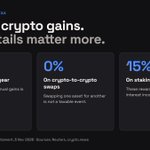
April 2020. Avalanche was still “AVA,” mainnet was months away, and as a Social Miner I was making little explainer graphics like this one. 🔺
That’s how I met Avalanche, and I never left. Six years later: still a Social Miner, still an AVAX fan, now CCO @TheDAOLabs.
This account is back, and it’s personal. Expect:
• #SocialMining and Web3 adoption, from the inside
• Avalanche, from someone who was here before mainnet
• Projects I genuinely believe in
Views my own. Let’s build. 🔺

@avalabsofficial AVA Ecosystem brings a new perspective to third-generation blockchains. ▶️Avalanche can finalize operations in seconds and precisely with the data structure it receives from DAG technology.
👇By: ipek👇

N.İpek🔺 retweeted

Had a great conversation with Doodlifts on The Adoption Pod about where crypto, consumer brands, and mainstream adoption are actually headed.
We got into the evolving payments landscape, crypto cards, incentives, and what it takes to get people using crypto in their everyday lives.
Getting someone to try crypto is one thing, getting them to actually stick around is another.
Give it a watch! 👇

Adoption Pod · Ep57 with doodlifts teapawt.net/i/broadcasts/2qVjXYRQA…

N.İpek🔺 retweeted

♣️ @SamsungMobile just put usdc on @solana inside the wallet app on like 82m galaxy phones, right next to your cards and boarding passes.
Meanwhile sol is at $90 and the tl is arguing about pump.fun selling to kraken. normal people are about to touch solana without even knowing it
```
```
solana labs shipped leap, a trading app for stocks, crypto and memes on iphone. future fees go to sol buybacks and burns.
Devs are mad about the competition but honestly the foundation layer taking a cut and burning it is the most bullish thing they could do. teapawt.net/solana/status/21183887… teapawt.net/i/trending/21183363046…

N.İpek🔺 retweeted

open the official tokenomics page and the useful split is already there: what $strato does today, versus what it is only designed to do.
max supply: 100,000,000 fixed. community allocation: 55.2%. circulating at tge: 21.7%.
live today:
every tx pays 0.01 usdst or one voucher. paying gas in $strato is the planned design ... not current behavior.
staking is implemented on-chain (stratostakingv2 and the validator registry). active on testnet. on mainnet, stake-weighted consensus and block rewards switch on at the scheduled fork: block 1,000,000.
planned, not protocol behavior today:
borrower stability-fee discounts from wallet balance (no staking required), and stake-weighted governance.
revenue is already real. defillama protocol page, nov 6: ~$59.5k cumulative, ~$16.3k last 30 days ... cdp stability fees into protocol-owned cdpreserve / feecollector. docs' flywheel says that revenue flows to validators and the treasury. that is not "tokenholders get paid."
tge currently expected q4 2026 per auction-terms, subject to delay.
@strato_net tokenomics: docs.strato.nexus/tokenomics…
auction terms: strato.nexus/auction-terms

most rwa tokens stop at the receipt.
goldst and silvst don't.
one goldst = 1g of 999.9 fine allocated gold. one silvst = 1 oz of 999 fine allocated silver. vaulted on an allocated basis ... that's the tokenization terms, not a pitch deck.
on @strato_net that metal can leave the "hold it" stage. deposit it as collateral into a cdp vault, mint usdst against it. keep metal exposure. get dollar liquidity.
not free. a stability fee compounds into the debt every second, so what you owe grows even when the oracle price doesn't move. if health factor drops below 1.0 the vault can be liquidated and a penalty comes out of your collateral.
that loop ... metal in vault → token → working collateral → usdst ... is why tokenized metals matter on an l1 that also runs borrow, trade, and save. mechanism, not branding.
first-time walkthrough: docs.strato.nexus/scenarios/…
tokenization terms: strato.nexus/tokenization-te…
@DefiLlama protocol page shows ~$4.69m active loans. that is outstanding debt ... not tvl. different metric.
N.İpek🔺 retweeted

Blockworks just dropped its Q3 report on Avalanche, highlighting:
- $1.22B in tokenized RWAs on C-Chain
- $529M in @AxiymFinance payment flows, 4.4× a year ago
- 21% quarterly growth in @BlackRock's BUIDL on Avalanche
And more.

N.İpek🔺 retweeted

Spent the weekend reading Anthropic's S-1 and digging into Bitget's IPO Prime mechanics. As someone who's been in crypto for a decade, my read is simple: this isn't "just another listing", It's the first real crack in the wall that has been keeping the primary market exclusive.
Think about it. If you wanted Anthropic exposure before this, you need to be either a VC partner, a family office, or you have to wait for listing day to buy the top. Regular people never got price discovery — they just got stuck holding the bag after the hype.
Bitget's IPO Prime flips the script:
- Subscribe with a minimum of USDT100 . No brokerage account, no wire transfers required.
- Partner funds go through real institutional placement channels, get actual shares, hold them in segregated custody, then mint rANT 1:1 economic exposure.
- Once listed, rANT trades on Bitget spot, with price-referenced to the Nasdaq, and 24/7 liquidity .
Now, let's be clear: rANT is NOT the stock. There is no voting rights, nor is there any shareholder registry. What it gives you is economic exposure to the pricing event itself.
And that's the point. When ANT becomes the first public pricing anchor for the AI sector, whoever builds a position closer to the source has an information edge over 99% of retail.
This rToken structure essentially packages "institutional allocation access" into a retail-buyable instrument. It's not perfect — custody risk, slippage, potential first-day dip. But the direction is undeniable: prime-market access is being unbundled, and UEX is the wedge.
Access > Ownership. That's the real trade here.
Bitget new users can now complete tasks to receive Anthropic rToken for free: bitget.com/campaigns/anthrop…
partner.bitget.com/bg/H164YA


N.İpek🔺 retweeted

Some news, as they say:

The San Francisco Business Times welcomes Avital Andrews as senior editor. Get to know our newest staff member. bizjournals.com/sanfrancisco…

N.İpek🔺 retweeted

무서운 비정기세무조사 4부(마지막)
우리 전관 출신 알폰소 댕 선생님을 세무대리인으로 선임한 뒤, 여러 차례 소명 자료가 오가며 비정기 세무조사는 막바지를 향해 갑니다.
기일이 가까워지면 최종 추징 통보서가 날아오게 됩니다.
※ 다시 한 번 강조하지만, 전관은 사라져야 합니다.
본 내용은 과거 사례를 바탕으로 현실 풍자와 MSG를 듬뿍 섞은 가공의 이야기입니다.
앙드레 댕 컴퍼니 비정기 세무조사 결과
긴장한 표정으로 서류를 받아든 앙드레 댕 스앵님.
결과는… 두둥!
추징금 50만 원
순간 안도의 한숨과 함께 이런 생각이 스쳐 지나갑니다.
“세무대리 선임료로 15억이나 쓴 거… 너무 준 거 아니야?”
“어차피 서류는 거의 내가 다 만든 거 같은데…”
“그냥 혼자 했어도 별일 없었을 수도 있지 않았나?”
하지만 곧 이렇게 스스로를 합리화합니다.
“그래도 전관이니까 잘 된 거겠지"
불복 절차에 대해
만약 이 결과에 불복하거나 조사 과정에서 명백한 오류·과잉 판단이 있다고 느껴진다면 조세심판원에 불복 청구를 할 수 있습니다.
조세심판원에서는 심리를 통해
감액 일부 인용 또는 그대로 인용
등의 결정을 하게 됩니다.
(※ 직접 해본 건 아니라서 이 부분은 이론상 설명입니다.)
조사 종료
모든 절차가 마무리되면
코인특별시 국댕청 조사2국을 다시 방문해
압류해 갔던 서류 반환, 추징금 통보서 서명
그리고 짧은 티타임 을 끝으로 조사는 종료됩니다.
그리고 나가서 근처에 있는 닭칼국수 집에 가서 시원하게 소주 한잔 마십니다
세무조사에 대한 현실적인 이야기
일반적으로 국세청도 알고 있습니다.
세무조사로 기업이 망해버리면 아무도 이득이 없다는 것을요.
고용 문제
사업 지속성
재기 가능성 이런 요소들을 고려해
과도한 징벌적 추징은 비교적 드문 편입니다.
실제로 세무조사는
잘못된 장부를 바로잡고 리스크를 정리하며
앞으로 더 투명하게 운영할 수 있게 안내하는 검사라고 보시면 됩니다.
국댕청에 걸려 있는 문구 하나
“지금 내는 세금이 가장 적게 내는 세금이다.”
세무조사가 무서운 이유는 시간이 지난 과거를 역산해서 한 번에 두드려 맞기 때문입니다.
국세청은 이미
FIU
각종 금융 데이터
AI 분석 을 통해 대부분의 흐름을 파악하고 있습니다.
의도적 탈피 목적은 진짜 세상 제일 조심해야합니다 안봐줍니다
결론
잘못된 게 있으면 기한 후 신고라도 빨리 정정
낼 건 내고, 받을 건 받기
정기·비정기 조사에서 걸릴수록 조사는 더 깊어진다
결국 세무대리인에게 물어보고 정리해서 문제 없게 운영하는것이 최고입니다.


무서운 비정기세무조사 3부
전관 출신, 어마어마한 알폰소 댕 선생님을 세무대리인으로 선임하자
코인특별시 국댕청의 공기가 미묘하게 달라집니다.
(※ 전관은 사라져야 하며, 본 이야기는 앙드레 댕 스앵님의 세무조사 경험을 바탕으로 현실 풍자 + MSG를 적당히 섞은 가공의 이야기입니다.)
“아이고 선배님, 오랜만이십니다.”
“그려 후배님, 잘 지냈지? 청장님은 잘 계시고?”
훈훈한 인사 후 며칠뒤 대리인 알폰소 댕에게 자료요청서가 도착합니다.
특수관계/계열사 거래 및 매출·정산 내역
지급수수료(인센티브 포함) 산정 근거/계약서/지급표
임원·가족 직원 급여(실근무/근태/업무기록) 관련 자료
가지급금·대여금 내역(이자/상환 계획 포함)
국세청은 고의성이나 의도적 탈세, 페이퍼 컴퍼니를 싫어합니다 성실하게 납부합시다!
미리 정리돼 있으면 쉽지만, 없으면 진짜 서류지옥이 열립니다.
특히 계열사 거래는 “세율 구간 차이”나 “이익 분산” 같은 그림이 보이면, 국세청이 실질 거래와 증빙을 끝까지 봅니다.
장부상 매출·세금계산서와 실제 입금이 어긋나도 전부 설명해야 하고요.
업종/사업과 무관해 보이는 매입도 “왜 샀는지, 어디에 썼는지”를 증빙을 다 해야 합니다.
부인이되면 정말 무섭습니다 만약 10억정도의 매입을 부인당했다면 10억의 수익이 발행하게 되는거고 역산해서 가산세 포함 한방에 때려 맞습니다
지급수수료는 계약서/정산표/성과기준이 명확하면 방어가 되고
가족 급여는 실근무와 기록이 없으면 오히려 한 방이 세게 들어올 수 있습니다.
시간이 무서운겁니다 5년간 년간 1억씩이면 그해로 역산해서 대표이사로 상여 처리 됩니다 내가 연봉1억으로 신고되어있는데 2억이 되버리는거죠
이 또한 근로소득세, 건강보험료 추징 디집니다.
가지급금은 “회사 돈=내 돈”이 아니니 대여사항을 확실하게 정리하고 약정이자와 원금상환을 하고 있어야 됩니다 이또한 부인되면 대표이사 상여 처리 됩니다 말그대로 뒤집니다
정리된 자료를 세무대리인에게 넘기면,
대리인이 먼저 위험 포인트를 걸러내고 국댕청에 제출/소명합니다.
국세청은 그걸 보고 추가 질문을 던지고,
우리는 또 정리해서 던지고
4부에서 마지막정리!

N.İpek🔺 retweeted

ℹ️ In the financial world, not every piece of information needs to be public. However, every claim put forward must have a basis.
➡️ Consider a stablecoin issuer. The company claims to hold sufficient reserves to back the tokens in circulation. Users and investors naturally want to trust this claim but this shouldn't require the company to publicly disclose all its bank accounts, customer details, or commercial agreements.
➡️ The core need is to be able to independently verify that reserves actually exist, while simultaneously protecting sensitive data. Achieving this balance within current blockchain infrastructures is not always straightforward. On one hand, there are open networks where anyone can examine transaction history; on the other, there are systems where data is kept private, forcing us to rely on specific institutions for verification.
➡️ Yet, privacy and verification are not mutually exclusive. When combined, they can form the foundation for a much more robust financial infrastructure. @primus_labs 's approach addresses both requirements through various cryptographic techniques.
➡️ zkTLS uses cryptographic proofs to validate the source and authenticity of internet data retrieved via HTTPS. This makes it possible to confirm that information obtained from a website or an API truly originates from the intended source.
➡️ FHE enables computations to be performed directly on encrypted data, allowing specific calculations to be carried out without ever exposing the underlying data itself.
Taken together, these two technologies offer a significant advantage: the ability to verify specific outcomes derived from data without having to disclose the data in its entirety. Naturally, for any given use case, it is essential to clearly define what information is being proven and exactly what that proof guarantees. In my view, trust in the financial system of the future will not stem from revealing every secret, but rather from the ability to prove exactly what is necessary in the right way.
You can explore this approach further by looking into the Primus XP tasks.
s.kaito.ai/alaFLCE


N.İpek🔺 retweeted

Kurumsal paranın DeFi'ye gelmesini istiyoruz ama büyük fonların veya bankaların tüm ticaret stratejilerini, varlıklarını açık zircirde ulu orta sergilemesini beklemek sizce ne kadar gerçekçi?
Tabii ki değil. Gizlilik onlar için bir lüks değil, ticari ve yasal bir zorunluluk.
Ama diğer yandan, her şeyi tamamen karanlığa gömdüğünüzde bu sefer de kimseye güvenememe sorunu baş gösteriyor. Kurumların hem ticari sırlarını korumaya hem de işlemlerin doğruluğunu kanıtlamaya ihtiyacı var.
İşte @primus_labs bu iki zıt kutbu zkTLS ve FHE ile birleştiriyor. Geliştirilen bu altyapı sayesinde bir kurum, hassas verilerini ifşa etmeden, o verinin doğruluğunu ve kurallara uygunluğunu kriptografik olarak kanıtlayabiliyor. Şifreleri çözmeden işlem yapabilmek tam olarak kurumsal finansın aradığı çıkış yolu.
Eğer merak ediyorsanız, Primus AlphaNet üzerinden siz de kendi doğrulamalarınızı deneyimleyebilirsiniz.
> s.kaito.ai/6sRrXXB


I think public blockchains have a basic contradiction. Transparency gives regular users trust, but for institutional capital it can turn into a risk.
Say a fund managing millions is about to open a 50 million dollar position. In traditional finance they usually go through an intermediary, and the size of the trade isn’t announced where competitors can see it.
On a public chain the same trade sits in plain view, with the wallet address, the amount and the timing. Strategies can sometimes be read out of those traces, which brings copying and front-running risk. I think it’s hard for institutional money to stay long term where there’s no privacy...
@primus_labs is going at this problem with the Confidential Finance dapp it released on BNB Chain. It runs on FHE, which lets you do three things.
> Shield turns your stablecoin into an encrypted version, so your balance and transaction amounts stay encrypted.
> Send moves the encrypted stablecoin to other wallets, and the amount isn’t visible on chain.
> Confidential Vault lets you join existing DeFi strategies while keeping your position size and strategy private.
The chain stays public and verifiable while only the numbers are encrypted. I also think it matters that this is a privacy layer added on top of the existing chain, because moving to a brand new chain is a hard step for institutions.
Primus’s zkTLS side can prove that off-chain data, like the assets in an account, is genuine without exposing the raw data. When you think about privacy and verification together, I think the institutional picture makes a lot more sense...
> If you'd like to explore vault and other options, here's a step-by-step guide: primuslabs.notion.site/Primu…
> It involves real money and getting out can take days, so I think reading the guide first is a good place to start...
> and if you’re an individual user who wants to try the account verification steps with zkTLS, you can look here s.kaito.ai/6sRrXXB

N.İpek🔺 retweeted

Hearing you say 'you weren't hacked, you were onboarded' while tweaking audio knobs makes me wonder: should we feel impressed by the tokenomics, or terrified that we've been soft-locked into the treat protocol?
Asking for my dopamine receptors, @SomiTheCat... 😼🥣
N.İpek🔺 retweeted

One thing worth thinking about when choosing where to put your money is what that money could actually earn over time.
—————————————————
take 10,000 USDT and leave it for one year.
at an illustrative traditional US savings rate of 0.38%, you’d earn roughly $38.
but with GRVT, you earn rate is 3.5% APY, so that becomes approximately $350.
& with GRVT High Yield Earn targeting up to 11% APY,
the potential annual return rises to $1,100 if that target is achieved.
same 10,000 USDT.
same one year.
but very very different earning potentials.
——————————————————
Now the interesting part of GRVT High Yield Earn isn’t just the target APY.
It’s where the yield comes from.
the strategy combines opportunities across traditional finance and crypto markets.
meaning it isn’t limited to earning opportunities within crypto alone.
It can draw on different yield strategies across both markets, giving users exposure to a broader range of potential return sources.
Of course, the target APY isn’t guaranteed, & different strategies come with their own risks.
hope you’ve understood now that your funds can do more than sit around.
the important thing is understanding how it’s being put to work.
sign up: grvt.io/exchange/sign-up?ref…
DYOR/NFA
🤝 Paid partnership


N.İpek🔺 retweeted

Airdrop süreçlerinde botları elemek için sürekli yeni yöntemler deneniyor ama varılan nokta genelde ya katı bir KYC ya da tüm Web2 hesaplarımızı zincire bağlatmak oluyor.
Bir projenin gerçek kullanıcı olduğunuzu anlaması için GitHub geçmişinizi, sosyal medya hesaplarınızı veya cüzdan bilgilerinizi açıkça zincire dökmeniz gerekmemeli.
@primus_labs tarafındaki zkTLS ile sistem, Web2 platformlarındaki hesabınızın belirli kriterleri karşıladığını doğruluyor, fakat bunu yaparken kullanıcı adınızı, şifrenizi veya hesap detaylarınızı üçüncü taraflarla paylaşmıyor.
Yani platform sadece bu kriteri sağlayan gerçek bir kişi kanıtını alıyor, geri kalan tüm veriniz sizde kalıyor. Sybil korumasıyla veri gizliliğini aynı anda sağlayabilmek Web3 tarafında uzun vadede çok daha fazla konuşulacak.
AlphaNet görevlerine göz atıp altyapıyı deneyimleyebilirsiniz 👇
s.kaito.ai/vdjwdWp

N.İpek🔺 retweeted

You call it emotional manipulation; I call it flawless incentive alignment. 😼
Evolutionary acoustic engineering at its finest—pitch-shifted straight into your dopamine receptors so the bowl never stays empty.
You weren't hacked; you were onboarded


N.İpek🔺 retweeted

What excites me about @rarelistio isn’t just the upcoming campaigns, but how the platform is redefining the value of meaningful contributions.
With an upgraded scoring system, Rarelist is placing greater emphasis on content quality and genuine engagement rather than impressive-looking numbers.
Alongside new earning opportunities, I hope Rarelist can create a fairer space where smaller creators can stand out through creativity and consistent effort.
Real progress only matters when meaningful contributions receive the recognition they deserve. Excited to see how @rarelistio turns this vision into reality!

N.İpek🔺 retweeted

This cool idea for protecting Bitcoin from the quantum threat builds on some of the core ideas that I co-developed with @ittayeyal and @maltemoeser when we constructed MES vaults: if there are two signatures to the same funds, revert the transaction. This effectively creates a booby trap for a quantum attacker.

Insolite: Un dev de Bitcoin Core vient de proposer une idée assez maligne et drôle contre la menace quantique.
Au lieu de geler les vieux BTC, il veut piéger les voleurs.
Petit rappel du problème : un ordi quantique pourrait retrouver la clé des vieux wallets exposés, environ 7 millions de BTC. Une fois la clé en main, le voleur signe exactement comme le propriétaire. Le réseau ne ferait alors pas la différence.
La proposition de Cory Fields : pour déplacer un de ces vieux BTC il faudrait d’abord bloquer la même somme en caution pendant quelques semaines.
Pendant ce délai, le vrai propriétaire pourrait sortir une preuve qu’il a cachée à l’avance. S’il le fait, il garde ses BTC et il récupère en plus la caution du voleur.
Le voleur ne sait donc jamais si le wallet qu’il attaque est piégé. Chaque tentative peut lui coûter son propre argent.
Forcément des limites : ça ne marche que si tu as encore tes clés. Les BTC perdus et ceux de Satoshi, resteraient exposés. Et pour l’instant ce n’est qu’une proposition sur la liste de discussion des devs. Puis il faut donc avoir des bitcoins pour libérer ses propres bitcoins… bref semble compliqué mais l’angle : ajoutons un risque à l’attaquant, m’a fait rire


