

A preprint highlights service run by the biological community and supported by The Company of Biologists
Cambridge, England
Joined December 2017
- Tweets4.4K
- Following931
- Followers7.4K
- Likes5.5K




preLights retweeted

(1/10) Thrilled to share new preprint led by Jamie: biorxiv.org/content/10.64898…
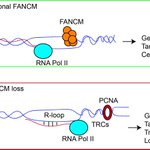
Q: How does transcription affect 3D genome and insulation boundaries?
A:
- Cohesin-independent insulation via gene-body decompaction.
- Cohesin-dependent insulation via RNA Pol II extrusion barrier.

preLights retweeted

Early-career researchers can apply for a funded place at one of our Workshops. This is a great opportunity that could enhance your career in various ways. Watch the video to hear from some of our previous attendees on how they found the experience.
youtu.be/OnXqz9xMzKo?si=t5X1…

preLights retweeted

Is losing a gene simply the opposite of gaining it? In the developing human brain, often not.
New preprint: we simulated knockout and overexpression of 14,044 genes in a model of human brain development and followed where each cell ended up. 🧵
biorxiv.org/content/10.64898…

preLights retweeted

Preprint! Can a blood draw tell you which (non-malignant) mutant clones are expanding in your body? Mutant clones shape disease, but internal organs are difficult to sample at scale. We teamed with @landau_lab to look for somatic mutations in the plasma. biorxiv.org/content/10.64898…

preLights retweeted

🧠 What if we've been missing how brain tumours survive treatment?
Excited to share our new preprint! We mapped brain tumours in 3D and discovered hidden metabolic ecosystems that change after therapy.
🎥 Take a look!
📄 doi.org/10.64898/2026.11.15.…
🧵👇
preLights retweeted

Excited to share our new preprint, available here! doi.org/10.64898/2026.11.17.…
Watch collective mechanochemical ERK waves emerge in an epithelial tissue via cell competition.
What triggers this transition, and what does it trigger?
Collab with @EdouardHannezo and @OMDrozdowski
preLights retweeted
Don't miss the 22 November deadline to join the @preLights team

@preLights is looking for early-career researchers to join the preLights community as preLighters. Help uncover exciting preprints, engage with authors and contribute to scientific discussion.
Interested? Apply by 22 November
prelights.biologists.com/new…

ALT Become a preLighter Are you passionate about preprints and enjoying writing and communicating science? Apply to join the team
preLights retweeted

Our latest #preprint list is up on FocalPlane. This week we focus on research using #microscopy to answer questions in #biology.
Let us know if you have any recommendations for our list.
focalplane.biologists.com/20…

preLights retweeted

My new #prelights #article about #ant #locomotion
#Photo: © #StefanFWirth, #Formica #fusca, Berlin, 2025


Ants: efficient and cooperative walkers with a striking energy balance 🐜
@wirthstef: the authors...reveal that ant locomotion is far from trivial; rather, it is highly complex
#preprint Alexandre Casadei-Ferreira @ale_cferreira & David Labonte
#preLight⬇️
prelights.biologists.com/hig…

preLights retweeted

1/7 To distinguish transcriptionally similar progenitors in the early embryo, spatial single-cell resolution is key. Here is our new work mapping human embryonic patterning during early organogenesis. Preprint: biorxiv.org/content/10.64898… A thread:

preLights retweeted

Our new preprint is out! We developed FluoCode, a combinatorial fluorescent barcoding system that can map projections from up to 21 brain regions within a single animal. We visualized cortico-subcortical projection maps in mice and marmosets. biorxiv.org/content/10.64898…
preLights retweeted
@preLights is looking for early-career researchers to join the preLights community as preLighters. Help uncover exciting preprints, engage with authors and contribute to scientific discussion.
Interested? Apply by 22 November
prelights.biologists.com/new…
ALT Become a preLighter Are you passionate about preprints and enjoying writing and communicating science? Apply to join the team
preLights retweeted

Science isn't finished until it's communicated!
Find out how to tell your scientific story at the @Co_Biologists @the_Node @preLights @focalplane_jcs online workshop 10 November 13:00-17:00 GMT
Register now! tinyurl.com/4tndhueb
🔁

ALT Scientific storytelling Tuesday 10 November 2026 13:00-17:00GMT Online event Spoken: Duncan Yellowlees Science communicator and consultant Two minute research talk competition Written: Kathryn Knight News and Views Editor, JEB Visual:Sonhita Chakraborty Molecular biologist and artist The Node, preLights and FocalPlane icons
preLights retweeted

Not all nuclei are the same. We went to biology’s most extreme nuclei
👉 dinoflagellates, genomes 80× ours
👉 Giardia’s twin nuclei
👉 ciliates: two nuclei, one cytoplasm
& asked: what sets nuclear density?
🧵 Preprint: biorxiv.org/content/10.64898…

preLights retweeted

Check out our new preprint on Sissivirus: A giant virus with a ~4Mb genome - the largest reported for a viral isolate - with 43% repetitive DNA!
Exciting collaboration with Julien Andreani, Mart Krupovic and Bernard La Scola!
biorxiv.org/content/10.64898…

preLights retweeted

In preprints – pushing the limits of morphogen scaling in #limbregeneration
@jake_cs_ discusses a recent preprint by Tardivo, Tanaka & co that shows how #morphogenscaling coordinates growth & patterning to determine the form of a regenerated limb.
doi.org/10.1242/dev.206147

preLights retweeted

We recently introduced LipiGO 🤩: targeted mRNA delivery beyond the liver 🧬
A step toward cell-level precision in medicine: drastically enhanced immune-cell targeting for future in vivo therapies, including CAR-T. biorxiv.org/content/10.1101/…
preLights retweeted

It's incredible how expansion microscopy has advanced in the past few years, but I rarely see improvements in devices that handle the whole technique. Take a look at @Lydia_Kisley’s lab’s latest preprint showing their new device for this field! @preLights
prelights.biologists.com/hig…

preLights retweeted

Not one, not two, but three insect ionotropic receptor CryoEM structures from @hhmi_science #FreemanHrabowski Scholar Josefina del Marmol:
biorxiv.org/content/10.64898…
Read this pre-print for the full picture of IR structure-function.

preLights retweeted

🧪🧭 What if we could ask a model which experiment gives us the cells we want?
Our new preprint, LabCompass, takes a step in this direction through generative inverse design. For me, this is one of the most exciting directions for the field.
Together with many others, we have been working on predicting how cells respond to perturbations. How can we use these models to design experiments that achieve a desired biological outcome?
🎛️ This inverse problem is difficult. Combinations and doses create spaces that cannot be exhaustively screened, and each experiment produces a distribution of cell states. Predictive models are also imperfect, particularly in unexplored regions where we want to discover something new.
LabCompass couples a generative model of experimental designs with a forward model of cellular responses. The desired phenotype guides generation in continuous design space, while a learned prior favors plausible designs. Selected candidates are tested experimentally, and the measurements inform the next round.
💡 The method is not tied to a particular virtual cell model. It can work with different differentiable forward models and cellular readouts, and the same trained models can address different phenotypic objectives.
🩸 We demonstrated this in primary human blood stem and progenitor cells. Across the study, we profiled 78 million cells and experimentally validated conditions enriching megakaryocytic, erythroid, monocytic and early lymphoid populations.
One result I particularly like: distinct culture recipes produced similar target enrichments. Several solutions to the same biological objective give us alternatives to investigate and develop further.
🔬 The opportunity extends beyond blood and cell culture. We also applied LabCompass to single-cell transcriptomic data from viral infection. I’m excited to explore its potential for other perturbation systems, drug combinations, differentiation and organoids.
This raises a question for virtual cell models: alongside prediction accuracy, how effectively can they guide experiments toward desired biological outcomes?
If this connects to a problem you are working on, I’d love to hear from you. We’re keen to see how LabCompass transfers to new systems and happy to explore ideas together.
A wonderful collaboration with Bertie Göttgens and Nicola Wilson at the Cambridge Stem Cell Institute. Huge credit to joint first authors Licyel Paulas-Condori, Alessandro Palma, Lorenzo Consoli and Juan Antonio Rubio-Lara, and the whole team across both labs!
📄 Preprint: biorxiv.org/content/10.64898…
💻 Code: github.com/theislab/LabCompa…
#InverseDesign #VirtualCell #SingleCell