





Ruto Is Right, but He’s Barking Up the Wrong Tree
Speaking at the Kremlin, President William Ruto argued that Africa has "contributed immensely to the creation of global wealth" while capturing only a fraction of its value. He's right. But Moscow is the wrong place to make that case.
The attendance alone tells a story. Russia says 48 of Africa's 54 countries participated, yet only 22 sent heads of state or government, down sharply from the 43 leaders who attended the Sochi summit in 2019. Africa's enthusiasm for Russia appears to be fading.
There is a plausible reason for that: Russia has little to offer economically. Russia-Africa trade totaled just $27 billion in 2025. That's roughly the net worth of Samsung chairman Lee Jae-yong, ranked around 95th among the world's richest individuals. At $3.96 trillion, the combined nominal GDP of Africa is larger than Russia’s, which stands at approximately $2.86 trillion. China's trade with Africa is estimated at $288 billion, more than ten times larger than Russia's.
And yet, $27B is the prize that dozens of African leaders traveled to Moscow to pursue. Talk of an elephant chasing a mouse!
Meanwhile, Russian summits have produced few meaningful trade or investment commitments. Russia's economy is roughly the size of Texas's. It is not a leader in AI, advanced manufacturing, or high-end technology. Sanctions further limit its ability to provide the capital, technology, and markets that Africa needs to industrialize.
Even Russia's agricultural strength offers little strategic value. It mainly exports raw commodities such as grain, putting it in competition with many African economies rather than helping them move up the value chain. You don't learn how to build cars from someone who mainly sells iron ore.
Where Russia's model has gained traction, it often reinforces the very problem that Ruto is describing. Analysts estimate that Russia earned about $2.5 billion from gold operations in Mali, Sudan, and the Central African Republic over roughly 18 months, largely tied to security arrangements. That is value flowing out of Africa; exactly what we don’t need.
Its security footprint is not better. Russia's Africa Corps, formerly the Wagner Group, operates across the Sahel, the Central African Republic, and Libya, facing serious allegations of abuses. At the same time, Russia's security-first approach has done little to attract the private investment that Africa needs. A continent seeking factories, technology, and jobs is too often being offered a gunman for hire.
None of this means Africa should cut ties with Russia. But presidential travel signals priorities. This is clearly not Africa’s priority! The partners with the capital, technology, and consumer markets capable of supporting Africa's industrial ambitions are in Beijing, Brussels, the Gulf, New Delhi, and Washington.
Ruto's argument about value capture is sound. But he should be making it at the right place.

69
After the first round of elections in Brazil, President Luiz Inácio Lula da Silva was losing to his opponent, Flavio Bolsonaro, by 45 to 47%. The main reason was that Lula had never used social media to attract young voters. The 81-year-old grandpa had never used a smartphone before, so when the rerun was declared, a young state governor bought Lula a Samsung Galaxy Ultra phone and showed him how to access social media. The man went crazy😅😅😅😅
57
*Ask not who you are voting for, but what you are voting for*.
To paraphrase JFK: Ask not who you are voting for, but what you are voting for.
Politicians come and go. Policies, budgets, laws, judicial appointments, and development priorities endure long after the campaign posters come down. Charisma is not policy. A catchy slogan is not a development plan. Voters should look beyond the brand and examine the substance.
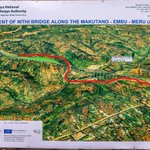
In 1985, President Daniel arap Moi commissioned the Nithi Bridge in Tharaka Nithi County. What should have been a vital piece of infrastructure instead became one of Kenya's most notorious black spots. For decades, tragic accidents at the bridge claimed lives, leaving families shattered and communities pleading for action.
Just before the steep descent lies a sign reading: "Nithi Viewpoint – Utalii Wetu, Urithi Wetu." For countless travelers, that viewpoint marked their final glimpse of the river valley below.
Over the years, residents repeatedly appealed to successive governments to redesign the bridge and the dangerous stretch of road surrounding it. According to media reports, residents pleaded for a safer bridge for 17 years under Moi, and again under Mwai Kibaki and Uhuru Kenyatta. Nothing was built. They had especially hoped for relief under Kibaki after backing him strongly in the 2002 General Election.
Deputy President Kithure Kindiki put it succinctly: “I thought that the man I had helped at The Hague, together with his deputy, would ensure that the Nithi Bridge was built.”
Today, the China Wu Yi Company has begun constructing a new bridge. It is an elevated viaduct of 22 spans of roughly 40 metres each, supported by 23 piers that rise up to 100 metres from the valley floor at their tallest. Separate carriageways for each direction of traffic are designed to prevent head-on collisions. The deck is 13 metres wide, with a 7-metre primary carriageway.
The lesson from Nithi Bridge is larger than the bridge itself.
The people of Tharaka Nithi have learned a simple but powerful political truth: it is not who you vote for that matters most. It is what you vote for.
A politician may be your friend, your tribesman, your party leader, or your favorite speaker. But if the policies, priorities, and projects that improve people's lives are not delivered, then loyalty alone is a poor substitute for progress.

1
284
Scaramucci Dethroned as White House's Shortest-Serving Employee!
@RestPoliticsUS, @KattyKay_
Anthony @Scaramucci, Donald Trump's former White House Communications Director, has lost his title as the shortest-serving employee in White House history. He had only served for 11 days before he was fired. His successor in infamy is new press secretary Katie Zacharia, who was fired this morning (Friday) after less than a week on the job, following a first press conference that went awry.
Zacharia had presented herself as a lawyer, despite having failed the California bar exam. Asked by reporters where she is licensed to practice, she answered: "China.", to the chagrin of Trump himself, who looked on in complete confusion.
There was only one problem. Her response collided head‑on with the fact that only Chinese citizens can practice law in China, and from her looks, there is no indication that Ms. Zacharia is Chinese.
She is now the reigning champion as the shortest-serving White House Staffer!
48

Kenya’s foreign exchange reserves surged to an all-time record high of US$15.25 billion to US$15.4 billion in 2026. Driven by strong capital inflows and a partial corporate divestiture of Safaricom, the Central Bank of Kenya (CBK) has accumulated unprecedented buffers that far exceed its historical averages. The Central Bank of Kenya says that Kenya's balance of payments position is strong enough to manage without immediate IMF financial support.
Core Drivers of the Reserve Trajectory:
• 2021 – 2023 (The Downturn):
o Reserves fell from $8.6 billion to a low of $6.7 billion.
o Depleted by heavy external debt obligations and high global fuel prices.
• 2024 – 2025 (The Rebound):
o Recovered back up to $9.2 billion.
o Supported by rising tourism revenues, strong diaspora remittances, and IMF disbursements.
• 2026 (The Surge):
o Shot up aggressively to cross the $15 billion milestone.
o Fueled by a record $1.55 billion single-week inflow from the Safaricom divestment.
o Provides over 6.3 months of import cover, safely beating the statutory 4-month minimum.
In percentage terms, Kenya’s foreign exchange reserves increased by 77.33%.
From the lowest point of the crunch in 2023 (US$6.7 billion) to the current 2026 high, reserves surged 127.61%.
And this does not take into account the expected inflow from the new Dangote refinery.

27
Aden Duale and the Somali Philosophy of a Shutdown.
In Somali pastoral life, a family doesn’t abandon its animals or its way of life. It abandons a location that can no longer sustain them. When the wells dry up and the grass thins, the elders make a practical decision: dismantle the Aqal, move the herd, and rebuild where the land is healthier.
The identity of the family stays intact. The livestock stay intact. Only the settlement changes.
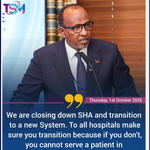
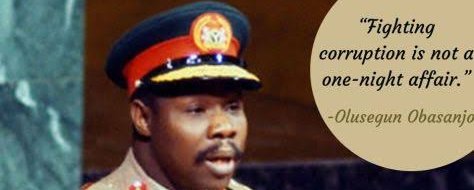
So when @AdenDuale stood up and declared, “We are closing down SHA,” Kenyans went into full national meltdown. They didn't even wait to hear the last sentence... "and transition to a new system".
People heard the insurance scheme itself was being buried. Wails, panic, gnashing of teeth, and prophecies fulfilled. The clever ones even rushed online to remind us of their predictions: “See! We told you SHA would collapse in six months!”.
But Aden Duale wasn’t shutting down SHA. He was speaking pure Ki-Somali. In the Ki-Somali language, there is no equivalent to “System Migration.” When the old settlement can’t sustain the herd, you pack up the Aqal, shut it down, and move to better pasture.
Duale simply translated that philosophy straight into English. And English betrayed him.
He thought he was announcing a relocation. Kenyans heard a funeral.
Which is why he’s now out here clarifying to the bewildered crowd that SHA, the insurance itself, is very much alive. What’s changing is the platform, the “grazing ground,” shifting from the old Provider Portal to the integrated HMIS.
The herd is fine. It’s the old settlement that’s being folded.
Kenyans panicked because Duale announced a migration like it was a burial. Nkt!!

63


They will never succeed!

Lamu refinery must go on!
Some political detractors & ethnic chauvinists opposed to Ruto administration have gone overdrive in the past few days in a doomed attempt to derail the launch of an oil refinery by Nigerian businessman Aliko Dangote. The media gave them traction.
Not surprising at all. Laughable indeed. But they only made a fool of themselves, asking why the haste? Who is Dangote? Who owns the shares? Where will it get crude oil? It's our ancestral land! Bla bla bla.
Kenya built its first refinery, Kenya Petroleum Oil Refinery, in Mombasa in 1963, and was shut down by the Government in 2013. It didn't have problems obtaining crude. It was owned 100% by Shell & BP until GoK acquired 50% stake in 1971. These shenanigans had no qualms about it. In 2005, S Sudan wanted a refinery in Mombasa, with a rail & pipeline link to Juba. The Kibaki team blocked it, demanding shares. Uhuru, Godana & I were invited by S Sudan as official opposition to intervene.
In 2008, Kibaki launched Vision 2030 in which Lappset corridor project was a flagship project. In 2012, an oil refinery in Lamu was included as a flagship project. Uhuru built 3 berths at Lamu port, spent over sh 42 billion & remained a white elephant. The Lappset road from Lamu to link Ethiopia, SSudan etc remained on paper.
Ruto picks it up. The road is under construction. The port is getting ships. The refinery is getting launched.
These ethnic chauvinists are suddenly alarmed. They rush to court, organize protests in Lamu and yap on the media....
Sad. They've led this country for decades & did not get us beyond the drinking dens of Karatina. Ruto sets the road to Singapore on his sights & they are getting choked. They mocked his inclusivity on development projects such as the Isiolo-Mandera highway. They rushed to court to block Rironi - Mai Mahiu Rd, NIF, etc.
This delusion of entitlement must end.
A $17 billion project is simply the most consequential investment in Kenya since independence. 700,000 b.p.d refinery is a game changer. The value chain in the economy is huge.
These detractors should be ashamed. It's a pity some aspire to lead our nation.
#DangoteWelcome
#LamuRefinery
22
Of all the Githeri media houses in Nairobi, you would think the Nation ate the least Githeri! But alas, I was wrong. For them to ask where the crude will come from for the Dangote refinery just removes all doubt!!

23
Why was the state-owned National Oil Corporation of Kenya (NOCK) sidelined in the (G-to-G) oil procurement Deal?
When the Museveni G-TO-G “scandal” that never existed finally collapsed, some people tried to resurrect an old argument: Who were the local players? Their claim was that G-to-G couldn’t possibly be genuine because the Kenyan counterparties were private companies. According to them, how could it be government-to-government if Rubis, Vivo, and Gulf Energy are involved?
Never mind that, apart from National Oil, no one in Kenya has ever driven into a gas station with a GoK logo on it!
HINT: We are a private-sector-led capitalist economy!
Ndindi Nyoro - in his self-appointed role as the Economist-in-Chief of the Latter-day Saints - even portrayed the G-to-G program as an underground railroad for bootleg oil. In his telling, Rubis, Vivo, and Gulf Energy were the Harriet Tubmans of petroleum smuggling. He loudly questioned why NOCK wasn’t the counterparty, conveniently ignoring the fact that he was the Chair of Parliament’s Budget and Appropriations Committee at the time and should have known the answer better than anyone.
The truth is simple: NOCK was financially crippled. It had been on life support for years.
• 2018–2019: An Auditor General’s report exposed a massive fuel racket scandal that drained over KShs 2.3 billion from its coffers. By the end of that cycle, NOCK’s debt-to-equity ratio had collapsed to an unsustainable 8 to 1.
• 2020: KCB issued a 30-day liquidation notice to auction NOCK’s assets over unpaid loans. The corporation survived only through emergency moratoria and state bailouts.
• 2021–2022: The Auditor General formally declared NOCK technically insolvent, with accumulated losses exceeding KShs 4 billion and liabilities far outweighing its assets. Today, the debt has ballooned to KShs7.4 billion. It is struggling to meet basic recurrent expenditures.
• 2024–2025: Rubis attempted a rescue deal, which quickly fell apart. By then, NOCK’s books showed a terminal deficit - liabilities exceeding its asset base by KShs 11.6 billion.
In short, NOCK had been in rolling insolvency for five to six years before its final collapse in 2025. It was in no condition to act as a counterparty for anything, let alone a nine-figure oil import program.
The entire value of the G to G arrangement was the 180-day supplier credit extended by Gulf state oil companies. That kind of credit is given only to entities trusted with massive cargoes. NOCK’s balance sheet and track record made it impossible. No supplier would extend that level of credit based solely on a sovereign letterhead. Routing the deal through NOCK would have meant no credit, no cargo, and no fuel.
Yet here was the former Budget Committee Chair - a man who should have been intimately aware of NOCK’s financial condition - acting completely oblivious. Either that, or he was playing politics.
Meanwhile, the githeri media, with absolutely no hint of shame, have stood back to wait for the next “scandal”. No retraction, no apologies to its readers and viewers!

DeepRough retweeted

Ndindi Nyoro slams the Dangote Refinery project in Kenya, claiming President William Ruto will be the biggest shareholder.
Bwana Ndindi, remember this investment is expected to employ thousands of Kenyans.
Before throwing stones at such a major investment, you're one of the biggest shareholders in KPLC, yet Kenyans have mainly complained about the rising cost of tokens.
Can you lower token costs first before demanding to be considered a shareholder in the refinery?

Why Shutting Down Tata Chemicals Magadi Was a Justified National Interest Decision
@KIMANIICHUNGWAH @StateHouseKenya @MusaliaMudavadi @psmining_ke @OfficePCS_KE @KuriaKimaniMP @NAssemblyKE @NACommitteeKE @HassanAliJoho @DavidNdii @OleItumbi

47
DeepRough retweeted

Mr. @orengo_james: You have seen James Sang’s write up?
DeepRough retweeted

Some people who should know better have abandoned facts and embraced fake news. Instead of informing Kenyans, they are deliberately misleading them.
Take the claims about the NTSA fines payment. The viral narrative was that the money was paid to someone called Cherono. That is simply not true.
The receipt clearly shows that the biller was NTSA FINES. The payment was made through a KCB Bank Agent.
As with any bank transaction, the receipt displays the name of the agent who processed the payment. In this case, that agent was Catherine Jerono Tomno.
She did not receive the money. She only facilitated the transaction on behalf of KCB.
To make the false story believable, those spreading it shared only part of the receipt and left out the section that clearly identifies the biller as NTSA FINES.
I have attached the complete receipt, which speaks for itself.
Before believing or sharing sensational claims, take a moment to check the facts. A full receipt tells the truth. A cropped one can be used to tell almost any story.
Sina mengi ya kusema kwa sasa
#SystemYaFacts

