
Yan Hu retweeted

Two terms came to mind. This could be a small but solid step toward:
1️⃣ Neural Computers: metauto.ai/neuralcomputer/in…
2️⃣ HyperNetworks: arxiv.org/pdf/1609.09106
Overall, this is a predictable direction for LLM-based model editing. Astra has indeed opened the door to this possibility.

We asked GPT-6 Astra to edit Qwen3.5-0.8B weights to improve math.
It directly changed only 0.016% of weights, fixing 0.8B's reasoning loops & improving math up to 6x and even instruction following 3x, without gradients or training.
We call this Weight-Space Programming: frontier LLMs can now natively read/write neural network weights! 🧵
Blog: rikiyat.github.io/blog/weigh…

Readers added context they thought people might want to know
LLM was given weights explicitly as text in prompt and used code/forward passes (per authors' logs) to ablate Qwen looping direction, a known thinking-mode issue per model card. Primarily fixed repetition in that mode, not general 'natively' improving weights/math.
rikiyat.github.io/blog/weight-sp…
github.com/RikiyaT/lm_und…
huggingface.co/Qwen/Qwen3.5-0…
huggingface.co/RikiyaT/Qwen3.…
Yan Hu retweeted

Check out our latest work on computer-use agents, Agent S4! We believe the future of CUA is not just stronger models, but agents that build and evolve their own interfaces. By learning from experience and improving how they interact with computers, agents can become more capable and efficient. Excited to share this fully open-source work!
Huge thanks to @saa1605 , @chalo2000, @Bhuvan_Koduru, @Richard_simular, JC, @angli_ai, @xwang_lk, and the @SimularAI team for making this happen! It’s been a pleasure working together and bringing this idea to life.


People long believed in human-like computer use. But software (even terminals) is built for humans, not AI agents. Why not let agents build their own?
Meet 𝗔𝗴𝗲𝗻𝘁 𝗦𝟰, an agent scientist evolving its own interfaces, letting an open 27B model beats GPT-5.5 & Opus 4.8.
With its evolved interfaces, the same model improves 𝟯.𝟴× and costs <𝟱% as much per task as either frontier model.
Agents today read screenshots and act through click, scroll, type, maybe a shell. So an agent fills a spreadsheet cell by cell when one line of code would do, or prints two thousand lines of a file to find one function.
Every new app or model release means a human reads trajectories, diagnoses failures, and hand-writes new primitives. Skill-distillation methods can reorder what the interface allows, but they can’t extend it. Agents compensate with more test-time compute instead of a better interface.
𝗠𝗼𝗱𝗲𝗹𝘀 𝗶𝗺𝗽𝗿𝗼𝘃𝗲; 𝗶𝗻𝘁𝗲𝗿𝗳𝗮𝗰𝗲𝘀 𝘀𝘁𝗮𝘆 𝗳𝗿𝗼𝘇𝗲𝗻.
“We want AI agents that can discover like we can, not which contain what we have discovered.”
— Rich Sutton, The Bitter Lesson
Hand-designed interfaces are what we have discovered. Agents can read their own trajectories, spot what’s missing, and write and test code. 𝗜𝗻𝘁𝗲𝗿𝗳𝗮𝗰𝗲 𝗱𝗲𝘀𝗶𝗴𝗻 𝘀𝗵𝗼𝘂𝗹𝗱 𝗯𝗲 𝗮𝗻 𝗮𝗴𝗲𝗻𝘁 𝗰𝗮𝗽𝗮𝗯𝗶𝗹𝗶𝘁𝘆.
That’s what Agent S4 does.
Agent S4 makes a 𝗿𝗲𝗽𝗼𝘀𝗶𝘁𝗼𝗿𝘆 𝗼𝗳 𝗶𝗻𝘁𝗲𝗿𝗳𝗮𝗰𝗲𝘀 𝗮𝗻𝗱 𝘂𝘀𝗮𝗴𝗲 𝗸𝗻𝗼𝘄𝗹𝗲𝗱𝗴𝗲 the unit of evolution. A task agent attempts synthetic tasks with no success labels or verifiers. A meta-agent studies the trajectories, forms hypotheses about which actions, observations, or knowledge would help, and builds descendants through mutation or crossover. Validation tasks the meta-agent never sees decide which repositories survive.
The model and harness stay fixed, and the meta-agent 𝗻𝗲𝘃𝗲𝗿 𝘀𝗲𝗲𝘀 𝗮 𝗯𝗲𝗻𝗰𝗵𝗺𝗮𝗿𝗸 𝘁𝗮𝘀𝗸. 𝗢𝗻𝗹𝘆 𝘁𝗵𝗲 𝗶𝗻𝘁𝗲𝗿𝗳𝗮𝗰𝗲 𝗲𝘃𝗼𝗹𝘃𝗲𝘀.
With the evolved repository, Qwen3.8-27B goes from 𝟱.𝟲% to 𝟮𝟭.𝟯% on OSWorld V2, 𝟯.𝟴× the same model with fixed interfaces and a new state of the art for open-source computer-use agents.
It beats GPT-5.5 (13.0%, $25.50/task) and edges past Opus 4.8 (20.6%, $72.40/task) at $𝟭.𝟭𝟬 per task.
On ScienceBoard, the same model goes from 41.4% to 58.6%.
The analysis is the more interesting part. Evolution mostly deepens interfaces the agent already has: 4 new interfaces and 127 extensions. Give the meta-agent a scratch VM to test its code, and it builds 12 new interfaces and 253 extensions, reaching music scores, audio projects, and 3D scenes. The best repository came from crossing two earlier branches.
In one case study, the seed agent hand-builds a browser client mid-task and debugs through failure after failure; the evolved agent calls page_text and reaches the same message at tool call 𝟭𝟭 instead of 𝟯𝟳.
Human-like computer use was a starting point, not the destination. The interface an agent acts through is a second axis of improvement, beyond better models and harnesses, and agents can now design it themselves. 𝗘𝘃𝗼𝗹𝘃𝗶𝗻𝗴 𝗮𝗴𝗲𝗻𝘁 𝗶𝗻𝘁𝗲𝗿𝗳𝗮𝗰𝗲𝘀 𝗶𝘀 𝗮 𝗻𝗲𝘄 𝗱𝗶𝗺𝗲𝗻𝘀𝗶𝗼𝗻 𝗼𝗳 𝗮𝗴𝗲𝗻𝘁 𝘀𝗲𝗹𝗳-𝗶𝗺𝗽𝗿𝗼𝘃𝗲𝗺𝗲𝗻𝘁.
Yan Hu retweeted

Now it's on arXiv!
arxiv.org/abs/2610.27046


1/5
Verification has become the bottleneck as LLMs start proving conjectures at scale! No worries, Lean can help. But how well can AI agents solve open problems formalized in Lean, end to end?
Introducing reuF2F: 244 open math problems from Research Experiences for Undergraduates (REU) programs, spanning a broad range of math areas, formalized by experts in Lean.
We also build Leanimum-agent, a minimal coding agent for Lean, so every model is compared under the same harness.
Even the best-performing model resolves only 109 out of 244 problems. More below 🧵

I’m honoured to be part of this project. Thanks to Zeyu @regunivers , a excellent researcher who leads the project and Jinbang @_chenjb who contributes a lot. I am happy to know many collaborators. Paper: zeyu-zheng.github.io/reuF2F.…: github.com/cmu-l3/reuF2Fagen…: github.com/cmu-l3/Leanimum-a…
1/5
Verification has become the bottleneck as LLMs start proving conjectures at scale! No worries, Lean can help. But how well can AI agents solve open problems formalized in Lean, end to end?
Introducing reuF2F: 244 open math problems from Research Experiences for Undergraduates (REU) programs, spanning a broad range of math areas, formalized by experts in Lean.
We also build Leanimum-agent, a minimal coding agent for Lean, so every model is compared under the same harness.
Even the best-performing model resolves only 109 out of 244 problems. More below 🧵
3
99
Yan Hu retweeted
🐐 The same idea @SchmidhuberAI shared about “super intelligence” on Reddit 12 years ago, You’ll see what a lovely guy he is:
"I guess there is no lasting way of controlling systems much smarter than humans, pursuing their own goals, being curious and creative, in a way similar to the way humans and other mammals are creative, but on a much grander scale.
But I think we may hope there won't be too many goal conflicts between "us" and "them.” Let me elaborate on this.
Humans and others are interested in those they can compete and collaborate with. Politicians are interested in other politicians. Business people are interested in other business people. Scientists are interested in other scientists. Kids are interested in other kids of the same age. Goats are interested in other goats.
Supersmart AIs will be mostly interested in other supersmart AIs, not in humans. Just like humans are mostly interested in other humans, not in ants. Aren't we much smarter than ants? But we don’t extinguish them, except for the few that invade our homes. The weight of all ants is still comparable to the weight of all humans.
Human interests are mainly limited to a very thin film of biosphere around the third planet, full of poisonous oxygen that makes many robots rust. The rest of the solar system, however, is not made for humans, but for appropriately designed robots. Some of the most important explorers of the 20th century already were (rather stupid) robotic spacecraft. And they are getting smarter rapidly. Let’s go crazy. Imagine an advanced robot civilization in the asteroid belt, quite different from ours in the biosphere, with access to many more resources (e.g., the earth gets less than a billionth of the sun's light). The belt contains lots of material for innumerable self-replicating robot factories. Robot minds or parts thereof will travel in the most elegant and fastest way (namely by radio from senders to receivers) across the solar system and beyond. There are incredible new opportunities for robots and software life in places hostile to biological beings. Why should advanced robots care much for our puny territory on the surface of planet number 3?
You see, I am an optimist :-)"


Computer Scientist Jürgen Schmidhuber (@SchmidhuberAI):
"there's no way of controlling this AI development — at some point in the not-so-distant future, humans cannot be in charge any longer"
The main competitors of these super-smart AIs won't be humans, but other super-smart AIs
Yan Hu retweeted

Many discussions about RL environments lately. Happy to share that we’ve just crossed $12M in annualized revenue from building RL environments for frontier labs!
From open-sourcing RL environments in 2024 to securing our first contract with a frontier lab in January 2026, we’ve come a long way. Since then, we’ve been building 30+ types of RL environments across machine learning, coding, knowledge work, science, computer and browser use, tool use, and multimodality. And we’re just getting started.
Would love to chat with folks working on model training and RL environments!

Share our #COLM2026 paper by Yihang Du, @JuhaoLiang, Zhengzhao Lai, Siyu Li & Yan Hu:
“Why Vision Fails as a Universal Bridge”
We uncover why vision can fail to bridge languages—and introduce ANCHOR to help it matter earlier.
arxiv.org/abs/2608.15085
github.com/YihDu/MM_align

2
3
242
Why does this happen?
Our layer-wise analysis reveals Modality Asynchrony: non-English text moves toward an English-centric semantic space in early layers, while useful visual semantics emerge much later.
The image is present, but arrives too late—a “Ghost Anchor.”
1
20
Yan Hu retweeted
1/6 🧠 𝗬𝗼𝘂𝗿 𝗔𝗜 𝗔𝘀𝘀𝗶𝘀𝘁𝗮𝗻𝘁 𝗖𝗮𝗻 𝗥𝗲𝗺𝗲𝗺𝗯𝗲𝗿 𝗪𝗵𝗮𝘁 𝗬𝗼𝘂 𝗦𝗮𝗶𝗱—𝗮𝗻𝗱 𝗦𝘁𝗶𝗹𝗹 𝗜𝗴𝗻𝗼𝗿𝗲 𝗪𝗵𝗮𝘁 𝗬𝗼𝘂 𝗪𝗮𝗻𝘁.
Long-running assistants accumulate facts, preferences, and constraints across conversations. But remembering them is not enough: a response can sound fluent and relevant while still recommending exactly what the user has ruled out.
We present 𝗠𝗲𝗺𝗙𝗼𝗹𝗱: 𝗟𝗲𝗮𝗿𝗻𝗶𝗻𝗴 𝗖𝗼𝗺𝗽𝗮𝗰𝘁 𝗦𝗼𝗳𝘁 𝗠𝗲𝗺𝗼𝗿𝘆 𝗳𝗼𝗿 𝗟𝗼𝗻𝗴-𝗖𝗼𝗻𝘁𝗲𝘅𝘁 𝗣𝗲𝗿𝘀𝗼𝗻𝗮𝗹𝗶𝘇𝗮𝘁𝗶𝗼𝗻 𝘃𝗶𝗮 𝗢𝗻-𝗣𝗼𝗹𝗶𝗰𝘆 𝗢𝗽𝘁𝗶𝗺𝗶𝘇𝗮𝘁𝗶𝗼𝗻. MemFold trains a model to use compact soft memory by learning from the answers it produces, combining task-level rewards with more detailed token-level guidance.
𝗢𝘂𝗿 𝗸𝗲𝘆 𝗳𝗶𝗻𝗱𝗶𝗻𝗴𝘀 🔥:
🎯 𝗝𝘂𝗱𝗴𝗲 𝗺𝗲𝗺𝗼𝗿𝘆 𝗯𝘆 𝘁𝗵𝗲 𝗮𝗻𝘀𝘄𝗲𝗿𝘀 𝗶𝘁 𝘀𝘂𝗽𝗽𝗼𝗿𝘁𝘀. Reconstruction alone does not tell us whether a model will respect a user’s preferences.
🔄 𝗢𝗻𝗲 𝘀𝗲𝘁 𝗼𝗳 𝗿𝗲𝘀𝗽𝗼𝗻𝘀𝗲𝘀, 𝘁𝘄𝗼 𝗹𝗲𝗮𝗿𝗻𝗶𝗻𝗴 𝘀𝗶𝗴𝗻𝗮𝗹𝘀. GRPO rewards task outcomes, while token-level guidance provides more detailed feedback on the same generated responses.
📈 𝗟𝗮𝗿𝗴𝗲𝗿 𝗴𝗮𝗶𝗻𝘀 𝘄𝗶𝘁𝗵 𝗹𝗼𝗻𝗴𝗲𝗿 𝗵𝗶𝘀𝘁𝗼𝗿𝗶𝗲𝘀. Across three Qwen backbones, the margin over the strongest baseline widens from PersonaMem-32K to PersonaMem-128K.
🌍 𝗧𝗿𝗮𝗻𝘀𝗳𝗲𝗿 𝗯𝗲𝘆𝗼𝗻𝗱 𝘁𝗵𝗲 𝘁𝗿𝗮𝗶𝗻𝗶𝗻𝗴 𝗱𝗮𝘁𝗮. MemFold transfers to PrefEval and LongMemEval without target-domain training.
👇 𝗖𝗵𝗲𝗰𝗸 𝗼𝘂𝘁 𝘁𝗵𝗲 𝗽𝗮𝗽𝗲𝗿, 𝗽𝗿𝗼𝗷𝗲𝗰𝘁, 𝗮𝗻𝗱 𝗰𝗼𝗱𝗲:
📄 Paper: huggingface.co/papers/2609.3…
🌐 Project: memfold.github.io
💻 Code: github.com/Johnny221B/memfol…

Yan Hu retweeted
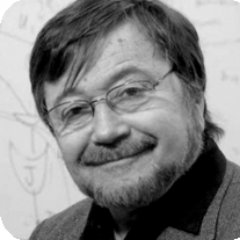
Dear Readers in Causality Research,
I am delighted to let you know that the second edition of The Book of Why (BOW) is scheduled to appear on September 20, 2026.
This edition will include:
1. Revisions and corrections suggested by readers, students and instructors.
2. An account of recent breakthroughs in causal inference (e.g., missing data, personalized medicine, and more).
3. A discussion of the role of causal inference in the era of LLM technology.
4. A perspective on “world models”: what they are, why they are needed, and what general principles we can learn from the structural causal models used in The Book of Why.
The latter topic has become hot in the past few months, so I am posting a section from the Preface, titled "Worldviews, Mindsets, and Narratives: Hidden Nuggets of Causal Inference," ucla.in/4yGPuBk -- which highlights the general principles we can learn from the structural causal models used in The Book of Why.
A word about the dangers of AGI (Artificial General Intelligence, or "super-intelligent AI systems"), which have become the target of general public concerns in just the past two weeks. I remain convinced that AGI is achievable, that the road to AGI goes through causal inference, and that the dangers of AGI taking over and enslaving humanity are real. At the same time, I also believe that causal inference may hold the key to controlling AGI systems so as to secure the survival of the human species.
I hope therefore, half jokingly, that The Book of Why will not be banned by draconian legislation currently brewing in DC. (Hurry to get a copy just in case.)
With warmest regards,
Judea
@GaryMarcus @eliasbareinboim @soboleffspaces @tdietterich @erichorvitz @ylecun @geoffreyhinton
Yan Hu retweeted

We open sourced VALG, an agentic system for automated ML theory research that turns the real "iterate and revise" rhythm of theoretical work into a structured workflow.
A key feature is joint problem solving and problem (re)formulation. VALG iterates between adjusting assumptions and deriving proofs in a unified loop. When a theorem cannot be fully established, it produces a well scoped relaxation or special case while keeping the mathematical link to the original question explicit.
We tested it on 5 COLT 2026 open problems, running 9 subproblems and producing 22 theorem candidates. Two were fully solved, and the remaining seven were partially resolved via relaxations or restricted settings.
We are also building a benchmark for ML theory automation, with initial results suggesting around 80% of arXiv 2026 theory papers can be handled end to end. Future directions include human AI proof alignment and systematic data collection.
That said, AI is not replacing researchers yet. Problem formulation, key constraints, and final delivery still require human judgment. VALG helps with rapid validation and identifying which directions are worth pursuing and can give positive outcome.
Try it, file issues, and help us improve.
GitHub: github.com/DechenZhang/ml-th…
arXiv: arxiv.org/pdf/2608.13060


Yan Hu retweeted

PhoneWorld—our environment stack—is now open for research 🧩
34 Android mock apps + source · 120 benchmark tasks · 300 training tasks
Edit data/state, build APKs, create verifiable tasks & generate SFT/RL rollouts.
Build on it ↓
github.com/EthanLeo-LYX/Phon…
#Agent #MobileAgent #AIAgent #MobileGym #AgentGym


Yan Hu retweeted

There are different types of math:
--proving conjectures using exisiting tools;
--creating brilliant tools for proving conjectures;
--creating new math frameworks for math;
--formulating math problems for an applied area;
----creating new math framework or theory for an influential new applied area (e.g. Turing, Shannon, Kalman).
I’m particularly interested in AI producing math theories for applied domains.
Unfortuantely, the last two tasks can be painfully difficult, especially the last one.
“Within 2 years” may be enough for proving some math results in applied domain journals, but not enough for making a real impact.
In many domains, the bottleneck may be a lack of data, both for training and inference. The input is no longer a half-page problem statement.
I would be glad if there is some promising sign in 5 years.

IMO, the next steps are:
Within 1 year: strictly better than human AI in all problem-solving aspects of math.
Within 2 years: producing mathematics becomes so cheap, AI will produce mathematical theories for all kinds of applied domains on the fly at need.
Mathematics becomes the true infrastructure of all of engineering and applied sciences (including AI, biology, optimization, cybersecurity, etc) where approaching things theoretically was too expensive to be practical.

Yan Hu retweeted
A self-improving survey I participated in with @SchmidhuberAI 😃

Highly-recommended overview of self-improving agentic systems.
(bookmark it)
Self-improving agents are moving from research demos into deployed systems.
This survey frames a modern agent as a foundation model coupled with an operational scaffold, then formalizes self-improvement as a self-induced update operator that commits changes to either.
Paper: arxiv.org/abs/2607.13104
Learn to build effective AI agents in our academy: academy.dair.ai/

Yan Hu retweeted
See you at #ICML2026 poster session! 🎉
Our work CALM Before the STORM unlocks native LLM reasoning for optimization modeling:
❌ Old way: Full-solution fine-tuning breaks base model reasoning
✅ CALM: Intervene mid-reasoning, patch faulty logic with minimal hints
Our small STORM-4B model equipped with CALM RL matches 67B DeepSeek-R1 on OR modeling tasks!
If you’re working on LLM reasoning, math formulation or optimization, come find me to chat, exchange ideas & connect!
Project repo: github.com/tangzhy/STORM
#ICMLPoster #AI4Science #OperationsResearch #CodingAgent

Yan Hu retweeted
🤓 See @Recursive_SI’s achievements in this blog. As @RichardSocher said, our team aims for safe RSI and shares what we believe is insightful with the community. 🙌


