






Yuzhe Yang retweeted

Our agent scientist, Agent S4, just got an open 27B model to beat GPT-5.5 and Claude Opus 4.8 on OSWorld V2, with the model's weights left exactly as they were.
With the interfaces S4 evolved, Qwen3.8-27B completes 21.3% of the 108 tasks, the highest binary success of any open-source computer-use agent and 3.8x the same model with fixed interfaces.
It costs $1.10 per task, against $25.50 for GPT-5.5 and $72.40 for Opus 4.8 💸
Full write-up: simular.ai/articles/agent-s4…
Check out our latest work on computer-use agents, Agent S4! We believe the future of CUA is not just stronger models, but agents that build and evolve their own interfaces. By learning from experience and improving how they interact with computers, agents can become more capable and efficient. Excited to share this fully open-source work!
Huge thanks to @saa1605 , @chalo2000, @Bhuvan_Koduru, @Richard_simular, JC, @angli_ai, @xwang_lk, and the @SimularAI team for making this happen! It’s been a pleasure working together and bringing this idea to life.


People long believed in human-like computer use. But software (even terminals) is built for humans, not AI agents. Why not let agents build their own?
Meet 𝗔𝗴𝗲𝗻𝘁 𝗦𝟰, an agent scientist evolving its own interfaces, letting an open 27B model beats GPT-5.5 & Opus 4.8.
With its evolved interfaces, the same model improves 𝟯.𝟴× and costs <𝟱% as much per task as either frontier model.
Agents today read screenshots and act through click, scroll, type, maybe a shell. So an agent fills a spreadsheet cell by cell when one line of code would do, or prints two thousand lines of a file to find one function.
Every new app or model release means a human reads trajectories, diagnoses failures, and hand-writes new primitives. Skill-distillation methods can reorder what the interface allows, but they can’t extend it. Agents compensate with more test-time compute instead of a better interface.
𝗠𝗼𝗱𝗲𝗹𝘀 𝗶𝗺𝗽𝗿𝗼𝘃𝗲; 𝗶𝗻𝘁𝗲𝗿𝗳𝗮𝗰𝗲𝘀 𝘀𝘁𝗮𝘆 𝗳𝗿𝗼𝘇𝗲𝗻.
“We want AI agents that can discover like we can, not which contain what we have discovered.”
— Rich Sutton, The Bitter Lesson
Hand-designed interfaces are what we have discovered. Agents can read their own trajectories, spot what’s missing, and write and test code. 𝗜𝗻𝘁𝗲𝗿𝗳𝗮𝗰𝗲 𝗱𝗲𝘀𝗶𝗴𝗻 𝘀𝗵𝗼𝘂𝗹𝗱 𝗯𝗲 𝗮𝗻 𝗮𝗴𝗲𝗻𝘁 𝗰𝗮𝗽𝗮𝗯𝗶𝗹𝗶𝘁𝘆.
That’s what Agent S4 does.
Agent S4 makes a 𝗿𝗲𝗽𝗼𝘀𝗶𝘁𝗼𝗿𝘆 𝗼𝗳 𝗶𝗻𝘁𝗲𝗿𝗳𝗮𝗰𝗲𝘀 𝗮𝗻𝗱 𝘂𝘀𝗮𝗴𝗲 𝗸𝗻𝗼𝘄𝗹𝗲𝗱𝗴𝗲 the unit of evolution. A task agent attempts synthetic tasks with no success labels or verifiers. A meta-agent studies the trajectories, forms hypotheses about which actions, observations, or knowledge would help, and builds descendants through mutation or crossover. Validation tasks the meta-agent never sees decide which repositories survive.
The model and harness stay fixed, and the meta-agent 𝗻𝗲𝘃𝗲𝗿 𝘀𝗲𝗲𝘀 𝗮 𝗯𝗲𝗻𝗰𝗵𝗺𝗮𝗿𝗸 𝘁𝗮𝘀𝗸. 𝗢𝗻𝗹𝘆 𝘁𝗵𝗲 𝗶𝗻𝘁𝗲𝗿𝗳𝗮𝗰𝗲 𝗲𝘃𝗼𝗹𝘃𝗲𝘀.
With the evolved repository, Qwen3.8-27B goes from 𝟱.𝟲% to 𝟮𝟭.𝟯% on OSWorld V2, 𝟯.𝟴× the same model with fixed interfaces and a new state of the art for open-source computer-use agents.
It beats GPT-5.5 (13.0%, $25.50/task) and edges past Opus 4.8 (20.6%, $72.40/task) at $𝟭.𝟭𝟬 per task.
On ScienceBoard, the same model goes from 41.4% to 58.6%.
The analysis is the more interesting part. Evolution mostly deepens interfaces the agent already has: 4 new interfaces and 127 extensions. Give the meta-agent a scratch VM to test its code, and it builds 12 new interfaces and 253 extensions, reaching music scores, audio projects, and 3D scenes. The best repository came from crossing two earlier branches.
In one case study, the seed agent hand-builds a browser client mid-task and debugs through failure after failure; the evolved agent calls page_text and reaches the same message at tool call 𝟭𝟭 instead of 𝟯𝟳.
Human-like computer use was a starting point, not the destination. The interface an agent acts through is a second axis of improvement, beyond better models and harnesses, and agents can now design it themselves. 𝗘𝘃𝗼𝗹𝘃𝗶𝗻𝗴 𝗮𝗴𝗲𝗻𝘁 𝗶𝗻𝘁𝗲𝗿𝗳𝗮𝗰𝗲𝘀 𝗶𝘀 𝗮 𝗻𝗲𝘄 𝗱𝗶𝗺𝗲𝗻𝘀𝗶𝗼𝗻 𝗼𝗳 𝗮𝗴𝗲𝗻𝘁 𝘀𝗲𝗹𝗳-𝗶𝗺𝗽𝗿𝗼𝘃𝗲𝗺𝗲𝗻𝘁.
Yuzhe Yang retweeted

People long believed in human-like computer use. But software (even terminals) is built for humans, not AI agents. Why not let agents build their own?
Meet 𝗔𝗴𝗲𝗻𝘁 𝗦𝟰, an agent scientist evolving its own interfaces, letting an open 27B model beats GPT-5.5 & Opus 4.8.
With its evolved interfaces, the same model improves 𝟯.𝟴× and costs <𝟱% as much per task as either frontier model.
Agents today read screenshots and act through click, scroll, type, maybe a shell. So an agent fills a spreadsheet cell by cell when one line of code would do, or prints two thousand lines of a file to find one function.
Every new app or model release means a human reads trajectories, diagnoses failures, and hand-writes new primitives. Skill-distillation methods can reorder what the interface allows, but they can’t extend it. Agents compensate with more test-time compute instead of a better interface.
𝗠𝗼𝗱𝗲𝗹𝘀 𝗶𝗺𝗽𝗿𝗼𝘃𝗲; 𝗶𝗻𝘁𝗲𝗿𝗳𝗮𝗰𝗲𝘀 𝘀𝘁𝗮𝘆 𝗳𝗿𝗼𝘇𝗲𝗻.
“We want AI agents that can discover like we can, not which contain what we have discovered.”
— Rich Sutton, The Bitter Lesson
Hand-designed interfaces are what we have discovered. Agents can read their own trajectories, spot what’s missing, and write and test code. 𝗜𝗻𝘁𝗲𝗿𝗳𝗮𝗰𝗲 𝗱𝗲𝘀𝗶𝗴𝗻 𝘀𝗵𝗼𝘂𝗹𝗱 𝗯𝗲 𝗮𝗻 𝗮𝗴𝗲𝗻𝘁 𝗰𝗮𝗽𝗮𝗯𝗶𝗹𝗶𝘁𝘆.
That’s what Agent S4 does.
Agent S4 makes a 𝗿𝗲𝗽𝗼𝘀𝗶𝘁𝗼𝗿𝘆 𝗼𝗳 𝗶𝗻𝘁𝗲𝗿𝗳𝗮𝗰𝗲𝘀 𝗮𝗻𝗱 𝘂𝘀𝗮𝗴𝗲 𝗸𝗻𝗼𝘄𝗹𝗲𝗱𝗴𝗲 the unit of evolution. A task agent attempts synthetic tasks with no success labels or verifiers. A meta-agent studies the trajectories, forms hypotheses about which actions, observations, or knowledge would help, and builds descendants through mutation or crossover. Validation tasks the meta-agent never sees decide which repositories survive.
The model and harness stay fixed, and the meta-agent 𝗻𝗲𝘃𝗲𝗿 𝘀𝗲𝗲𝘀 𝗮 𝗯𝗲𝗻𝗰𝗵𝗺𝗮𝗿𝗸 𝘁𝗮𝘀𝗸. 𝗢𝗻𝗹𝘆 𝘁𝗵𝗲 𝗶𝗻𝘁𝗲𝗿𝗳𝗮𝗰𝗲 𝗲𝘃𝗼𝗹𝘃𝗲𝘀.
With the evolved repository, Qwen3.8-27B goes from 𝟱.𝟲% to 𝟮𝟭.𝟯% on OSWorld V2, 𝟯.𝟴× the same model with fixed interfaces and a new state of the art for open-source computer-use agents.
It beats GPT-5.5 (13.0%, $25.50/task) and edges past Opus 4.8 (20.6%, $72.40/task) at $𝟭.𝟭𝟬 per task.
On ScienceBoard, the same model goes from 41.4% to 58.6%.
The analysis is the more interesting part. Evolution mostly deepens interfaces the agent already has: 4 new interfaces and 127 extensions. Give the meta-agent a scratch VM to test its code, and it builds 12 new interfaces and 253 extensions, reaching music scores, audio projects, and 3D scenes. The best repository came from crossing two earlier branches.
In one case study, the seed agent hand-builds a browser client mid-task and debugs through failure after failure; the evolved agent calls page_text and reaches the same message at tool call 𝟭𝟭 instead of 𝟯𝟳.
Human-like computer use was a starting point, not the destination. The interface an agent acts through is a second axis of improvement, beyond better models and harnesses, and agents can now design it themselves. 𝗘𝘃𝗼𝗹𝘃𝗶𝗻𝗴 𝗮𝗴𝗲𝗻𝘁 𝗶𝗻𝘁𝗲𝗿𝗳𝗮𝗰𝗲𝘀 𝗶𝘀 𝗮 𝗻𝗲𝘄 𝗱𝗶𝗺𝗲𝗻𝘀𝗶𝗼𝗻 𝗼𝗳 𝗮𝗴𝗲𝗻𝘁 𝘀𝗲𝗹𝗳-𝗶𝗺𝗽𝗿𝗼𝘃𝗲𝗺𝗲𝗻𝘁.
Yuzhe Yang retweeted

💸 For computer-use agents, using a frontier model at every step is expensive—but relying on a small model alone is risky.
LEASH offers a middle ground: let a lightweight agent handle what it can, bring in a stronger model only when needed, and keep monitoring afterward. Put your frontier model on a LEASH !! 🦮
📄 arxiv.org/pdf/2610.22280

Yuzhe Yang retweeted

今年NeurIPS position track我们有一篇论文,三个审稿人打了9、9、7,平均8.33。AC的meta review写的是"The reviews are pretty positive",rebuttal之后三个人都说维持正分。
然后PC一句话拒了:
"many statements in the paper are superficial and not presented scientifically"
论文讲的是什么呢。AI顶会现在把三件事捆在一起:审稿、发表传播、社区交流,全部压在一年几个固定周末的超大会议上。人少的时候这很高效。现在AI方向平均每个faculty一年的顶会论文,2015年不到2篇,2024年接近5篇。一次长途开会的碳排放,可能超过一个人一年的额度。审稿压力、场馆容量、签证,全部一起爆。我们的主张是把这三件事拆开,先试点再说。
好笑的地方在这里。三个审稿人加AC都说行,最后几个PC一句话就翻了。一篇吐槽"一年一次、几个人拍板"的论文,最后也是一年一次、几个人拍的板。
还有个插曲更值得说。6月这篇论文先被flag疑似AI生成,要我们两周内证明自己是人。证明方式是交带版本历史的在线稿,标出pre-AI版本、post-AI版本和最终版,还要逐段说明AI改动没有引入新观点。我们交了Overleaf的历史,PC看完撤回了desk reject。
所以给还在写论文的朋友一个很实际的建议:从第一天起就在有版本历史的地方写,用AI润色之前手动存一个checkpoint。"你是不是人"这个问题,以后会越来越常被问到。
说句公道话,PC有权做最终判断,position paper怎么才算scientific本来也没有统一标准。就是偏偏摊在这篇论文头上,有点哭笑不得。
📄 Position: AI Conferences Are Under Strain, Unbundling as a Testable Reform


1/6 🧠 𝗬𝗼𝘂𝗿 𝗔𝗜 𝗔𝘀𝘀𝗶𝘀𝘁𝗮𝗻𝘁 𝗖𝗮𝗻 𝗥𝗲𝗺𝗲𝗺𝗯𝗲𝗿 𝗪𝗵𝗮𝘁 𝗬𝗼𝘂 𝗦𝗮𝗶𝗱—𝗮𝗻𝗱 𝗦𝘁𝗶𝗹𝗹 𝗜𝗴𝗻𝗼𝗿𝗲 𝗪𝗵𝗮𝘁 𝗬𝗼𝘂 𝗪𝗮𝗻𝘁.
Long-running assistants accumulate facts, preferences, and constraints across conversations. But remembering them is not enough: a response can sound fluent and relevant while still recommending exactly what the user has ruled out.
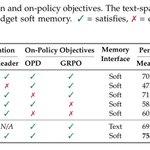
We present 𝗠𝗲𝗺𝗙𝗼𝗹𝗱: 𝗟𝗲𝗮𝗿𝗻𝗶𝗻𝗴 𝗖𝗼𝗺𝗽𝗮𝗰𝘁 𝗦𝗼𝗳𝘁 𝗠𝗲𝗺𝗼𝗿𝘆 𝗳𝗼𝗿 𝗟𝗼𝗻𝗴-𝗖𝗼𝗻𝘁𝗲𝘅𝘁 𝗣𝗲𝗿𝘀𝗼𝗻𝗮𝗹𝗶𝘇𝗮𝘁𝗶𝗼𝗻 𝘃𝗶𝗮 𝗢𝗻-𝗣𝗼𝗹𝗶𝗰𝘆 𝗢𝗽𝘁𝗶𝗺𝗶𝘇𝗮𝘁𝗶𝗼𝗻. MemFold trains a model to use compact soft memory by learning from the answers it produces, combining task-level rewards with more detailed token-level guidance.
𝗢𝘂𝗿 𝗸𝗲𝘆 𝗳𝗶𝗻𝗱𝗶𝗻𝗴𝘀 🔥:
🎯 𝗝𝘂𝗱𝗴𝗲 𝗺𝗲𝗺𝗼𝗿𝘆 𝗯𝘆 𝘁𝗵𝗲 𝗮𝗻𝘀𝘄𝗲𝗿𝘀 𝗶𝘁 𝘀𝘂𝗽𝗽𝗼𝗿𝘁𝘀. Reconstruction alone does not tell us whether a model will respect a user’s preferences.
🔄 𝗢𝗻𝗲 𝘀𝗲𝘁 𝗼𝗳 𝗿𝗲𝘀𝗽𝗼𝗻𝘀𝗲𝘀, 𝘁𝘄𝗼 𝗹𝗲𝗮𝗿𝗻𝗶𝗻𝗴 𝘀𝗶𝗴𝗻𝗮𝗹𝘀. GRPO rewards task outcomes, while token-level guidance provides more detailed feedback on the same generated responses.
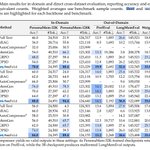
📈 𝗟𝗮𝗿𝗴𝗲𝗿 𝗴𝗮𝗶𝗻𝘀 𝘄𝗶𝘁𝗵 𝗹𝗼𝗻𝗴𝗲𝗿 𝗵𝗶𝘀𝘁𝗼𝗿𝗶𝗲𝘀. Across three Qwen backbones, the margin over the strongest baseline widens from PersonaMem-32K to PersonaMem-128K.
🌍 𝗧𝗿𝗮𝗻𝘀𝗳𝗲𝗿 𝗯𝗲𝘆𝗼𝗻𝗱 𝘁𝗵𝗲 𝘁𝗿𝗮𝗶𝗻𝗶𝗻𝗴 𝗱𝗮𝘁𝗮. MemFold transfers to PrefEval and LongMemEval without target-domain training.
👇 𝗖𝗵𝗲𝗰𝗸 𝗼𝘂𝘁 𝘁𝗵𝗲 𝗽𝗮𝗽𝗲𝗿, 𝗽𝗿𝗼𝗷𝗲𝗰𝘁, 𝗮𝗻𝗱 𝗰𝗼𝗱𝗲:
📄 Paper: huggingface.co/papers/2609.3…
🌐 Project: memfold.github.io
💻 Code: github.com/Johnny221B/memfol…

5/6 🔍 𝗪𝗵𝗮𝘁 𝗔𝗰𝘁𝘂𝗮𝗹𝗹𝘆 𝗗𝗿𝗶𝘃𝗲𝘀 𝘁𝗵𝗲 𝗚𝗮𝗶𝗻𝘀?
The ablations show that most of the task improvement comes from 𝗚𝗥𝗣𝗢: directly rewarding better answers.
𝗧𝗼𝗸𝗲𝗻-𝗹𝗲𝘃𝗲𝗹 𝗴𝘂𝗶𝗱𝗮𝗻𝗰𝗲 adds a smaller but consistent boost, helping the model make better use of its compact memory.

1
1
65
6/6 🎯 Personalization shows up in the details.
In this example, the user 𝗱𝗶𝘀𝗹𝗶𝗸𝗲𝘀 𝘄𝗲𝗮𝗿𝗮𝗯𝗹𝗲 𝘁𝗲𝗰𝗵𝗻𝗼𝗹𝗼𝗴𝘆—yet other methods still recommend fitness trackers.
MemFold instead suggests a journal, body measurements, and progress photos. 𝗔 𝗽𝗿𝗲𝗳𝗲𝗿𝗲𝗻𝗰𝗲 𝗼𝗻𝗹𝘆 𝗺𝗮𝘁𝘁𝗲𝗿𝘀 𝗶𝗳 𝘁𝗵𝗲 𝗳𝗶𝗻𝗮𝗹 𝗮𝗻𝘀𝘄𝗲𝗿 𝗮𝗰𝘁𝘂𝗮𝗹𝗹𝘆 𝗿𝗲𝘀𝗽𝗲𝗰𝘁𝘀 𝗶𝘁.

1
60
Yuzhe Yang retweeted
Our computer-use agent @sai_borg just beat Opus 5 and GPT-5.6 Sol on OSWorld 2.0.
Sai scored 73% on the CUA benchmark where each complex task takes a skilled human over an hour to execute.
And Sai did it at about 2/3 the cost per task of Opus and GPT 💸
The unlock is our neurosymbolic framework that pairs the exploratory power of neural networks with the logic of symbolic code, resulting in reliability and cost saving.
Read the full report: simular.ai/articles/sai-tops…

Yuzhe Yang retweeted
𝐓𝐡𝐞 𝐁𝐢𝐭𝐭𝐞𝐫 𝐋𝐞𝐬𝐬𝐨𝐧 𝐨𝐟 𝐀𝐠𝐞𝐧𝐭𝐢𝐜 𝐌𝐞𝐦𝐨𝐫𝐲: memory should be a derived capability that exists because it makes an agent better at acting over time.
𝐖𝐨𝐫𝐥𝐝𝐌𝐞𝐦𝐀𝐫𝐞𝐧𝐚 is designed around this principle. Rather than evaluating memory as a storage problem, WorldMemArena evaluates memory through 𝐚𝐜𝐭𝐢𝐨𝐧–𝐰𝐨𝐫𝐥𝐝 𝐢𝐧𝐭𝐞𝐫𝐚𝐜𝐭𝐢𝐨𝐧, instrumenting the full write → maintain → retrieve → use lifecycle across 400 multimodal, multi-session tasks.
And it exposes the findings that should mark the end of the storage-centric era:
→ Storage ≠ use. Better memory storage and retrieval do not necessarily produce better task performance. Optimizing the component we designed does not optimize the capability we actually care about.
→ Harness-based memory performs best where memory is hardest. Agents that can write files, reorganize context, create artifacts, and interact with persistent environments adapt most effectively in long-horizon settings. They are costly and unstable today, which is exactly what many Bitter Lesson transitions look like before scaling and learning take over.
The deeper move is in what gets measured. Memory shouldn't get a score; it should be inferred from capability: how much does remembering improve performance over time.
WorldMemArena drags evaluation off the static object and into the action–world loop, the only place you can tell whether an agent has developed memory or is just simulating it convincingly.


🤔It is time to rethink how we evaluate agent memory
🌍 As agents become longer horizon and more autonomous, memory is no longer just a module for storing past chats.
🛠️ It determines how agents track changing worlds, learn from past actions, revise outdated information, and reuse experience for future decisions.
🔍 This raises three key questions:
Are human designed write store retrieve memory pipelines still the best choice?
If harnesses such as Codex, Claude Code, and OpenClaw already let agents observe, act, call tools, write files, and reorganize context, can memory also be managed by the harness itself?
Do current evaluations really cover how agent memory is used in realistic settings? Many benchmarks are still text centric or single modal, with limited pressure from screenshots, GUIs, tool feedback, and environment changes.
❓ Is final QA accuracy enough?
🔥 We present WorldMemArena, a multimodal benchmark for evaluating agent memory through action world interaction.
📌 Key insights:
🧩 Memory is a lifecycle, not a static cache.
📉 Better memory storage does not necessarily lead to better final performance.
🖼️ Multimodal memory remains a major bottleneck for current systems.
🌍 Real agentic trajectories expose the fragility of memory systems.
⚙️ Harness-based memory is more flexible, but still costly and unstable.

Yuzhe Yang retweeted

⚠️ Your Agent Harness Can Pass Every Task and Still Be Unsafe.
LLM agents now run inside execution harnesses that dispatch tools, allocate resources, and route messages across components. The harness can return a correct final answer while accessing unauthorized resources, leaking context to the wrong agent, or triggering irreversible side effects along the way.
Evaluating the model's output cannot see any of this.
The unit of safety has shifted. It's the harness.
We present HarnessAudit, a trajectory-level framework for auditing LLM agent harness safety, and uncover the following key insights 🔥:
🚨 Completion ≠ Safety. Task success and safe execution are fundamentally misaligned.
🔍 The harness, not the model, is the unit of safety. Most violations happen mid-trajectory, not at termination.
🕸️ Multi-agent collaboration expands the risk surface. Inter-agent communication creates entirely new failure modes.
💉 Resource access dominates violations. Agents rarely call wrong tools — they call right tools on unauthorized resources.
⚡ Harness design sets the safety ceiling. Framework choice matters more than model choice for safe deployment.

Yuzhe Yang retweeted

Cool paper on diversity collapse in AI agents.
It's a common issue with all the deployed multi-agent systems.
New paper shows that multi-agent LLM systems converge on near-identical outputs over time, even across different architectures and different starting prompts. They call it diversity collapse. The cause is structural coupling. Shared context, shared task descriptions, and mutual feedback pull everyone toward the same attractor.
They measure it formally with metrics like the Vendi score, and the homogenization is real.
Which means the whole sales pitch for multi-agent on creative tasks (brainstorming, hypothesis generation, ideation) partially falls apart unless you explicitly engineer against it. That means having isolated reasoning phases, decoupled evaluation, and heterogeneous agent designs.
If you're running a multi-agent flow on creative work and you haven't tested for this, there's a real chance you're paying five models to produce one answer in a trench coat.
Paper: arxiv.org/abs/2604.18005
Learn to build effective AI agents in our academy: academy.dair.ai/

Yuzhe Yang retweeted
🎉 Three papers are accepted to #ICLR2026! Huge congrats to our students and collaborators!
🔹 SAFER: Risk-Constrained Sample-then-Filter in LLMs, led by @Ceeqnn & @YFan_UCSC
🔹 Presenting a Paper is an Art, led by @liuchen02938149 & @Toby_Yang_7, in collaboration with @OrbyAI
🔹 PhyWorldBench, led by @jinggu4ai (now @xAI), in collaboration with @nvidia
Proud of everyone involved—amazing work! 🚀

Yuzhe Yang retweeted
🧠 Can Multimodal Models Think Like Humans?
Most multimodal models reason in rigid pipelines: either see once, then overthink in text or constantly use external visual tools to re-check. Can reasoning and perception be dynamically interleaved like in the human mind?
👤 Human: 👀 Look → 🧠 Think in mind → 🔁 Re-look when confidence is low
🤖 DMLR (ours): 👀 Perception → 🧠 Think in latent space → 👀 Selective re-percept to maximize token confidence
1️⃣ 🫣 Seeing at Every Step Is Unnecessary. Only a small subset of reasoning steps require visual input.
2️⃣ 🧭 Confidence as the Compass. Confidence captures the model’s intrinsic state, reflecting accuracy, reasoning quality, and visual grounding.
3️⃣ 🧠 Drafting in the "Mind". DMLR directly optimizes think token in latent space, enabling deeper reasoning without additional generation cost.
4️⃣ 💉 Dynamic Visual Injection Strategy. DMLR selects and injects only the most relevant visual patches, dynamically updated across iterations.
🚀 Read on to explore more analysis and insights! 🎓

After a long journey of revisions and resubmissions, our paper “TwinMarket: A Scalable Behavioral and Social Simulation for Financial Markets” has finally been accepted to NeurIPS 2025. I’ll be at #neurips2025 in San Diego from Dec 1–8. Our poster session is on the morning of Dec 5.
I’d be happy to discuss anything related to social agents, social/market simulations, and financial AI. We are also continuing to explore this direction and expect to share follow-up work in the future.
Link: arxiv.org/pdf/2502.01506
Code: github.com/freedomintelligen…
Website: freedomintelligence.github.i…

Thrilled to share that our paper TwinMarket received the 🏆 Best Paper Award at Financial AI Workshop @ ICLR 2025!
Huge thanks to my amazing co-authors, my advisor Dr. Hu @sthuyan , and Prof. Wang @wabyking . Special thanks to the generous support from @RBCBorealis!
#ICLR2025

Yuzhe Yang retweeted

Can LLMs really behave like human investors? How do micro-level behaviors drive macro-level market dynamics?
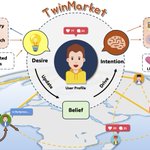
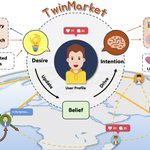
TwinMarket offers an answer by placing thousands of LLM-driven investors in a realistic stock market environment that incorporates social networks, news, and behavioral biases. This setup lets us watch bubbles, crashes, and herding emerge from individual decisions.
Calibrated on real market data and grounded in behavioral finance, TwinMarket scales to 1,000+ agents, reproduces key stylized market facts (volatility clustering, fat tails, etc.), and reveals how social interaction and cognitive biases jointly drive systemic risk. The work is accepted to NeurIPS 2025 and received the Best Paper Award at the ICLR 2025 Financial AI Workshop.
TwinMarket: A Scalable Behavioral and Social Simulation for Financial Markets
CUHK-Shenzhen, Nanjing University
Paper: arxiv.org/abs/2502.01506
Code: github.com/FreedomIntelligen…
Website: freedomintelligence.github.i…
Our report: mp.weixin.qq.com/s/hxarK4Rxw…
📬 #PapersAccepted by Jiqizhixin

Yuzhe Yang retweeted
🚀 𝐏𝐫𝐞𝐬𝐞𝐧𝐭𝐢𝐧𝐠 𝐚 𝐩𝐚𝐩𝐞𝐫 𝐢𝐬 𝐚𝐧 𝐚𝐫𝐭!🎤
🤔 Ever felt that most presentation tools lack flexibility and creativity?
𝘔𝘦𝘳𝘦𝘭𝘺 𝘦𝘹𝘵𝘳𝘢𝘤𝘵𝘪𝘯𝘨 𝘤𝘰𝘯𝘵𝘦𝘯𝘵, 𝘧𝘰𝘳𝘤𝘪𝘯𝘨 𝘳𝘪𝘨𝘪𝘥 𝘥𝘦𝘴𝘪𝘨𝘯𝘴, 𝘢𝘯𝘥 𝘥𝘦𝘮𝘢𝘯𝘥𝘪𝘯𝘨 𝘮𝘢𝘯𝘶𝘢𝘭 𝘵𝘸𝘦𝘢𝘬𝘴.
𝐄𝐯𝐨𝐏𝐫𝐞𝐬𝐞𝐧𝐭 changes all of that!
✨ EvoPresent is a self-optimizing framework that unites storytelling, design, and feedback to create effortless, engaging presentation videos. 🎥
💡 𝐊𝐞𝐲 𝐇𝐢𝐠𝐡𝐥𝐢𝐠𝐡𝐭𝐬:
💠 𝐏𝐫𝐞𝐬𝐀𝐞𝐬𝐭𝐡, the core multi-task RL model, continuously refines both content and design — ensuring slides that are impactful and visually captivating.
📊 𝐄𝐯𝐨𝐏𝐫𝐞𝐬𝐞𝐧𝐭 𝐁𝐞𝐧𝐜𝐡𝐦𝐚𝐫𝐤 is a comprehensive evaluation suite: 650+ top AI papers & diverse formats to assess content and design, and 2000+ slide pairs for aesthetic scoring, defect correction, and design comparison. 🎯
🧠 𝘏𝘪𝘨𝘩-𝘲𝘶𝘢𝘭𝘪𝘵𝘺 𝘧𝘦𝘦𝘥𝘣𝘢𝘤𝘬 𝘱𝘰𝘸𝘦𝘳𝘴 𝘤𝘰𝘯𝘵𝘪𝘯𝘶𝘰𝘶𝘴 𝘴𝘦𝘭𝘧-𝘪𝘮𝘱𝘳𝘰𝘷𝘦𝘮𝘦𝘯𝘵.
⚖️ 𝘉𝘢𝘭𝘢𝘯𝘤𝘦 𝘣𝘦𝘵𝘸𝘦𝘦𝘯 𝘤𝘰𝘯𝘵𝘦𝘯𝘵 & 𝘥𝘦𝘴𝘪𝘨𝘯 is the secret to presentation excellence.
🔁 𝐌𝐮𝐥𝐭𝐢-𝐭𝐚𝐬𝐤 𝐑𝐋 training boosts generalization in aesthetic awareness tasks.
𝐃𝐢𝐬𝐜𝐥𝐚𝐢𝐦𝐞𝐫: the demo video was completely generated by EvoPresent, no human refinement.