

Pinned Tweet
DON'T THINK I'M PIOUS BECAUSE OF MY POSTS.
I May Sin More Than You Do. May ALLAH Forgive Us. My All Posts Are Reminder For Myself Before Anyone Else.
May Allah forgive us for the sins we commit in private and public.
1
351
Shaykh Ahmed Yare has just finished teaching the Kutub al-Sittah, a journey of about 18 years and more than 2,000 sessions.
In a short booklet released today, the Shaykh lists when he began each of the six books and how many sessions each one took. He also describes the رسائل he wrote along the way on issues that came up while teaching them.
This is a tremendous milestone, and the Shaykh’s dedication truly deserves praise.
May Allah عز وجل bless the Shaykh, grant him a long life, and allow him to keep teaching and benefiting the Ummah.
1
123
We live in a time when everyone wants to debate, argue, refute, and have the last word. People spend hours arguing over religious matters, yet how much of that knowledge has actually changed their hearts and actions?
Ibn Rajab رحمه الله mentions in Faḍl ʿIlm al-Salaf that some of the Salaf said:
“If Allah intends good for a servant, He opens for him the door of action and closes for him the door of argumentation. And if Allah intends evil for a servant, He closes for him the door of action and opens for him the door of argumentation.”
What a frightening statement.
A person may become occupied with defending the truth while neglecting to act upon it. He knows how to refute others, but has forgotten how to hold himself accountable.
The purpose of seeking knowledge is not to become victorious in every argument, but to become a better servant of Allah.
So ask yourself: Has your knowledge increased your worship, humility, and fear of Allah, or has it only increased your arguments?

ابو يقين retweeted

𝗛𝗶𝘇𝗯𝗶𝘆𝘆𝗮𝗵 𝗮𝗻𝗱 𝗖𝘂𝗹𝘁𝗶𝘀𝗵 𝗾𝘂𝗮𝗿𝗿𝗲𝗹𝘀 𝗹𝗲𝗮𝗱𝘀 𝘁𝗵𝗲 𝗹𝗮𝘆𝗺𝗮𝗻 𝘁𝗼 𝗮𝘁𝗵𝗲𝗶𝘀𝗺 𝗮𝗻𝗱 𝗮𝗽𝗼𝘀𝘁𝗮𝘀𝘆!
Our Shaykh @Dr_Mutlaq al-Jāsir discussing with our Shaykh Uthmān al-Khamīs the dangers and affects of “duaat” who just argue, debate and make tabdee/takfir. Anyone who’s sincere, watch and reflect.
The youth should busy themselves with beneficial knowledge and build a solid foundation in the Islamic sciences. This will protect them and raise their status with Allah. Not targeting the honour of Muslims or getting involved in nuances far above their pay grade. And there are cases where such people who lacked the basic but went into these things apostatised. نسأل الله العافية
ابو يقين retweeted

كان يُقالُ في متصدِّرٍ لإفادةِ النَّاسِ مع قصورِ أهليَّتِهِ: (كثيرُ العلم، قليلُ العقل)، أمَّا اليومَ فيتصدَّرُ فيهم (قليلُ العلم، قليلُ العقل، قليلُ الدِّين، قليلُ المروءة)، وطلعُه النَّكِدُ: ضمورُ الحقِّ، وانتفاشُ الباطل، واشتعالُ العداوة، وفشوُ البغضاء؛فرُحماكَ ولطفكَ يا ربِّ.
ابو يقين retweeted

Modesty (حياء) is one of the most important branches of Iman. However, a lot of people have a big misunderstanding of what hayaa’ even is according to the shari’ah.
Al-Sharif al-Jurjani said:
"الحياء انقباض النفس من شيء وتركه حذرًا عن اللوم فيه"
“Al-Hayaa’ is feeling an inward reluctance toward something and avoiding it for fear of blame.”
Therefore, hayaa is something that begins internally, then manifests outwardly in one’s speech, conduct and appearance. The strength of one’s outer portrayal of modesty is proportional to the strength of that internal feeling. That inner feeling prevents you from doing that which is blameworthy.
As the prophet ﷺ said in the hadith of Abi Mas’ud:
"إن مِمَّا أَدْرَكَ النَّاسُ مِنْ كَلَامِ النُّبُوَّةِ الْأُولَى: إِذَا لَمْ تَسْتَحِ فَاصْنَعْ مَا شِئت”
“Among the sayings of the earliest prophets that people have preserved is: ‘If you have no shame, then do as you please.’”
This Hadith shows that hayaa is an internal restraint upon a person's conduct. When this restraint disappears, a person becomes willing to do whatever he pleases, without regard for what is shameful or blameworthy. Conversely, the presence of hayaa restrains a person from such conduct.
This is why hayaa cannot be merely reduced to one’s outward covering (niqab/khimar). Yet this is exactly the erroneous understanding many Muslims have, conflating outward manifestations of hayaa with hayaa itself.
The khimar is a cloth over a woman’s head, and the niqab is a veil over a woman’s face, typically showing her eyes for her to see. These are important obligatory manifestations of hayaa but they do not encompass everything a Muslimah is commanded to do from hayaa. Hayaa has to also manifest in her conduct, speech and interactions with others.
How are we supposed to respond to women who observe the niqab, yet willingly engage in unnecessary, contentious exchanges with non-mahram men, where shameless familiarity and inappropriate remarks come from them? Does the covering of one’s face somehow exempt a person from observing modesty in speech and conduct?
I’ve made a similar point before concerning the term “hijabi,” and my use of the word “khimar” throughout this discussion has been intentional. The term “hijab” has become synonymous in many people’s minds with merely covering one’s hair, such that a woman may be regarded as observing hijab regardless of how tight her clothing is or how much of her adornment she displays. Again, the mistake is confusing one outward requirement with the fulfillment of hayaa in its entirety.
The issue in both cases is the same: hayaa is not just a piece of clothing, but an inward disposition that governs one’s behavior. It should restrain a Muslim or Muslimah from engaging in what is blameworthy.
No, I understand your stance perfectly well, and I understand how you guys apply it. My disagreement is with making tawqquf the general rule simply because you don’t personally know someone’s condition.
There’s a difference between giving someone a tazkiyah and making a general judgment about an ordinary Muslim. When you give someone a tazkiyah, you obviously need to know his condition, because people may take knowledge from him and follow him.
But when it comes to the general awam, we have principles and qara’in (outward indications) that we take into consideration. For example, where does this person live? What kind of environment did he grow up in? What is the predominant i’tiqad of the people in his area?
Take an ordinary Muslim who grew up in a place where the creed of Ahl al-Sunnah is widespread. Based on these circumstances, we may reasonably assume he’s upon that creed unless something contrary becomes apparent. That doesn’t mean we’re giving him a specific tazkiyah.
So I’m not saying we can never make tawqquf. Of course, if there aren’t enough indications, we withhold judgment. My issue is with making tawqquf a general rule for everyone you don’t personally know, as though the zahir and the qara’in have no weight in determining someone’s condition.

This is how I know you don’t know my stance.
This is exactly what we are saying.
We don’t know their condition so we do tawaquf on it. We don’t say yes or no to them being upon bid’ah nor sunnah.
Because we don’t know them.
4
360
Ibn Khaldūn رحمه الله explained something interesting about how civilizations rise and eventually decline, and much of what he said can still be seen in the world today.
He explains that nations are initially established through العصبية (group solidarity), where people are united by hardship, courage, discipline, and a willingness to sacrifice for one another.
«فإنّ الغلب الّذي يكون به الملك إنّما هو بالعصبيّة وبما يتبعها من شدّة البأس»
Political authority is established through group solidarity and the strength that comes with it.
But once a nation becomes powerful, wealth and luxury follow. People begin enjoying comforts their predecessors never had.
Interestingly, Ibn Khaldūn doesn’t say luxury immediately weakens a nation. Rather, he says:
«الترف يزيد الدولة في أولها قوة إلى قوتها»
“Luxury initially adds strength to the strength of a dynasty.”
Wealth allows the population to grow, armies to expand, and cities and industries to develop.
However, over time, the generations begin to change. Those who established the nation experienced hardship, while their descendants grow up surrounded by comfort.
He mentions five stages that dynasties generally pass through:
طور الظفر — Conquest and the establishment of power.
طور الاستبداد — The concentration of authority in the ruler’s hands.
طور الفراغ والدعة — Prosperity, wealth, and development.
طور القنوع والمسالمة — Contentment and reliance upon what previous generations established.
طور الإسراف والتبذير — Extravagance, corruption, and eventual decline.
Now compare this to modern civilization.
Many nations today have advanced technology, enormous wealth, beautiful cities, and comforts that previous generations could never have imagined.
Yet having all these things doesn’t necessarily mean a society is stronger in every respect.
A nation can become wealthier while its people become less united, its leadership more corrupt, and its institutions weaker.
This is one of the interesting points Ibn Khaldūn makes: the very prosperity that initially strengthens a state can eventually contribute to its weakness when accompanied by the loss of solidarity and responsible leadership.
He says concerning the ruler in the final stage:
«فيكون مخرّبا لما كان سلفه يؤسّسون وهادما لما كانوا يبنون»
“He destroys what his predecessors established and demolishes what they built.”
And this is worth reflecting upon. A generation can inherit everything its predecessors struggled to establish, yet gradually destroy it through mismanagement, extravagance, and corruption.
Of course, this doesn’t mean every wealthy nation is destined to collapse or that technological advancement is something bad.
Rather, wealth and material progress alone do not guarantee that a civilization will remain strong.
Ibn Khaldūn concludes:
«فاعتبره وتفهّمه وتأمّله تجده صحيحا في العمران»
“Consider this, understand it, and reflect upon it. You will find it true in human civilization.”
سبحان الله، how many nations and dynasties have risen to power, reached extraordinary heights, and eventually disappeared?
«وَاللهُ وَارِثُ الْأَرْضِ وَمَنْ عَلَيْهَا وَهُوَ خَيْرُ الْوَارِثِينَ»
Al-Muqaddimah — Ibn Khaldūn رحمه الله
1
59
You are taking the statement of Imam al-Barbahārī رحمه الله out of its proper context.
When he says that a person should not be called a Ṣāḥib Sunnah until the characteristics of the Sunnah are known in him, he is discussing the conditions for giving someone that positive description.
Shaykh Ṣāliḥ al-Fawzān حفظه الله explains this very statement by saying:
«لا تزكي الشخص وتمدحه إلا عن علم».
“Do not recommend or praise someone except upon knowledge.”
So the discussion concerns tazkiyah, not establishing that every ordinary Muslim must prove his Salafi identity before being treated as free from innovation.
Al-Barbahārī himself said:
«والمستور من المسلمين من لم تظهر له ريبة».
“The Muslim whose condition is concealed is one from whom nothing suspicious has appeared.”
These two statements do not contradict each other.
There is a difference between not having enough knowledge to recommend someone as a firmly established person of Sunnah and having evidence that he is an innovator.
The absence of a tazkiyah is not proof of bidʿah, and ignorance of someone’s detailed beliefs does not justify treating him with suspicion.
We should understand the statements of the Salaf together, rather than using one statement to establish a principle that the author himself did not explicitly state.
This is a very disingenuous argument and usage of the Speech of Shaykh Fawzan حفظه الله. Why don’t you find something which is specific and clear?
The Shaykh says:
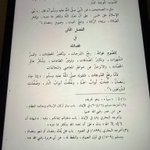
“The default concerning a Muslim is uprightness. This is a great principle: we do not think badly of him, spy on him or investigate him. However, if something becomes apparent to us, we judge him accordingly.” (Check image)
التعليقات المختصرة على متن العقيدة الطحاوية, p. 165.
But where here does the shaykh ever say the default of the person is Salafi or even Sunni?
One of the brothers mentioned what Shaykhul Islam Ibn Taymiyah رحمه الله said, but we should also analyse what Imam Barbahari رحمه الله mentioned.
We affirm someone’s a Salafi when?
When what is seen in him?
الله المستعان

The statements of the Salaf about testing people by certain scholars must be understood in their proper context.
Some of the Salaf would test people by particular scholars during times of fitnah, especially in places where innovation was widespread. A person’s attitude toward a scholar could sometimes indicate whether he followed the Sunnah or opposed it.
For example, Sufyān al-Thawrī رحمه الله said:
“Test the people of Mosul by Muʿāfā ibn ʿImrān.”
Notice that he specifically mentioned the people of Mosul. He did not make this a general rule for every Muslim in every time and place.
Testing people by the names of scholars is not one of the foundations of Ahl al-Sunnah. Rather, it may be allowed when there is a genuine need, depending on the time, place, and circumstances.
However, making a particular scholar the standard of loyalty, testing ordinary Muslims by their opinions of him, and then declaring them innovators or boycotting them simply because they disagree is blameworthy.
Ibn Taymiyyah رحمه الله explained that no individual other than the Prophet ﷺ should be made a standard upon which loyalty and opposition are based.
We should not take specific actions of the Salaf during times of fitnah and turn them into general rules that apply to everyone.
The circumstances must first be considered, because what may have been useful in one place and time may not apply elsewhere.
The standard is the Qurʾān and Sunnah, not loyalty to particular scholars. We judge people by how closely they follow the truth, not by whether they agree with a certain individual.
And Allah knows best.
48
A reminder to myself and everyone else.
Never look down upon someone because of their sins, nor think yourself better than them because of your worship.
The Prophet ﷺ told us about two men from the Children of Israel. One was devoted to worship, while the other frequently committed sins. The worshipper would constantly advise the sinner to stop, until one day he said, “By Allah, Allah will never forgive you.”
Because of this statement, Allah admitted the sinner into Paradise through His mercy and commanded that the worshipper be taken to the Fire.
Abu Hurayrah رضي الله عنه said that he spoke a single word that destroyed his worldly life and his Hereafter.
Sunan Abi Dawud (4901).
How many times do we see someone falling into sin and begin to think we are better than them? How often do we forget that the guidance we possess is only through the mercy of Allah?
You may be more knowledgeable than someone today, but they may be more sincere than you. You may have more acts of worship, but they may have a heart filled with humility and repentance.
Advise the sinner, hate the sin, but never become arrogant because of your obedience.
You do not know how your life will end, nor how theirs will end.
May Allah purify our hearts from arrogance, protect us from self-righteousness, and grant us a good ending.
3
110
ابو يقين retweeted

Your allegiance is to the Truth alone, not to your Shaykh or your Group.
— Sh. Sultān al-ʿUmayrī
One of the biggest problems with some young students today is attention.
You only have so much attention in your life. If most of it is spent tracking people, collecting mistakes, listening to refutations, waiting for the next person to slip, and figuring out who is “with” or “against” whom, then when exactly are you going to seek knowledge?
When are you going to memorize Quran? Study hadith? Learn fiqh? Usul? Arabic? Tafsir?
For some people, following mistakes has practically become their entire talab al-ilm.
And there is another problem: inconsistency in standards.
A contemporary scholar makes one mistake in an issue of aqidah or manhaj and suddenly every word he has ever said is investigated. People ask: Who does he sit with? Who praised him? Who did he refuse to warn against? Why didn’t he clarify this sentence? Why didn’t he retract that statement?
But then they read earlier scholars who had mistakes that were arguably much greater, including serious mistakes in aqidah, and suddenly there is tafsil, context, excuses, interpretation, consideration of the scholar’s overall Sunnah and service to Islam—and they still comfortably call him Imam, Shaykh al-Islam, al-Hafiz, etc.
I’m not saying those earlier scholars shouldn’t be excused or respected. The point is exactly the opposite: why does that scholarly fairness suddenly disappear when dealing with someone from the last 40 or 50 years?
Imagine taking the harshest standards some people apply to contemporary Salafi scholars and applying them mechanically to every scholar in Islamic history.
How many scholars would survive?
If your answer is, “No, you have to understand the earlier scholar’s context, his usul, what he intended, whether the statement was actually established from him, whether he was mistaken in ijtihad, whether he retracted, whether the mistake was characteristic of his methodology, and you have to weigh his Sunnah and scholarship as a whole,” then good.
That is precisely the point.
Be consistent.
And perhaps the saddest part is when the awam are constantly fed these disputes.
People will say, “These issues aren’t for the awam,” while producing hours of public content about individuals, names, warnings, responses and counter-responses—and then acting surprised when ordinary Muslims become obsessed with them.
If something truly isn’t for the awam, stop making the awam your audience for it.
Jarh, tahdhir and refutation have their proper place. Ahl al-Sunnah have never denied that.
But they are tools used to protect the religion. They are not the religion itself.
A student can spend years knowing exactly who made a mistake, who refuted him, who defended him, and who sat with whom—and still be unable to properly explain a chapter of fiqh, parse an Arabic sentence, discuss an issue of usul, or recite what he supposedly spent those years studying.
Your attention is part of your life.
Spend it becoming a person of knowledge, not merely a person who knows the mistakes of people of knowledge.
The strongest line, in my view, is “If something truly isn’t for the awam, stop making the awam your audience for it.” It captures the contradiction without denying legitimate jarḥ, radd, or taḥdhīr.
Your second post doesn’t really clarify the first. It changes the standard.
In the first post, John already heard that Muslims believe in one God and that Muhammad ﷺ is the final Messenger. But you still said John was NOT a kafir because he had misconceptions about Islam. You said those misconceptions had to be cleared up first.
Then when someone applied that same logic to Netanyahu, you responded by saying Netanyahu and other world leaders have “all heard the Truth.”
But that’s not the standard you gave us in the first post.
John had heard about Islam too. Your whole argument was that simply hearing about Islam isn’t enough if the person has a distorted understanding of it. So if someone says Netanyahu has a distorted understanding of Islam because he associates it with terrorism, you can’t just respond, “Well, he’s heard the Truth.” By your own first post, you would have to show that the misconceptions were actually cleared up for him.
Even the Subway example shows the problem.
You met a man who apparently didn’t even know what Islam was. Fine. That can be used as an example of someone to whom the message may not have reached.
But then you go further and say that if he died right there, he would not be punished eternally and that “with Allah” he is not a kafir.
How did you determine his individual ruling with Allah from one short conversation at Subway?
Allah says:
﴿وَمَا كُنَّا مُعَذِّبِينَ حَتَّىٰ نَبْعَثَ رَسُولًا﴾
“We do not punish until We send a messenger.”
That establishes a principle concerning punishment. It does not mean that after a two-minute conversation you can definitively tell us the final ruling of a specific person before Allah.
And notice the inconsistency:
With the Subway worker, you take his statement “What’s Islam?” at face value and conclude the message never reached him.
But with Netanyahu and other specific people, you simply declare that they “ALL heard the Truth” and “ALL know” about the Hereafter.
How do you know what was established upon either person before Allah?
You created an extremely high standard in the first post: the person must properly understand the message and his relevant misconceptions must be clarified.
Then, when someone applied that standard to a person you obviously believe is a kafir, you lowered it to: “He has heard the Truth.”
Pick one standard and apply it consistently.
And most importantly, separate three different questions:
What is a person’s outward ruling in this world?
Has the hujjah actually been established upon that particular individual?
What will Allah do with that individual in the Hereafter?
Those are not automatically the same question.

To clarify, this is not in the ruling/legal sense in this world.
As we live in this world, non-Muslim = kafir, there’s no special category in between.
The post below is clarification that with Allah تعالى, He said in His book He will not punish a person who did not receive the message. It’s about the afterlife.
Also, I saw a jaahil majhool - ignorant and unknown person - quote the tweet saying if Netenyahu thinks islam is terrorism because of what he sees, he’s not a kafir.
There is no disagreement whatsoever that Netenyahu is kafir khaalid in Jahannam. He will go in and never ever leave.
Only a fool makes a conclusion as such, from a very simple statement that I spent time explaining.
The simple statement is: A person cannot have rejected the Truth if they do not know the Truth.
Netenyahu, all apologist christians, all world leaders who dont outwardly say they’re Muslim, etc- these people have ALL heard the Truth and they ALL know there is an afterlife they will face after death. They are all kuffar, nobody disagrees.
The initial post below is referring to people, like this man I met at Subway 2 months ago or so:
I ordered a tuna sandwich, but asked him to change his gloves and wash knives and don’t touch any meat before touching my sandwich.
He did so happily, and curiously asked me why?
I said to him “because I have a religious allergy to meat” — he laughed at the joke and said “religious allergy? What does that mean?”
I said it means, in my religion I cannot eat meat unless it is slaughtered a specific way, it’s called Halal meat.
His face visibly showed he was shocked, and he asked what religion is that?
I said, Islam. He said: What’s Islam?
I myself was shocked to hear that question— but he didn’t know.
Such a person, had he died before me answering what Islam is, would he have gone to hell for eternity? No, by Allah’s own words.
I have met multiple people like this, such as the last one at my own house, the mail guy, he came to drop a package off and I was outside so I went up to him so he didn’t have to walk all the way to our front door.
I walked up, in a green thobe, and I saw a big cross on his neck, so I asked, are you a proud practicing Christian? He’s like “I’m a proud everything, man”
I said, it’s good to see you believe in something, I have one request from you cause I care about you like my brother-
He said what’s that?
I said read the Quran
He said what’s that?
I said it’s the last holy book sent by God to us all to teach us
He’s like, wow I never heard of that, I’ll check it out for sure man I appreciate you
Someone like him? Hell for eternity, when he didn’t even know there was something called a Quran?
These two examples are of people who are not Muslim, but with Allah تعالى they are not kuffar- they have not rejected anything, yet.
We give da’wah because we care about the people.
Other people who know the truth, whether they agree or not, as I explained in the first post, are kuffar if they reject— with Allah.
With us, for example a Muslim woman marrying a nonmuslim, the ruling is the same between nonmuslim and Kaafir.
1
243
You’re actually proving the point.
No one is arguing that merely sitting in the same room as an Ashʿarī or Māturīdī is prohibited in every circumstance. The question is whether the principle you’re now invoking, المصلحة الشرعية and looking at the purpose of the gathering, is being applied consistently.
You say, “Understand صورة المسألة before passing a verdict.”
Exactly.
So why isn’t that same تفصيل given to the duʿāt in the West before they are refuted for appearing at conferences alongside people you consider innovators?
You’ve now admitted that مجرد الاجتماع, merely gathering with them, is not sufficient. You have to look at the purpose, what was actually said, what benefit was intended, what harm was being avoided, and whether there was a legitimate مصلحة شرعية.
And saying, “But they didn’t refute them on stage,” doesn’t automatically settle the issue either. You would first have to establish the principle that every permissible gathering with an innovator requires publicly refuting his bidʿah during that same gathering.
Otherwise, where is the evidence for that condition?
Your alcohol analogy also assumes the very thing you’re trying to prove. Someone openly drinking alcohol in front of you is actively committing a munkar in the gathering. An Ashʿarī simply sitting beside you while nobody is discussing the disputed theological issue is not necessarily the same صورة.
And regarding this conference, if your argument is that its title is “countering ideological deviation,” that still doesn’t answer the principle. Were the specific Ashʿarī and Māturīdī doctrines of the scholars present actually being refuted? If not, then according to the standard you just imposed on Western duʿāt, that they share a platform, discuss general agreed upon matters, and don’t address the deviations of those sitting with them, you still have to explain the فرق المؤثر between the two cases.
If there is a genuine difference, establish it with a consistent ضابط.
But you cannot use مصلحة شرعية and consideration of صورة المسألة for one group, then abandon that تفصيل and reduce the other group to “he sat with an innovator.”
That is precisely the inconsistency being questioned.

Look who's out of the woodwork again, recycling talking points that have already been answered. الله المستعان
Can somebody please explain the following to the brother who keeps repeating them:
1. No one has ever closed the door completely on attending gatherings where innovators may be present. The scholars tie this to مصلحة شرعية: attending to clarify the truth and refute falsehood is one thing, and sitting there to lend legitimacy is another. Put the animosity aside for a moment and understand صورة المسألة before passing verdicts on it.
2. Stop drawing a false equivalence with what some Western du'at do at gatherings with innovators, where:
a) nothing is clarified, and it's pure platforming and sharing the stage;
b) the talks stay on general matters everyone agrees on, while the pressing issues that separate truth from error are never touched.
That's like spending every evening with those who drink alcohol and never once mentioning the harms of alcohol. That is the تمييع being criticised. A scholar sitting at a table whose whole purpose is refutation is not the same thing.
1. The very title of this conference is countering الانحراف الفكري, ideological deviation. Its sessions are on the role of fatwa in confronting deviation and on building immunity against it. You're comparing a platform built for الرد والبيان (refuting & clarifying) with gatherings built for mutual praise.
The Qur'an sets the criterion:
فَلَا تَقْعُدُوا مَعَهُمْ حَتَّىٰ يَخُوضُوا فِي حَدِيثٍ غَيْرِهِ﴾ [النساء: 140]. “then do not sit in that company unless they engage in a different topic, or else you will be like them”
The prohibition is on sitting silently while falsehood is spoken. It is not on standing up to answer it. Even if the falsifiers are present.
Ya Allah guide this mans heart…
ابو يقين retweeted

Absolute obedience of Ruler.
Ibn Taymiyyah mentioned:
The way of the Murji’ah and those like them, who follow the path of obeying rulers unconditionally,even if they are not righteous.


ابو يقين retweeted

[Thread 🧵] Pre-Taymiyyan scholars affirming “ḥulūl al-ḥawādith.”
The affirmation of al-afʿāl al-ikhtiyāriyyah (volitional actions temporally enacted by Allāh) is often falsely pinned as a heresy of Ibn Taymiyyah that was foreign to the Salaf al-Ṣāliḥ and the early scholars.
This quoted post is unavailable.

ابو يقين retweeted

“Gaza is the cause of the entire Muslim Ummah!”
-Abdul Aziz al-Tarefe (May Allah preserve him and free him from captivity with honour)
ابو يقين retweeted

That's enough Madkhali Twitter for one day.....
Wtf even is this?!!! 😂😂😂
How do you even get Abu Bakr al-Baghdadi, Ramadan al-Buti, Ahmad al-Hazimee, Ali Khamenei, Muhammad Surur, Habbib Ali Jifri, Usamah bin Laden, Muhammad bin Hadi, and Ali al-Halabi on the same poster? 😭

الأئمة المضلون هم الرؤوس الذين يقودون الناس باسم الدين إلى الضلال والبدع، وهم أعظم خطرًا على الأمة الإسلامية من الأعداء الظاهرين؛ لأنهم يفسدون العقائد ويفرّقون الكلمة ، يلبسون على الناس، يخلطون الحق بالباطل ويزخرفون البدع لتظهر كأنها من الدين، وصفهم النبي ﷺ بأنهم "دعاة على أبواب جهنم، من أجابهم إليها قذفوه فيها"
يجب الحذر من مجالسهم، وقراءة كتبهم، والاستماع لأهوائهم لحماية العقيدة
ومن يمدح أهل البدع والأهواء أو يثني عليهم فهو يعين على هدم الإسلام ويغرّ العامة بباطلهم
والسكوت عن بيان حالهم غش للمسلمين، وتفريط في أمانة العلم، وسبب لانتشار ضلالهم
الواجب على المسلم لزوم جماعة المسلمين وإمامهم، والتمسك بالقرآن والسنة بفهم السلف الصالح، والالتفاف حول العلماء الربانيين المشهود لهم بصحة المعتقد وسلامة المنهج.
#الاخوان_المفسدين