

Sometimes I design ships. Most times I design how to design ships. Tweets not representative of employer or client policy. She/Her/Hers. @r-p-one on the blue.
Joined October 2011
- Tweets15.3K
- Following1.6K
- Followers11.1K
- Likes23.6K




Dr Rachel Pawling 🌈🏳️⚧️ retweeted

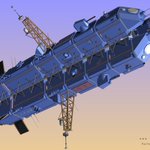
China’s New Trimaran Submarine: 16 Missiles And An Unconventional Design 🇨🇳
navalnews.com/naval-news/202…


Dr Rachel Pawling 🌈🏳️⚧️ retweeted

HI Sutton's take on the second new suspected UUV mothership built in Guangzhou. I think his length estimate (ca 180 m) is probably closer to reality than my initial impression (closer to 150 m vs first hull of 200+ m).
hisutton.com/Chinese-XXLUUV-…

Dr Rachel Pawling 🌈🏳️⚧️ retweeted

Ok. Is this like an academic deadline? Asking for a friend.

Defence Secretary urges British public to be ready for war within 1,000 days
mirror.co.uk/news/uk-news/de…


I remain of the view that the only way to do this is to drop the commonality requirement. I understand the arguments in favour of it, but basic network complexity says the interactions between requirements will escalate if forced onto a common vehicle platform.

One thing we should agree on upfront is that whatever happens to Ajax, the UK needs a universal medium tracked platform to replace three legacy fleets: CVR(T), Warrior and FV432 Bulldog. Ajax was only ever meant to replace CVR(T), but obviously commonality with a new IFV / APC family makes sense. The question is can Ajax do this?
Although having depth charge throwers forward was not idea for the anti torpedo role, I do wonder if there is by now a barrage round for the chaff launchers. Or is PLAN adopting smarter anti torpedo decoys?


The sheer untempered optimism of that Bradley (?) concept though. Getting Rapier miniaturised enough to fit would have been… challenging for the industry of the day.


Dr Rachel Pawling 🌈🏳️⚧️ retweeted

That's a new one on me, a BN islander with Seaspray radar and a Sea Skua missile


Hybrid navy inspo.

The World's smallest aircraft carrier.
USS Targeteer (YV-3) was a specialized drone carrier, designed to launch and control target drones that would serve as adversaries for training exercises.
She was originally named Gunnison River (LSM(R)-508) where she served as a Landing Ship Medium (Rocket) starting in 1945. Following her decommissioning in 1947, Gunnison River sat idle for several years.
The Navy decided to repurpose her as a Drone Aircraft Catapult Control Ship) in 1960. On 26 June 1960, Gunnison River was renamed Targeteer and began refit. The conversion, lasting into 1961, fitted her with radio-control equipment to control drones. She also recieved a catapult and equipment to handle the drones.
Thanks to her new ability to launch and control drones, the 1,000 ton Targeteer became affectionately known as the "The World's Smallest Aircraft Carrier" to her crew.
In this capacity, Targeteer served until 1968, helping develop navy tactics to fight against Aircraft ( using aerial drones) and fast attack craft (using surface drones). The work was not glamorous, but was instrumental.


Dr Rachel Pawling 🌈🏳️⚧️ retweeted

I'm the captain of a navy warship, and my family, which has a proud history of naval service, thinks I joined to continue the tradition. I actually joined because I like Star Trek and this is the closest I can get to being on the bridge of the starship Enterprise.


Dr Rachel Pawling 🌈🏳️⚧️ retweeted

DMS accelerators used by the human constructs in Epitaph, a weaponized version of the Direct Matter Stream technology originally developed for rapid fabrication, but instead of depositing material, the particle stream is accelerated to relativistic speeds to obliterate the target


That all went well. As ever, having students who ask questions (and suggest answers) makes it fun :-) Let’s see how much they remember…


Something I think about is simplification for wartime production, where it is a benefit & where it is not. Small arms are one area where it happens. I wonder about other areas. @RDPHistory what happened to the parts count / complexity of, say a RR Merlin through the war?
