

Verslavingsarts en scum of the riggle. Meer knuffels = meer beter. Team regenbogen en unicorns 🌈🦄 Woke samenzweerder en antifascist.
Amsterdam
Joined June 2010
- Tweets37.2K
- Following1.5K
- Followers848
- Likes66.7K




Jelmer Weijs retweeted

Happy Kerch Bridge Sanction Day to all who celebrate!

Absolut wichtiger ukrainische Erfolg! Die Angriffe auf die Kertschbrücke sind militärisch und diplomatisch wichtig:
1) Ist die Kertschbrücke zerstört, dann ist das militärisch sinnvoll, denn die russischen Nachschubwege über die völkerrechtswidrig besetzte Krym werden behindert
2) Russland nutzt die Krym weiter als Basis für Angriffe auf den Süden der Ukraine. Die Befreiung der Krym ist deshalb militärisch wichtig. Die Zerstörung der Brücke ist der erste Schritt dafür.
3) Mit der Zerstörung der bzw. den Angriffen auf die völkerrechtswidrig von Russland errichteten Brücke, setzt die Ukraine weitreichende Sanktionen aktiv durch. Europa sollte der Ukraine dankbar sein.
4) Für Putin haben die Kertschbücke und die Krym einen hohen symbolischen Wert. Angriffe auf die Kertschbrücke üben somit diplomatisch Druck auf Putin und sein Unrechtsregime aus.
5) Die schwache und beschwichtigende Reaktion des Westens auf den russischen Angriff auf die Ukraine 2014 und die völkerrechtswidrige Annexion der Krym war ein Grundfehler im Umgang mit Russland: Die Befreiung der Krym ist deshalb im Sinne Europas
Danke Ukraine 🇺🇦
Jelmer Weijs retweeted

The Defence Forces hit the Crimean Bridge: span down, road traffic to occupied Crimea halted
During the night of 17 November, the Defence Forces of Ukraine struck the Kerch Bridge. For years, russia built the myth of a “forever russian” Crimea around this bridge, and now that very structure lies partly in the water.
Powerful explosions rang out over the strait. The arch and a span of the bridge’s road section have collapsed. The roadway is out of action: no vehicle can cross it. The railway section is still standing, but now with a damaged arch.
This is the result of a multi-phase joint operation by Ukrainian warriors, carried out over several weeks.
The Defence Forces gradually neutralised air defence systems, electronic warfare (EW) assets and radars in order to deliver a final combined strike with Ukrainian-developed weapons.
For the occupiers, this is more than a symbolic blow. The bridge was the main artery carrying fuel, ammunition, equipment and personnel to the peninsula and on into southern Ukraine. This autumn, the Chonhar and Henichesk bridges went down. Now it is the Kerch Bridge’s turn. The occupiers are left with fewer and fewer land routes to Crimea. Every hour without traffic over the bridge means russian groupings in the south receive less of what they need to keep fighting.
The Defence Forces of Ukraine are exercising the right of self-defence guaranteed by Article 51 of the UN Charter. They are systematically dismantling the enemy’s military and economic potential and compelling russia to cease its armed aggression against Ukraine.
The symbol of the occupation has cracked. To be continued 💥
Glory to Ukraine! 🇺🇦

Jelmer Weijs retweeted

Aged like fine milk


BREAKING: The U.S. and Mexico have lost their measles-free status, international health officials say. apnews.com/article/measles-e…


Genieten hoe alle pro-Russische accounts over elkaar buitelen om het belang van de #Krimbrug te bagataliseren 🤣🤣🤣🤣
1
64


Jelmer Weijs retweeted
🔥 Ukrainian defense forces struck the Kerch Bridge using FP-2 drones and FP-5 cruise missiles.
The combined strike ran from the evening of November 16 into the night of November 17. Around midnight, direct impacts collapsed the road section's arch, dragging the roadway down with it.
Shipping from the Sea of Azov is now blocked, and vehicle traffic across the bridge is impossible. Still, that didn't stop Russians from forming queues to leave Crimea.

Jelmer Weijs retweeted

There are MANY things that are great about Kerch Bridge going down, but what makes me giddy is knowing that Putin has to sit there with Trump and Xi at this ridiculous summit while the whole world laughs at how limp and impotent his military is.
teapawt.net/Gerashchenko_en/status…


Jelmer Weijs retweeted

The destruction of the Kerch Bridge’s arch and the blockage of the shipping channel by its debris affect far more than Russia’s transport links with occupied Crimea. It triggers a chain of disruptions to maritime and river transport, grain and oil exports, military logistics, and the economies of entire Russian regions. Debris from the bridge blocks the Kerch–Yenikale Canal, cutting off direct access to the Black Sea for the ports of Rostov-on-Don, Azov, Taganrog, Yeysk and Temryuk, as well as occupied Mariupol and Berdiansk. But the consequences extend further. Through the Don and the Volga–Don Canal, the Sea of Azov is connected to the Volga, the Caspian Sea and Russia’s vast network of inland waterways.
The main target of the Ukrainian strike is the military logistics network supplying occupied Crimea. The Kerch Bridge remains an important supply route for Russian forces, and Ukraine will seek to put it permanently out of service. Moscow cannot count on restoring the bridge and shipping through the Kerch Strait without interference while the war continues. The loss of road and rail links forces Russia to reroute cargo through occupied southern Ukraine, where transport routes are already supplying the front. Crimea will not be completely isolated, but Russia will lose an important fallback option for its military logistics. The fewer supply routes remain, the harder it becomes for Russia to supply its troops and hold occupied territory.
The second major blow is to Russian grain exports. According to S&P Global estimates, the route through the Kerch Strait and the Azov–Don system accounted for around 28% of Russian wheat exports in August 2026. This puts more than a quarter of exports of one of Russia’s main agricultural commodities at risk. Some grain can be rerouted through other ports, but this requires rail capacity, freight wagons, grain storage facilities and available terminals. All of this costs money and takes time. Grain will accumulate in storage, export contracts will go unfulfilled, transport costs will rise, and the prices paid to Russian agricultural producers will come under pressure.
It was Russia that blockaded Ukraine’s Black Sea ports in 2022, withdrew from the grain deal in 2023, and continued destroying Ukrainian grain silos, terminals and port infrastructure. It is now also systematically targeting production facilities themselves: in November 2026, Russian strikes shut down Astarta’s soybean processing plant and damaged Kernel’s oilseed crushing plant. The destruction of the power grid further paralyses the processing and storage of agricultural products. Russia is systematically destroying Ukraine’s agricultural supply chain, from production to exports, while trying to push Ukraine out of global food markets. If Moscow now loses the ability to ship its own grain through Kerch, along with grain stolen from occupied Ukrainian territories, this is a direct consequence of the war it launched.
The third blow is to Russian petroleum product exports. Some fuel from refining centres in the Volga region and the Kama basin reaches Black Sea export routes via the Volga, the Volga–Don Canal and the Sea of Azov. Blocking passage through Kerch severs this transport chain. Russian carriers will have to find alternative ports or shift cargo to rail. This means additional costs, delays and competition for transport capacity. All of this comes against the backdrop of Ukrainian strikes on Russian refineries, which have already reduced fuel production and shipment capacity. Novorossiysk’s major oil terminals do not depend directly on the Kerch Strait, but access through the Sea of Azov has been an important export route for some producers in Russia’s interior.
The fourth blow is to the freight transport system as a whole. The problem extends beyond vessels unable to pass through the canal. A ship stuck in port cannot make its next voyage. Grain that cannot be shipped out fills storage facilities. A terminal at capacity stops accepting new cargo. A producer loses a buyer, a carrier loses revenue, and an exporter loses a contract. Even after passage is restored, these losses will not automatically disappear: accumulated cargo will have to be moved, and disrupted schedules will have to be reorganised. In this way, a single blocked canal creates problems for businesses and transport companies far beyond the Sea of Azov.
The fifth blow is to Russia’s railways. Cargo previously transported by water will have to be shifted to overland routes. But the rail network does not have unlimited spare capacity. Moving additional millions of tonnes of grain, petroleum products and other goods requires freight wagons, locomotives, track capacity and port terminals. This additional cargo will compete with existing freight flows, including military shipments. Russian Railways will be able to absorb some of these volumes, but at the cost of delays, higher logistics costs and the displacement of other freight.
The sixth blow is to naval logistics. Through the Volga, the Volga–Don Canal, the Don and the Sea of Azov, Russia has been able to transfer certain small warships and auxiliary vessels between the Caspian Flotilla and the Black Sea Fleet. Blocking the Kerch–Yenikale Canal deprives it of this direct route. The Caspian Flotilla, of course, retains its ability to operate in the Caspian Sea, while other inland waterways maintain connections to northern maritime basins. But the usual route from the Caspian to the Black Sea through the Sea of Azov becomes unavailable to these vessels. Russia loses another means of rapidly redeploying part of its naval forces between theatres of operations.
The seventh blow is to occupied Mariupol and Berdiansk. Russia is trying to incorporate these Ukrainian ports into its own transport system, using them for cargo shipments, military logistics and the removal of resources from occupied territories. Without access to the Black Sea, their role is sharply diminished. Russia will therefore lose the benefits it derives from the port infrastructure it seized during the war.
Moscow must recognise that Ukraine is unlikely to allow it to restore, without interference, transport infrastructure used to sustain Russian aggression. The Kerch Bridge supports Russian military logistics, giving Ukraine every reason to continue strikes aimed at putting it permanently out of service.
This is the central irony: the Kremlin built the bridge as a symbol of Crimea’s annexation, only to create a critical and highly vulnerable transport hub whose damage can paralyse routes deep inside Russian territory. The bridge Putin intended to bind Crimea to Russia forever may now cut off a substantial part of Russia itself from direct access to the Black Sea.

Jelmer Weijs retweeted

De #CrimeanBridge is vernietigd. In de aanval zijn Nederlandse kruisraketten gebruikt die zijn ontworpen door Destinus. Wraak voor MH-17


Jelmer Weijs retweeted
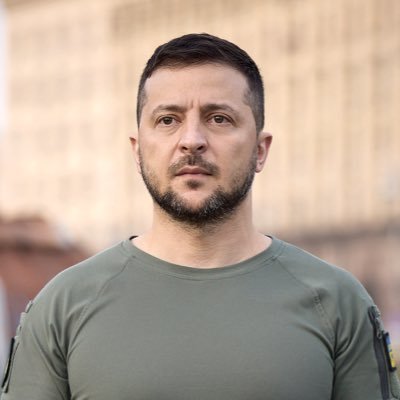
Grateful to the Security Service of Ukraine, all units of Ukraine’s Defense Forces involved, Ukraine’s Minister of Defense, the Commander-in-Chief of the Armed Forces of Ukraine and the General Staff, and all our weapons manufacturers for an unprecedented operation in response to Russian strikes on our infrastructure.
Today, everyone can see the consequences for the main military crossing from Russian territory into our Ukrainian Crimea. This is the result of the seventh stage of an operation carried out over several weeks, developed and coordinated by the Security Service of Ukraine together with the General Staff of the Armed Forces of Ukraine. Our warriors gradually destroyed air defense systems, radars, electronic warfare equipment, and other designated targets on the way to the final objective. For this, they used “Dovbush,” “Vendetta,” “Da Vinci,” “Sichen,” “Mich-2000,” “Ruta,” “Palianytsia,” “An-197,” “FP-1,” “FP-5 Flamingo,” and “R-360 Neptune.”
Today, at the key stage, the “Palianytsia” drones performed exceptionally well, striking the road section of the bridge, while “Neptune” missiles, “Ruta” drones, and FP-5 drones struck the railway section. Using “Flamingo,” our warriors carried out a precision-guided strike – and the communications uplink worked flawlessly until the very last seconds.
We have repeatedly offered Russia steps toward de-escalation – and every proposal has been met with loud rejection. Russia strikes our infrastructure every day, including bridges in Zaporizhzhia, Dnipro, Kyiv, and the Odesa region. We are restoring our infrastructure. But we are also reminding Russia that war will always return to where it began. Ukraine’s defensive capabilities are strong and will remain so, and we will never leave terror against our cities and people unanswered.
I thank the true warriors of the Security Service of Ukraine, all our Defense Forces, our intelligence agencies, and EVERY manufacturer of weapons effectively used to defend Ukraine, Ukrainians, and our national interests. Glory to Ukraine!
Jelmer Weijs retweeted

Only a fascist would be upset about a sticker that says "this gun kills fascists"

Oh dear Netflix. . Oh dear 🤬
I was LOVING the series Black Doves
Until I saw this
I find this HIGHLY irresponsible glorifying gun crime and with stickers on of who the depicted gun targets
Knowing there are many who describe anyone as facists these days from the conservative , elderly , those who want Peace in Russia , to those who support Israelis from persecution or those who think pronouns aren't labels to play with
And after the death of Charlie Kirk ..
I find this deeply concerning and inflammatory
You should be bringing people together not hardening the divide
@netflix
@JoeBarton_


Jelmer Weijs retweeted

🚨 BREAKING: Democrat Teresa Benitez-Thompson has flipped her R+19 seat blue in Nevada.
The seat has flipped blue for the first time in US history.

Jelmer Weijs retweeted

EN JA HOOR. Nu is zelfs hard bewijs. Weet je hoe ik zeker wist dat het een leugen was?
Omdat Liegende Dilan het zei.
Ze spreekt nooit de waarheid.
Is vrij simpel.
De woorden van een pathologische leugenaar zijn niks waard. Ik snap niet waarom dit steeds zo ‘schokkend’ is.

Jelmer Weijs retweeted

Altijd een goed idee. De kleuter die al dagen onredelijk aan het stampvoeten is zijn zin geven. Daar krijg je geweldig leuke kinderen van.

VVD-prominent Henk Kamp ziet een uitweg uit de kabinetscrisis: versterk het huidige minderheidskabinet aan de rechterkant, zodat de coalitie kan worden gerepareerd. "De mogelijkheid die meestal wordt genoemd, is JA21 laten aanschuiven." #WNL
Jelmer Weijs retweeted
Wacht even. @floorbremer zegt net bij Pauw en de Wit dat Eelco Heinen - die dus het kabinetsbeleid moet uitdragen - ‘s ochtends DENK benaderde met de vraag alsjeblieft tegen het Belastingplan te stemmen. En de VVD nu maar janken over hoe erg ze belazerd zijn.