

Nuclear and aerospace engineer. Trying to make a better future for humanity Opinions are my own. He/Him
Colorado
Joined May 2009
- Tweets2.1K
- Following1.3K
- Followers506
- Likes19.9K




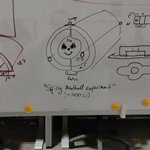




Pinned Tweet
We've made some major progress on this...
We have an agreement in place with a partner to use legacy reactor fuel in their possession. It's already fabricated and ready to use. This will save us >1 year and several million $'s. The biggest hurdle we have left is launch approval.

ALT Flyer describing Atomos' space nuclear pathfinder mission to put a simple critical assembly reactor into orbit to test new launch approval regulations

I finally have a project @AtomosSpace I can talk about. I'm working on space nuclear power, but we have a problem: too many people think it's impossible despite new regulations. So, we're going to launch a cheap critical assembly to prove it can be done: atomos.docsend.com/view/pcuk…
Lucas Beveridge ☢️🚀 retweeted

Say it with me: YOU. DONT. NEED. FTL. TO. GO. INTERSTELLAR. THIS IS A LIE BIG NIHLISM FEEDS YOU TO KEEP YOUR EYES ON THE DIRT! 20% LIGHTSPEED WILL STILL GET YOU TO ANOTHER STAR NEAR US IN A HUMAN LIFETIME!!!


Lucas Beveridge ☢️🚀 retweeted

"The energy levels needed to reach another star while transiting at a significant portion of the speed of light are impossible"

Lucas Beveridge ☢️🚀 retweeted

Simulations aren't good enough to capture all the plasma instabilities that arise in a practical implementation. You basically need agents + robots 3d printing and assembling thousands of chambers, instrumenting them, and running tons of cases physically.
I'm shocked that people think fusion will be cheap. Fuel is cheaper? Ok, fission reactor fuel is like 10% of total fission cost. Fusion with tritium breeding will be oozing out (lower level but still real) radiation like crazy. I suspect we'll see net positive fusion energy soonish but I think it will remain 10-300x more expensive than the competition probably forever due to engineering complexity, fast neutron first wall issues, and tritium management.
Lucas Beveridge ☢️🚀 retweeted

Zephram Cohcrane's warp drive stunt is a waste of resources when the planet is still recovering from World War III.

Lucas Beveridge ☢️🚀 retweeted

I cannot let a steam engine analogy go by without bringing up John Wilkinson, perhaps the most underappreciated engineer of the Industrial Revolution.
Watt had figured out how to dramatically improve the steam engine, but he spent years struggling to actually manufacture one. The problem was embarrassingly simple: nobody could make a sufficiently round cylinder.
The casting and machining tolerances were atrocious. Watt complained that one 18-inch cylinder was out of round by as much as THREE-EIGHTHS OF AN INCH. Steam leaked past the piston. He tried packing the gaps with cork, oiled rags, paper, and apparently even old hats. Nothing worked particularly well.
Enter John Wilkinson, a British ironmaster whose immediate concern was manufacturing better cannons.
At the time, iron cannons were commonly cast around a core, introducing defects and misalignment that could make the barrels inaccurate or dangerously weak. Wilkinson developed a process for boring cannons from solid castings, and in 1774 patented a vastly improved boring machine.
The key innovation was almost comically mechanical: a massive, rigid boring bar, supported at both ends, that could cut a genuinely straight, circular hole instead of following the irregularities of the casting.
He adapted this technology to Watt's cylinders. By 1776, Matthew Boulton was boasting that Wilkinson had bored a FIFTY-INCH cylinder accurate to within the thickness of an old shilling.
Suddenly, the steam engine was a commercially viable machine.
And the story gets better. Wilkinson became one of Watt's first customers, buying an engine to drive the blast machinery at his own ironworks. The steam engine was now helping manufacture the iron that made more steam engines possible.
I find this whole episode absolutely extraordinary. The Industrial Revolution was, for a critical period, bottlenecked on the ability to make a sufficiently round hole.
We remember Watt, and rightly so. We remember the invention of the steam engine and the subsequent development of thermodynamics. But the man who made the machinery that made the whole thing possible is practically a footnote.
I think we consistently underestimate how much of scientific progress is actually downstream of advances in tooling, measurement, and manufacturing precision. It's not just that technology precedes theory. Sometimes the decisive breakthrough is that someone finally figures out how to build the thing the theorists have been talking about for twenty years.
Anyway, I think John Wilkinson deserves considerably more credit for modern civilization than he gets.

a few thoughts:
1. pretraining science is kind of like how people built quite good steam engines before they understood thermodynamics. “Science owes more to the steam engine than the steam engine owes to science.”-(L.J. Henderson). if nick is right, which i am pretty sure he is, progress points in the direction of more interpretability, and pretraining was "slouching towards monosemanticity". my guess would be that major breakthroughs in interp also advance capabilities
2. nick is a good friend of mine, safe to say my origin story at openai wouldn't have happened if i hadn't met him, and it's fascinating watching him operate and seeing the early drafts evolve into this. he's the most profoundly happy guy I know- not driven by guilt, activism, or religious terror, but by fascination. he of course understands the stakes of understanding neural networks, but it doesn't seem like the core reason he does it: he just loves the neural nets. afaict he's posting this from some beautiful hideaway in tokyo. there's a lesson in there for all the +EV maxers. i feel very grateful to have met him
3. i do think it's crazy how few people across the world were staring at neural nets growing: most have moved to a different level of behaviorist analysis, thinking about reward functions and test scores and whatnot. it does not bode that well for the major model companies, oai included, that fundamental breakthroughs like this are coming from outside. we've become too much of a pressure cooker focusing on local incentives, studying narrow tracks under old paradigms, mostly doing engineering, rather than fundamental research, and implicitly hoping the next model will figure it out
Lucas Beveridge ☢️🚀 retweeted

We’re getting America underway on nuclear power in space and ushering in the era of a Nuclear NASA.
With the signing of an MOU with @ENERGY, we’re taking the next giant leap toward exploring the outer solar system and sending American astronauts to Mars. Fission power will help us travel farther, operate longer, and power more capable scientific instruments.


Lucas Beveridge ☢️🚀 retweeted
They literally cobbled together Delta Clipper using mostly off the shelf parts for $60 million, only for the people in charge of the company and NASA to go "well we just want a SSTO because stacking rockets is hard".



Lucas Beveridge ☢️🚀 retweeted

Hopefully its an awakening to investors that its worth investing in companies that compete with Elon, because most markets dont actually want to be winner-takes-all, and monopolies suck for customers.
Lucas Beveridge ☢️🚀 retweeted
We turned a 23% learning rate to -94% on nuclear reactors.
We literally chose to go slower and stupider, and live in a worse world because of it.

Lucas Beveridge ☢️🚀 retweeted
It's a bad idea.
If you dictate scientists just what to work on, you will get a low return on investment. The current science funding schemes ALREADY have this problem: pour money into some specific program, see scientists produce something that fits into the program to get the money --> topic is overcrowded with incremental and nonsense research that mostly leads nowhere.
It's inefficient for the same reason planned economies are inefficient.
Scientists need MORE freedom to do what they want, not less.
teapawt.net/NewsfromScience/status…

The National Science Foundation (NSF) has issued a 10-page memo signaling a retreat from its traditional role of giving grants to individual researchers to pursue their best ideas and to train the next generation of scientists.
Instead, the memo makes clear, NSF will devote the bulk of its resources to addressing the research priorities of President Donald Trump and his administration, many of them technology focused. scim.ag/4ipE1kY

Lucas Beveridge ☢️🚀 retweeted

This is one of the biggest problems we have as a nation right now. Not kidding about that.
To start a business you need labor, facilities & equipment, and money.
We have vast areas of the country with underemployment (labor is cheap), housing is cheap, land is cheap.
Thanks to UPS/FedEx and the internet, a garage anywhere in the country can be a worldwide business; you can get materials, ship product, and connect to customers worldwide.
This absolutely should be a stampede of development in those areas. Meanwhile, we crowd more and more people in to urban centers. Yes, some of them like that, want that, and that's fine. But for a lot of people, it's the only job they can get and they have to pay extremely high rent or housing cost to get it or spend way too much time commuting.
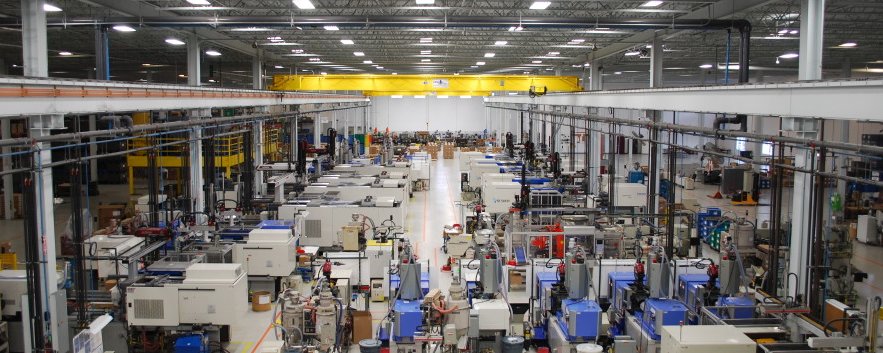
Why don't we put the jobs where people and housing and land are cheap? It's access to money. Finance for new businesses is concentrated in very few urban centers: LA, SF, Seattle, Boston, New York, D.C. Most other areas may have some local specific niches for new-company capital but not many.
And the people with money are busy and want you to come to them. They simply won't invest in companies where they'd have to travel to kick the tires.
This leads to crazy results like people starting rocket companies in the Bay area where every single test requires them to drive six hours to Mojave.
We have got to find a way to crack this model. We dismantled the network of "local bank" as a source for this kind of business investment, the high net worth individuals also live in the same cities if you're going for angels.
It's not just geographic. Manufacturing doesn't scale like software. We don't even seem to have an investment strategy for some solid business that's going to grow 50% year over year. If you can't tell the story of how you might be a 100x 'unicorn' you can barely play.



Lucas Beveridge ☢️🚀 retweeted
Yeah, we need a real and competitive space industry, not just SpaceX.

This thing where people think SpaceX will solve every problem and build everything we need in space so we can stop worrying about a real space economy is a dangerous mistake.
We need to be doing some aggressive, very fundamental materials science research and encouraging multiple systems providers with different goals and business models.
Lucas Beveridge ☢️🚀 retweeted

Degrowth environmentalists just don’t want anyone going into space at all.
They think any human activity “harms the environment,” even if it’s on a lifeless rock.


Lucas Beveridge ☢️🚀 retweeted

I just fixed my dishwasher with the help of ChatGPT. A trivial task. I had been about to order a new one. So this software has increased the country's real wealth yet decreased the measured GDP. The main economic indicator is structurally incapable of registering the thing that actually makes people better off, namely the growth of knowledge
Lucas Beveridge ☢️🚀 retweeted

I never really had a strong opinion on astronaut radiation dose risks until I watched the original Mars Direct presentation by Robert Zubrin on youtube and he pointed out that smoking a few cigarettes a day for 3 years carries a greater risk than a 3 year Mars round trip.