

A hobbyist coder who enjoys writing numerical programs in C++ and JavaScript; for samples of work, see Numerical Math Utilities page: https://teapawt.net/t.co/LUOzdVF3MQ
Coquitlam, B.C. Canada
Joined June 2014
- Tweets867
- Following281
- Followers80
- Likes120





David Binner retweeted

A high-trust society cannot survive when the rules apply to some people and not to others.
Canada was known and loved as a place where you could trust your neighbours, expect fair treatment and build a life with confidence that the rules meant something. That trust was part of what made this country feel like home. It is worth protecting.
The rule of law is foundational to that trust. Everyone is subject to the law, including the people who write it, enforce it and exercise power in our name.
You cannot expect citizens to respect the law while allowing those in power to disregard its limits. You cannot demand honesty while rewarding corruption. And you cannot keep asking people to trust institutions that refuse to hold themselves accountable.
People see the double standard. They see who gets investigated, who gets protected, whose conduct is excused and whose life is turned upside down.
A high-trust society depends on people knowing that the same legal standards apply to everyone. That their rights will be respected. That public power has limits. That wrongdoing will have consequences, regardless of who is responsible.
A low-trust society takes hold when people conclude that the rules are merely tools used by those with power against those without it.
Those two systems cannot coexist. Either we uphold equal accountability, or we normalize selective enforcement and watch trust disappear.
And no, demanding accountability is not what undermines public confidence. The misconduct does that. The cover-ups do that. The refusal to apply the law equally does that.
Institutions are not entitled to our trust because of the power they hold. They earn it through how they exercise that power—and whether they hold their own accountable when it is abused.
Apply the law equally. Respect its limits. Hold people accountable, regardless of their title, position or political allegiance.
The rule of law means nothing if the people entrusted to uphold it are protected when they violate it.
The question for Canadians is: What kind of country do you want? One where you can trust your neighbours, rely on your institutions and know the law applies equally to everyone? Or one where who you know and how much power you hold determine which rules apply to you?
David Binner retweeted
Mark Carney keeps telling us we live in a “dangerous and divided world” without acknowledging how we got here. Because if he did, fingers would be pointing right back at him.
Leading the Bank of Canada under Harper. Leading the Bank of England. Advising Trudeau. Working in the very circles that helped shape the world he is now warning us about.
You would think there would be a little humility. Perhaps even some embarrassment before asking citizens to trust him with more power.
If these “leaders” are so capable, why do their warnings keep getting darker while our lives get harder? Where are the results of all this supposed expertise? We are told to trust their leadership, yet somehow never to question where it has brought us.
I have come to the harsh conclusion that we keep expecting better outcomes from people whose priority is protecting their own positions and interests. Helping citizens become strong, free and prosperous is clearly not the priority. Instead, we are left paying more for public services that fail to serve the public, while those responsible expect our trust and treat us as the problem when we question their failures.
So what can you do in this “dangerous and divided world”? Stop assuming the government will take care of you. Judge its competence by its record, not its promises.
Take care of yourself, your family and your community. Ask questions. Think independently. Do not hand over your judgment simply because someone in power tells you to be afraid.
Look around and ask yourself. Are our streets safer? Are hospital waits shorter? Are classrooms less crowded? Is housing more affordable? Are groceries cheaper? Are you keeping more of what you earn? Are repeat violent offenders being kept off our streets? Is public money being spent responsibly? Are those in power answering your questions or dismissing you for asking?
Then ask yourself whether you want more of the same and why those failing us every day should be trusted with even more power.
David Binner retweeted

While everyone is focused on the separation referendum, Albertans are also voting on NINE OTHER QUESTIONS regarding immigration and the constitution.
Danielle Smith is encouraging Albertans to vote YES to all nine. Mark Carney is telling people to vote NO.
The first five questions are all about immigration:
1. Do you support the Government of Alberta taking increased control over immigration for the purposes of decreasing immigration to more sustainable levels, prioritizing economic migration and giving Albertans first priority on new employment opportunities?
2. Do you support the Government of Alberta introducing a law mandating that only Canadian citizens, permanent residents and individuals with an Alberta approved immigration status will be eligible for provincially-funded programs, such as health care, education and other social services?
3. Assuming that all Canadian citizens and permanent residents continue to qualify for social support programs as they do now, do you support the Government of Alberta introducing a law requiring all individuals with a non-permanent legal immigration status to reside in Alberta for at least 12 months before qualifying for any provincially-funded social support programs?
4. Assuming that all Canadian citizens and permanent residents continue to qualify for public health care and education as they do now, do you support the Government of Alberta charging a reasonable fee or premium to individuals with a non-permanent immigration status living in Alberta for their and their family’s use of the healthcare and education systems?
5. Do you support the Government of Alberta introducing a law requiring individuals to provide proof of citizenship, such as a passport, birth certificate or citizenship card, to vote in an Alberta provincial election?
While the next four are only centred on constitutional questions:
6. Do you support the Government of Alberta working with the governments of other willing provinces to amend the Canadian Constitution to have provincial governments, and not the federal government, select the justices appointed to provincial King’s Bench and Appeal courts?
7. Do you support the Government of Alberta working with the governments of other willing provinces to amend the Canadian Constitution to abolish the unelected federal Senate?
8. Do you support the Government of Alberta working with the governments of other willing provinces to amend the Canadian Constitution to allow provinces to opt out of federal programs that intrude on provincial jurisdiction such as health care, education, and social services, without a province losing any of the associated federal funding for use in its social programs?
9. Do you support the Government of Alberta working with the governments of other willing provinces to amend the Canadian Constitution to better protect provincial rights from federal interference by giving a province’s laws dealing with provincial or shared areas of constitutional jurisdiction priority over federal laws when the province’s laws and federal laws conflict?
Where do you stand on these questions? 🤔

David Binner retweeted

David Eby is a shrewd, confident competitor.
He will challenge anyone currently suffering from a stomach virus to a hot-dog-eating contest. He will dare any chess champion to a tournament when they are sleeping.
theglobeandmail.com/opinion/…

David Binner retweeted

“Nobody is equal to anybody. Even the same man is not equal to himself on different days.”
— Thomas Sowell
People differ in intelligence, skills, preferences, ambition, upbringing, and many other ways. Treating people as though they were identical or interchangeable ignores the enormous variation that exists among individuals.
Unequal outcomes, by themselves, are not proof of discrimination. As Sowell points out, even the same person performs differently on different days. Inequality is neither an anomaly nor a mystery, but a basic fact of life.

David Binner retweeted

My absolute favorite Roger Scruton quote:
"A conservative is someone who has found something to love and wants to retain it, and to protect it from all the sources of decay. It is a philosophy of love."

David Binner retweeted

Senator Ron Johnson’s full opening statement at the Allison Inquiry is a masterclass in exposing the "COVID Cartel."
He details how early treatment was sabotaged, natural immunity was ignored, and a "miserable failure" of a response cost us $17 trillion.
Key points from his testimony:
1. The Data Was Ignored: By March 2020, Stanford's John Ioannidis projected an Infection Fatality Rate of ~0.125% (similar to a bad flu). Fauci privately admitted 0.2-0.3% in his diary, but publicly pushed 2-3% to stoke fear.
2. The Great Reset: While small businesses were destroyed, billionaires gained $3.9 trillion. Blue-collar workers kept the country running while white-collar workers stayed home.
3. Vaccine Safety Signals: VAERS data shows over 39,000 deaths reported. In April 2021 alone, 40% of reported deaths occurred on the day of vaccination or within 1-2 days. NIH’s Francis Collins dismissed this with "Senator, people die."
4. Censorship: True information was labeled "malinformation." Doctors were vilified for prescribing Ivermectin (a Nobel Prize-winning drug) while Remdesivir ("Run, death is near") was pushed.
5. The Result: A miserable failure. 16% of global deaths in a country (The US) with 4% of the population.
Watch the full video. The truth is coming out.

Johnson’s charge is not a slogan war. It is that the slogans outran the safety desk on the COVID shots.
He lists the lines used to close the argument. Follow the science. Safe and effective. No one is safe until everyone is safe. A pandemic of the unvaccinated. Get the shot and you will not die. Then he asks the obvious one. If it stopped infection cold, why did your neighbor’s arm become your problem?
By the time EUA landed, he says, the story was already locked. A few months in, his claim is uglier: FDA and CDC were not doing sincere surveillance of those mRNA vaccines. When a tool blinked, they buried the tool. The emails, in his telling, give the reason. A signal would mean hesitancy. Hesitancy would mean fewer arms.
He calls the product experimental gene therapy pushed on billions. That is his language. Deaths and injuries from the COVID shots, he says, are still being denied in public while the objective stays the same: keep the narrative standing.
If “vaccine hesitancy” was treated as a worse outcome than a blinking alarm, what exactly was the surveillance for?
David Binner retweeted

Mark Carney, during one of the most troubling times in Canadians history, didn’t address Canadians.
He broadcast to them.
Why?
Because a controlled YouTube video means:
❌no journalists
❌no tough questions
❌no follow up
❌no accountability
When you’re confident in your abilities and your plan, you face the questions.
When you’re afraid of the questions and have a weak plan, you control the room.
Carney is asking Canadians to “trust him”.
Why would anyone trust a COWARD?

CARNEY’S NEW SALES PITCH: “TRUST ME, THE DEAL WAS TERRIBLE.” 🇨🇦
Okay.
Then show us the deal.
Because right now Canada’s entire economic future is being justified with:
Believe me, it was bad.
No documents.
No full terms.
No public comparison.
Just government messaging after the fact.
If Carney was right to walk away, release it and prove it.


David Binner retweeted
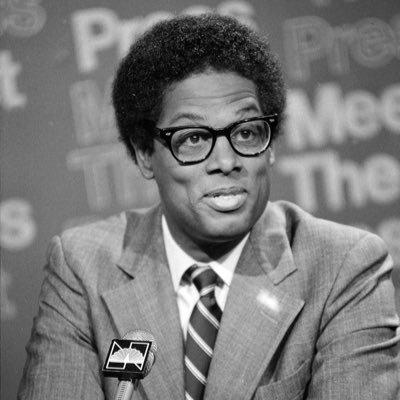
“You remember the past not so that it is ‘accurately recorded,’ to say it again, but so that you are prepared for the future.”
— Jordan Peterson
David Binner retweeted

🚨 WOW! Iceland citizens are CELEBRATING EN MASSE after their nation has REJECTED joining the European Union
Turnout was over 82%
PROTECT YOUR SOVEREIGNTY! 🇺🇸🇮🇸
Not only should countries be rejecting joining — but nations should start PULLING OUT of the EU 🔥
David Binner retweeted

We need action NOW to ensure that the next generation of ferries are built in B.C.
We can’t wait until the next procurement and then hear the same old excuses about why it can’t be done. If there are barriers, identify them now and fix them.
British Columbians should expect their government to have a plan that strengthens our industrial capacity and creates good jobs here.

The BC Building Trades is proud to stand with over 15 unions calling on BC Ferries to build their next round of vessels here in BC. British Columbians deserve good jobs and ferries that work when they need them. Add your voice at buildthemhere.ca

David Binner retweeted

Mark Carney's great friend, the head of the European Union, whom Quebecers would love to join, is now talking about seizing citizens' savings to put it "at the service of Europe"!
That, my friends, added to the laws that prevent you from criticizing them, is straight-up pure communism!
And that's the line Mark Carney wants to follow.
At that point, it's true that it will be the end of everything you've ever known. Including your freedom.
*
David Binner retweeted

Almost every argument about energy comes down to one number: energy density.
How much energy is stored per kilogram of fuel or material.
The numbers in MJ/kg:
• Wood: 15
• Coal: 24
• Crude oil: 44
• Natural gas: 54
• Hydrogen (compressed): 120
• Lithium-ion battery: 0.7
• Uranium (fission): 80,000,000
• Hydrogen (fusion): 690,000,000
Read those last two again.
A kilogram of uranium contains more energy than 3,000 tonnes of coal.
A kilogram of hydrogen fusion fuel contains 45 million times more energy than a kilogram of oil.
This is why:
• Batteries struggle to replace liquid fuels in aviation and shipping. Energy density is 60x lower.
• Nuclear submarines can run for 25 years without refuelling.
• Fusion, if cracked, ends energy scarcity permanently – not just for decades, but for the lifetime of the Sun.
The energy transition debate isn't about ideology.
It's about physics.
Every energy source is competing against millions of years of chemistry packed into fossil fuels – and, eventually, against the nucleus itself.
Know the numbers. The debate becomes clearer.
David Binner retweeted

This is the black swan event that is starting to look very real for the Canadian consumer.
If the Canadian dollar decisively breaks below US$0.70, technical traders could target significantly lower levels, potentially into the mid-to-high US$0.60s.
The Bank of Canada faces a difficult choice: raise rates to support the dollar and risk slowing an already weak economy(Stagflation), or tolerate a weaker dollar and accept higher imported inflation.
Years of weak productivity growth, persistent deficits, and policy uncertainty have all contributed to a weaker Canadian dollar. The result of 11 Years of policy failure and weak leadership.
There are winner, exporters of goods that sell in USD and pay wages in CDN. The wealthy that have most of their assets in USD. If you have debt in CDN and have offsets in USD, you win big.
The losers, and that is most of the population, meaning you.
It will be the person already struggling to get by, this will drive inflation.
This is the result of the govt spending.
This is important. A country's currency ultimately reflects investor confidence in its economy, fiscal discipline, productivity, and long-term policy direction.
A weaker Canadian dollar isn't just a number on a trading screen. It makes imported goods more expensive, fuels inflation, reduces purchasing power, and lowers Canadians' standard of living.
Currency markets are ultimately a vote of confidence in a country's economic direction.
The current polices are geared to benefit the few, and to hell with the masses, they are only good for votes.

Analysts cut Canadian dollar forecasts as CUSMA uncertainty clips rate hike chances bnnbloomberg.ca/tariffs/2026…

David Binner retweeted

Canada: Crying Over Spilt Milk in a Self‑Inflicted Stagnation
Canada’s elite have spent a quarter‑century turning a rich, opportunity‑dense economy into a slow‑growth, over‑levered cul‑de‑sac, and they still insist nothing is structurally wrong. There is no sense crying over spilt milk about past mistakes when the architects of this stagnation are still in charge and still in denial.
Canada did not just drift into secular stagnation; it embraced a kind of virtue socialism and an industrial policy anchored on climate change targets rather than productive capacity, competitiveness, or growth. An economy built on world‑class natural resources, strategic geography, and human capital has been deliberately downgraded into a housing‑addicted, low‑productivity balance sheet recession risk, and the people who did it still show up on panels calling this “resilience.”
For years, Canada’s comparative advantages in energy, resources, and industrial capacity were something to apologize for, regulate to death, or tax into oblivion, while policy and capital chased the illusion that you could mortgage and virtue‑signal your way to prosperity. The result is a country flirting with a liquidity trap, where even lower rates may barely move a real economy suffocated by over‑priced assets, under‑built productive capital, and households too damaged to borrow again.
The real scandal is not that Canada faces secular stagnation; it is that the elite engineered it, denied it, wrapped it in climate rhetoric, and now blame external shocks while the data scream that this is a made‑in‑Canada crisis.
To be clear, Canada’s problems are not the result of President Trump!
If Canada’s elite will not finally admit that decades of attacking its own strengths, worshipping its own bubbles, and treating industrial policy as a morality play have left the country one downturn away from a full balance sheet recession, then they are not guardians of the national interest, they are custodians of decline, and at this point, there really is no sense crying over spilt milk, only over the refusal to fix the mess they made.

David Binner retweeted

A landmark moment at #ITER! The final module of the central solenoid was added to complete the stack. This powerful magnet, the beating heart of ITER, will induce the plasma current needed to initiate & help control the fusion reaction inside the tokamak.
monkeylink.co/f05a23
David Binner retweeted

Ukrainian mathematician Maryna Viazovska solved a problem that had puzzled mathematicians for over 400 years. Even Johannes Kepler and Isaac Newton couldn’t crack it.
We live in a three-dimensional world, but Maryna solved a puzzle in an eight-dimensional space—something that’s very hard even to imagine.
She was born in Kyiv, studied at Taras Shevchenko University, worked in Bonn and Berlin, and at just 33 became a professor in Lausanne.
So what was the problem? It’s about how to pack identical spheres as tightly as possible in space. This question was first asked by Kepler back in 1611. Over time, scientists found answers for two and three dimensions—but not for eight.
Maryna proved that in eight dimensions, the densest packing is formed by a special mathematical structure called a lattice. What’s even more amazing is that she did it in just 23 pages, while earlier attempts took hundreds.
In 2022, she was awarded the Fields Medal, the most prestigious prize in mathematics. She became only the second woman in history to receive it.
Today, Maryna Viazovska works in Lausanne, supports Ukrainian mathematicians, and brings pride to Ukraine with her achievements.

David Binner retweeted

The Brachistochrone Curve ✍️
Imagine you have a smooth, frictionless ramp connecting two points. Point A is at the upper left, and point B is at the lower right. If you release a bead at the top, gravity pulls it down. The question is straightforward: what shape should the ramp be to ensure the bead reaches the bottom in the least amount of time? Your gut feeling might suggest a straight line, as the shortest distance between two points is a straight line. However, this instinct is completely wrong. The true answer is one of the most surprising findings in mathematics. The key insight is that the shortest distance and shortest time are completely different concepts because the bead's speed changes during its journey. On a straight ramp, the bead gains speed slowly and spends too much time moving sluggishly along the upper part before it accelerates. If the ramp drops steeply right from the top, the bead picks up speed quickly. Even though the total path might be longer, it covers the distance at such a high speed that the total time is actually shorter.
The diagram displays five competing ramp shapes to illustrate this idea. The red straight line is the direct route but makes the bead gain speed too slowly, leading to a longer time. The orange parabola and green circular arc improve on this, each becoming steeper near the start and thus performing faster. The black cycloid wins, dipping noticeably lower and steeper at the beginning to build speed quickly, then sweeping more gently toward point B. The blue sixth-degree polynomial shows the pitfalls of overcorrecting; it drops so steeply that the total path becomes too long, costing more time than the extra speed saves.
The winning cycloid is a shape most people have never heard of, but it is easy to picture. It's the curve traced by a single point on the rim of a rolling circle, like adding a glowing dot to the edge of a bicycle wheel and observing the arch it creates as the wheel rolls. The brachistochrone uses one single arch of this cycloid, starting where the dot touches the ground, rising up and over, and ending where it touches down again. The size of the arch can be adjusted by changing the radius of the imaginary rolling circle until it perfectly connects to the endpoint.
This problem was posed as a public challenge by Johann Bernoulli in 1696, and the responses were remarkable. Isaac Newton reportedly found a solution overnight after receiving the challenge, and Bernoulli recognized Newton’s anonymous answer right away, saying, “I recognize the lion by his paw.” However, more significant than the answer itself was the creation of an entirely new branch of mathematics called the calculus of variations. This field finds entire curves or shapes that optimize certain quantities rather than just specific numbers. It has become one of the most powerful mathematical tools ever developed.
The cycloid has another incredible property: it is also the tautochrone. This means that beads released from any point along the cycloidal ramp, whether near the top or near the bottom, all arrive at the lowest point at the same time. The extra distance that a bead starting higher must travel is perfectly balanced by the extra speed it gains from its greater height. Christiaan Huygens discovered this tautochrone property in 1659 and used it to design pendulum clocks that kept accurate time, no matter how far the pendulum swung. Ultimately, the brachistochrone problem led to the principle of least action, one of the most profound ideas in physics. This principle states that every physical process in nature follows the path that optimizes a particular quantity. From this concept, we can derive Newton's laws, Maxwell's equations, Einstein's relativity, and quantum mechanics. Thus, the problem of how to make a bead slide down a curved ramp the fastest became the cornerstone of modern theoretical physics.


